
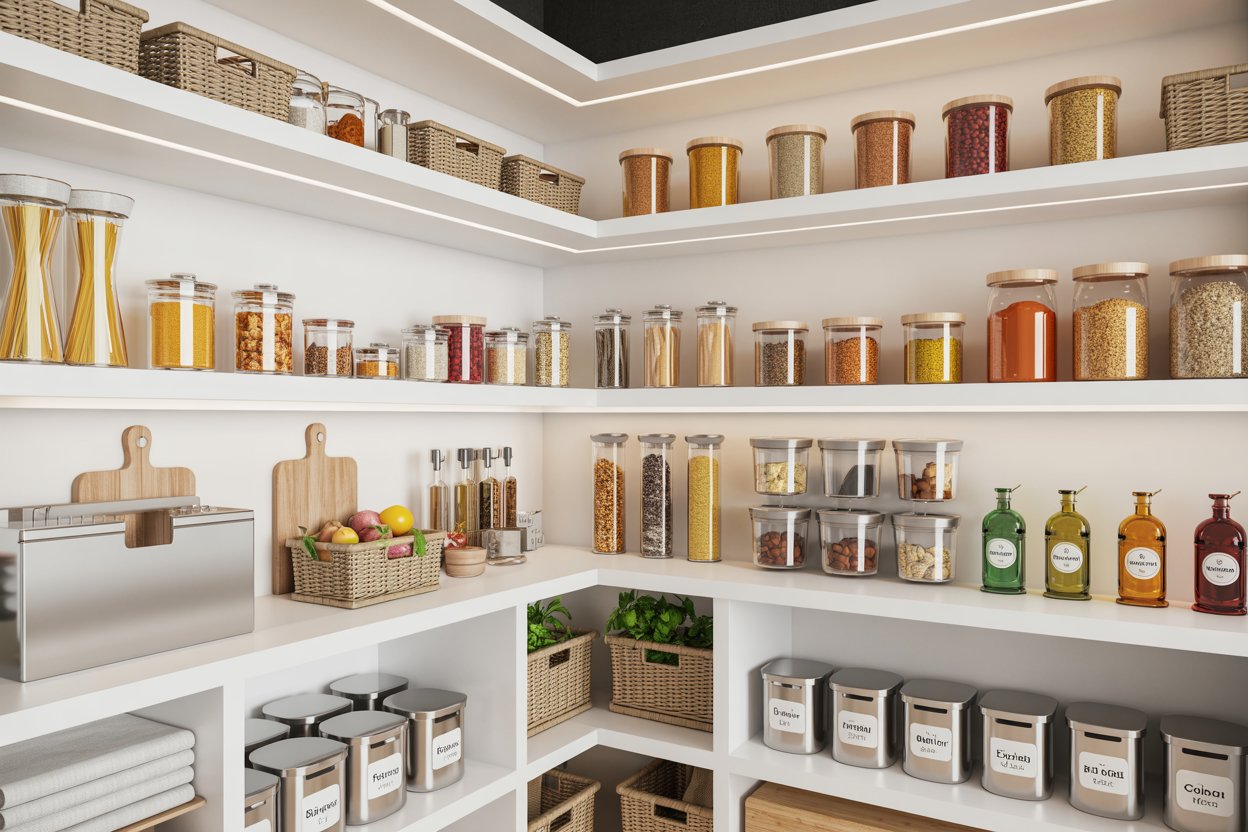
The Pantry Organization Habit That Saves Time, Money, and Sanity
I’ll be honest — there was a time I couldn’t see the back of my own pantry shelf. Boxes leaned, cans rattled, and mystery bags of flour collected dust. I’d buy another jar of pasta sauce, only to find two already hiding behind the cereal boxes. And pantry organization was the last thing I wanted to do.
If that sounds familiar, you’re not alone. Most American households toss hundreds of dollars’ worth of unused or expired food every year, according to the USDA’s Economic Research Service.
That clutter doesn’t just waste food — it chips away at calm mornings and adds mental noise to every mealtime.
But here’s the good news: once you treat pantry organization as a simple weekly habit instead of a one-time overhaul, your kitchen starts to work for you again. Meals get easier, grocery trips get shorter, and your mind feels lighter.
Let’s turn that chaos into calm — one shelf at a time.
Why Pantry Organization Isn’t About Perfection
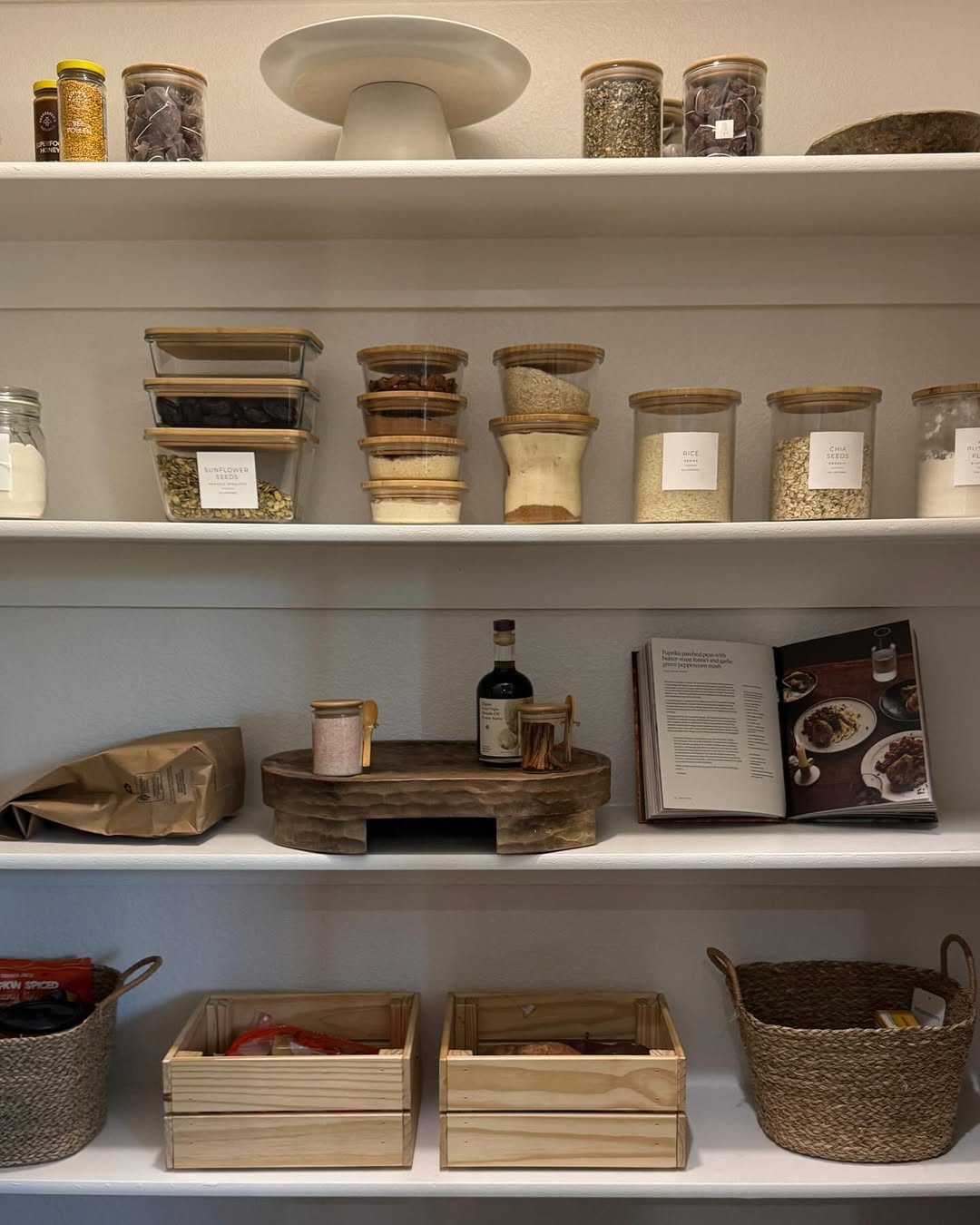
I used to think organization meant everything had to look Pinterest-perfect — identical jars, fancy labels, and shelves that sparkled.
Then I learned that what matters most is function. The goal is simple: make your pantry serve your daily life, not some online ideal.
Real Simple points out that clutter often comes from habit — tossing groceries wherever they fit or keeping extras “just in case.”
Once you stop chasing looks and start thinking about reach and rhythm, organization becomes less about matching jars and more about moving through your kitchen with ease.
Once your mindset shifts, the next step is to clear out what doesn’t earn its space.
Step One: Clear Out What’s Not Serving You
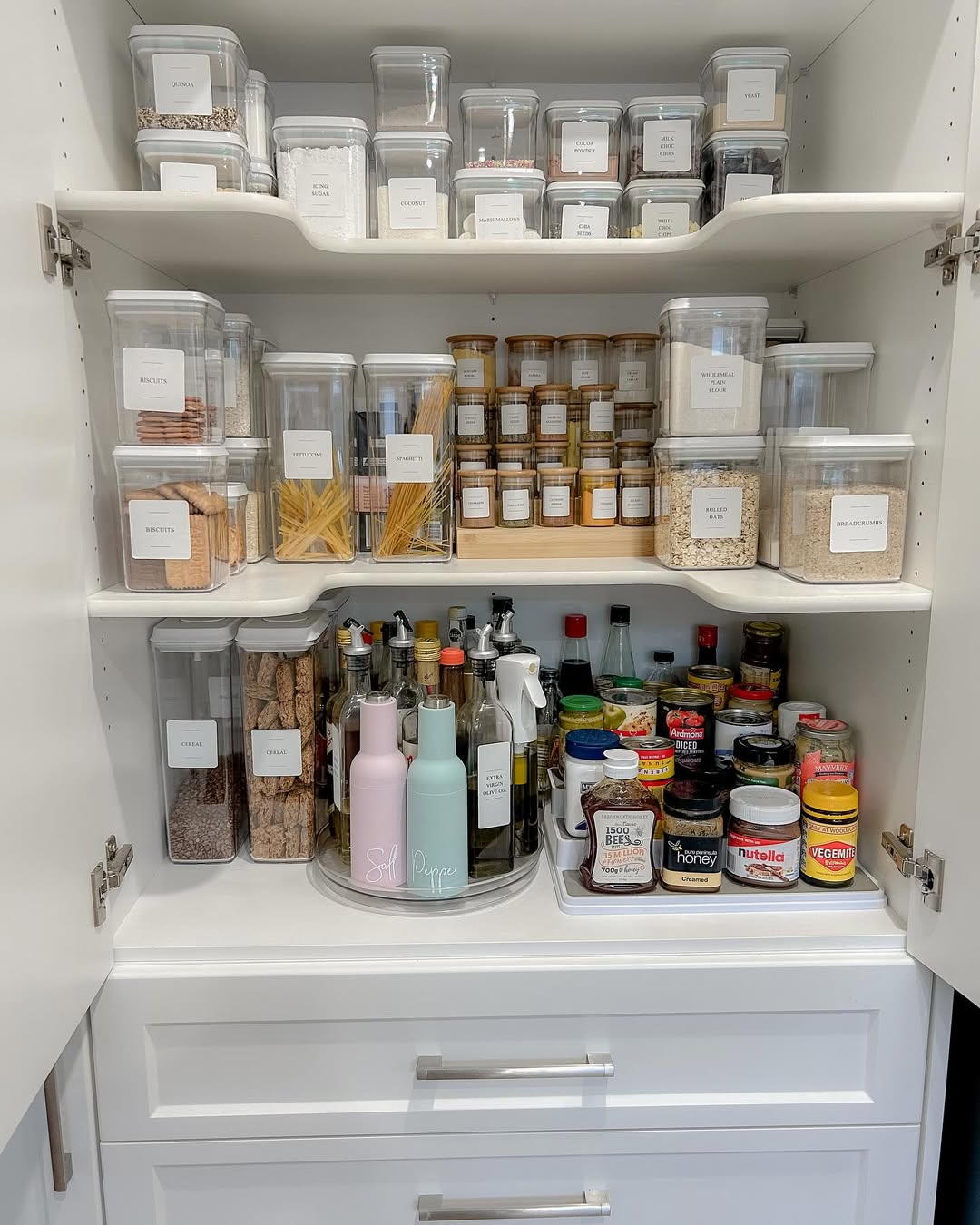
Here’s where change really starts. Pull everything out — yes, every box and bag — and feel the weight of what you’ve been holding onto.
Ask yourself: Do I use this? Is it still good?
When I did this, I found spices that had lost all flavor and snacks nobody liked. That first clear-out changed the tone of my kitchen.
Professional organizer Taylor Flanery of Home Storage Solutions 101 suggests that decluttering one shelf at a time keeps things realistic — otherwise, you risk ending up surrounded by half-sorted chaos when real life interrupts.
When you’ve pared things down, wipe the shelves and only return what earns its spot. You’ll notice a lightness in your space — and in your head — the moment you’re done.
Now that the shelves are open and ready, it’s time to group what remains in a way that matches how you actually cook.
Step Two: Group by How You Cook, Not by Packaging
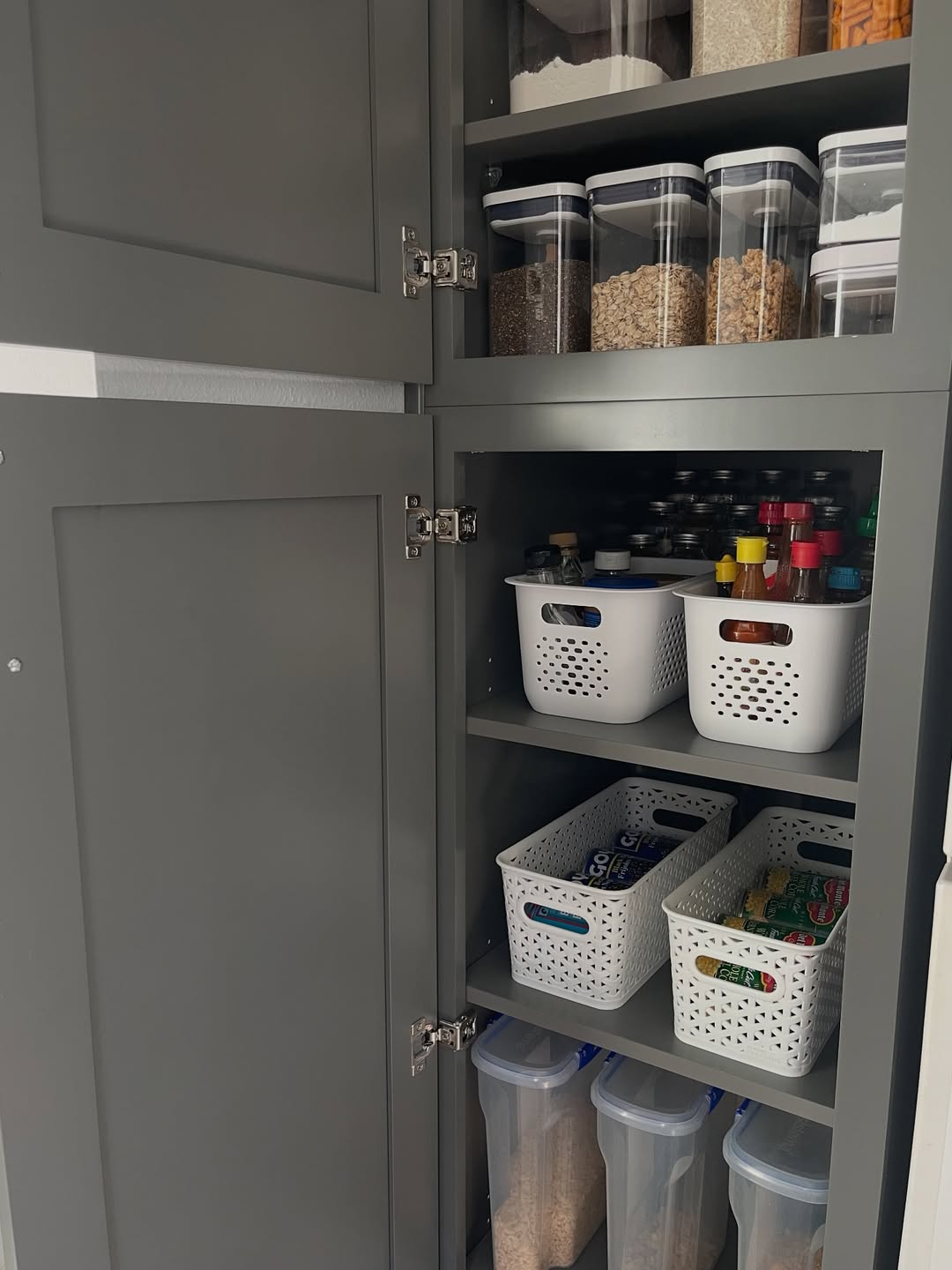
This shift changes everything. Instead of stacking boxes and brands together, I started grouping by use.
Breakfast shelf: oats, tea, peanut butter.
Dinner shelf: pasta, sauces, canned veggies.
Baking zone: flour, sugar, cocoa.
The team at Homes & Gardens calls this “organizing by rhythm,” and they’re right — your pantry should mirror your routine.
You’ll reach for ingredients faster, plan meals without guesswork, and notice right away when staples run low.
Before I made this switch, I’d waste time hunting for rice that was always hidden behind snacks. Now it’s right where it should be — easy to grab on busy nights.
Once things are grouped by how you live, the secret to keeping it that way is simple maintenance.
Step Three: Create a Refill Habit, Not a Reorganize Habit
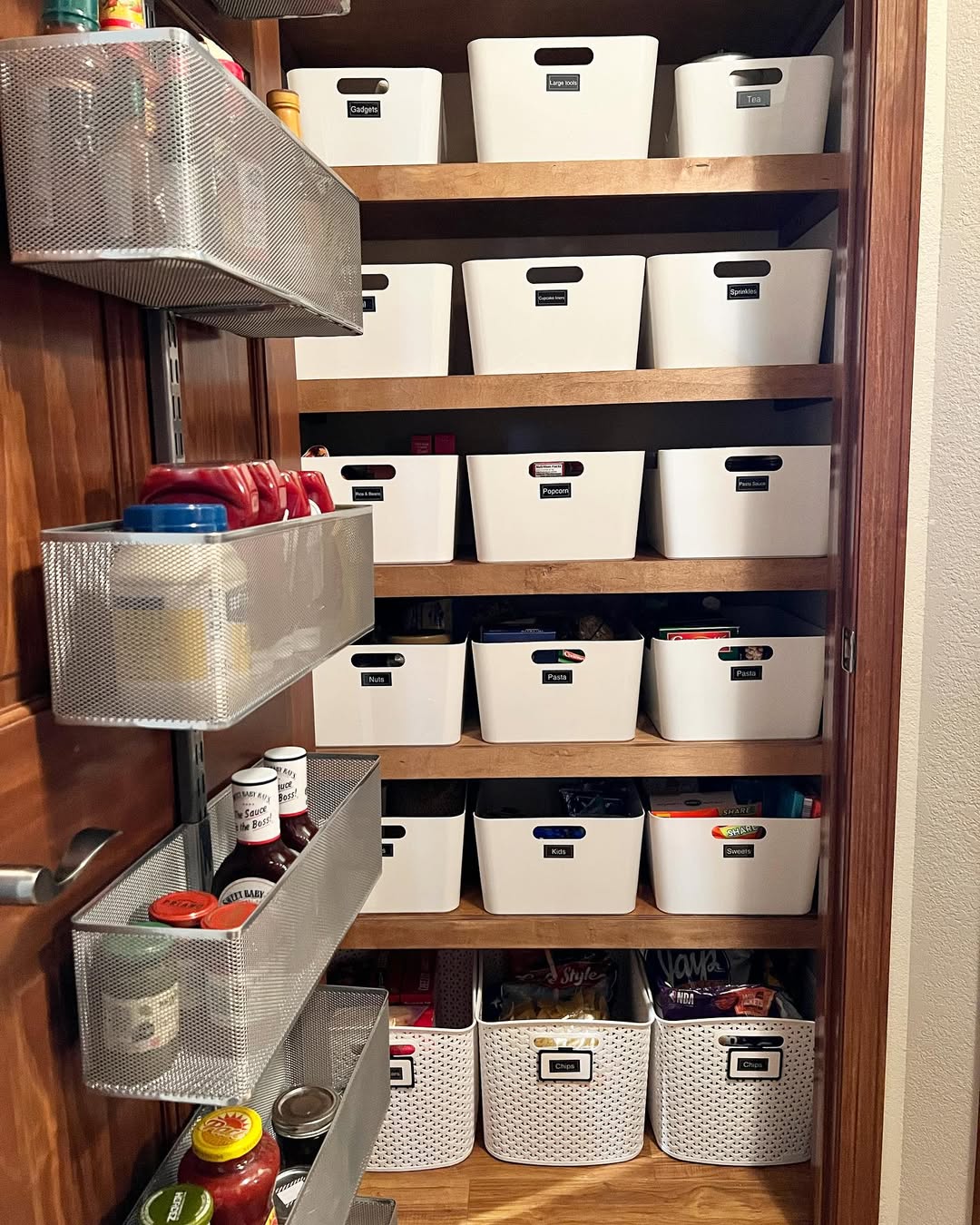
This is where real order takes hold. Organization isn’t a one-time fix — it’s a quick rhythm you repeat. I call it the “Sunday check-in.” Once a week, I refill jars, toss what’s stale, and make a short shopping note.
That tiny routine keeps chaos from creeping back in. The U.S. Environmental Protection Agency reports that food waste costs American families thousands each year. A five-minute reset helps you hold onto both food and money.
Set a reminder for Sunday afternoon. It’s a small act that saves you time, dollars, and stress all week long.
When your shelves stay steady, the next smart move is labeling — not for looks, but for your future self.
Step Four: Label for Your Future Self
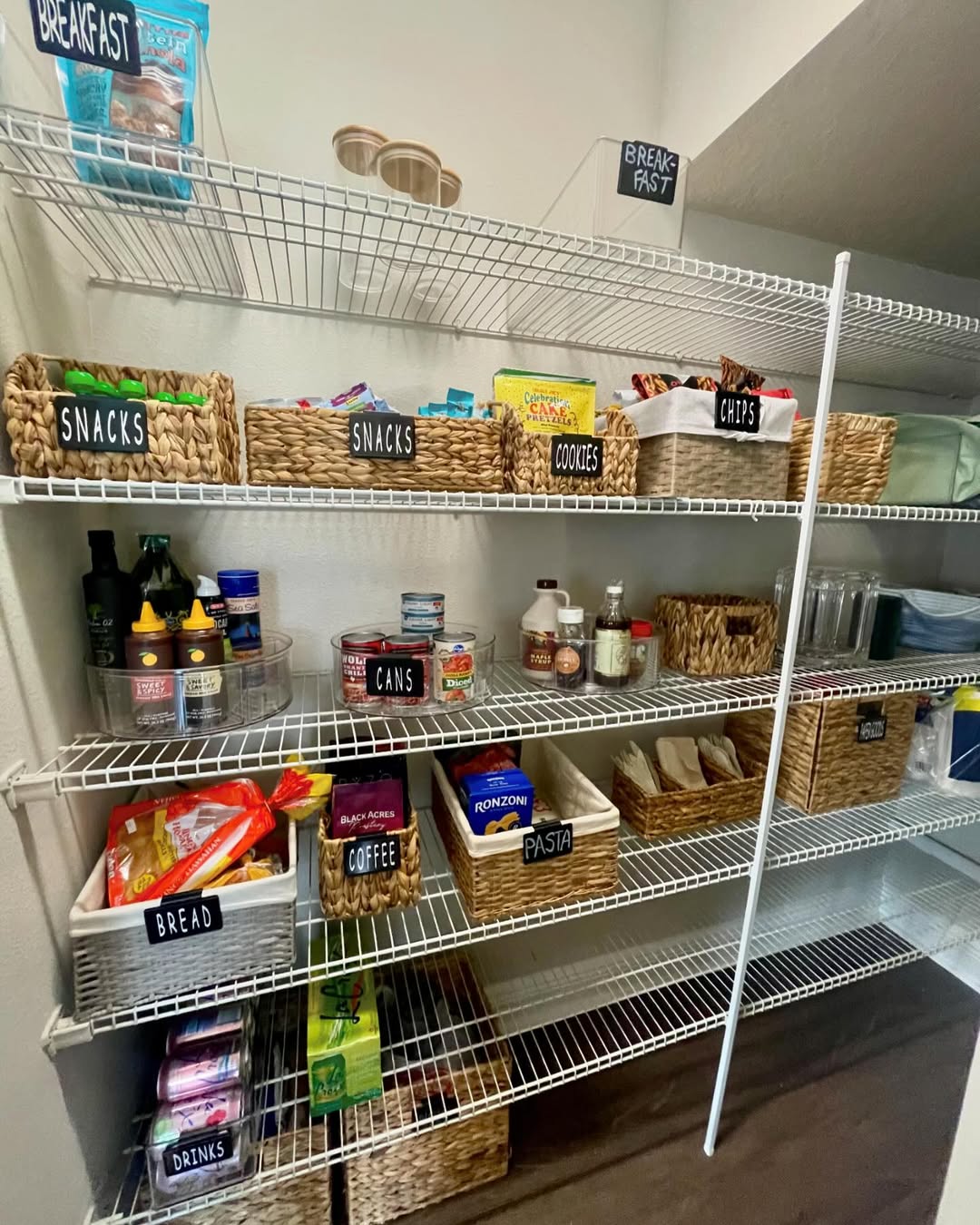
Ever grabbed a jar and guessed wrong between sugar and salt? I’ve been there. Labeling isn’t about making it pretty — it’s about clarity when your morning is already rushing by.
The Spruce suggests using painter’s tape and a marker — simple, fast, and flexible. Add dates if you want an easy reminder for rotation. And for safe storage timelines, the FoodSafety.gov chart gives a clear guide on when foods stay fresh.
Think of labels as quiet help from your past self — a small kindness that saves you from one more decision.
Once everything’s labeled, you can share the system — so everyone in the house can keep it running smoothly.
Step Five: Make It Easy for Everyone in the House
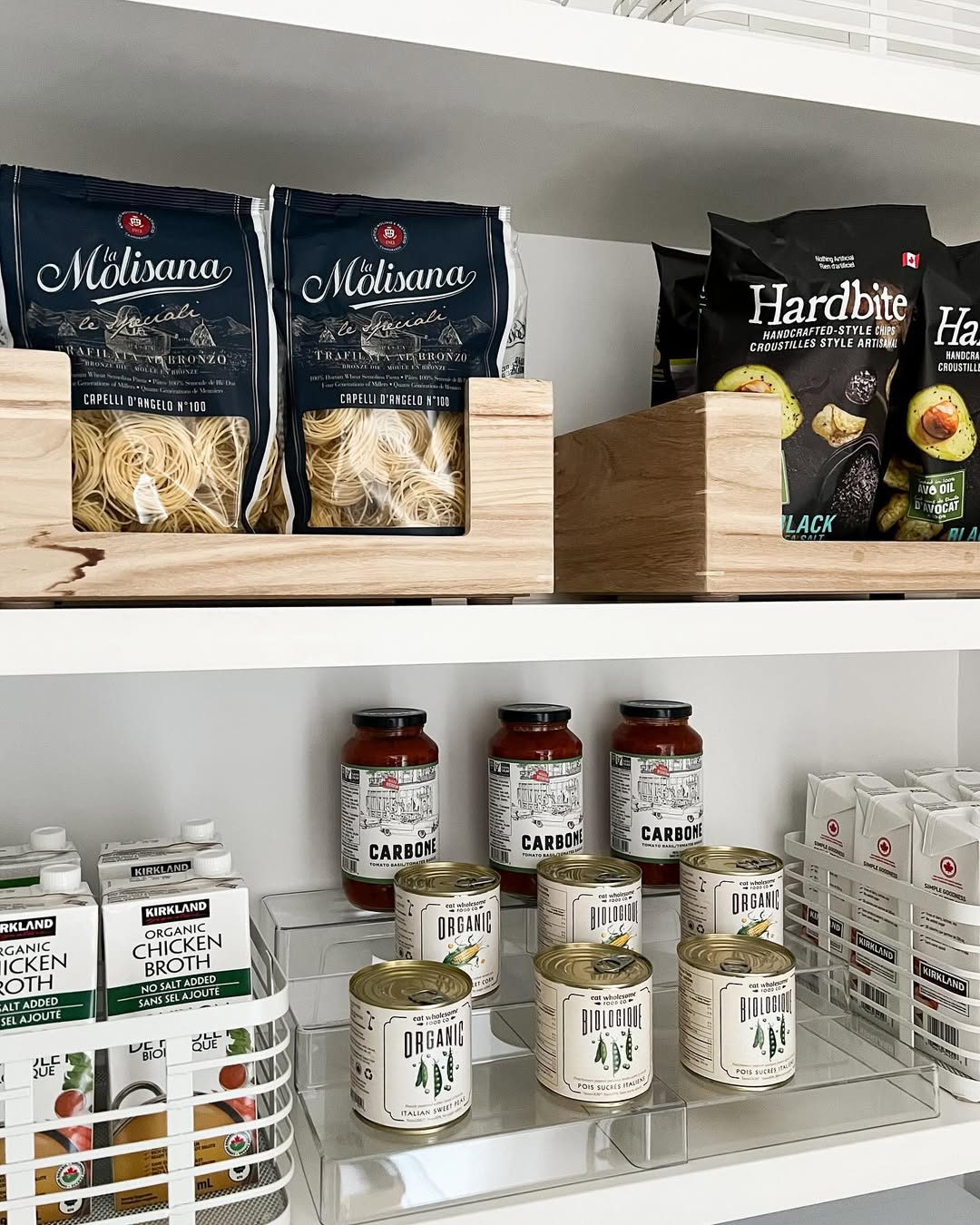
A system only works if everyone can follow it. I learned this after finding snacks scattered in random corners courtesy of my partner.
Now, I keep zones simple: Lunch Prep, Baking, and Snacks. Everyone knows exactly where to look — and where to put things back.
Pro organizers in Good Housekeeping recommend placing kid snacks on lower shelves and heavier items up high. That setup makes it easier for little hands to help and keeps traffic moving.
When your family can restock without asking where things go, your pantry stays calm — even on the busiest days.
And calm is more than a feeling. Science says it’s measurable.
The Science of Calm Kitchens
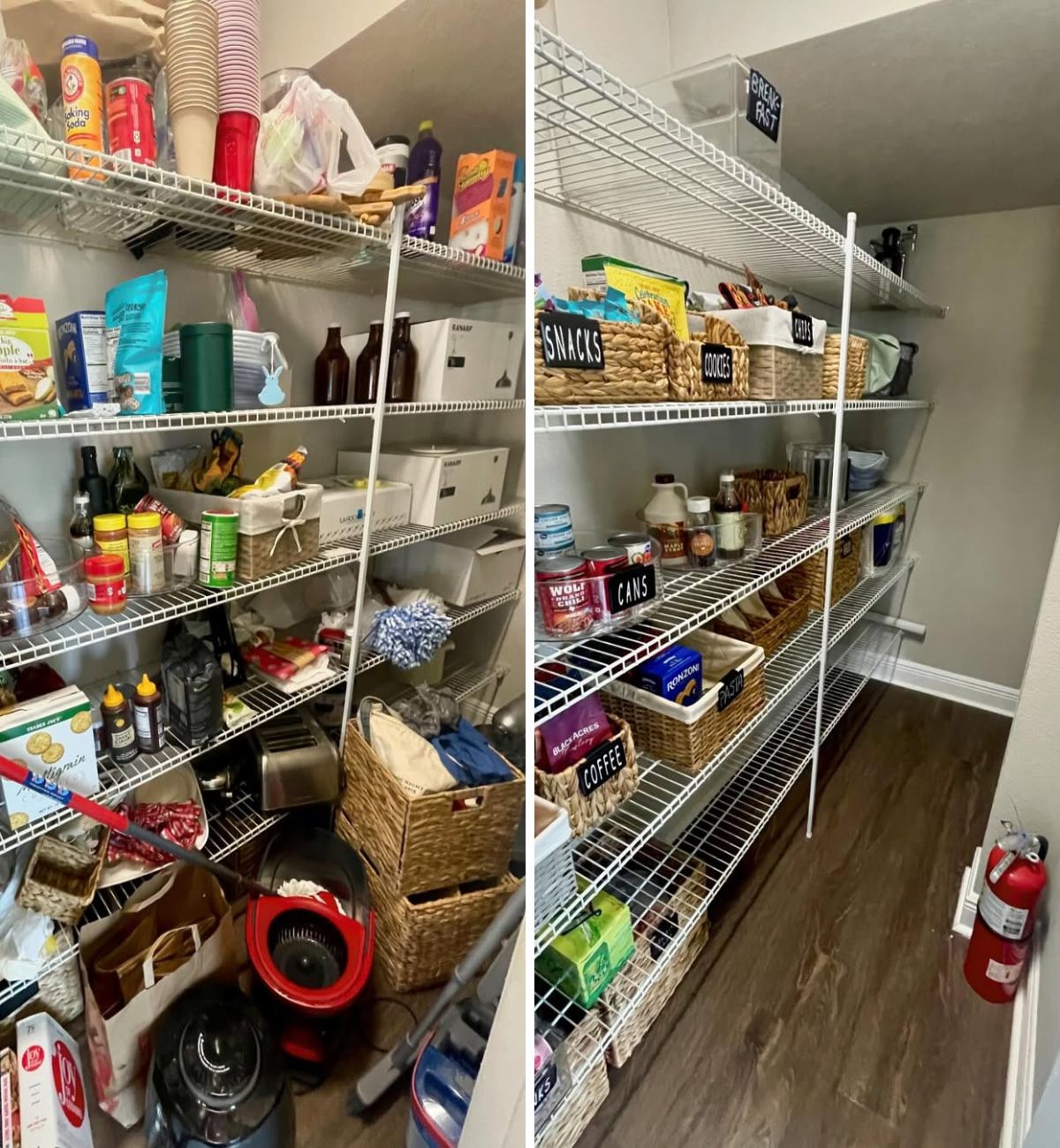
You can sense it the moment you open tidy shelves. Studies show that clutter doesn’t just crowd your space — it spikes stress levels.
The Personality and Social Psychology Bulletin found that people who described their homes as messy had higher cortisol, the stress hormone that drains energy.
There’s brain science behind it too. Research in the Journal of Neuroscience shows that visual clutter fights for our attention, making it harder to focus.
That’s why a clean pantry feels like a breath of fresh air — it frees up headspace for what actually matters, like cooking without the noise of chaos around you.
Once your shelves are calm, a few small upgrades can help that feeling last.
Small Tweaks, Big Wins for Pantry Organization
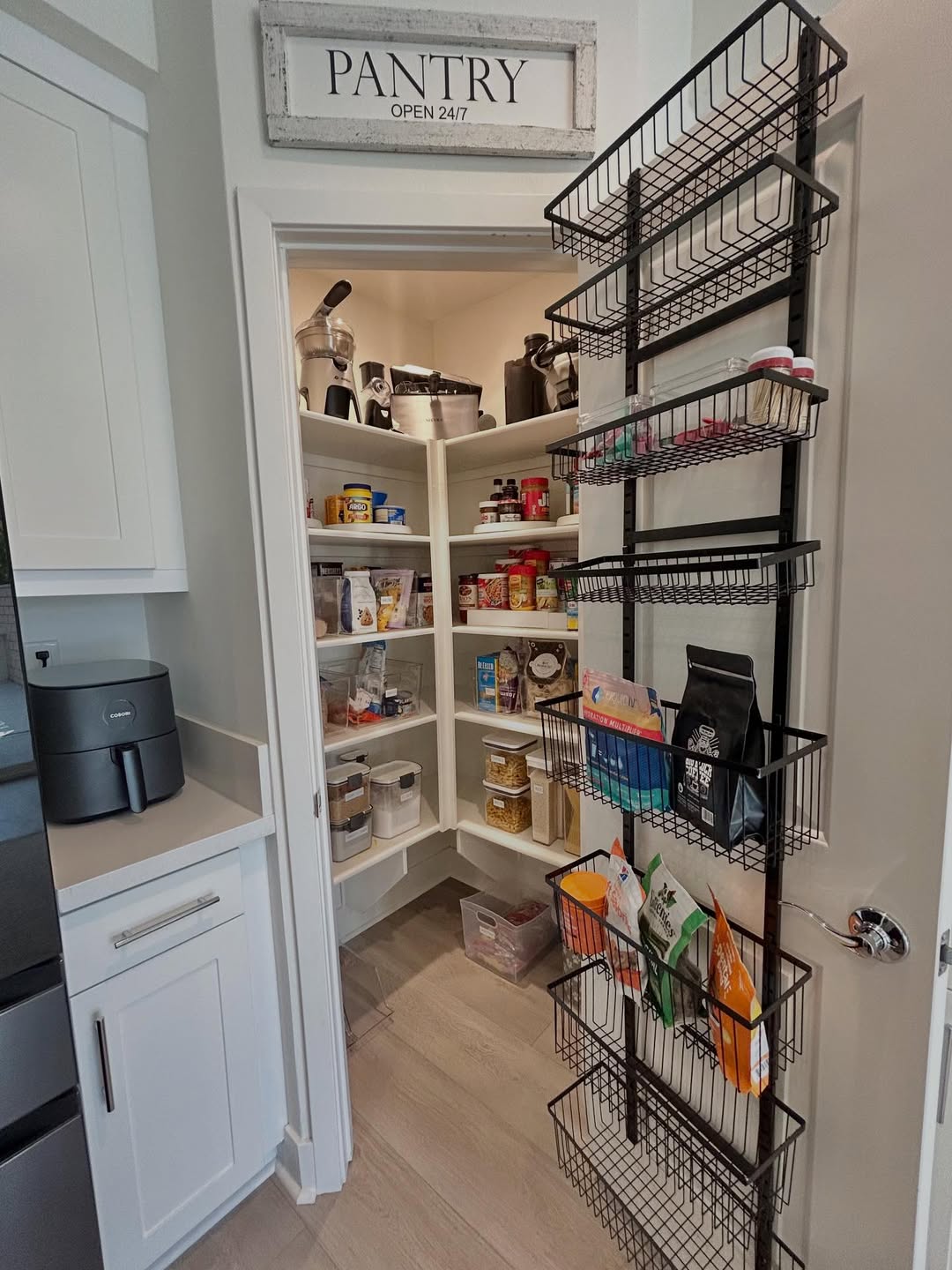
If your pantry is tiny, don’t stress. You don’t need new furniture or matching sets. A few simple tweaks go a long way.
Try clear bins to see what’s inside, tiered risers for cans, and lazy Susans for sauces — ideas Better Homes & Gardens recommends for tighter spaces.
My personal favorite is the over-the-door organizer rack. My pantry is small, yet this small installation adds so much more space and organization to my pantry.
Read more: My “No Overwhelm” Home Declutter Checklist That Actually Works.
Before you start rearranging your shelves, let’s tackle a few common questions people always ask when they begin pantry organization. These are the small details that make daily use easier and the habit last.
Frequently Asked Questions
How often should I reorganize my pantry?
You don’t need a big overhaul every month. A quick weekly reset—like the Sunday check-in—keeps things in order. Once a year, do a deeper sweep to check expiration dates and wipe down every surface.
What’s the best way to keep food from expiring?
Use the “first in, first out” rule. Place newer items behind older ones, and label jars with the date you opened or bought them. According to FoodSafety.gov, most shelf-stable foods last longer than we think, but rotation still saves waste.
How do I organize a small pantry or just a few shelves?
Focus on zones, not size. Even one cabinet can hold breakfast items on one shelf, dinner staples on another, and snacks in a single bin. Clear containers or baskets make it easy to see what you have without digging.
Do I need to spend money on new containers?
Not at all. Glass jars, coffee tins, or pasta sauce bottles work perfectly. Better Homes & Gardens suggests starting with what you already own before buying anything new.
What if my family keeps putting things in the wrong spot?
Keep labels short and clear. A simple “Snacks,” “Lunch Fixings,” or “Dinner Shelf” helps everyone return things where they belong. Over time, it becomes second nature—and the pantry stays calm.
Conclusion
Pantry organization isn’t about being perfect. It’s about creating a kitchen that works for real life—one where you can grab breakfast without digging, see what’s running low, and feel a little lighter every time you open the door.
Start tonight with one shelf. You’ll feel the shift right away—the calm, the space, the relief of knowing exactly what’s there.
If you’ve already tried a few of these ideas, I’d love to hear how it went.
Drop a comment and share your favorite pantry trick or the small habit that changed your kitchen. Let’s trade ideas that make home life simpler for everyone.



Can’t wait to try some of these.
This is going to be very useful during new years