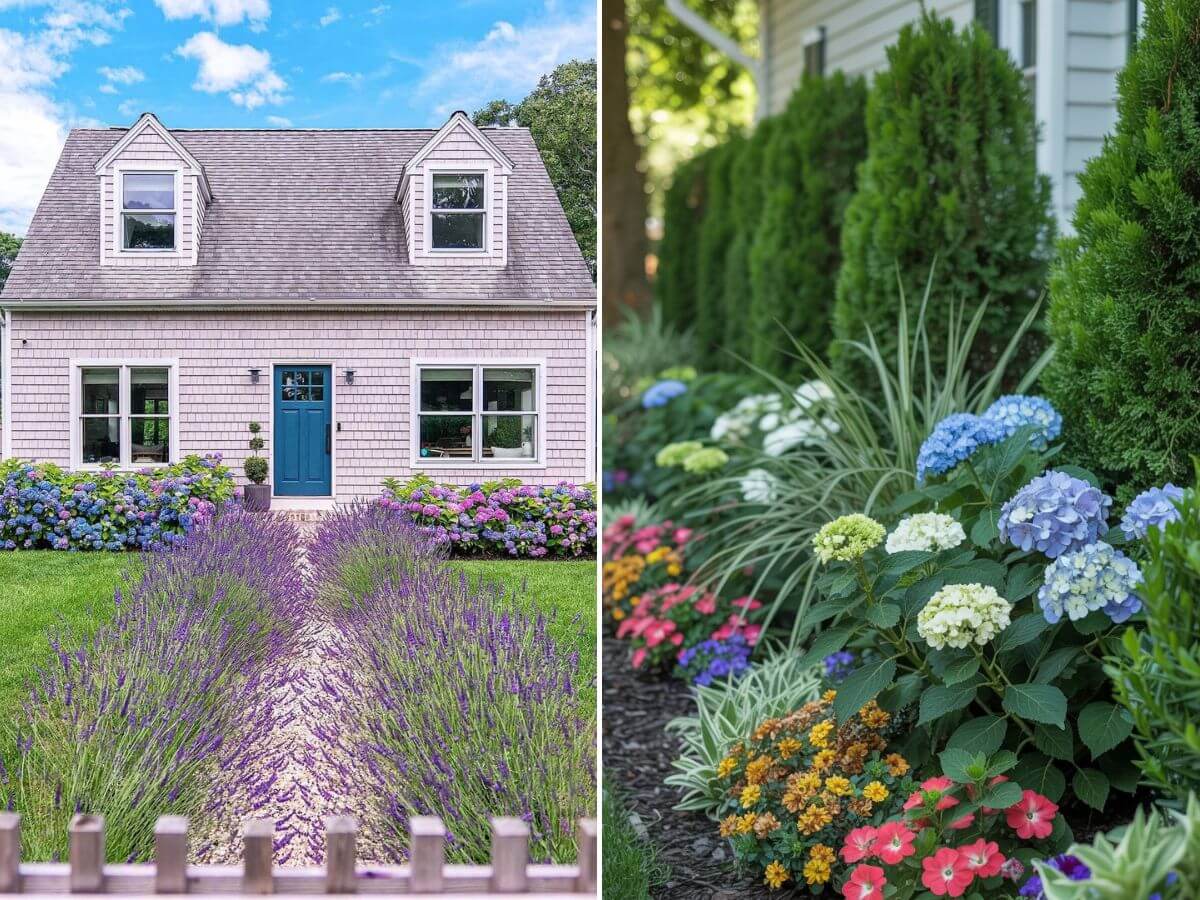
Front Yard Garden Design Ideas That Instantly Boost Curb Appeal
First impressions start long before anyone reaches your front door.
Color, texture, plant placement, and even garden shape quietly influence how welcoming a home feels from the street. Some front yards feel calm and polished instantly. Others feel cluttered even with expensive landscaping. Difference usually comes down to thoughtful garden design rather than massive renovation budgets.
One thing I’ve noticed while looking at beautifully designed homes is how intentional everything feels. Repeated plants create rhythm. Curved beds soften harsh edges.
Layered greenery adds depth without overwhelming smaller spaces. Even simple upgrades can completely change how a landscape looks and feels.
And honestly, many of the best-looking front yard gardens aren’t necessarily the biggest or most expensive. They simply use layout, repetition, texture, and structure more effectively. Small changes like reshaping garden beds, adding evergreen layering, or framing walkways with plants can dramatically improve curb appeal without making maintenance harder.
Best part?
Most of these ideas are surprisingly achievable, whether you’re working with a large suburban yard, compact entrance garden, or something in between.
Layer Plants by Height for a More Professional Look
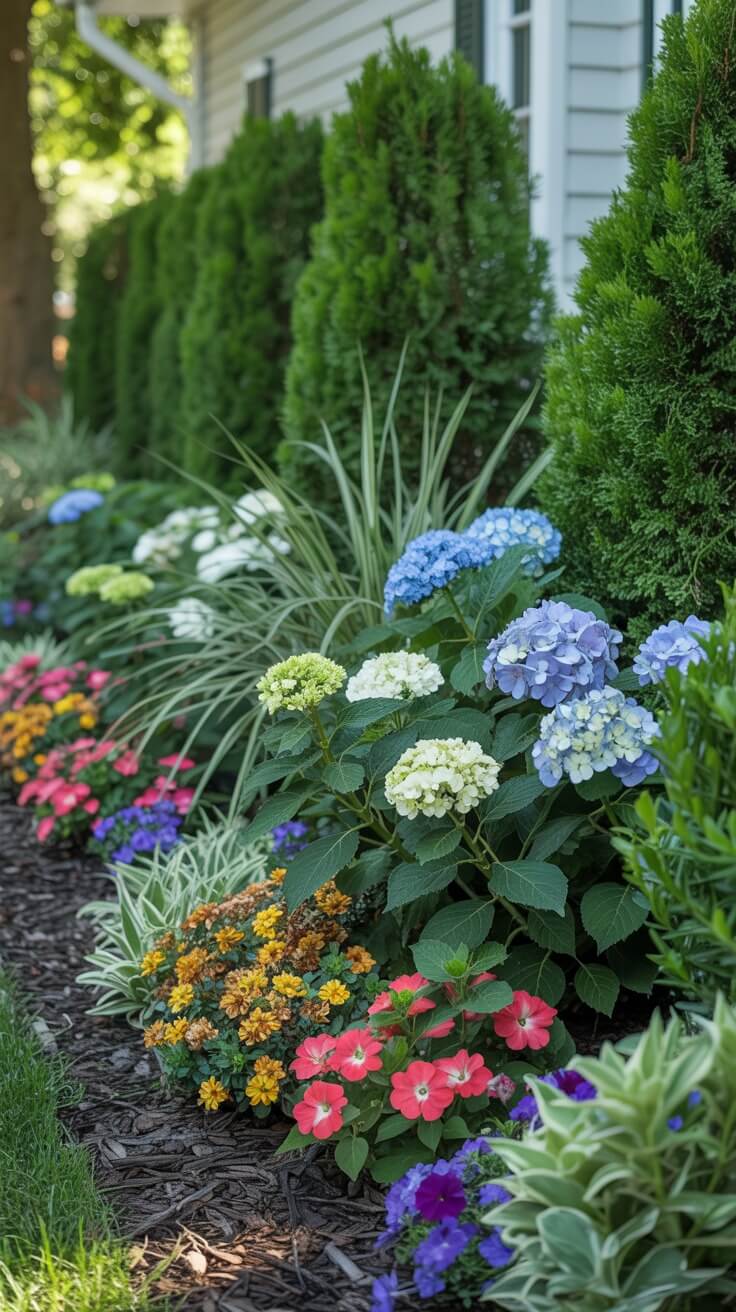
Flat gardens often feel unfinished, even when plants themselves are beautiful. Layering completely changes how a landscape feels.
Taller shrubs and ornamental grasses naturally create structure near walls or fences, while medium-height plants soften middle areas and smaller flowers help fill borders without crowding pathways. Thoughtful layering makes planting beds feel fuller, more balanced, and easier on the eyes.
In fact, The Spruce recommends, “Grow tall shrubs and perennials towards the back of flower beds and plant low-growing ornamentals and groundcovers towards the front.”
Once I started paying attention to layered landscaping in real neighborhoods, I noticed almost every polished-looking home follows similar pattern. Heights gradually transition from tall to low, helping gardens feel intentional instead of random.
For smaller spaces, layering becomes even more useful because it creates depth without requiring extra square footage. Compact hydrangeas, dwarf boxwoods, and low-growing flowers work especially well together.
Use Curved Garden Beds to Soften Harsh Front Yards
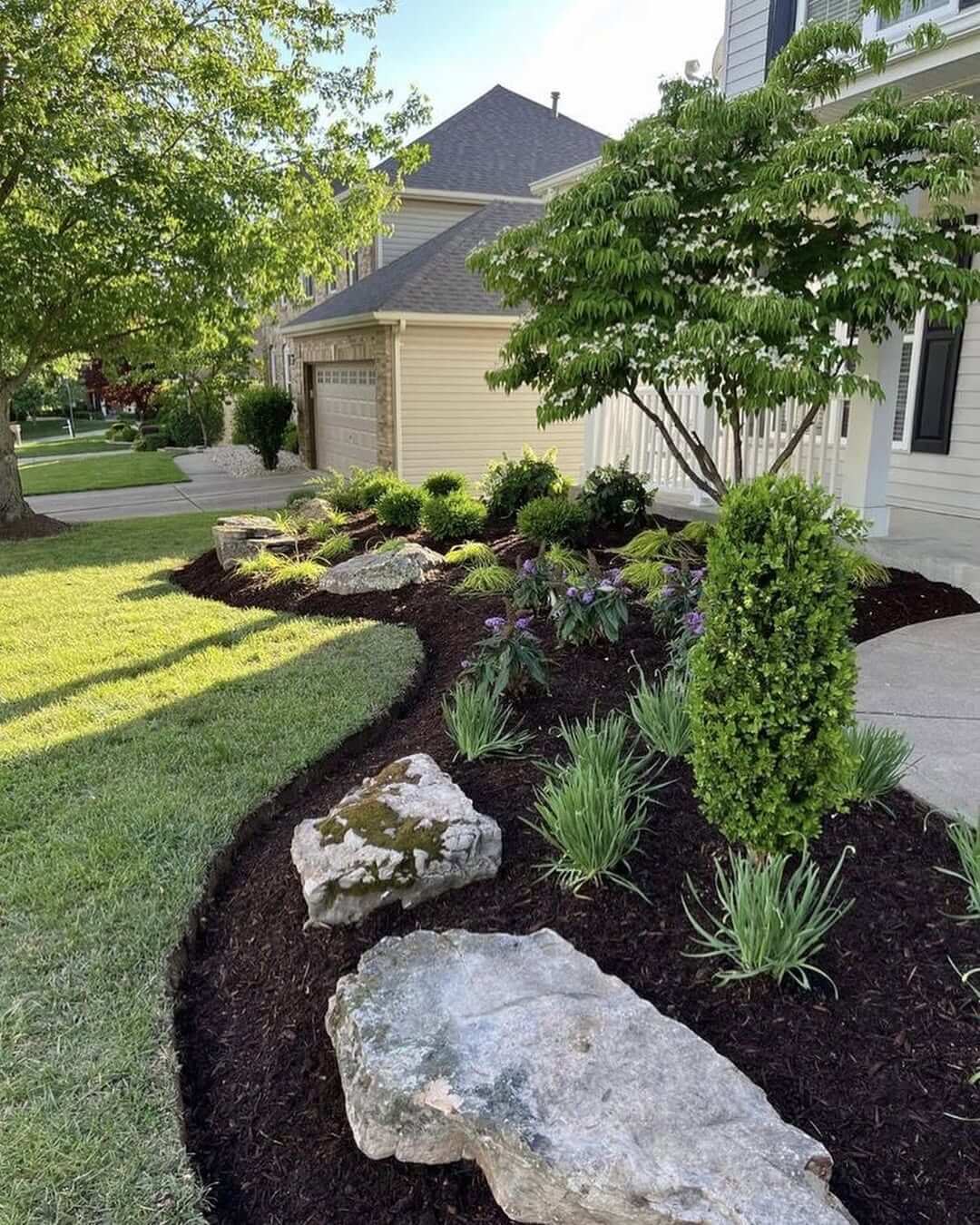
Straight lines can feel stiff surprisingly fast, especially in neighborhoods already filled with driveways, sidewalks, fences, and sharp property lines.
Curved garden beds create gentler movement across outdoor spaces and help landscaping feel softer and more natural. Even simple curves can completely shift how welcoming a home feels from the street.
One of easiest upgrades homeowners can make is reshaping flat rectangular beds into flowing curves that guide attention naturally toward entrance. Mulch borders, stone edging, and layered flowers all work beautifully with curved layouts.
I’ve seen smaller homes look noticeably more refined after adding curved edges around pathways and planting beds. Same lawn. Same flowers. Different layout.
Curves also pair especially well with layered shrubs and flowering borders because they prevent gardens from feeling boxed in or overly rigid.
Flower-lined pathways also work beautifully alongside thoughtful front yard walkway landscaping, especially when curves help connect planting beds more naturally to entrances.
Add Repeating Plants for a More Cohesive Front Yard Garden Design
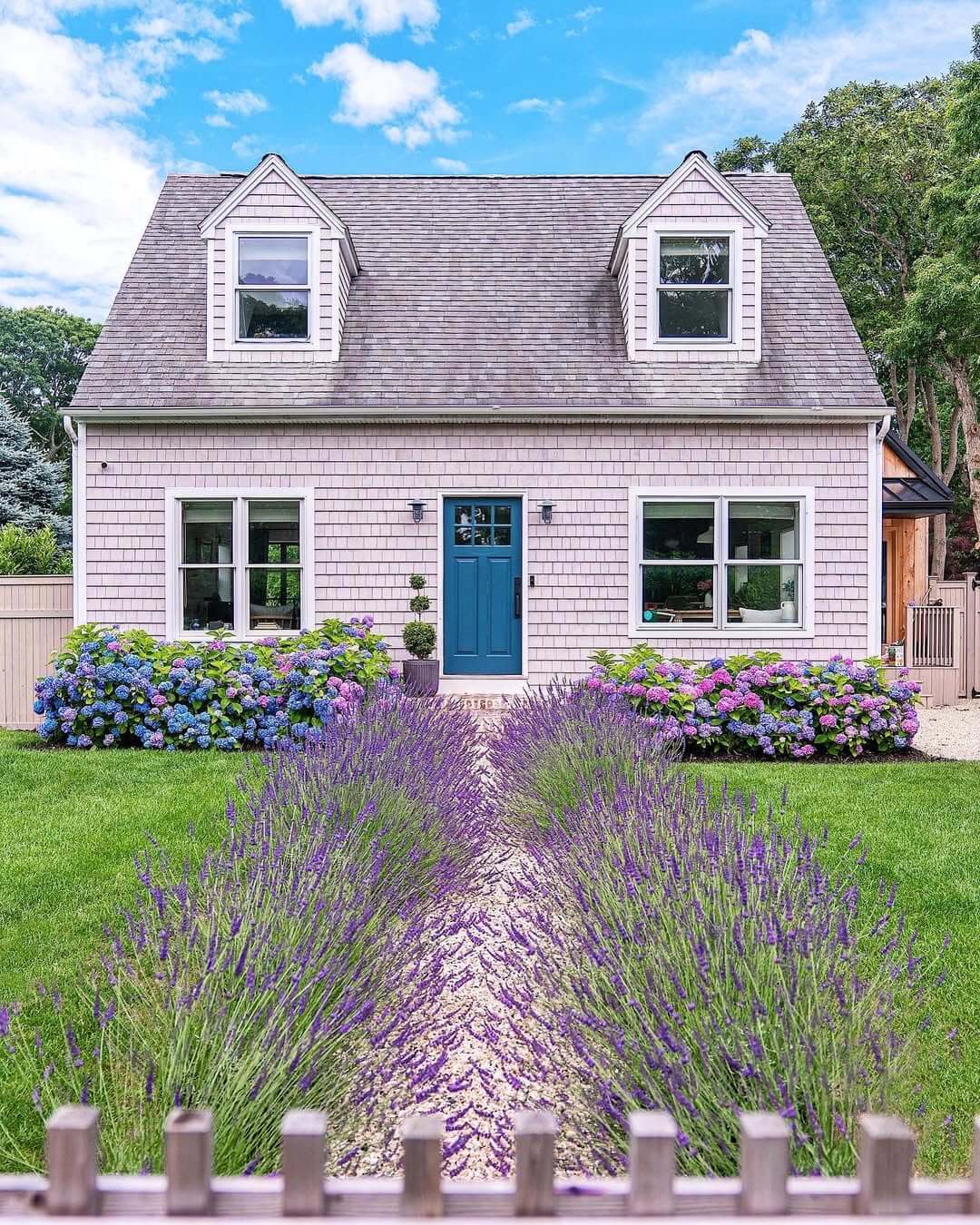
Too many different plants can make gardens feel visually scattered very quickly.
Repeating shrubs, flowers, colors, or ornamental grasses creates rhythm across landscape and helps outdoor spaces feel more connected. Professional designers rely on repetition constantly because it quietly guides eyes through gardens without overwhelming them.
According to Better Homes & Gardens, “Repeating plants, groupings, colors, and shapes throughout your front yard landscaping creates a rhythm that draws your eye through a space.”
Lavender works beautifully for this approach. So do hydrangeas, compact evergreen shrubs, and ornamental grasses. Repeating same plants near walkways, porches, and borders instantly makes landscaping feel calmer and more polished.
One common mistake is using too many unrelated plant varieties in small spaces, which can make even healthy landscaping feel cluttered and visually overwhelming. Fewer varieties repeated strategically almost always look cleaner and more refined.
Mix Evergreen Shrubs With Seasonal Flowers
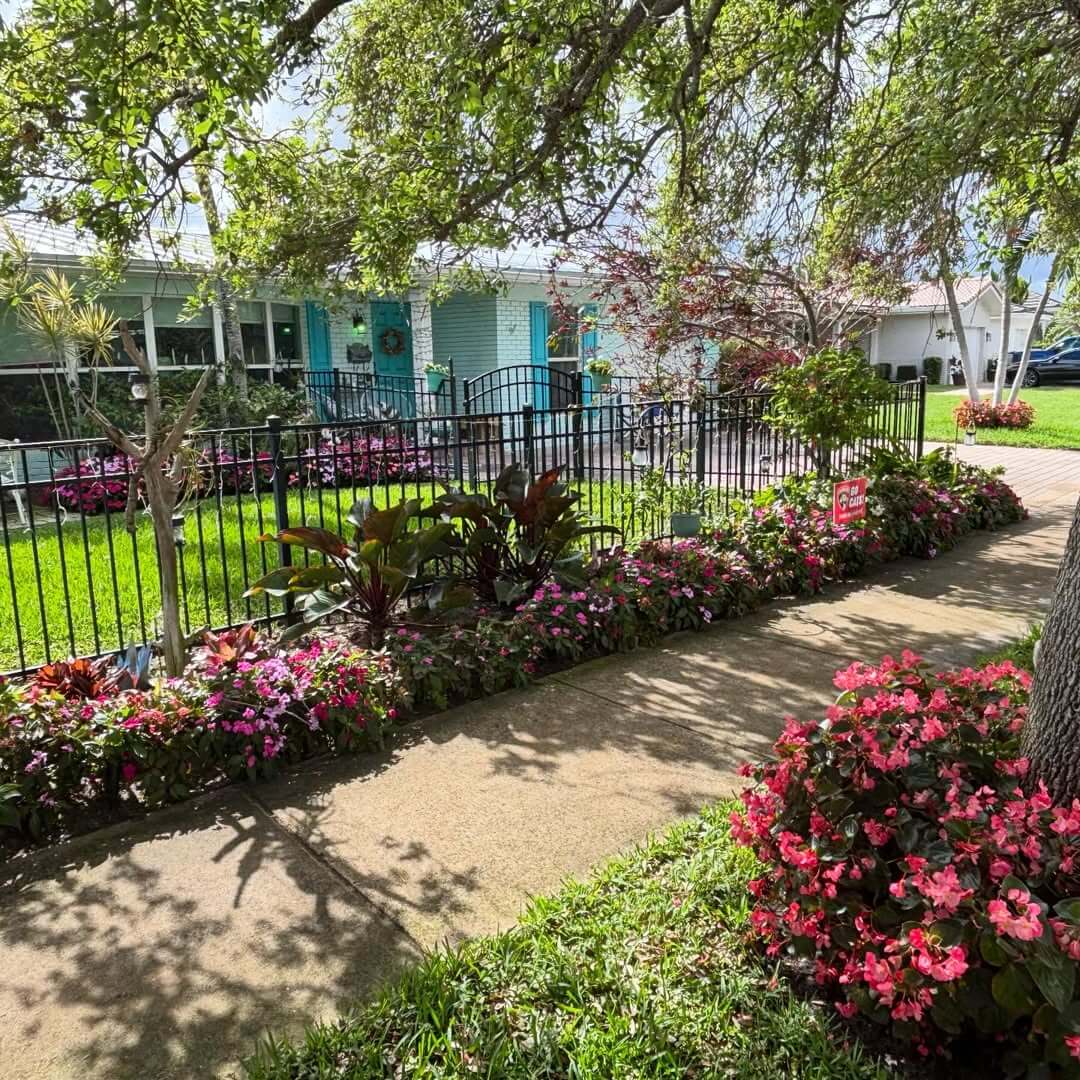
Gardens designed only around spring blooms often feel empty during colder months.
Evergreen shrubs help solve that problem because they provide structure year-round, even after flowers fade. Seasonal blooms can then rotate around them without entire landscape losing shape or balance.
Boxwoods, dwarf hollies, and compact conifers work especially well as foundation plants because they anchor garden beds throughout every season while flowers bring changing color and texture.
In fact, Gardeners’ World advises, “Make sure you plant for every season – not just spring and summer.”
One combination I keep coming back to is evergreen shrubs mixed with hydrangeas and ornamental grasses. Even after flowering season ends, landscape still feels layered and complete instead of bare or lifeless.
Frame Walkways With Low Garden Borders
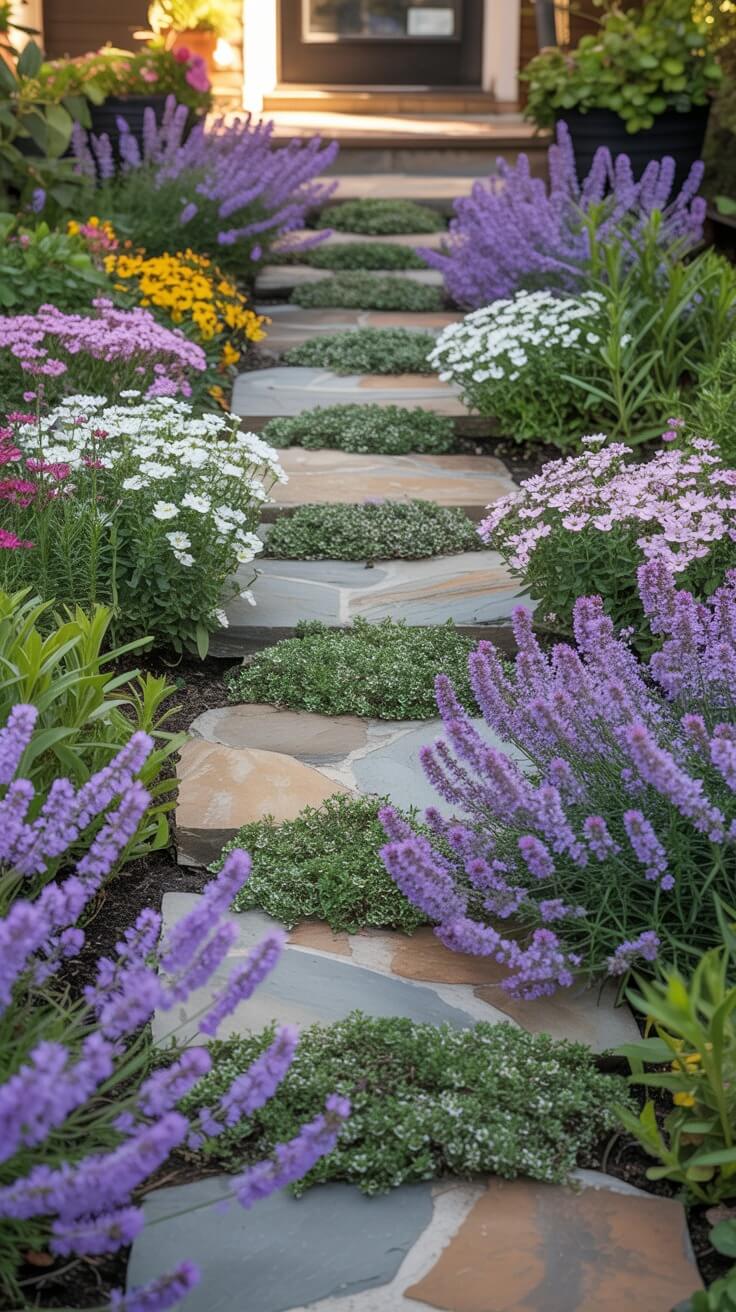
Walkways should feel connected to landscaping, not separated from it.
Low garden borders soften hard edges around stone paths, brick walkways, and concrete entrances while naturally guiding attention toward front door. Even narrow flower beds beside pathways can make entrances feel noticeably warmer.
Lavender, creeping thyme, dwarf liriope, and compact flowers work especially well here because they add texture without overwhelming walking space.
Many beautiful homes don’t necessarily rely on expensive materials. Instead, they frame pathways carefully with repeated planting that creates gentle visual flow from curb to porch.
For smaller homes, narrow layered borders often work better than oversized flower beds because they maintain openness while still adding curb appeal.
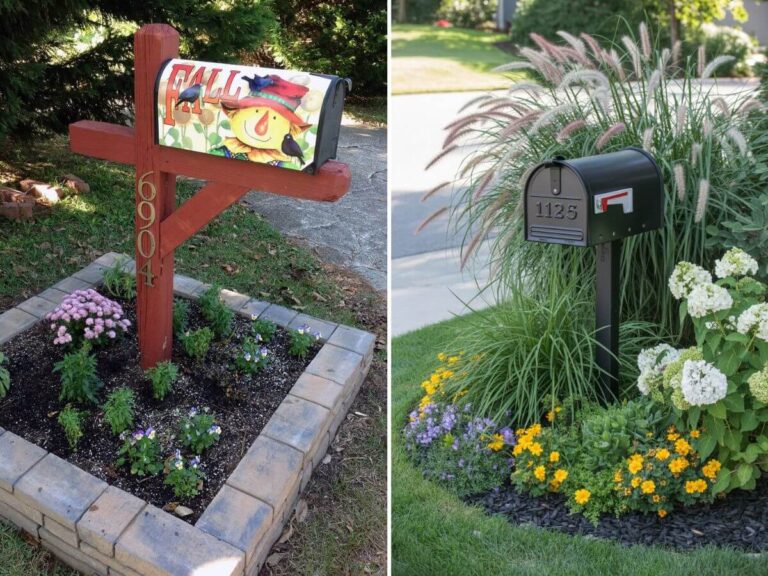
Use Mulch and Edging to Make Gardens Look Cleaner
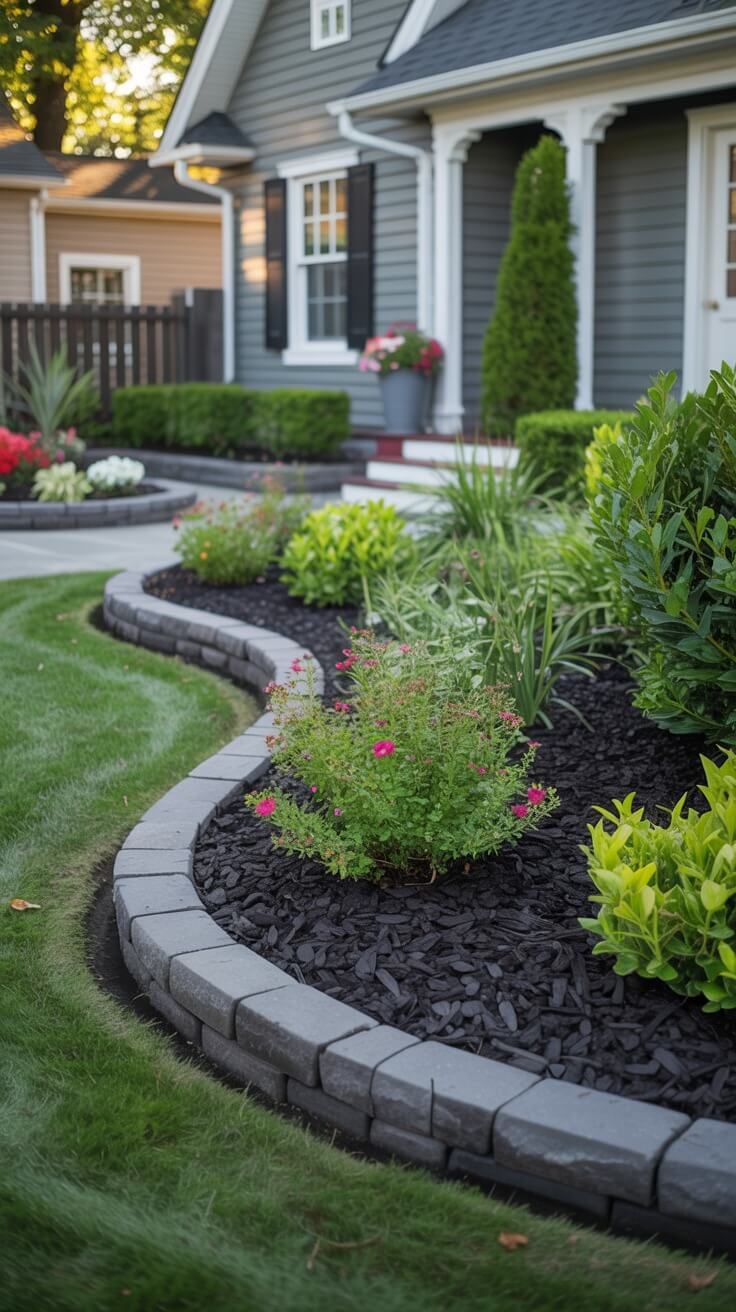
Clean edging might be one of most overlooked landscaping upgrades.
Sharp borders between mulch, lawn, and planting beds instantly make gardens feel more maintained and professionally designed. Without edging, even beautiful plants can start looking messy surprisingly fast.
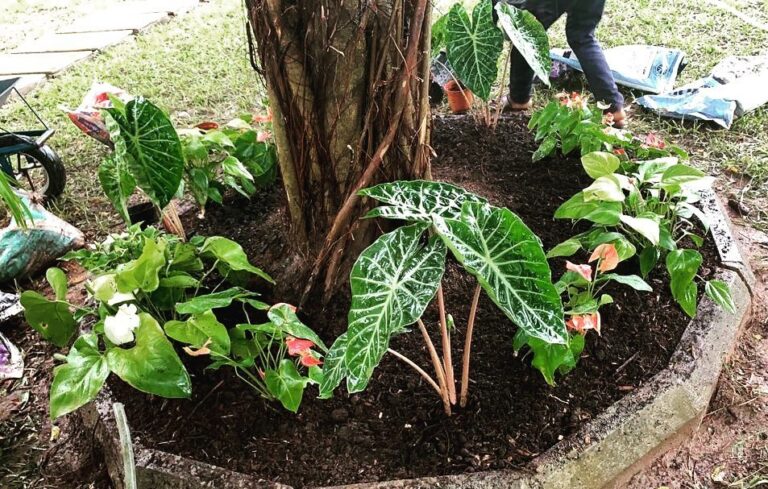
Dark mulch creates especially strong contrast around green shrubs and colorful flowers, helping plants stand out more clearly from surrounding lawn. Stone edging, brick borders, or metal landscape edging can also create structure without making gardens feel overly formal.
One simple weekend refresh with fresh mulch and cleaner bed lines often creates bigger visual improvement than adding entirely new plants.
Create a Focal Point Near the Entrance
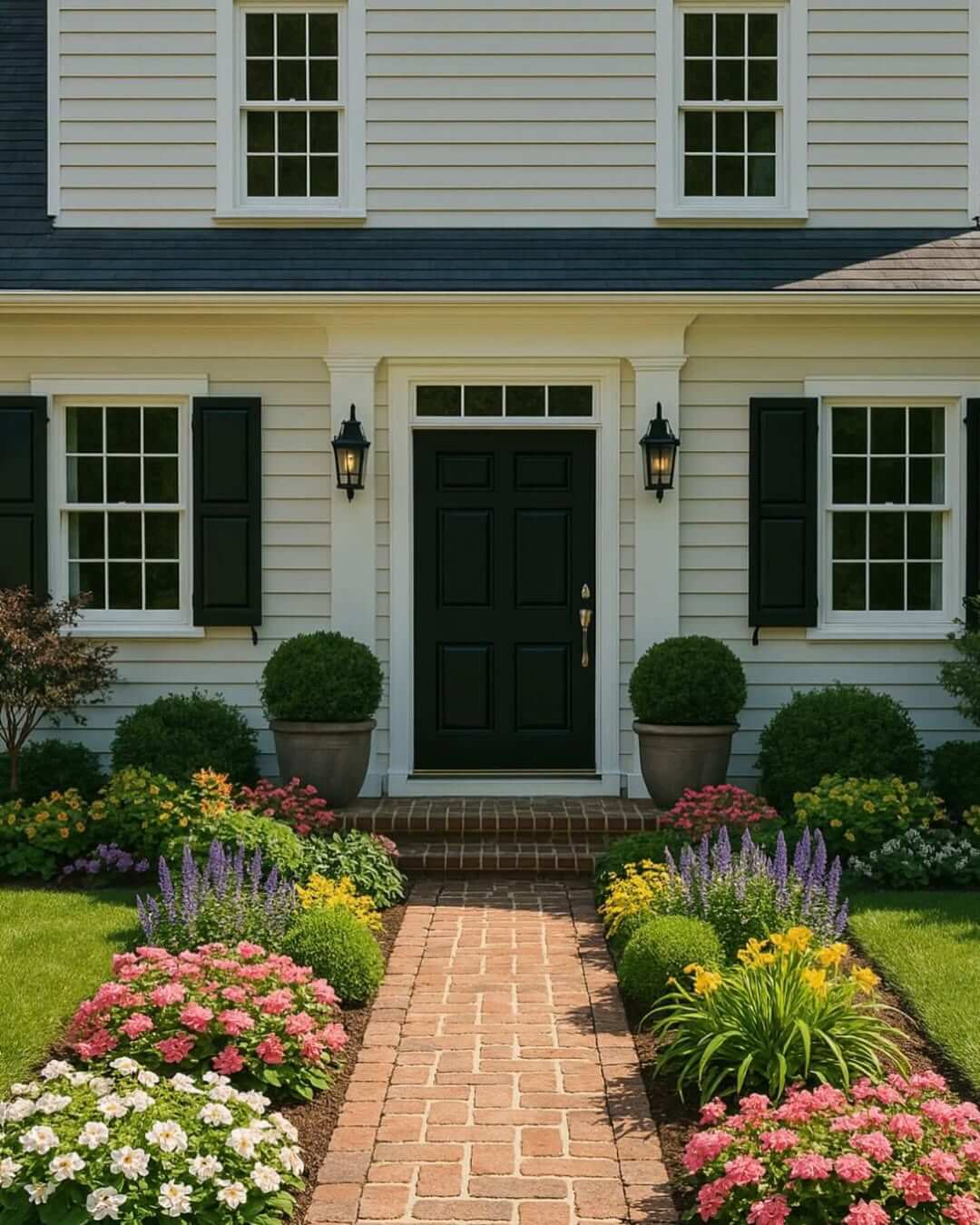
Every memorable front yard usually has one feature that quietly anchors entire design.
Sometimes it’s flowering tree near walkway. Sometimes layered hydrangeas beside porch. Sometimes oversized planter near entry steps. Without focal point, gardens can feel visually scattered even when landscaping itself looks beautiful.
Japanese maples work especially well for smaller front yards because shape and color naturally draw attention without overwhelming surrounding space. Large planters filled with seasonal flowers can also create strong visual impact near entrances.
Most welcoming homes guide attention naturally toward front door instead of forcing eyes to wander randomly across yard.
Add Landscape Lighting for Evening Curb Appeal
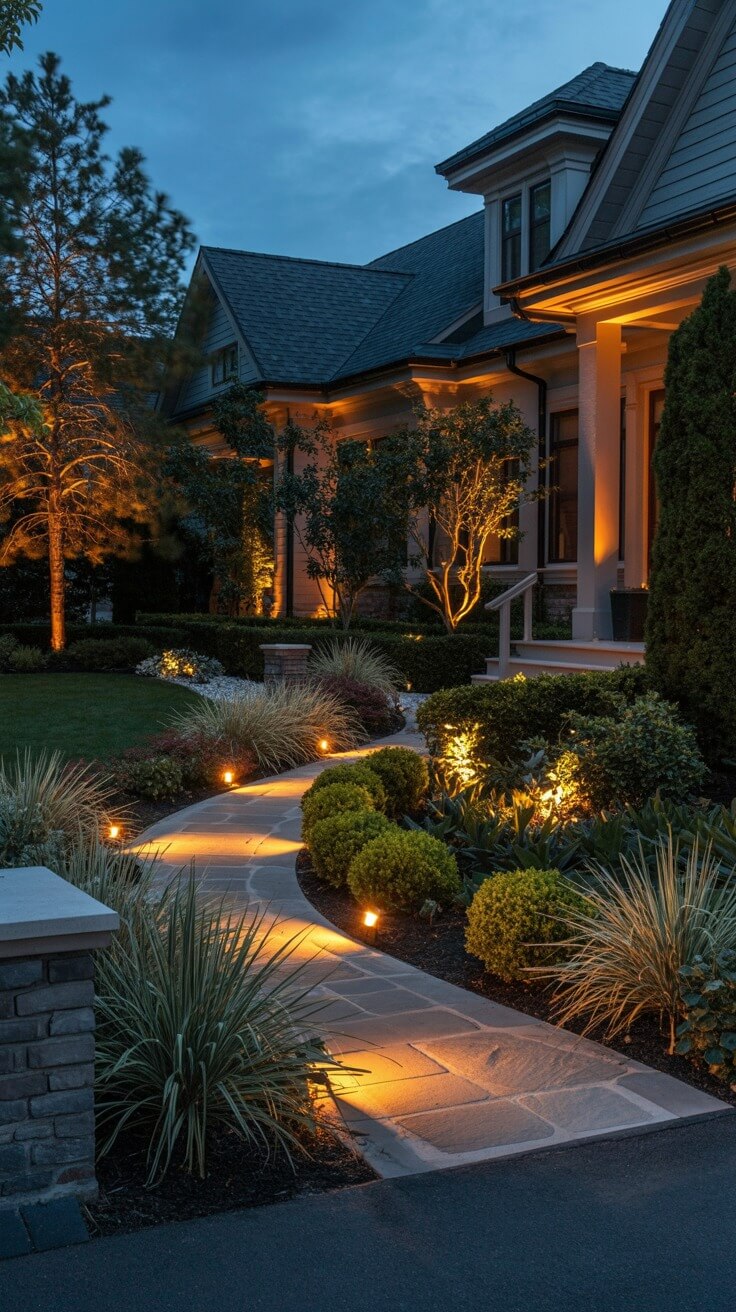
Lighting transforms gardens more than most homeowners expect.
Soft pathway lights, uplighting around trees, or warm porch lighting can make even simple landscaping feel elegant during evenings. Harsh lighting usually feels commercial. Softer lighting feels calm and welcoming.
One of easiest upgrades is adding low solar lights beside pathways or garden borders. They improve safety while also highlighting texture, curves, and planting layers after dark.
Warm lighting reflecting across shrubs, stone edging, and ornamental grasses creates depth that often disappears completely at night without illumination.
Mix Textures Instead of Only Adding More Flowers
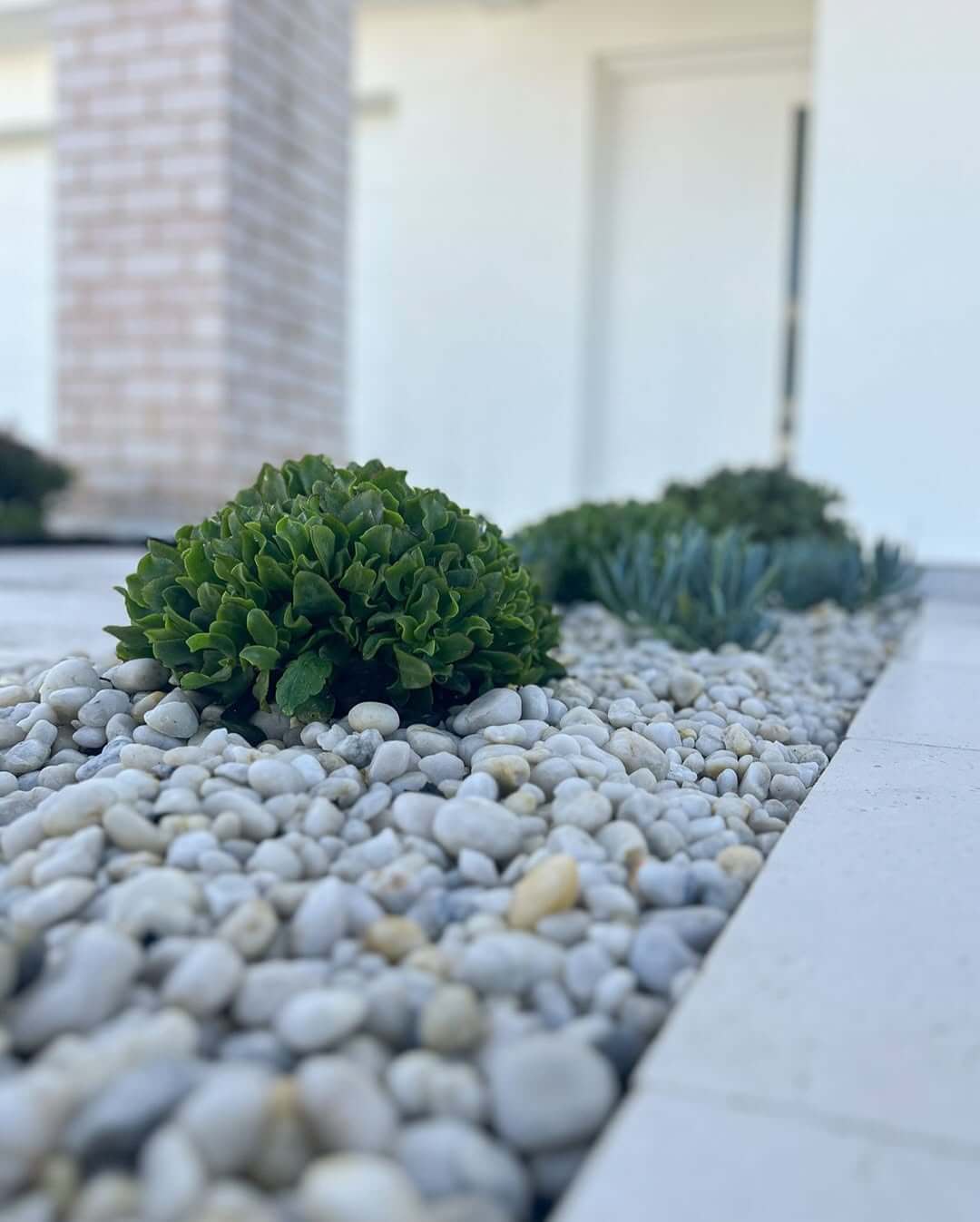
More flowers don’t always create better gardens.
Texture matters just as much as color. Combining ornamental grasses, shrubs, stone, mulch, flowers, and varied foliage creates layered visual interest that keeps outdoor spaces feeling rich without overcrowding them.
Soft grasses beside structured shrubs create contrast. River rock beside flowering borders adds balance. Broad-leaf plants mixed with delicate blooms prevent gardens from feeling repetitive.
Some of most beautiful front yard garden designs actually use fewer flowers than people expect. Instead, they focus on combining textures thoughtfully so landscapes still feel interesting throughout every season.
Choose Front Yard Plants That Match Your Home Style
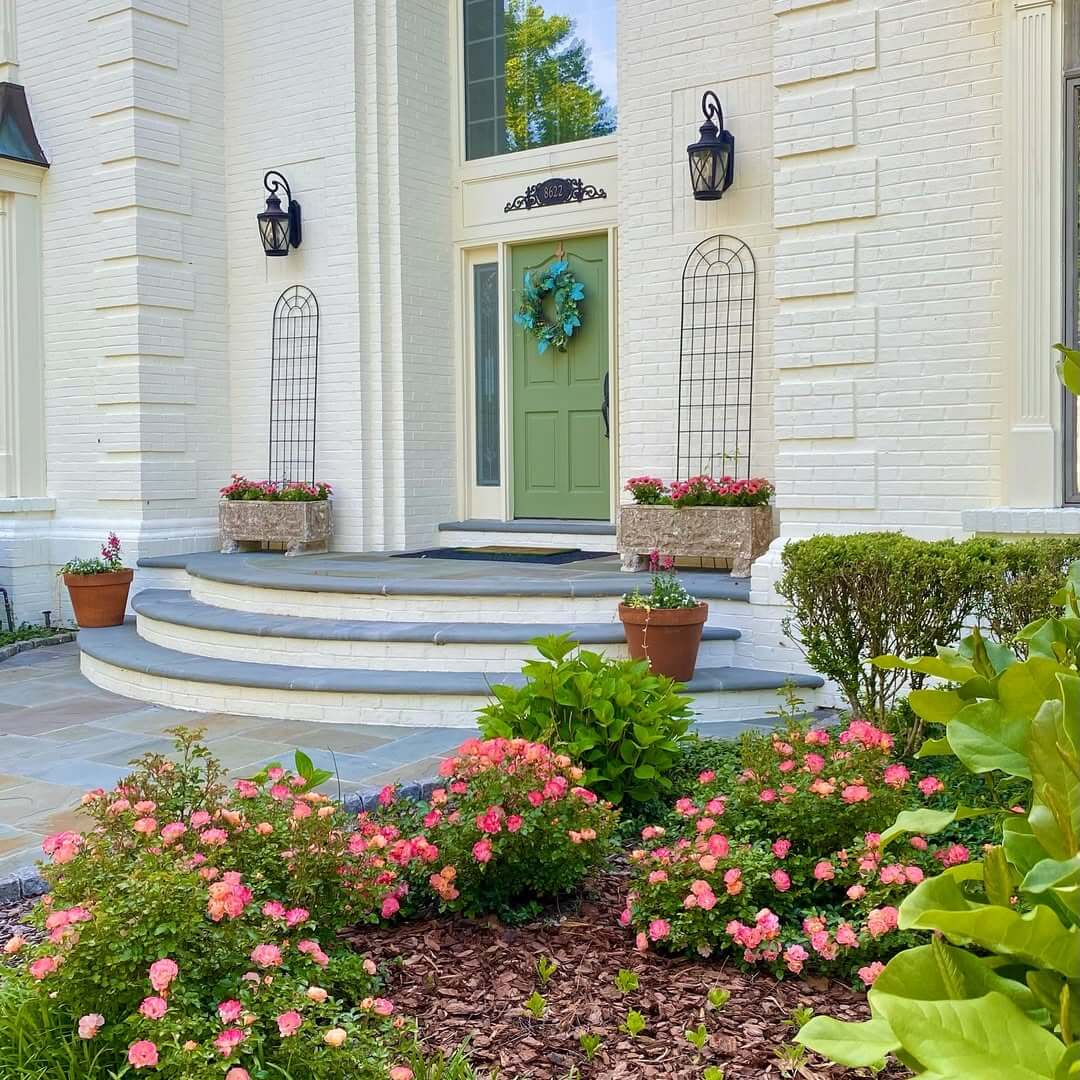
Plant choices should feel connected to architecture surrounding them.
Cottage-style homes often pair beautifully with softer flowers, layered greenery, and curved garden beds. Modern homes usually look stronger with cleaner lines, repeated shrubs, ornamental grasses, and structured planting. Farmhouse landscapes often sit somewhere in between with layered textures and relaxed symmetry.
One mistake many homeowners make is copying landscaping trends that clash completely with style of their home. Even expensive gardens can feel disconnected when shapes, colors, and plant choices fight against architecture.
Outdoor spaces usually feel most welcoming when everything works together naturally instead of competing for attention.
Final Thoughts
Beautiful front yard gardens rarely come from one expensive feature. Most welcoming landscapes rely on smaller intentional choices layered together over time.
Curved beds soften rigid spaces. Repeated plants create rhythm. Evergreens provide year-round structure while seasonal flowers bring changing color and personality. Even simple walkway borders or cleaner edging can dramatically improve curb appeal without requiring major renovation.
Most importantly, front yard garden design should feel approachable and livable rather than overly complicated or difficult to maintain.
Sometimes all it takes is better flow, stronger layering, and little more intention to make entire home feel warmer from very first glance.