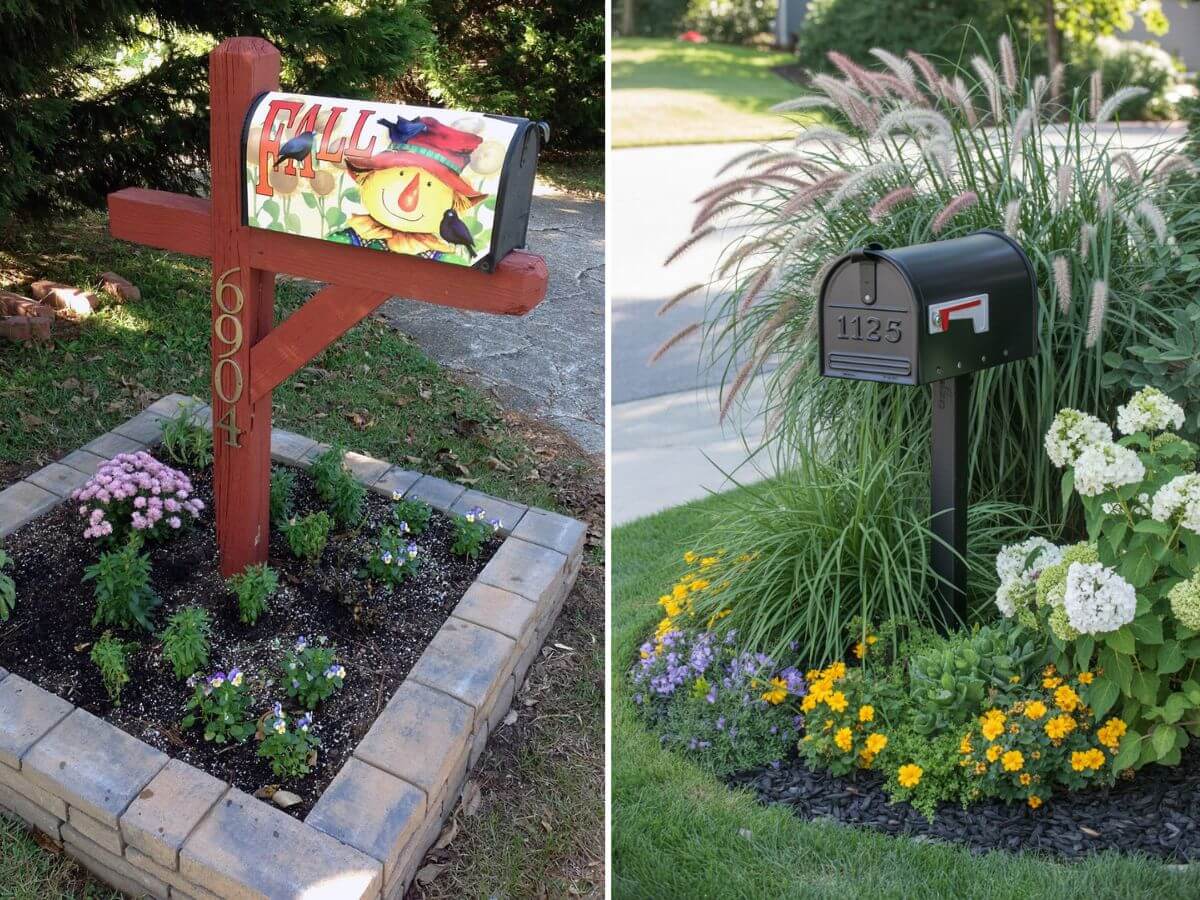
Mailbox Landscaping Ideas That Make Your Front Yard Look Finished
Mailbox areas are easy to ignore until entire front yard starts feeling incomplete.
Everything near porch might look polished. Lawn may be freshly cut. Flower beds could already be planted beautifully. But one bare mailbox surrounded by patchy grass or random weeds can quietly throw off entire entrance. Small detail. Big visual impact.
I started noticing something similar while driving through neighborhoods with especially welcoming curb appeal. Homes that looked the most finished almost always treated mailbox landscaping as part of overall design instead of separate afterthought near curb.
Repeated plants connected mailbox to front walkway. Curved borders softened harsh driveway edges. Even simple mulch beds made entrances feel more intentional.
And honestly, mailbox landscaping doesn’t need to be oversized or complicated to work well. Most beautiful setups rely on a few smart choices repeated consistently. Better structure. Cleaner edging. Balanced plants. Stronger flow from street to front door.
What surprised me most is how much difference even smaller updates can make. A simple curved border, low-maintenance shrubs, or cleaner mulch lines can completely change how finished an entrance feels without turning landscaping into constant weekend work.
Best part?
Most of these ideas are surprisingly realistic for everyday homeowners, even with smaller front yards or limited landscaping budgets.
Create a Defined Border Around Your Mailbox
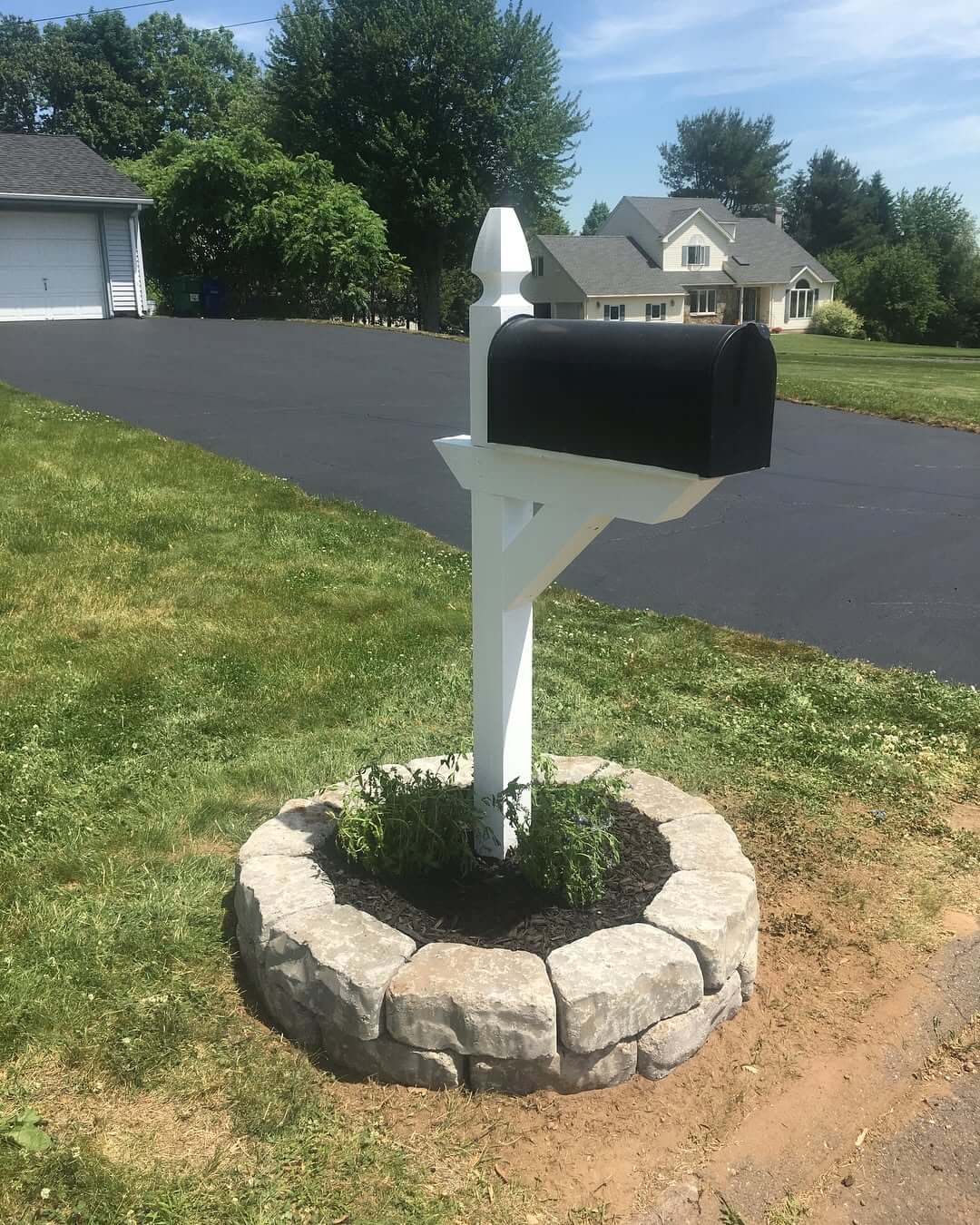
One of quickest ways to make mailbox landscaping feel intentional is creating a clear border around it.
Without edging, curbside planting beds often blend awkwardly into lawn and start looking unfinished very quickly. Defined borders immediately create structure and help even simple planting feel more polished.
Curved mulch beds usually work especially well because they soften rigid driveway lines and help landscaping feel more natural. Brick edging creates classic charm. Stone borders feel timeless. Metal edging works beautifully for cleaner modern homes.
I’ve noticed oversized square mulch patches rarely look as refined as softer curved beds following natural movement of driveway or walkway. Even small curves can completely shift overall atmosphere.
One simple trick that helps immediately is keeping border size proportional to surrounding space. Tiny mailbox with giant mulch island can overwhelm smaller front yards surprisingly fast.
Once structure around mailbox feels intentional, repeating similar plants throughout landscape helps entire yard feel more connected.
Use Repeating Plants to Connect Mailbox Landscaping With Your Front Yard
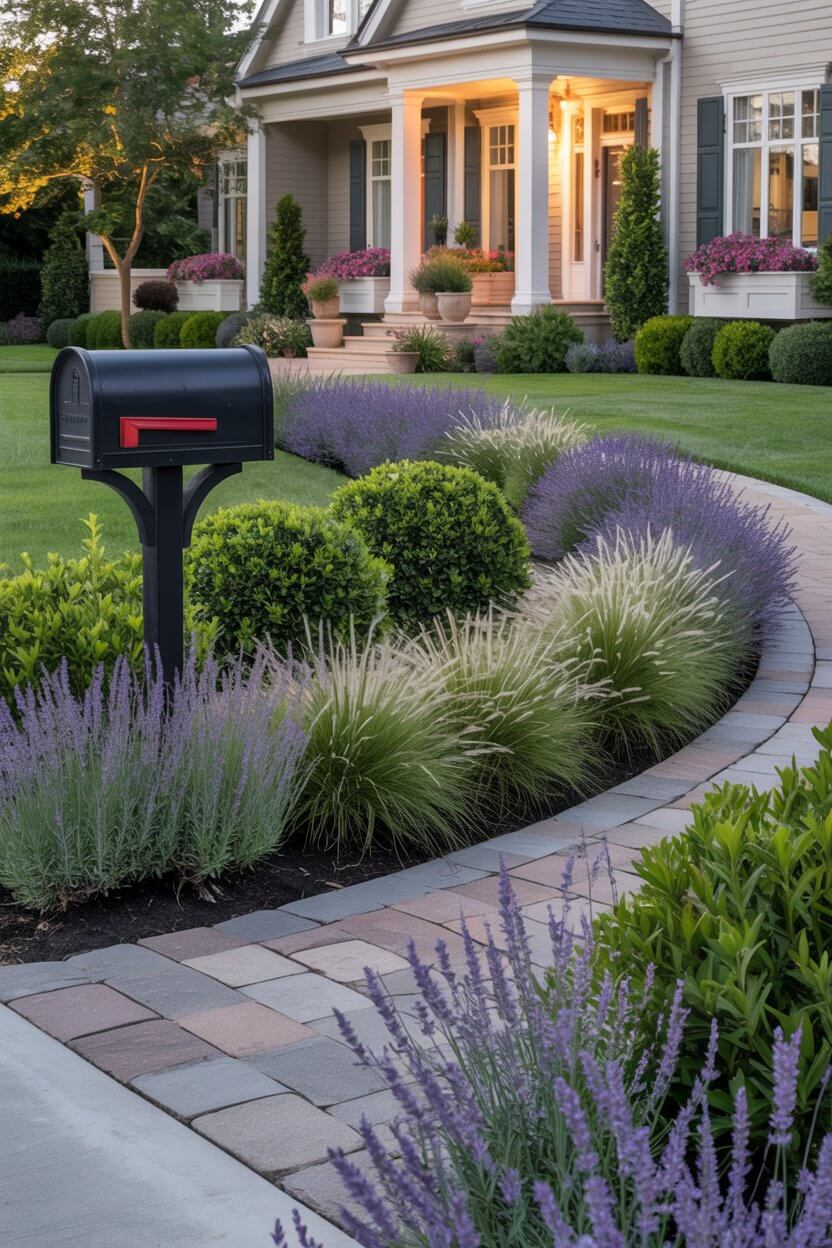
Too many unrelated flowers near mailbox can make curb appeal feel scattered instead of cohesive.
Repeating same shrubs, flowers, or ornamental grasses already used near porch or walkway creates stronger visual flow across entire landscape. Professional-looking homes do this constantly. Nothing feels random. Everything quietly connects together.
Lavender works especially well for mailbox landscaping because shape stays soft while color adds warmth from street view. Compact hydrangeas, boxwoods, and ornamental grasses also repeat beautifully across outdoor spaces without feeling overwhelming.
In fact, The Spruce explains, “If your home has vibrant shutters or a showy mailbox, bring those colors into your flower beds to create a cohesive curb appeal design.”
One mistake I see often is homeowners planting completely different flowers around mailbox than anywhere else in yard. Even healthy landscaping can start feeling disconnected when colors and textures compete too much.
That stronger visual rhythm also makes year-round structure feel even more effective once seasonal flowers begin changing throughout the year.
Mix Evergreen Shrubs With Seasonal Flowers
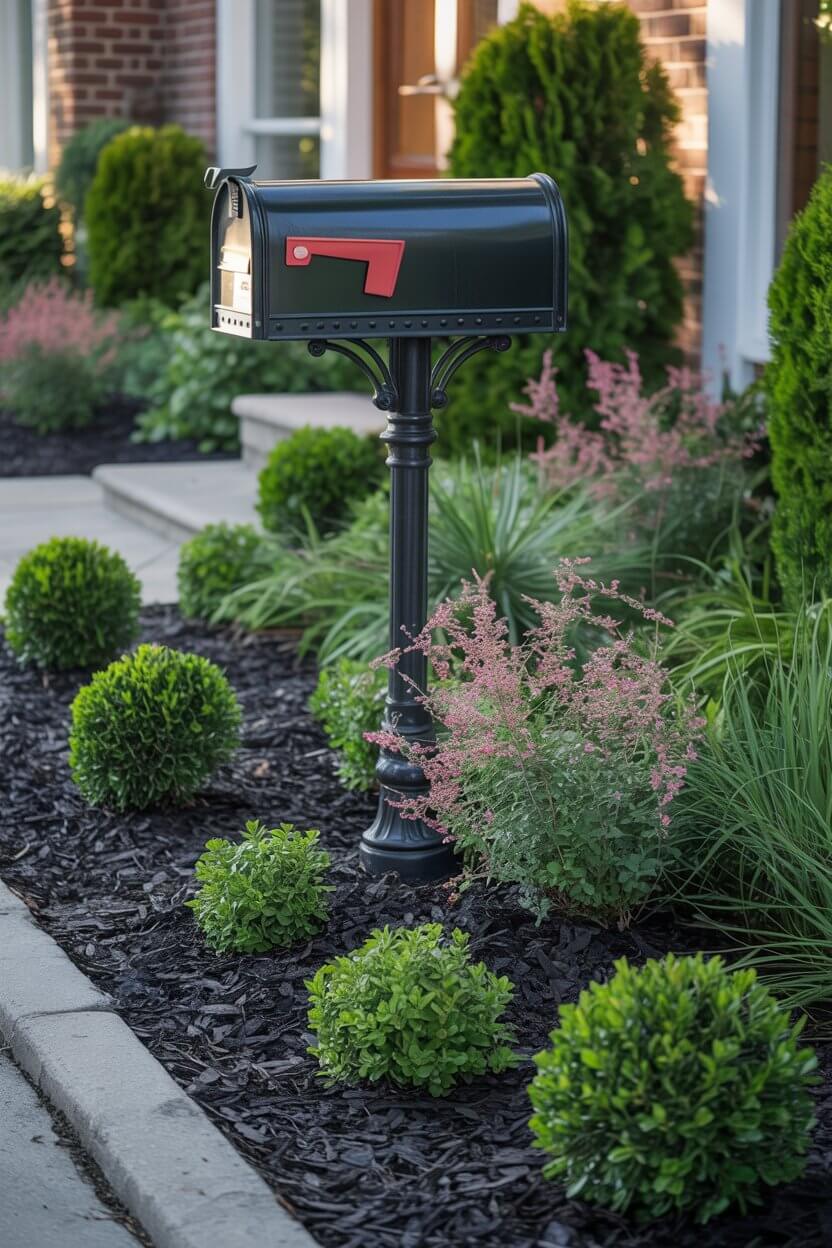
Mailbox landscaping built only around spring blooms often feels empty for half the year.
Evergreen shrubs solve that problem beautifully because they provide structure during every season, even after flowers disappear. Seasonal color can then rotate around them without entire mailbox bed looking bare during colder months.
Compact boxwoods, dwarf hollies, and smaller conifers work especially well because they anchor landscaping without blocking visibility near driveway or curb.
One combination I keep coming back to is low evergreen shrubs surrounded by seasonal flowers and ornamental grasses. Even during winter, landscape still feels intentional instead of forgotten.
For smaller spaces, fewer plants usually look more refined than overcrowded flower beds packed with too many varieties. One evergreen base paired with two complementary flowers often creates cleaner curb appeal than complicated planting mixes.
At that point, managing plant height becomes just as important as choosing the right flowers.
Add Height Without Blocking Visibility
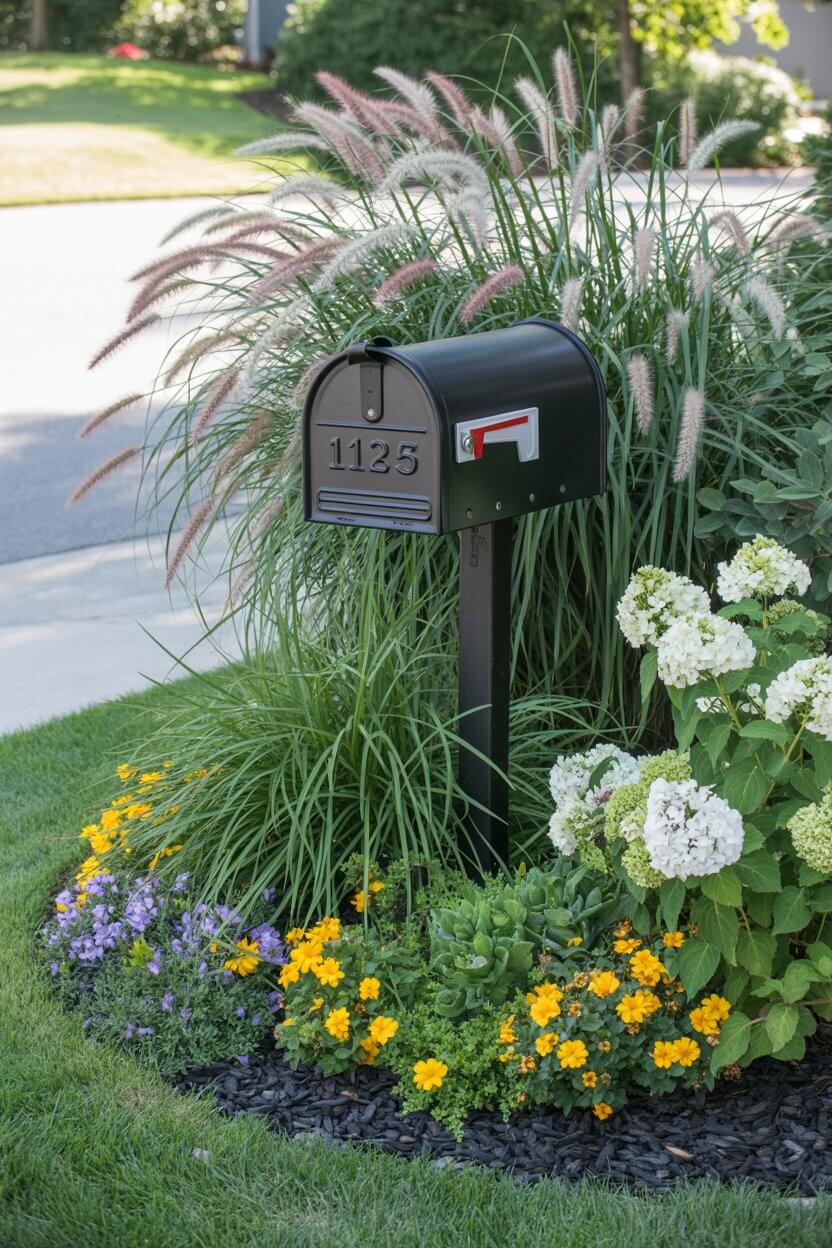
Mailbox landscaping should feel layered, not overgrown.
Tall ornamental grasses and flowering shrubs can add beautiful depth around curbside areas, but placement matters. Plants growing directly in front of mailbox often create frustration quickly, especially when numbers become difficult to read from street.
According to USPS, “Put your house or apartment number on the mailbox.”
That small detail matters more than many homeowners realize. Landscaping should enhance mailbox, not hide it.
One trick that works especially well is placing taller plants slightly behind mailbox while keeping front area lower and cleaner. Layered heights still create richness without affecting visibility or driveway safety.
I’ve also noticed vertical ornamental grasses soften mailbox posts beautifully without making landscaping feel bulky or crowded.
Cleaner height balance also makes ground textures stand out much more clearly.
Use River Rock or Mulch for a Cleaner Low-Maintenance Look
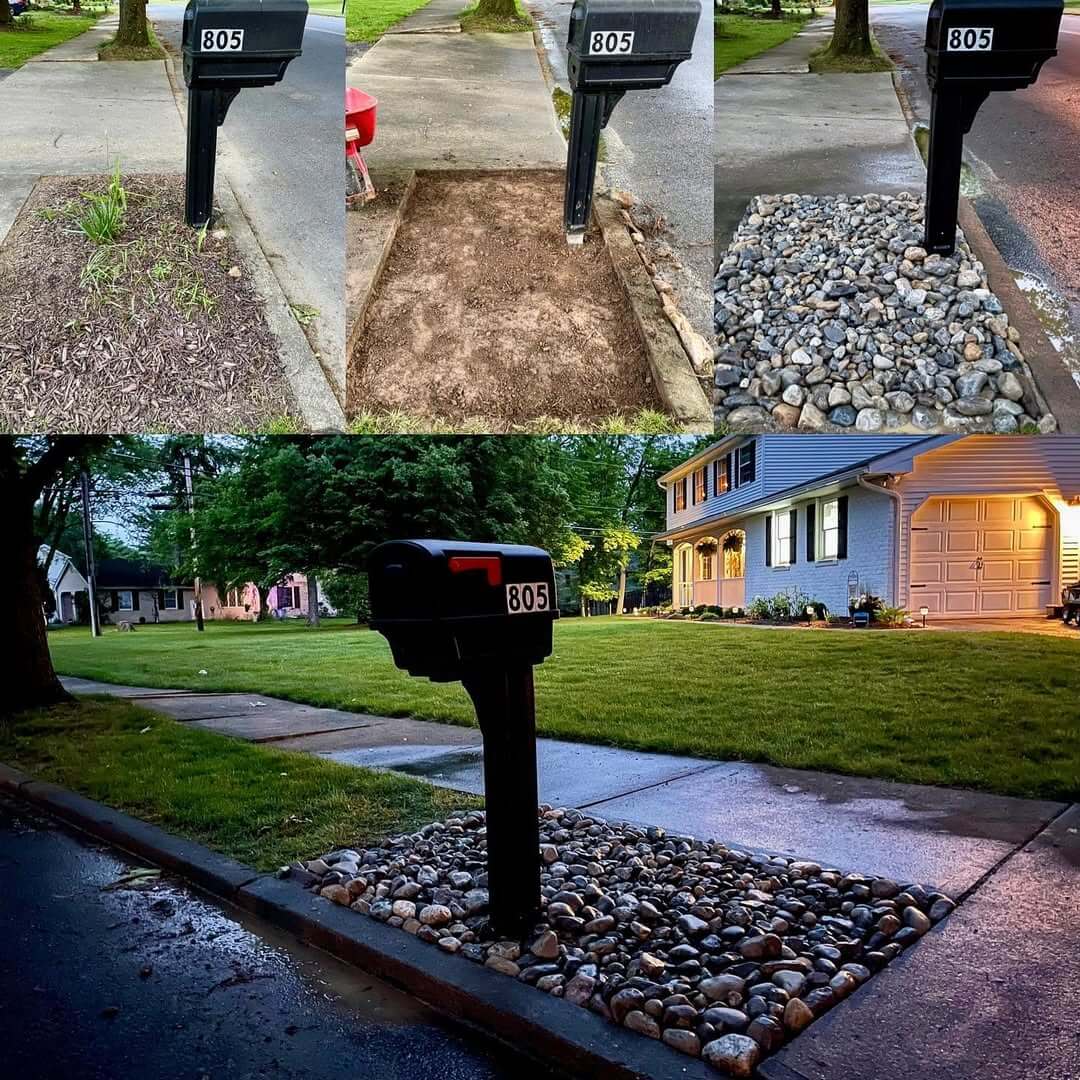
Mailbox areas can become weed magnets surprisingly fast.
That’s why mulch, gravel, and decorative stone make such big difference around curbside landscaping. They create cleaner texture, reduce maintenance, and help flowers stand out more clearly against surrounding lawn.
Dark mulch works beautifully with colorful flowers because contrast instantly sharpens entire planting bed. River rock creates more modern texture and usually lasts longer with less upkeep. Decorative gravel also works well for contemporary homes wanting cleaner minimalist curb appeal.
In fact, Home Depot recommends, “Plant flowers or plants around a curbside mailbox. Or use decorative stone and yard art.”
One practical tip that saves time later is adding landscape fabric underneath mulch or gravel before planting. It dramatically reduces weeds while keeping mailbox beds looking cleaner longer.
Once texture around mailbox feels polished, symmetry can quietly make entire area feel even more refined.
Frame the Mailbox With Symmetry for a More Polished Appearance
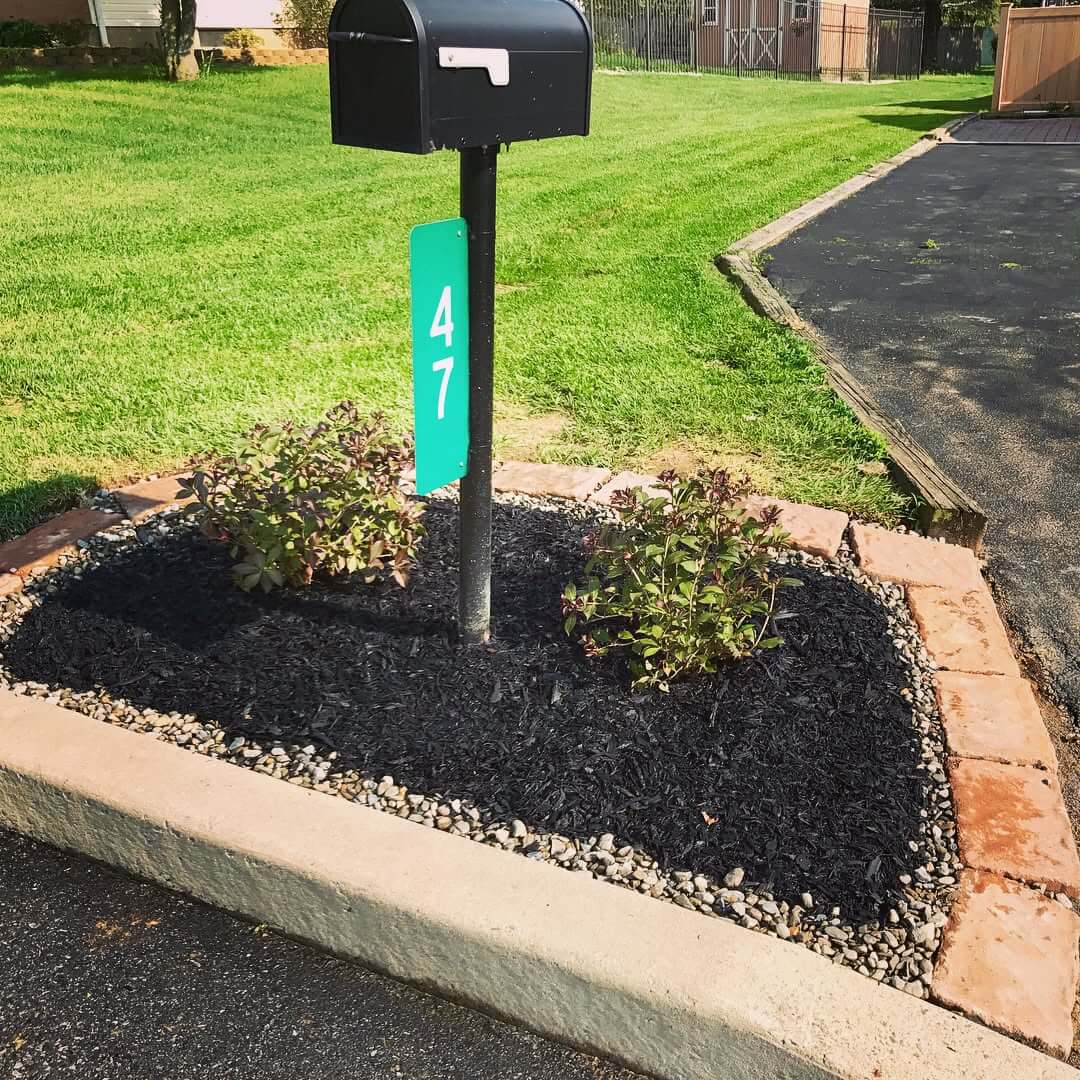
Symmetry instantly makes landscaping feel calmer and more organized.
Even simple mirrored planting on both sides of mailbox creates balanced curb appeal without requiring expensive materials or oversized flower beds. Matching shrubs, repeated flowers, or evenly spaced grasses can completely shift how finished entire entrance feels from street view.
I’ve noticed many upscale-looking homes actually keep mailbox landscaping fairly simple. Difference usually comes down to balance rather than quantity.
Two compact shrubs with low flowers beneath them often look more polished than oversized flower beds filled with too many competing colors.
For smaller mailbox beds, symmetry usually works best with just two shrubs and one repeating flower instead of overcrowding space with too many plant varieties.
Softer symmetry also works beautifully for farmhouse and cottage-style homes because it keeps landscaping relaxed while still feeling intentional.
And once mailbox landscaping feels visually balanced during daytime, lighting becomes next detail that changes entire atmosphere after sunset.
Add Solar Lighting Around the Mailbox
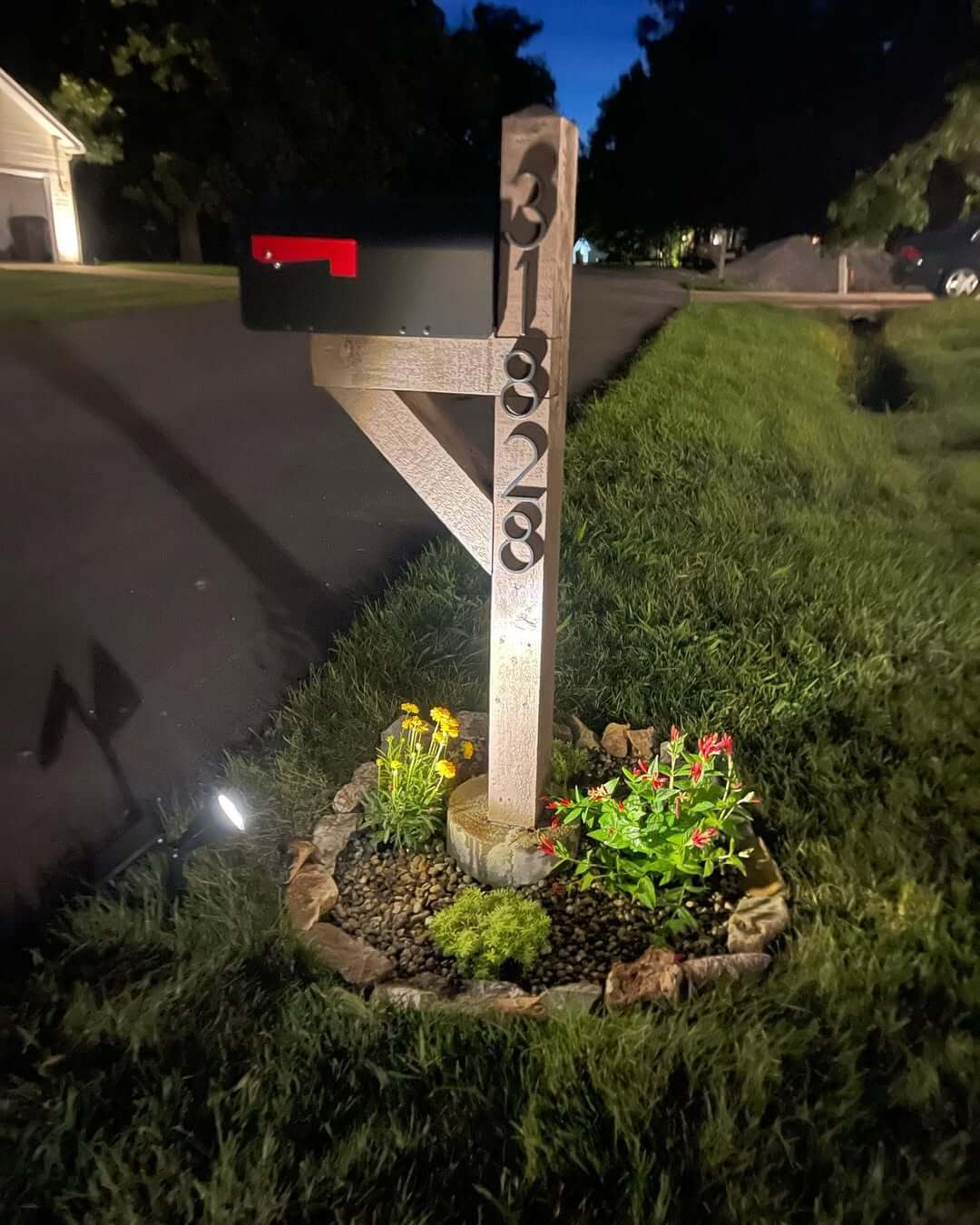
Lighting can completely transform curb appeal at night.
Soft solar lights around mailbox create welcoming glow while improving visibility near driveway and curb. Even simple pathway lights help landscaping feel warmer and more complete during evenings.
One thing I’ve learned is softer lighting almost always looks better than harsh bright fixtures. Warm low lighting highlights flowers, mulch texture, and ornamental grasses without making entrance feel commercial or overdesigned.
Small solar spotlights placed near shrubs or stone edging also create beautiful depth after dark. And because solar lighting requires almost no wiring, it’s one of easiest upgrades homeowners can add in a single afternoon.
Once lighting improves evening curb appeal, texture becomes next thing helping landscaping feel richer during every season.
Mix Textures Instead of Only Adding More Flowers
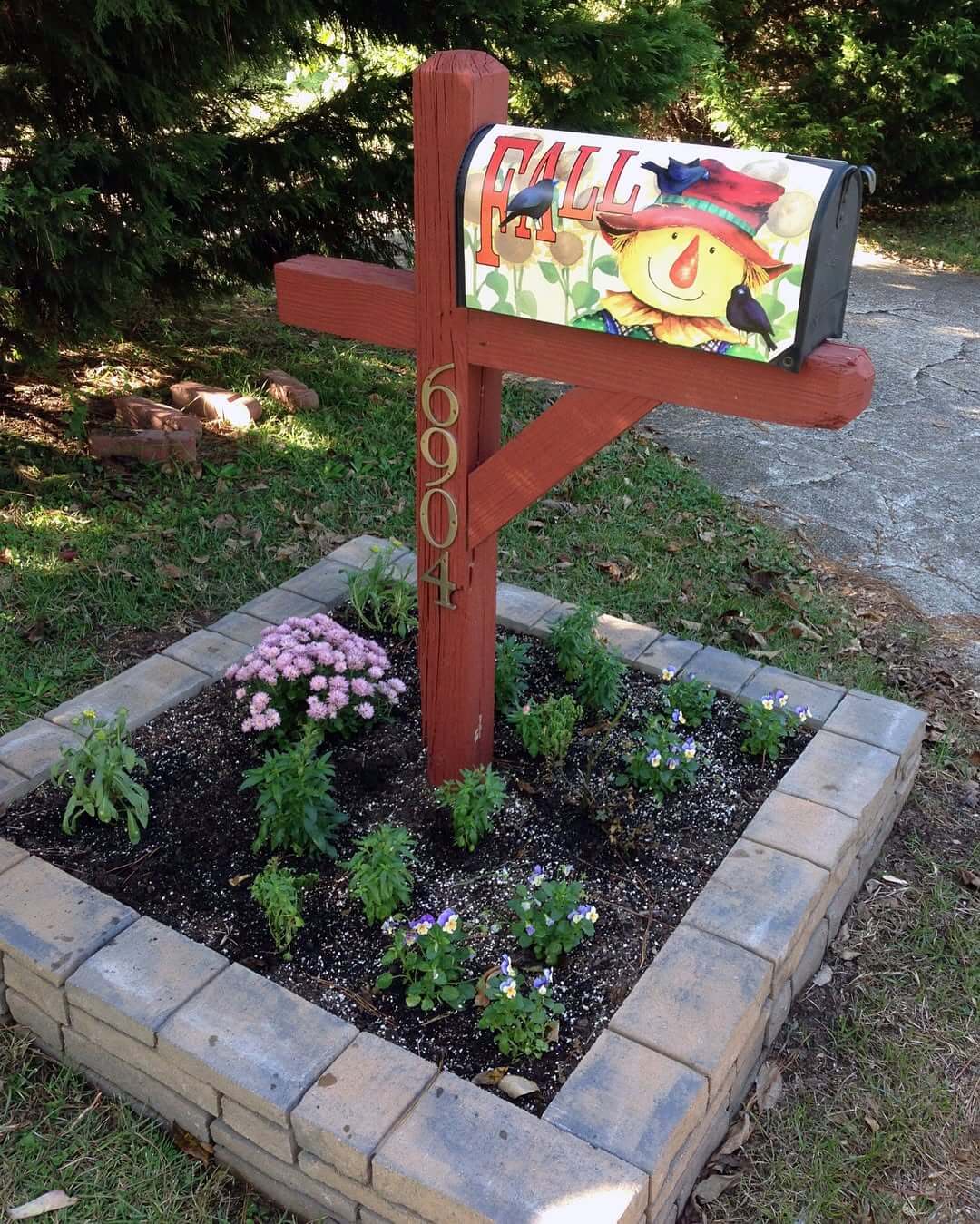
More flowers don’t automatically create better landscaping.
Texture matters just as much as color. Combining ornamental grasses, mulch, stone, evergreen shrubs, and flowering plants creates layered visual interest that keeps curbside landscaping feeling balanced instead of overcrowded.
Soft grasses beside structured shrubs create contrast beautifully. Decorative stone beside flowers adds depth. Broad-leaf plants mixed with delicate blooms prevent planting beds from feeling repetitive.
Some of most beautiful mailbox landscaping ideas I’ve seen actually use fewer flowers than expected. Instead, they rely on texture variation and cleaner structure to create stronger curb appeal from distance.
That balance becomes even more important when landscaping needs to match style of home itself.
Choose Mailbox Landscaping That Matches Your Home Style
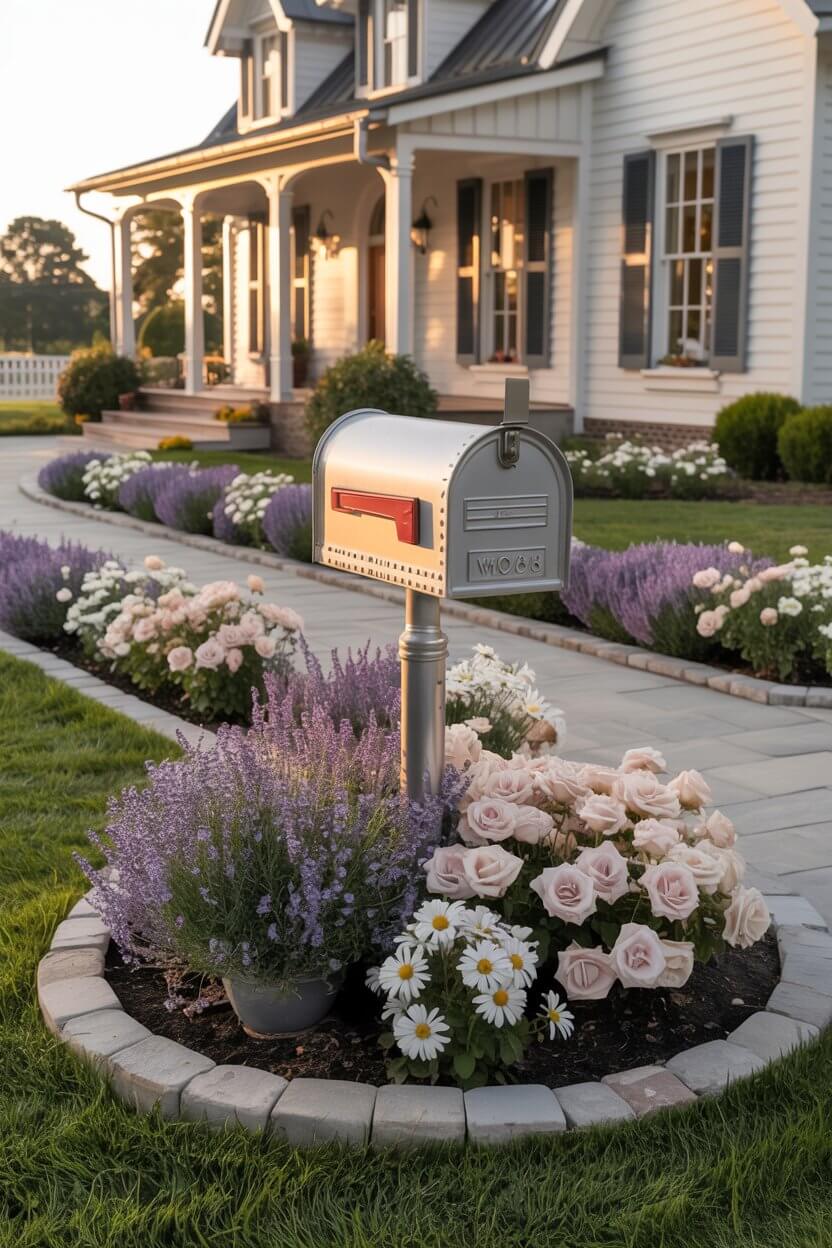
Landscaping feels most natural when it reflects architecture surrounding it.
Cottage-style homes usually pair beautifully with softer flowers, curved borders, and layered greenery around mailbox. Modern homes often look better with cleaner edging, ornamental grasses, gravel, and structured shrubs. Farmhouse landscapes tend to work well with relaxed symmetry and natural stone textures.
One mistake homeowners make often is copying landscaping trends clashing completely with style of house itself. Even expensive mailbox beds can feel awkward when plants, shapes, and materials fight against surrounding architecture.
I’ve noticed homes feel most welcoming when everything flows together naturally from curb to front porch instead of competing for attention.
Avoid These Common Mailbox Landscaping Mistakes
Some mailbox landscaping problems appear small but make entire front yard feel unfinished surprisingly quickly.
Oversized mulch circles are one of biggest examples. Tiny mailbox posts surrounded by giant empty mulch beds usually feel disconnected from rest of landscape.
Too many flower varieties can also create clutter instead of curb appeal. Simpler combinations repeated consistently almost always look more refined.
Another common issue is allowing plants to grow too tall around mailbox numbers or driveway edges. Landscaping should soften space, not create visibility problems.
And finally, high-maintenance flowers requiring constant replacement often become difficult to sustain long-term. Lower-maintenance shrubs, grasses, mulch, and repeated perennial flowers usually create cleaner curb appeal with far less effort.
Final Thoughts
Beautiful mailbox landscaping rarely depends on massive flower beds or expensive materials.
Most finished-looking front yards rely on smaller intentional details layered together thoughtfully over time. Defined borders create structure. Repeated plants improve flow. Evergreens provide year-round shape while flowers bring seasonal personality and warmth.
Even simple upgrades like fresh mulch, cleaner edging, or low solar lighting can completely change how welcoming entire entrance feels from street.
Most importantly, mailbox landscaping should feel connected to rest of yard instead of isolated from it.
Sometimes all it takes is better balance, softer textures, and little more intention to make a front yard finally feel complete.
Also read: