Rent-Friendly Home Upgrades That Look Custom but Aren’t Permanent
For a long time, I thought making a rental feel custom meant disguising everything that made it look like a rental.
The plain walls needed covering. The standard light fixture needed replacing. The awkward kitchen needed fixing. Every empty corner seemed to need another piece of furniture.
But that can turn decorating a rental into an expensive project very quickly.
And when the lease ends, much of that money stays behind.
I’ve come to think about rental decorating differently. Instead of asking, “How can I make this look renovated?” I ask, “What is making this room feel temporary?”
Sometimes it’s the thin curtains. Sometimes it’s one harsh ceiling light. Maybe the rug is too small, the walls feel empty, or everything you own looks as though it was placed wherever it happened to fit.
Those problems don’t require a renovation.
They need better decisions about scale, lighting, storage, texture, and what your eye notices first.
Before you buy anything, take a photo of the room that bothers you most.
Stand in the doorway and take the whole room, not a carefully styled corner.
Keep that photo.
We’re going to use it to figure out which rent-friendly home upgrades can make the biggest difference without turning your security deposit into a decorating budget.
Start With What Makes Your Rental Feel Temporary
Look at the photo you just took.
What catches your eye first?
Don’t start making a shopping list yet.
Instead, find three things that make the room feel unfinished.
Maybe the curtains barely cover the window. Perhaps your sofa sits on a rug that looks too small beneath it. The room might have plenty of furniture but still feel flat after sunset.
You may notice something else entirely.
Write those three things down.
Now choose the one that occupies the most visual space.
I like starting there because one large improvement can change the way everything around it feels.
If the windows look bare, another decorative pillow isn’t going to solve that.
If the lighting feels harsh, buying another piece of wall art probably won’t make evenings feel much better.
Fix the larger visual problem first.
For many rentals, that’s the window.
Make the Windows Look More Finished
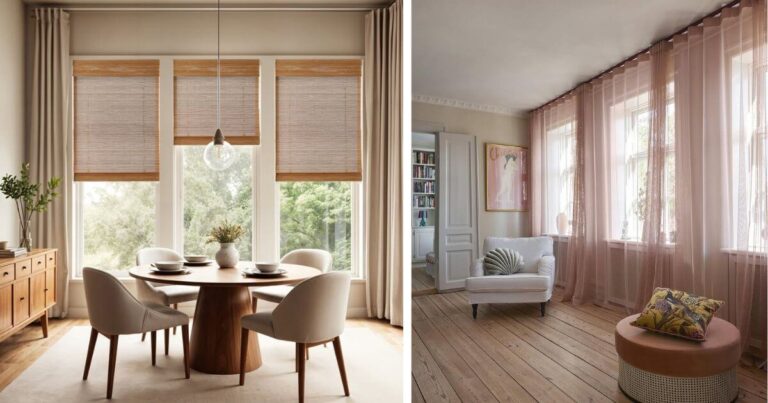
Rental curtains have a habit of looking temporary even when they’ve been hanging there for three years.
Sometimes the fabric isn’t the problem.
It’s the proportion.
Stand across the room and close your curtains.
Do they still have soft folds, or do they stretch almost flat across the window?
Now look at the length.
Do they reach the floor, or stop at an awkward point above it?
Then look at the rod.
If it’s squeezed tightly around the window frame, the entire treatment may look smaller than it needs to.
Before replacing anything, try changing the way you see the window.
Use painter’s tape to mark where a higher or slightly wider rod position might sit.
Don’t drill.
You’re testing.
Walk across the room and look again.
You may find that the window suddenly appears more generous simply because you’re imagining the fabric over a larger area.
If your lease doesn’t allow new holes, don’t assume you need to abandon curtains completely.
Work within whatever mounting methods your lease and wall surface allow, and focus on what you can control safely.
Fullness, fabric, length, and how the curtains relate to the room can still change the result.
Once the windows feel softer during the day, look at what happens to the room after sunset.
Replace Harsh Lighting With Layers You Can Take With You

Wait until evening and turn off the main ceiling light.
What disappears?
Maybe the sofa corner becomes gloomy.
Perhaps the bedroom has no comfortable light except the lamp beside the bed.
Or your living room goes from bright overhead lighting to almost completely dark.
That’s where I’d start.
You don’t necessarily need to touch the existing ceiling fixture.
Bring light into the places where you actually live.
A table lamp can soften a console.
A floor lamp can give a reading chair its own pool of light.
A plug-in sconce can free up space on a tiny nightstand.
Battery-operated picture lighting can bring attention to art without requiring electrical work.
The Spruce also makes a good case for layering light in its rental-friendly lighting guide. Interior designer Kristen McGowan recommends, “For a bright, cozy, and balanced look, try to incorporate three light sources in every space.”
That doesn’t mean you need three expensive fixtures. A table lamp, floor lamp, and plug-in or battery-operated light can give different parts of the room their own glow without relying entirely on one harsh overhead fixture.
Try this tonight.
Turn off the ceiling fixture and use only your portable lights.
Then photograph the room.
If one area still looks like a dark hole, that’s where another light may do more for the room than another decorative object.
Lighting changes what you notice on the walls, furniture, and floor.
And the floor is where I’d look next.
Use a Bigger Rug to Change the Scale of the Room
A rug can technically fit in a room and still look too small for everything around it.
I’ve found photos particularly useful for spotting this.
When you’re standing inside a room, you see the sofa, coffee table, chairs, and rug as separate things.
A photograph makes their proportions much easier to compare.
Before ordering a larger rug, grab painter’s tape again.
Mark the dimensions on the floor.
Put enough tape down that you can understand where the edges would land in relation to your furniture.
Then live with those lines for a day.
Walk through the room.
Sit on the sofa.
Open nearby doors.
Look at the outline from the hallway.
If you’re testing a bedroom rug, step out of bed onto the taped area and see where the imaginary rug would end.
This little experiment can keep you from ordering a rug that looks generous on a product page and strangely tiny once it arrives.
It can also help disguise flooring you don’t love without changing anything permanently.
When you move, the rug moves too.
The same thinking works vertically.
Your walls can change without becoming construction projects.
Make Blank Walls Feel Intentional
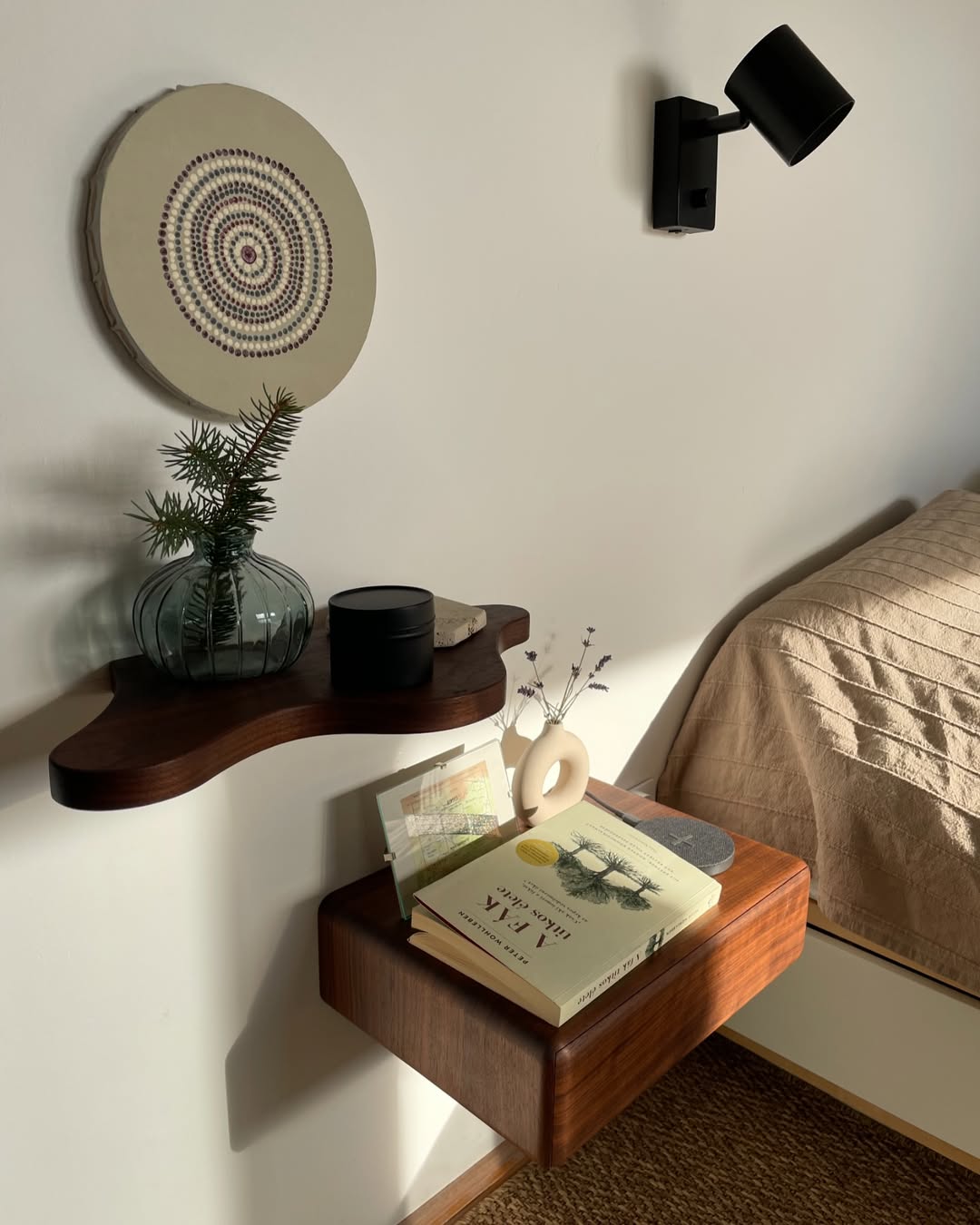
A blank rental wall can create a strange kind of decorating panic.
It feels empty, so you start filling.
A little frame goes up.
Then another.
Maybe a tiny shelf.
Then a print to fill the gap.
Before long, the wall has plenty on it but still doesn’t feel finished.
Try testing scale before adding more.
If you’re considering a large piece of artwork, cut or tape together paper until it roughly matches the dimensions.
Put the paper on the wall using a method suitable for your surface.
Then leave the room.
Walk back in.
Does the size make sense from the doorway?
Sit on the sofa or bed and look again.
You can use the same trick for a mirror or a group of frames.
The point isn’t to cover the wall.
It’s to give your eye somewhere intentional to land.
And if the wall color itself bothers you, don’t immediately assume it has to disappear.
Work With the Wall Before You Work Against It
Rental wall colors can be frustrating because you didn’t choose them.
Maybe yours is colder than you’d like.
Maybe it’s beige when you love color.
Perhaps it’s a gray that makes everything you own feel slightly off.
Before covering it, look for something in your room that makes the color easier to live with.
If the walls are warm beige, bringing in wood, cream fabric, and warmer textiles may make the color feel more connected.
If they’re cool, artwork can introduce warmer shades without requiring you to change the wall itself.
Even curtains can shift the balance because they occupy so much vertical space.
Take another photo after changing the things around the wall.
You may discover that the paint wasn’t the entire problem.
And if you still want a temporary surface treatment, test it before committing to the whole wall.
Treat Peel-and-Stick Products as an Accent, Not a Rescue Plan
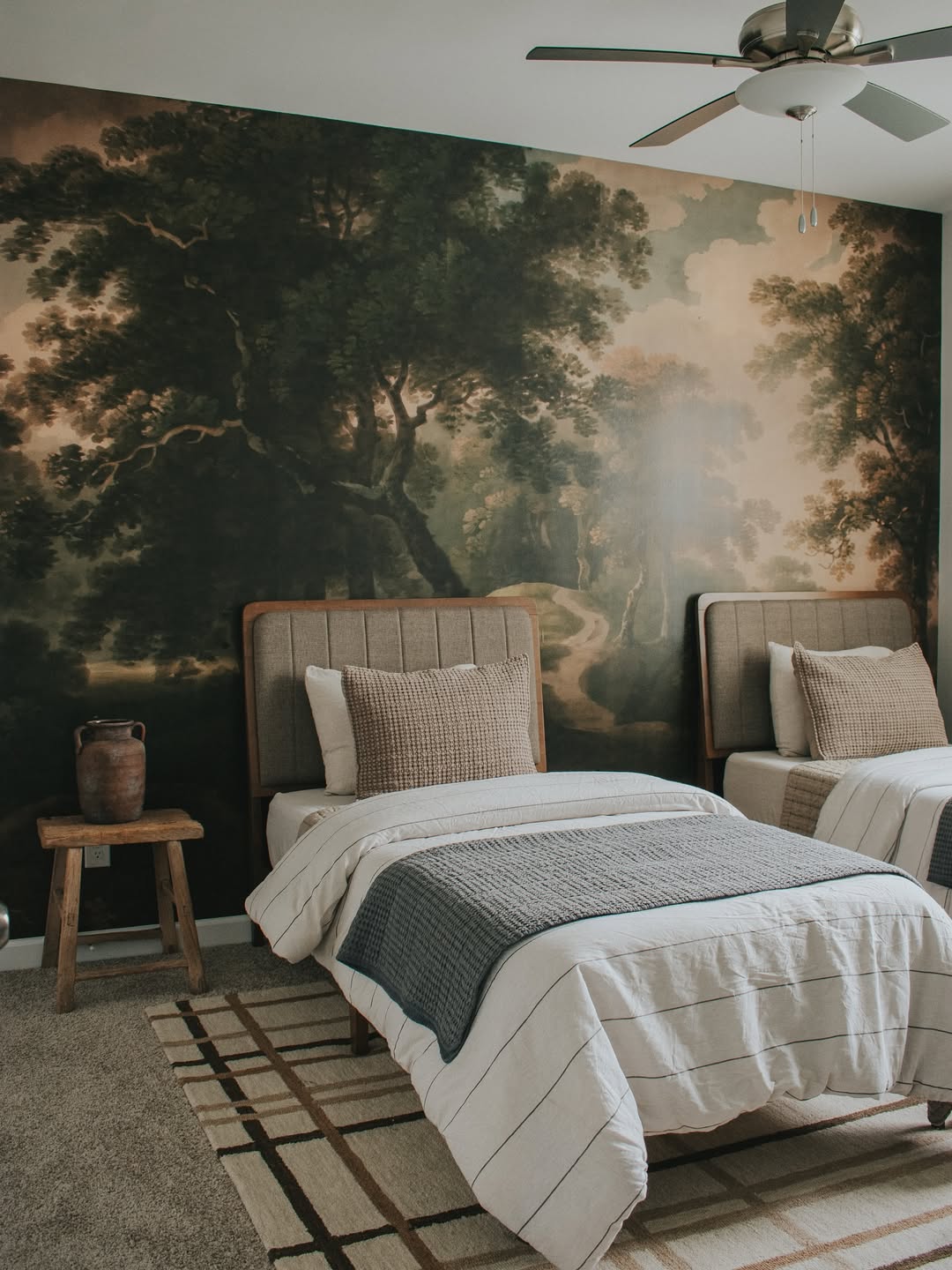
Peel-and-stick wallpaper can be tempting when you’re staring at a wall you don’t like.
I wouldn’t begin by ordering enough for the whole room.
Start smaller.
A contained nook can give you the effect without asking one temporary product to solve everything.
The back of a suitable shelving unit may be another place to introduce pattern without covering an entire wall.
Whatever surface you’re considering, read the product instructions first.
Then test the material somewhere inconspicuous if the manufacturer recommends it.
“Removable” isn’t a promise that every product will behave the same way on every paint finish or surface.
And before putting anything on a rental wall, check what your lease allows.
Sometimes the smarter move isn’t covering the wall at all.
It’s redirecting attention somewhere else.
Rental kitchens are perfect places to use that approach.
Make a Rental Kitchen Feel More Considered Without Renovating It
A rental kitchen can make you feel as though your only options are accepting everything or starting a renovation you aren’t allowed to do.
There’s a third option.
Change what your eye notices first.
Stand at the kitchen entrance.
Where does your attention go?
If it’s straight to a crowded countertop, begin there.
Clear everything off one section.
Then return only what you regularly use.
Instead of five unrelated objects spread across the counter, a tray can gather a few things into one visual group.
A wooden cutting board can introduce warmth while remaining useful.
A washable runner can give the floor more presence.
A small lamp, where safe and practical, can make an unused corner feel softer in the evening.
If you’re short on workspace, a movable cart may give you another surface without becoming part of the kitchen itself.
Don’t try to pretend the cabinets, counters, or floors are something they’re not.
Make the things you control look intentional around them.
Hide What You Don’t Want to Look At
Some rental finishes aren’t going anywhere.
That doesn’t mean they need to command your attention.
Let’s say you dislike the countertop.
You don’t necessarily need to cover every inch of it.
Instead, look at where your eye naturally lands.
A large cutting board might break up the surface while giving you somewhere useful to work.
A tray can gather bottles and small items that otherwise create visual clutter.
A bowl of fruit can add shape and color without becoming another purely decorative purchase.
The same idea works on the floor.
A runner can interrupt a stretch of tile or vinyl you don’t love.
You’re not hiding the entire rental.
You’re deciding what deserves attention.
The bathroom can benefit from exactly the same approach.
Give the Bathroom a More Finished Look Without Touching the Tile
Bathrooms can feel especially restrictive when you’re renting.
The tile stays.
The tub stays.
The vanity probably stays.
So work with the surfaces and objects that don’t.
Start with the shower curtain.
It takes up a surprisingly large amount of visual space.
If yours feels thin or undersized, improving that one piece may do more than filling the counter with decorative containers.
Then look at the towels and bath mat.
They don’t have to match perfectly.
They just need to feel as though they belong in the same room.
Clear the countertop next.
Return only the things you use regularly.
If you have almost no storage, look upward or toward freestanding pieces before assuming everything needs to sit around the sink.
A slim cart may work.
A small freestanding cabinet might work better.
And that brings us to one of my favorite ways to give rentals more character without attaching anything permanently.
Make Freestanding Storage Look Built In
Freestanding furniture can look temporary when it seems too small for the place where it sits.
Picture a narrow bookcase floating in the middle of a huge blank wall.
Nothing is technically wrong with it.
But the proportions can make it feel like something you put there because you didn’t know where else it should go.
Measure the wall before buying storage.
Then use painter’s tape to mark the width of the piece you’re considering.
Don’t stop at the floor.
Mark some of the height on the wall too if you can do so safely.
Step back.
How much empty wall remains on either side?
Does the furniture feel substantial enough for the space?
Could two matching or related units make more sense than one?
You don’t need to imitate a true built-in.
You want the storage to look like it was chosen for that particular wall.
The same principle can create architectural character elsewhere.
Create Architectural Interest With Furniture Instead of Construction
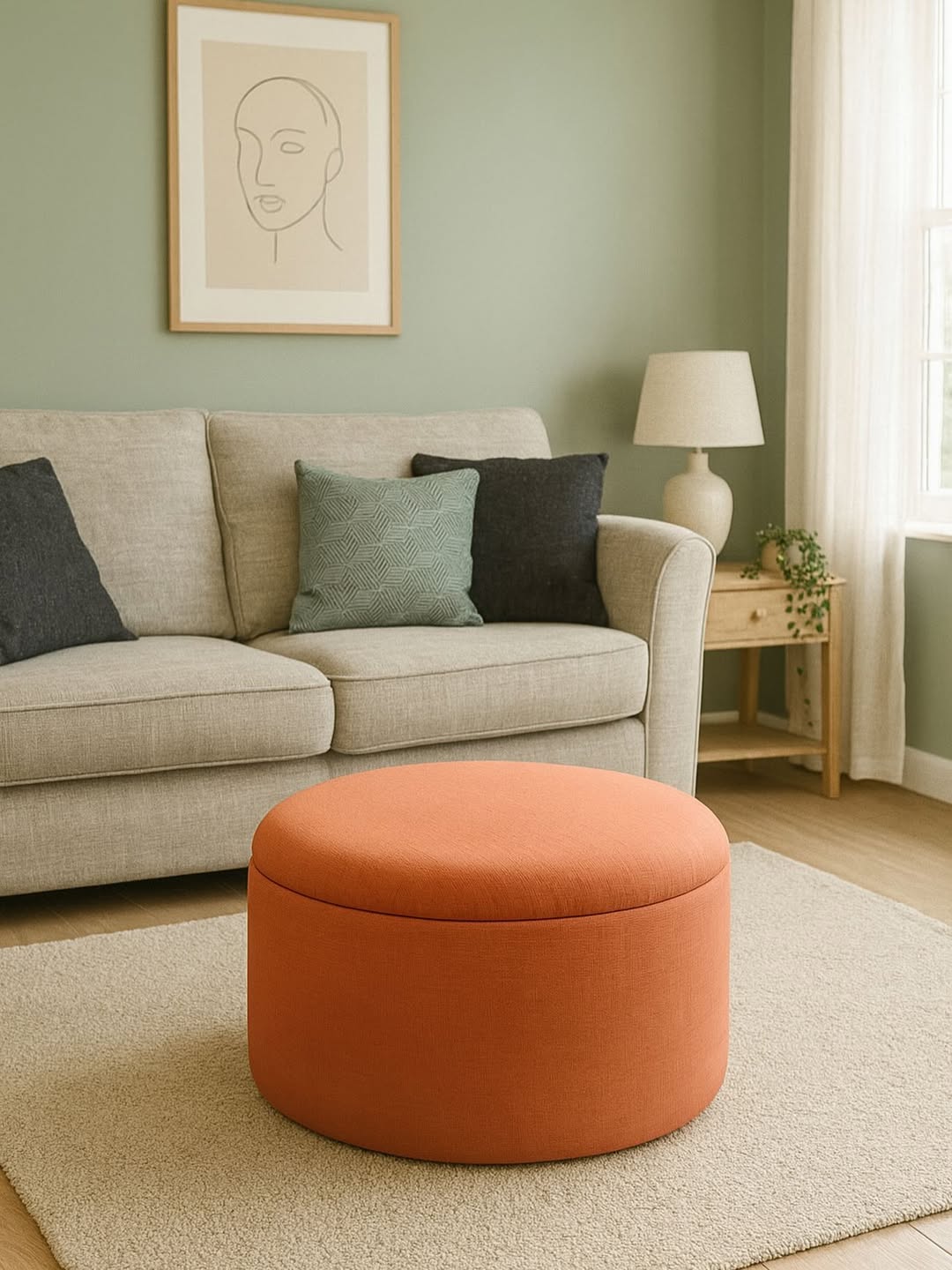
Plain rentals often lack the details that make older or custom homes interesting.
But you don’t necessarily need molding or permanent wall treatments to create structure.
Furniture can do some of that work.
A tall bookcase draws your eye upward.
A large mirror gives an empty wall more presence.
A folding screen can visually separate a work area from the rest of a bedroom.
Curtains can soften nearly an entire wall.
A freestanding cabinet can turn a forgotten corner into useful storage.
Look at the room in shapes rather than objects.
Where is everything low?
Where is there too much empty vertical space?
Where does one area bleed awkwardly into another?
Sometimes the missing piece isn’t decoration.
It’s structure.
And once the room itself starts feeling more intentional, pay attention to the little things you interact with every day.
Change the Things You Touch Every Day
I would rather improve something I use every morning than buy another object whose only job is filling a shelf.
Think about the small annoyances in your rental.
Maybe your bathroom counter never stays organized.
Perhaps the bedside table has nowhere for charging cables.
Your entryway may have no sensible place for keys and bags.
The kitchen drawer may become a mess three days after you organize it.
Those aren’t glamorous decorating problems.
Solving them can make the home feel much better to live in.
Use drawer organizers where they help.
Give keys a predictable home.
Keep charging cables where you actually charge things.
Use baskets where loose objects naturally collect instead of putting baskets where Pinterest says baskets should go.
And if you ever swap something that belongs to the rental, don’t lose the original.
Keep Anything You Remove From the Rental
This habit can save you a lot of trouble later.
If you remove a landlord-owned item with permission, label it.
Keep its screws and small parts with it.
Store everything somewhere dry and safe.
Don’t tell yourself you’ll remember which screws belonged to which piece a year from now.
Homes & Gardens gives similar advice in its guide to decorating a rental. Home and garden expert Lorraine Thompson recommends renters “always keep any original fixtures or elements you replace to ensure you can revert the rental back to its original state when moving out.”
I would take that one step further and photograph the original setup before removing anything.
That gives you a visual reference when it’s time to put everything back.
Once you’ve protected yourself at move-out, there’s another free upgrade worth trying before shopping.
Rearrange Before You Buy More Furniture
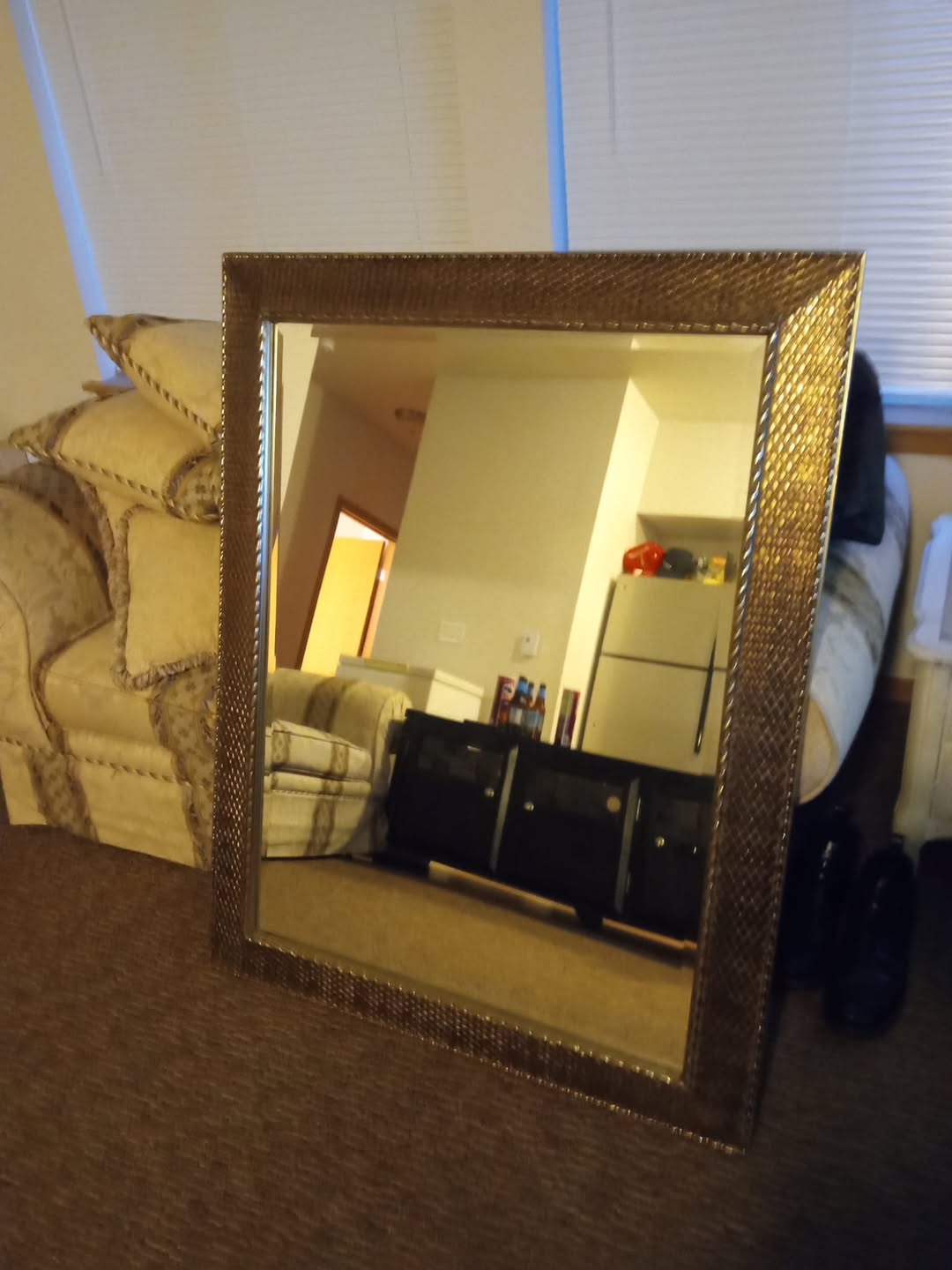
Sometimes a rental feels awkward because the furniture is awkwardly placed.
Not because you need more of it.
Pick one room and move something.
Pull the sofa slightly away from the wall.
Try the chair on the other side.
Move the side table.
Turn the rug if the dimensions allow it.
Then take a photo.
Try a second arrangement and photograph that too.
Compare the pictures.
Which one has clearer walkways?
Which one makes the room feel less crowded?
Which one gives your eye an obvious place to settle?
Photos help because they stop you from judging the room based on how strange it feels to see your sofa somewhere new.
Give the arrangement a day before moving everything back.
You may find that the room needed a better layout more than another purchase.
Make the Rental Look Collected Rather Than Temporary
One thing that can make a rental feel temporary is the sense that everything was purchased at once to fill it.
You don’t need to solve that by buying more.
Use what already has meaning.
Books you’ve kept.
Artwork you actually like.
A bowl from a trip.
A photograph you want to see every day.
An old table that doesn’t perfectly match the newer furniture.
Then look for small relationships between things.
Maybe the wood tone of a frame relates to the coffee table.
Perhaps a color from your artwork appears again in a cushion.
A black lamp might connect visually with another dark detail across the room.
Nothing needs to match perfectly.
You just want the room to feel like the pieces know each other.
That becomes much easier when you stop buying things solely for the rental you’re currently in.
Stop Buying Things That Only Work in This Rental
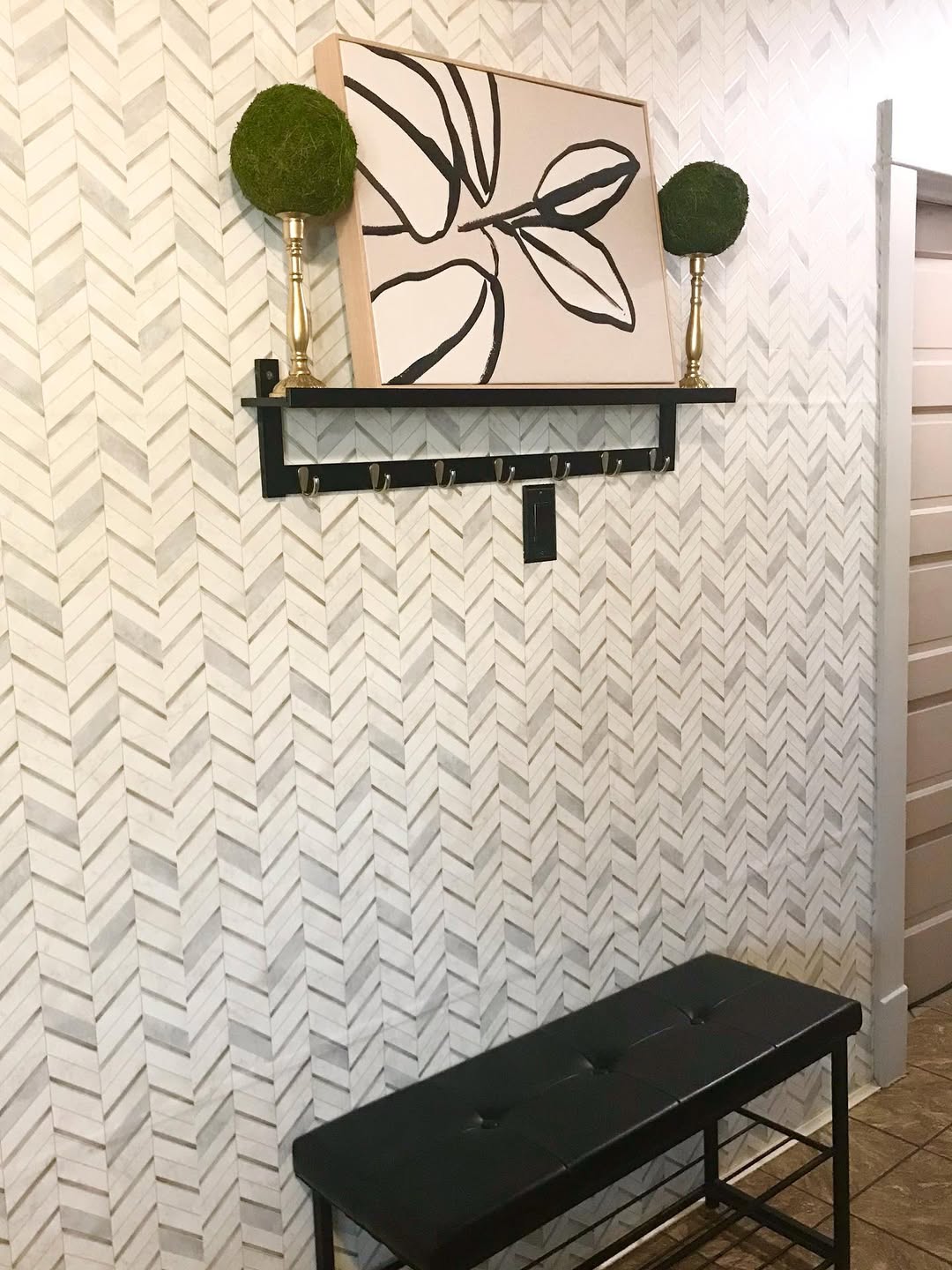
Before buying something for a rental, I like one question.
Would I take this with me?
A good rug?
Probably.
A lamp you love?
Yes.
Artwork?
Of course.
A freestanding cabinet that could work in several rooms?
Possibly.
Something expensive designed to disguise one strange feature in one specific apartment?
I’d think harder.
Put more of your decorating budget into the things that belong to you.
That doesn’t mean every purchase needs to work in every home you’ll ever live in.
It means considering whether you’re buying something because you genuinely want to own it or because you’re desperate to fix the rental.
That little distinction can save a surprising amount of money.
And before making another purchase, give the room some time.
Live With the Change Before Adding Another One
Make one noticeable change.
Then stop.
This can be difficult when you’ve already imagined the finished room.
But rooms have a way of revealing what they need only after something else changes.
Designer Jenni Kayne explains this beautifully in House Beautiful’s advice on slow decorating: “Living in a space really shows you what you are missing and how you want to and will want to live in it.”
Give yourself a week.
If you changed the curtains, notice how the room feels in the morning and at night.
If you moved the furniture, pay attention to the walkways.
If you added a rug, see whether the rest of the furniture suddenly feels better connected.
Then take another photo from the same position as your original one.
What still bothers you?
That should guide the next decision.
Not whatever product happens to be popular on Pinterest that week.
Before you make that next change, though, run it through one final test.
Do the Move-Out Test Before Making Any Rent-Friendly Upgrade
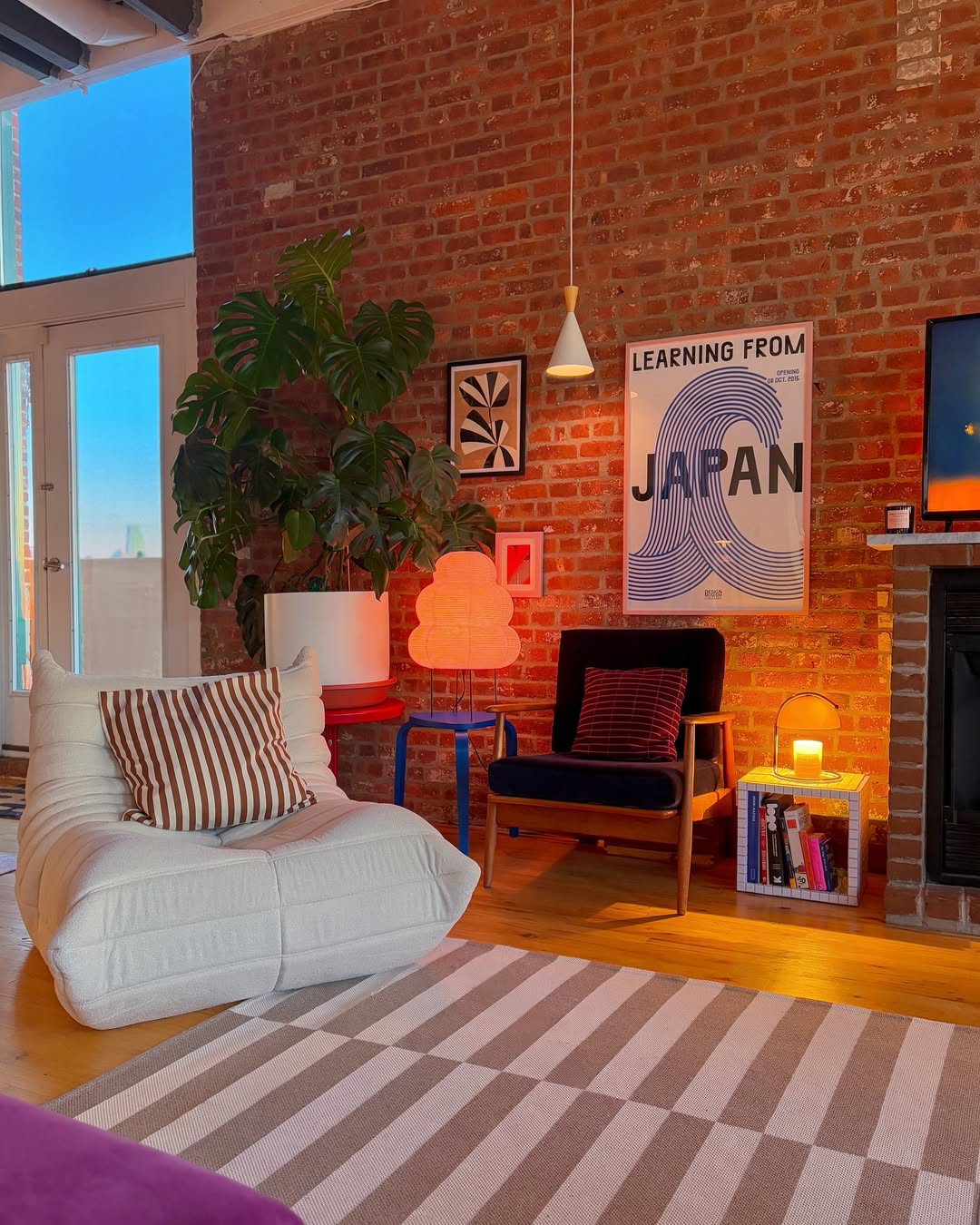
Picture yourself packing.
Not decorating.
Moving out.
What happens to the upgrade you’re considering?
Can it come down?
Can the original setup be restored?
Do you know where any landlord-owned pieces will be stored?
Have you checked what your lease allows?
Have you read the instructions for anything you’re attaching to a wall or another surface?
If you can’t answer those questions yet, don’t install it yet.
Take photos before changing anything that belongs to the rental.
Keep removed pieces together.
Label small parts.
And when you’re unsure whether a change is allowed, ask rather than assuming.
“Rent-friendly” should mean more than something being removable in a social media video.
It should make sense for your rental, your agreement, and the surface you’re putting it on.
Your Rental Doesn’t Have to Look Temporary
You don’t need to own your home before you’re allowed to care how it feels.
And you don’t have to spend years living among bare windows, harsh lighting, awkward furniture, and rooms that never quite feel like yours.
Start with one room.
Take the photo.
Find the thing making the biggest part of that room feel unfinished.
Maybe it’s the curtains.
Maybe it’s the rug.
Maybe you need better lighting rather than more decor.
Maybe nothing needs buying at all and the furniture simply needs moving.
Fix that first.
Then live with it.
The rent-friendly home upgrades I like most aren’t the ones that fool someone into thinking you’ve renovated.
They’re the ones that make your home feel more considered while you’re living there without tying you permanently to the property.
Because someday the lease will end.
The curtains can come down. The rug can roll up. The lamps, artwork, furniture, and things you genuinely love can go into boxes.
And when you open those boxes in your next home, they’ll still feel like yours.