Backyard Privacy Ideas That Feel Cozy Instead of Closed Off
There’s a reason some backyards instantly feel more relaxing than others.
You step outside and immediately feel comfortable.
The space feels calm.
The seating area feels tucked away.
The neighbors seem less noticeable.
Somehow the backyard feels like its own little escape.
Then there are outdoor spaces that never quite create that feeling.
The yard may be beautiful.
The landscaping may be well maintained.
The furniture may be attractive.
Yet the space still feels exposed.
You notice neighboring windows.
You notice nearby houses.
You feel like you’re sitting on display instead of relaxing in your own backyard.
That’s usually when homeowners start searching for privacy solutions.
The problem is that many privacy projects accidentally create a different issue.
The backyard becomes darker.
Smaller.
More enclosed.
Less inviting.
I’ve noticed that the best privacy ideas don’t make a backyard disappear from the outside world completely. They simply create enough separation that you can relax and enjoy the space without feeling exposed.
The goal isn’t isolation.
The goal is comfort.
In this guide, I’ll share backyard privacy ideas that help create a cozy, welcoming outdoor space without making your yard feel boxed in or closed off.
Start by Thinking About Privacy Differently
Most homeowners approach privacy the wrong way.
They think about what they want to block.
The better approach is thinking about how they want the backyard to feel.
That shift changes everything.
Privacy Isn’t About Blocking Everything
One mistake I see often is trying to eliminate every possible sightline.
Every neighboring window.
Every nearby house.
Every view beyond the property line.
The result can feel more like a fortress than a backyard.
Instead, focus on the views that actually affect your comfort.
A few carefully placed privacy features often work better than screening the entire yard.
Focus on Comfort Instead of Isolation
The most inviting outdoor spaces still feel connected to nature.
They still allow light.
They still allow airflow.
They still feel open.
Privacy should enhance the experience rather than limit it.
Identify Where Privacy Matters Most
Walk through your backyard and think about where you spend the most time.
Your patio.
Your dining space.
Your favorite chair.
Your fire pit.
Those destinations deserve attention first.
I’ve found that creating privacy around the areas you actually use often creates a much bigger impact than trying to shield every inch of the property.
And once you know where privacy matters most, it’s time to build around those spaces.
Create Privacy Around the Places You Actually Use
One thing I’ve learned is that people rarely need privacy throughout the entire backyard.
They need privacy where they spend time.
That’s an important distinction.
Make Seating Areas Feel More Comfortable
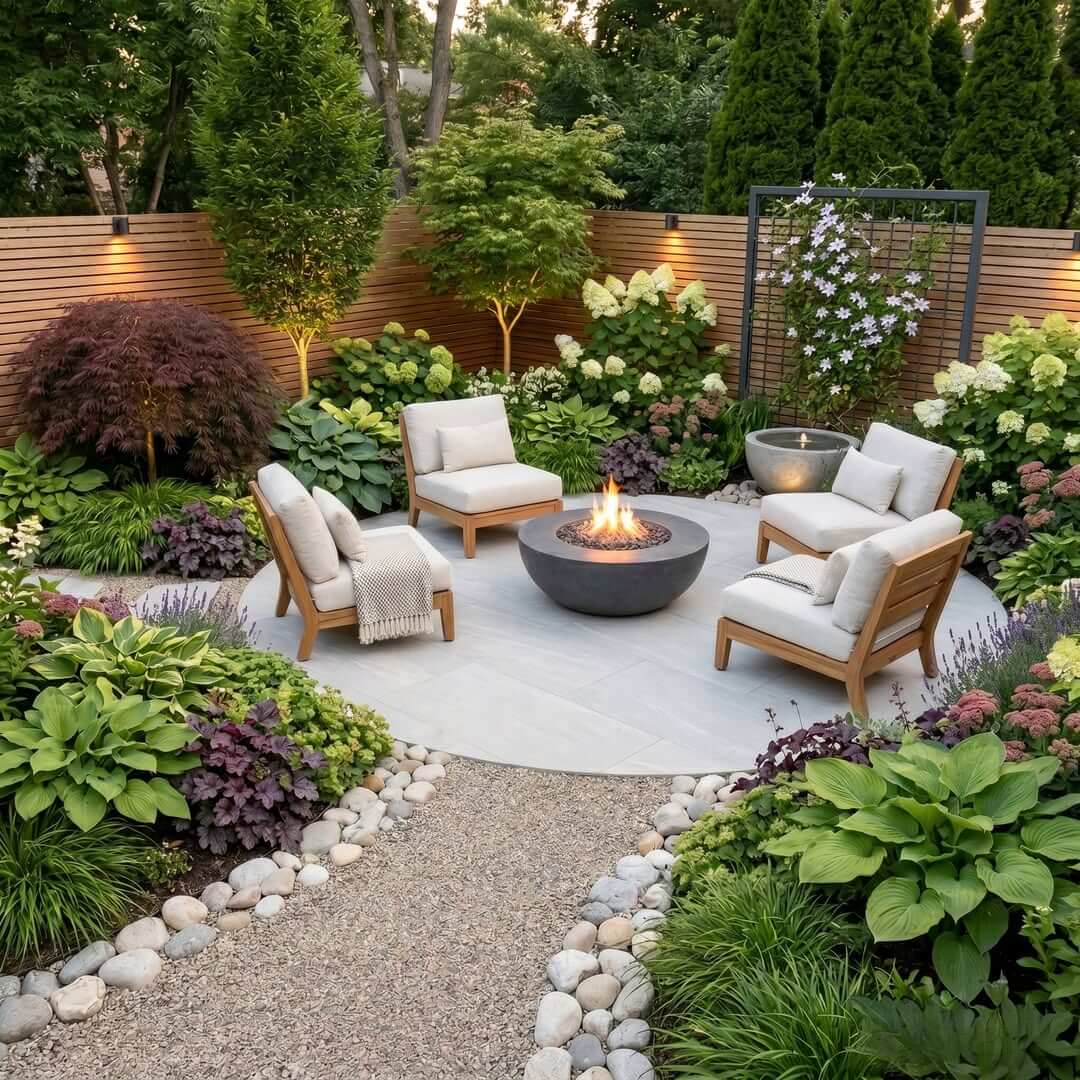
A seating area surrounded by greenery, planters, or a decorative screen often feels dramatically more private than the rest of the yard.
And that’s usually enough.
The goal isn’t creating walls.
The goal is creating comfort.
Create Privacy Around Outdoor Dining Spaces
Meals feel more enjoyable when the space feels slightly separated from the rest of the neighborhood.
A few strategically placed plants.
A trellis.
A privacy screen.
Small changes often make a surprising difference.
Give Reading Corners Their Own Space
One of my favorite backyard upgrades is creating a small reading retreat.
A comfortable chair.
Some nearby greenery.
A little shade.
A subtle privacy feature.
That’s often all it takes to make the space feel more relaxing.
Think in Terms of Destinations
Instead of asking, “How do I make the whole backyard private?”
Ask, “How do I make this space more comfortable?”
The answer is usually simpler and less expensive.
And many of the best privacy solutions come from landscaping rather than structures.
Use Landscaping as a Natural Privacy Screen
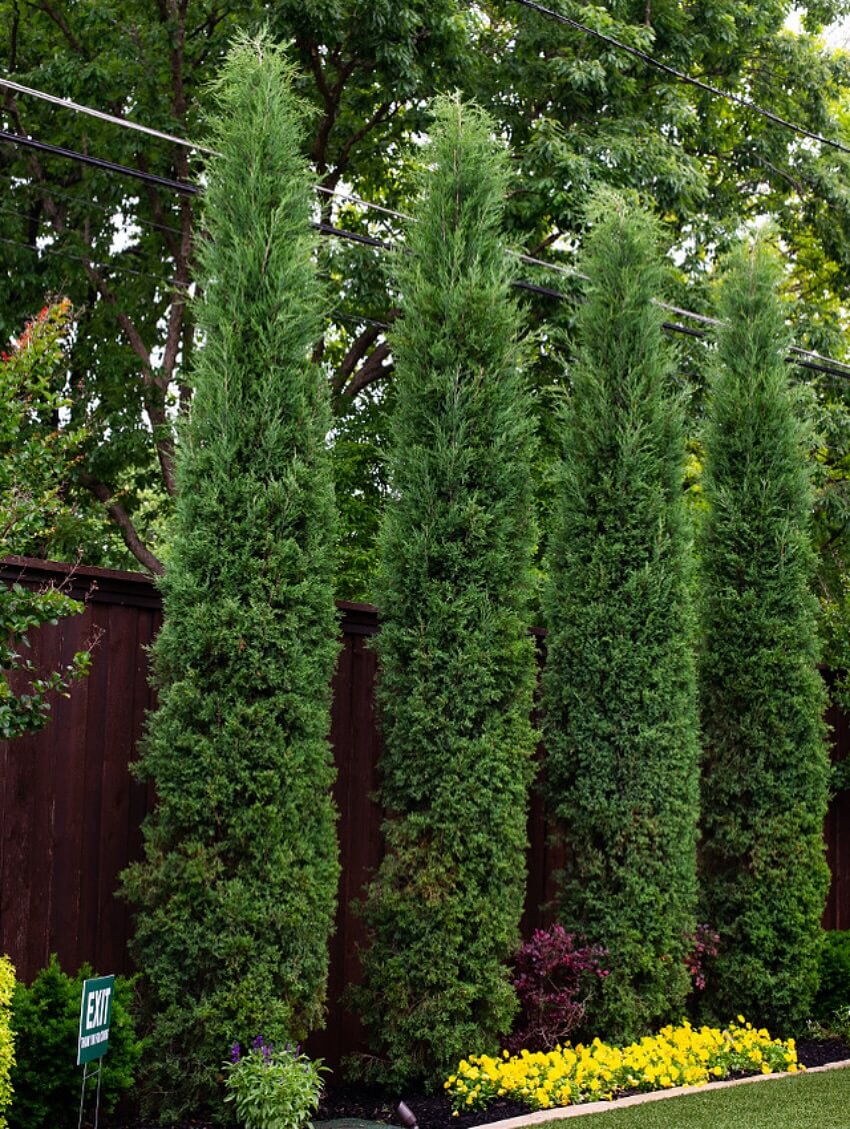
Plants are one of the most effective privacy tools available.
They’re softer than fences.
More welcoming than walls.
And often more beautiful than either option.
The team at Better Homes & Gardens explains this perfectly, writing, “You can opt to rely on hardscaping like fences and pergolas or use privacy plants to create a screen garden.”
That’s one reason landscaping remains one of my favorite privacy solutions.
It creates screening while making the backyard feel more alive.
Layer Plants Instead of Building Walls
One simple technique is layering.
Tall shrubs in the back.
Medium-sized plants in the middle.
Lower plants in front.
This creates privacy while maintaining depth and visual interest.
Use Ornamental Grasses for Soft Screening
Ornamental grasses add movement, texture, and privacy at the same time.
Unlike solid barriers, they create separation without feeling heavy.
I’ve seen a simple row of grasses completely change how a backyard feels.
Add Small Trees Where Needed
Sometimes a single tree can solve a privacy problem.
Blocking one neighboring window often creates a bigger improvement than fencing an entire property.
Let Plants Create the Atmosphere
One thing I’ve noticed is that plants don’t just provide privacy.
They create mood.
The backyard feels softer.
Calmer.
More connected to nature.
And if you’re working with a smaller space, there are even more ways to create privacy without sacrificing openness.
Backyard Privacy Ideas That Don’t Require a Fence
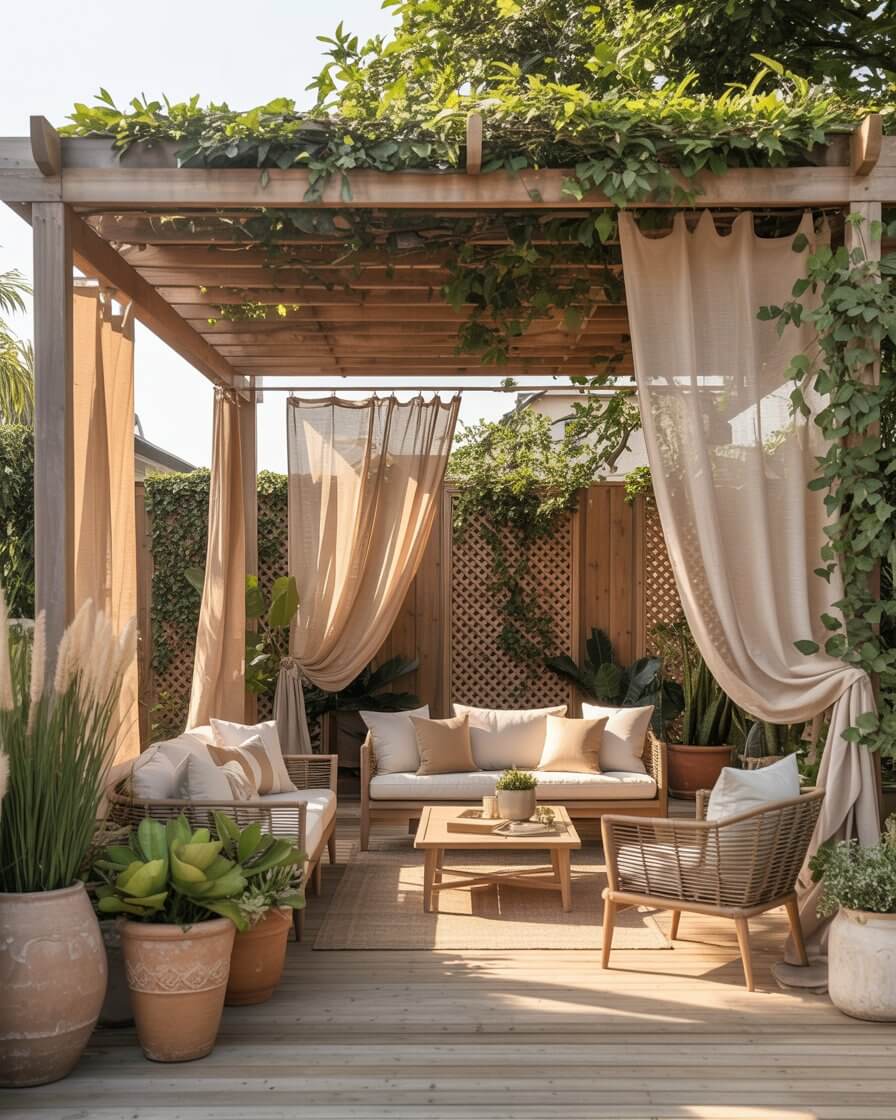
One of the biggest misconceptions about backyard privacy is that every solution starts with a fence.
It doesn’t.
In fact, some of the most attractive privacy ideas don’t involve fencing at all.
They’re flexible.
Affordable.
And often much softer visually.
Use Outdoor Curtains
Outdoor curtains instantly make patios, pergolas, and covered seating areas feel more private.
They also add texture and softness.
The space feels more like an outdoor room.
One thing I love about curtains is flexibility.
Open them when you want an airy feeling.
Close them when you want more privacy.
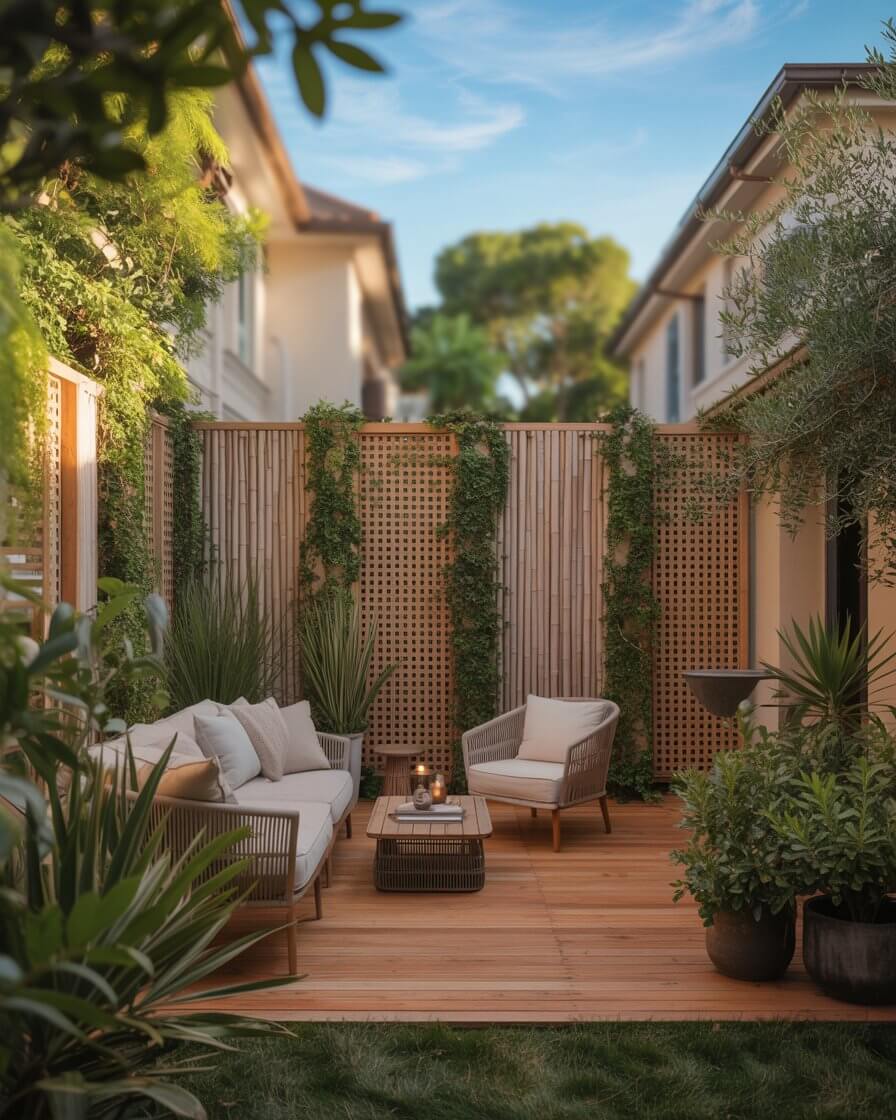
Add Decorative Privacy Screens
Decorative screens have become increasingly popular because they’re easy to install and easy to move.
The team at The Spruce highlights this advantage perfectly, writing, “Movable screens and trellises provide affordable, stylish, and flexible privacy solutions.”
That’s exactly why they work so well.
They allow you to create privacy where you need it without permanently changing the yard.
Create Privacy With Large Planters
Oversized planters filled with shrubs, ornamental grasses, or small trees can create screening exactly where it’s needed.
This approach works especially well around patios and seating areas.
And unlike permanent structures, you can rearrange them whenever your needs change.
Try Pergolas With Climbing Plants
Pergolas create a sense of enclosure without feeling heavy.
Add climbing vines and the effect becomes even stronger.
The backyard still feels open.
Yet the space feels more sheltered and inviting.
I’ve found that combining several small privacy solutions often creates a better result than relying on one large barrier.
And that’s especially true in smaller backyards.
Use Vertical Privacy Solutions in Small Backyards
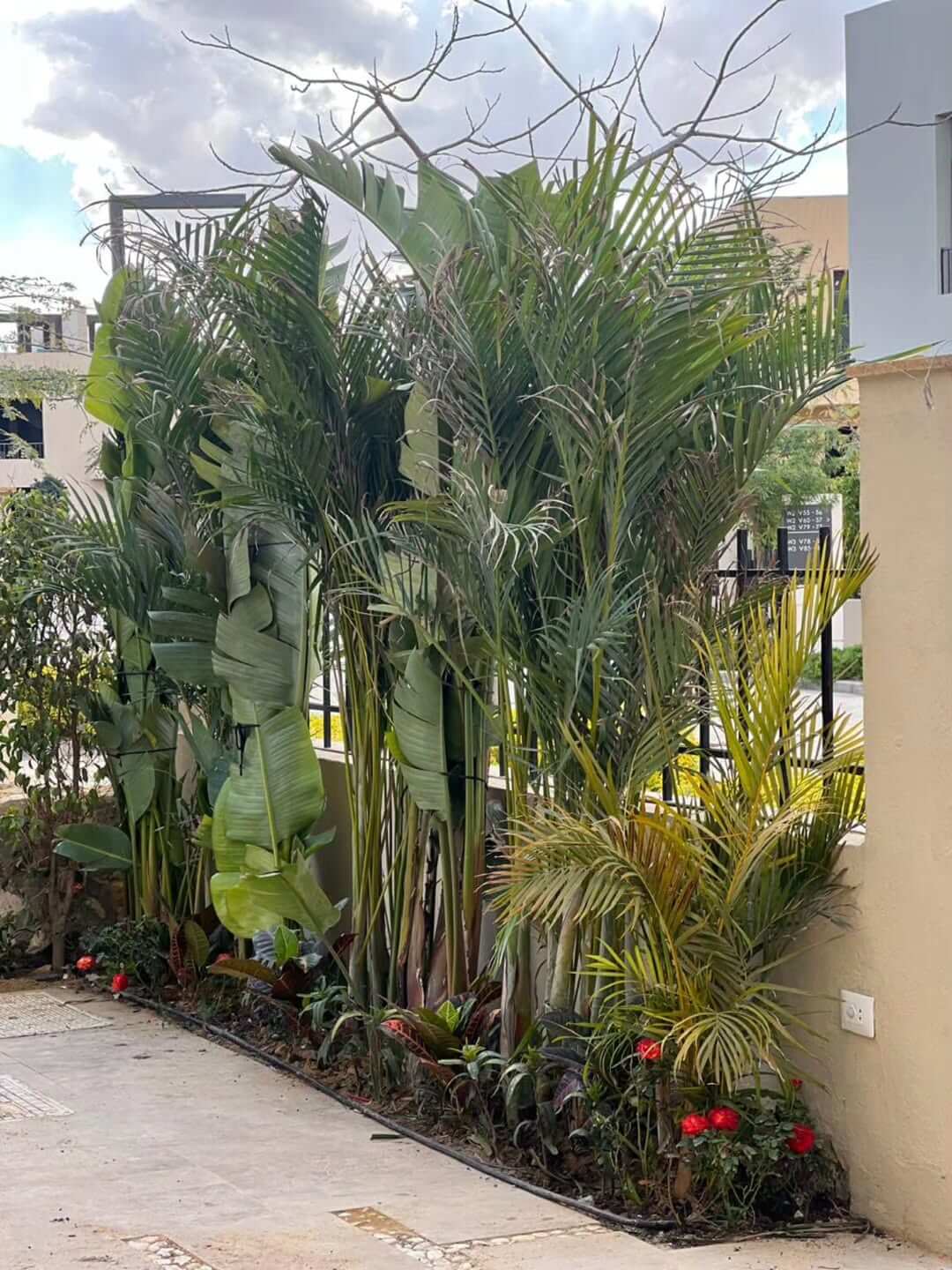
One challenge with compact outdoor spaces is that every square foot matters.
Traditional privacy solutions can sometimes make the yard feel smaller.
That’s why vertical privacy features are so valuable.
They create separation without consuming valuable floor space.
Use Trellises for Privacy and Height
Trellises remain one of the smartest privacy upgrades for smaller yards.
The editors at Homes & Gardens explain why, writing, “In small gardens, trellis ideas are space-saving ways to screen off different areas, as well as adding height and supporting climbing plants.”
That’s exactly why they’re so effective.
They add privacy.
Support greenery.
And help draw the eye upward.
Install Living Walls
Living walls introduce privacy while adding greenery.
They’re particularly useful when neighboring homes sit close together.
The added texture helps the backyard feel more lush and inviting.
Add Hanging Planters
Hanging planters can create subtle visual separation while keeping the ground area open.
This works especially well on patios, balconies, and compact backyards.
Use Decorative Panels
Decorative panels provide privacy while acting as design features.
Many homeowners use them to screen patios, seating areas, or unattractive views.
The result feels intentional rather than purely functional.
And speaking of unwanted views, neighboring homes are often the biggest privacy concern homeowners face.
Backyard Privacy Ideas From Neighbors
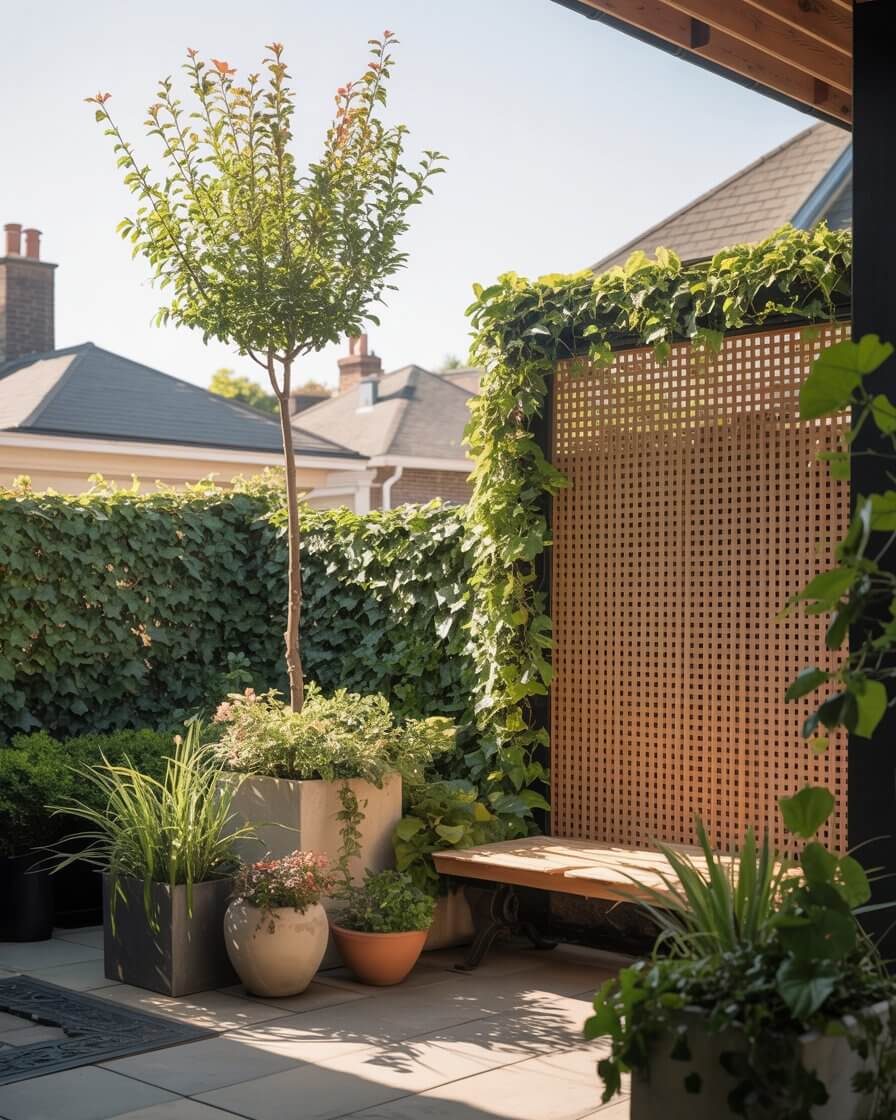
Many homeowners aren’t trying to block the entire world.
They simply want a little separation from nearby houses.
The good news is that solving that problem usually requires less screening than people expect.
Block Direct Sight Lines
Start by identifying exactly what you see from your favorite outdoor spot.
A neighboring window.
A second-story deck.
A busy side yard.
Targeting those specific views often solves most privacy concerns.
I’ve noticed that homeowners often assume they need complete screening from neighbors. In reality, blocking just one or two direct sight lines usually creates most of the privacy they’re looking for.
Create Layered Privacy
Instead of relying on one barrier, combine multiple elements.
A small tree.
A decorative screen.
A planter.
A trellis.
Layered privacy tends to feel much softer and more natural.
Focus on the Seating Area First
One thing I’ve learned is that people notice privacy problems most when they’re sitting down.
That’s why I usually recommend improving seating areas first.
It’s where the biggest lifestyle improvement happens.
Preserve the Views You Love
Not every view needs to disappear.
If you have attractive landscaping, mature trees, or a pleasant outlook, keep it.
Privacy works best when it removes distractions without eliminating everything else.
And sometimes a fence can still play a role in that balance.
The key is choosing the right type.
Use Fencing Without Making the Yard Feel Closed Off
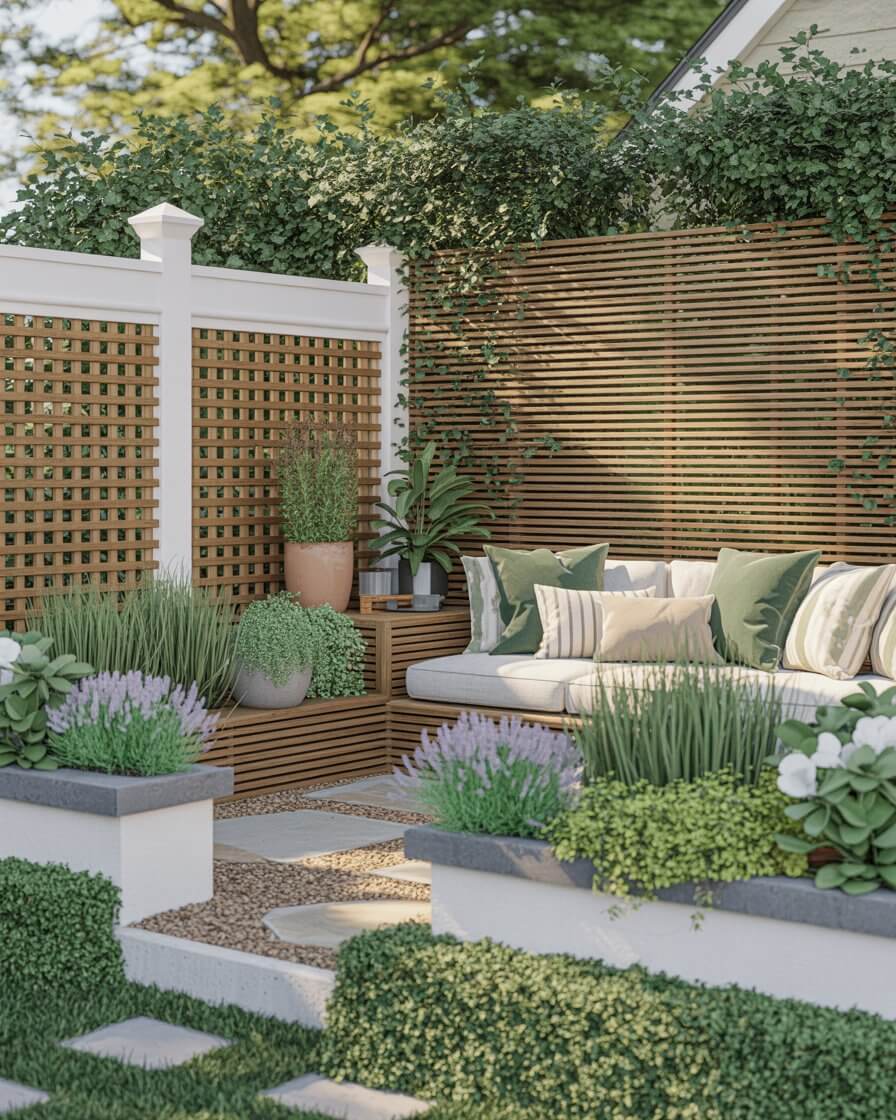
Fences can absolutely improve privacy.
The trick is making sure they don’t overwhelm the backyard.
Some fencing styles create screening while still allowing the space to feel open and inviting.
Choose Lattice Instead of Solid Panels
Lattice fencing creates separation while allowing light and airflow to pass through.
That simple difference often makes a backyard feel much larger.
Try Partial Privacy Screens
Not every fence needs to surround the entire property.
A short section of fencing near a seating area may provide all the privacy you need.
Consider Horizontal Fence Designs
Horizontal fences can help a backyard feel wider.
The long lines naturally draw the eye across the space.
This often creates a more open feeling than traditional vertical fencing.
Add Decorative Fence Details
Small upgrades make a difference.
Decorative trim.
Lattice tops.
Integrated planters.
Simple details help fences feel more like part of the landscape.
I’ve noticed that the most successful privacy fences don’t dominate the yard.
They quietly support the experience.
And when privacy, comfort, and atmosphere come together, the backyard begins feeling less like a yard and more like a retreat.
Backyard Privacy Ideas That Feel Like a Retreat
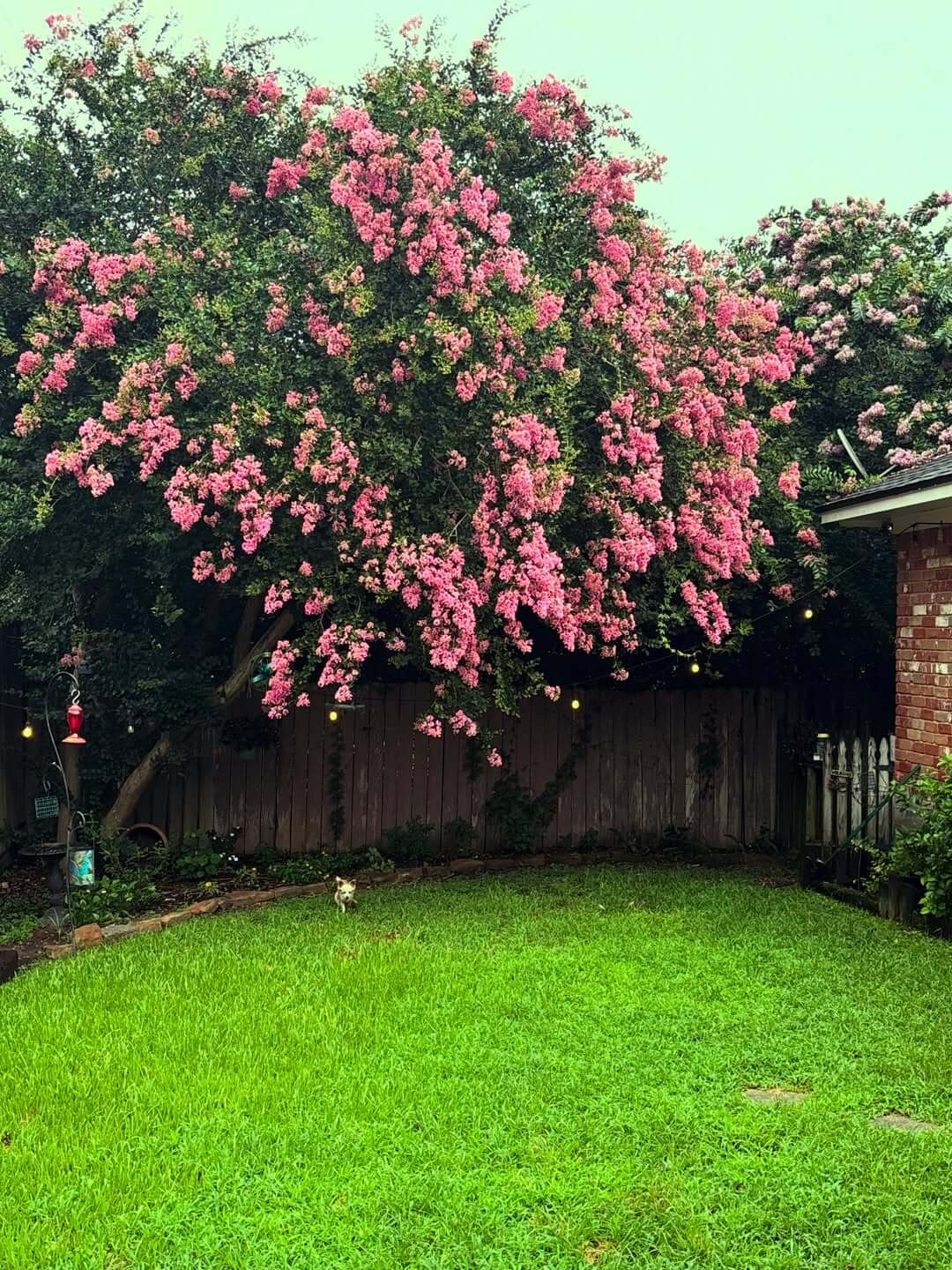
The most memorable outdoor spaces don’t just provide privacy.
They create a feeling.
A feeling of comfort.
A feeling of calm.
A feeling that encourages you to stay outside a little longer.
That’s what separates a private backyard from a truly inviting one.
Create Outdoor Rooms
One of my favorite privacy strategies is creating outdoor rooms.
Not literal rooms.
Defined destinations.
A seating area.
A dining space.
A reading corner.
A fire pit zone.
When each area feels intentional, the backyard naturally becomes more comfortable.
Add Cozy Seating
Privacy only matters if people want to spend time in the space.
Comfortable seating helps make that happen.
Deep chairs.
Outdoor cushions.
A small side table.
Simple additions often create the biggest improvement.
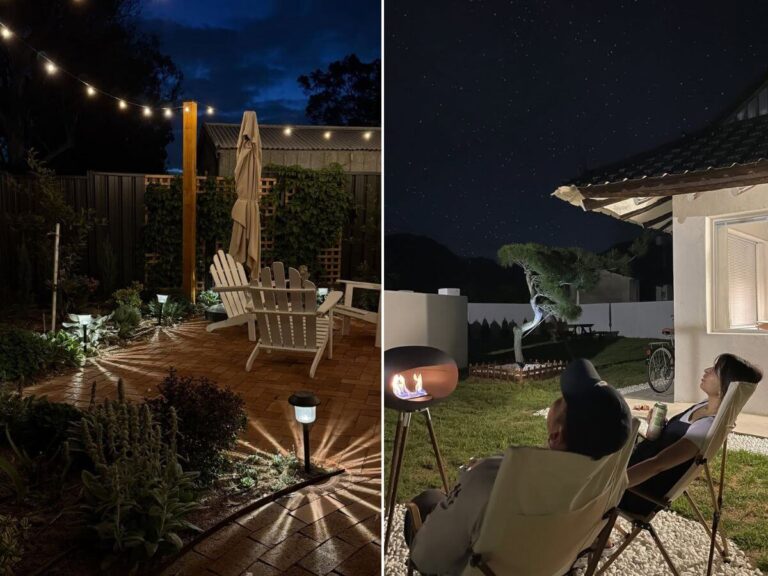
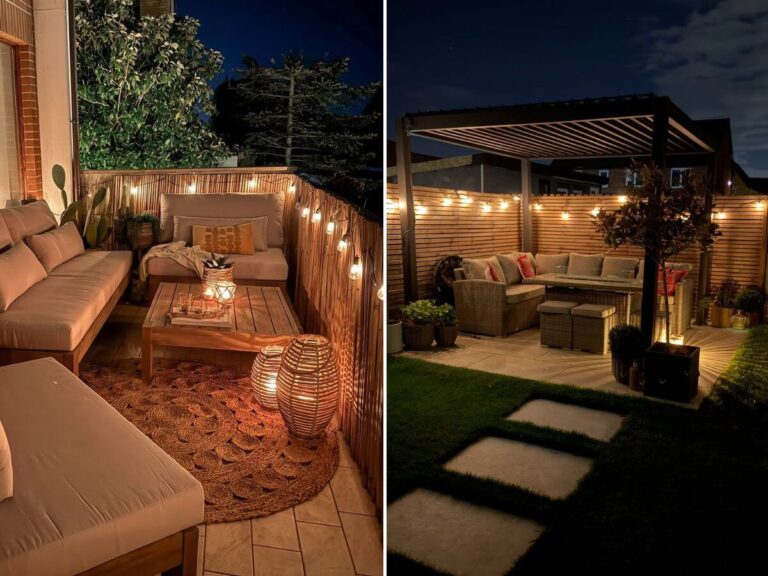
Layer Lighting
Privacy doesn’t disappear after sunset.
Neither should atmosphere.
String lights.
Lanterns.
Path lights.
Soft lighting helps outdoor spaces feel warmer and more inviting.
Introduce Texture and Greenery
Plants, natural materials, and layered landscaping create a sense of enclosure without creating heaviness.
The backyard feels protected while still feeling open.
And that’s exactly the balance most homeowners are looking for.
Cheap Backyard Privacy Ideas That Look Expensive
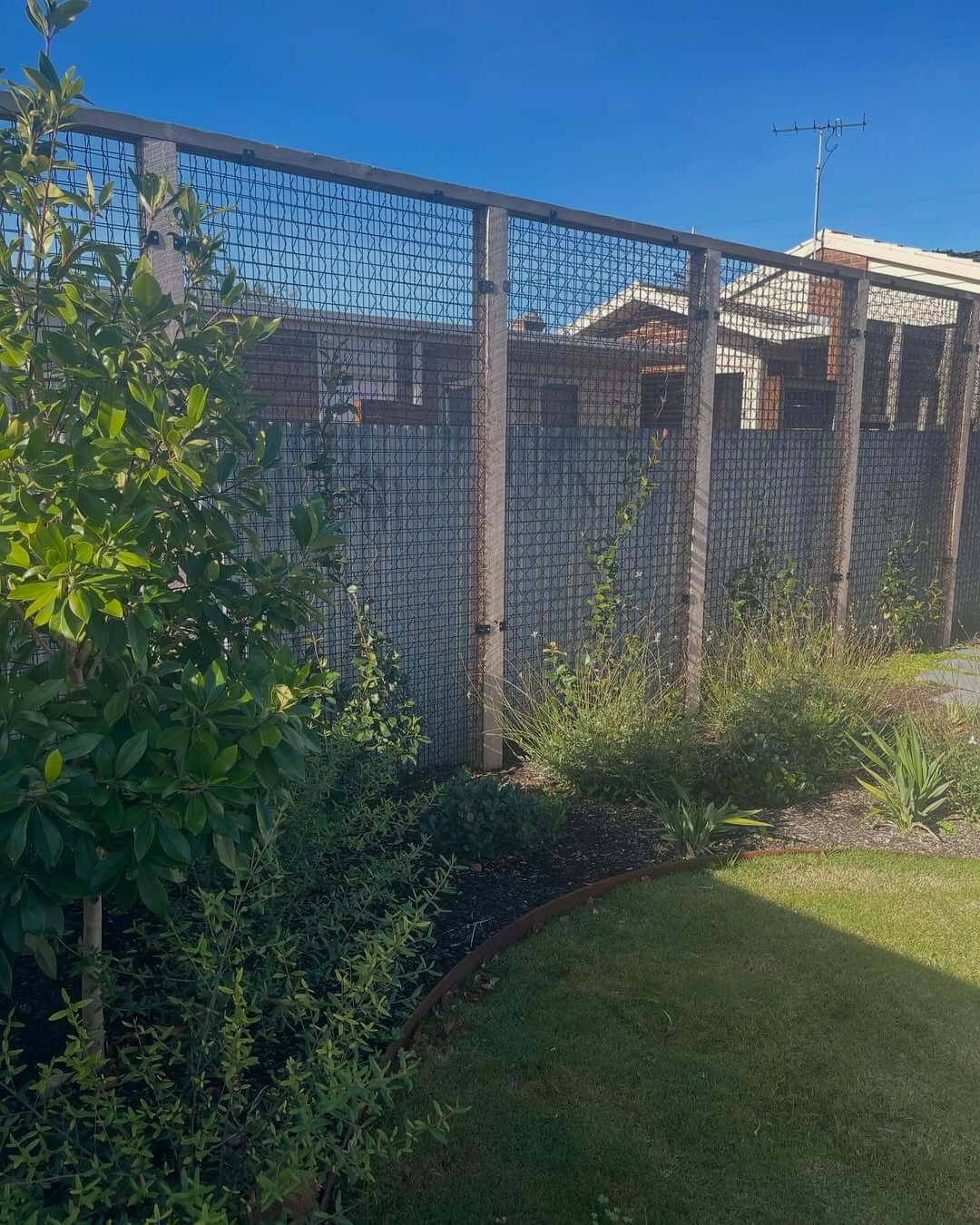
One thing I’ve learned is that expensive-looking outdoor spaces aren’t always expensive.
They’re usually intentional.
A few thoughtful upgrades often outperform a large budget.
Use Repetition
Repeating the same plants, planters, or design elements creates a more professional appearance.
Consistency tends to look expensive.
Randomness tends to look unfinished.
Group Items Together
Instead of scattering planters throughout the yard, group them together.
Clusters create stronger visual impact.
The arrangement feels more deliberate.
Combine Plants and Structures
A trellis by itself may look functional.
A trellis covered in greenery feels like part of the landscape.
Combining privacy elements almost always creates a more polished result.
Match Planters and Privacy Features
When planters, privacy screens, and outdoor furniture share similar colors or materials, the entire backyard feels more intentional.
This is one of the easiest ways to make inexpensive privacy upgrades look custom designed.
Focus on What People Actually See
Most guests experience the backyard from a seating area.
That’s where your effort should go.
I’ve noticed that homeowners often spend money improving parts of the yard that nobody actually uses.
Focusing on the experience usually produces better results.
And if you’re looking for quick wins, there are several upgrades you can tackle this weekend.
7 Backyard Privacy Upgrades You Can Do This Weekend
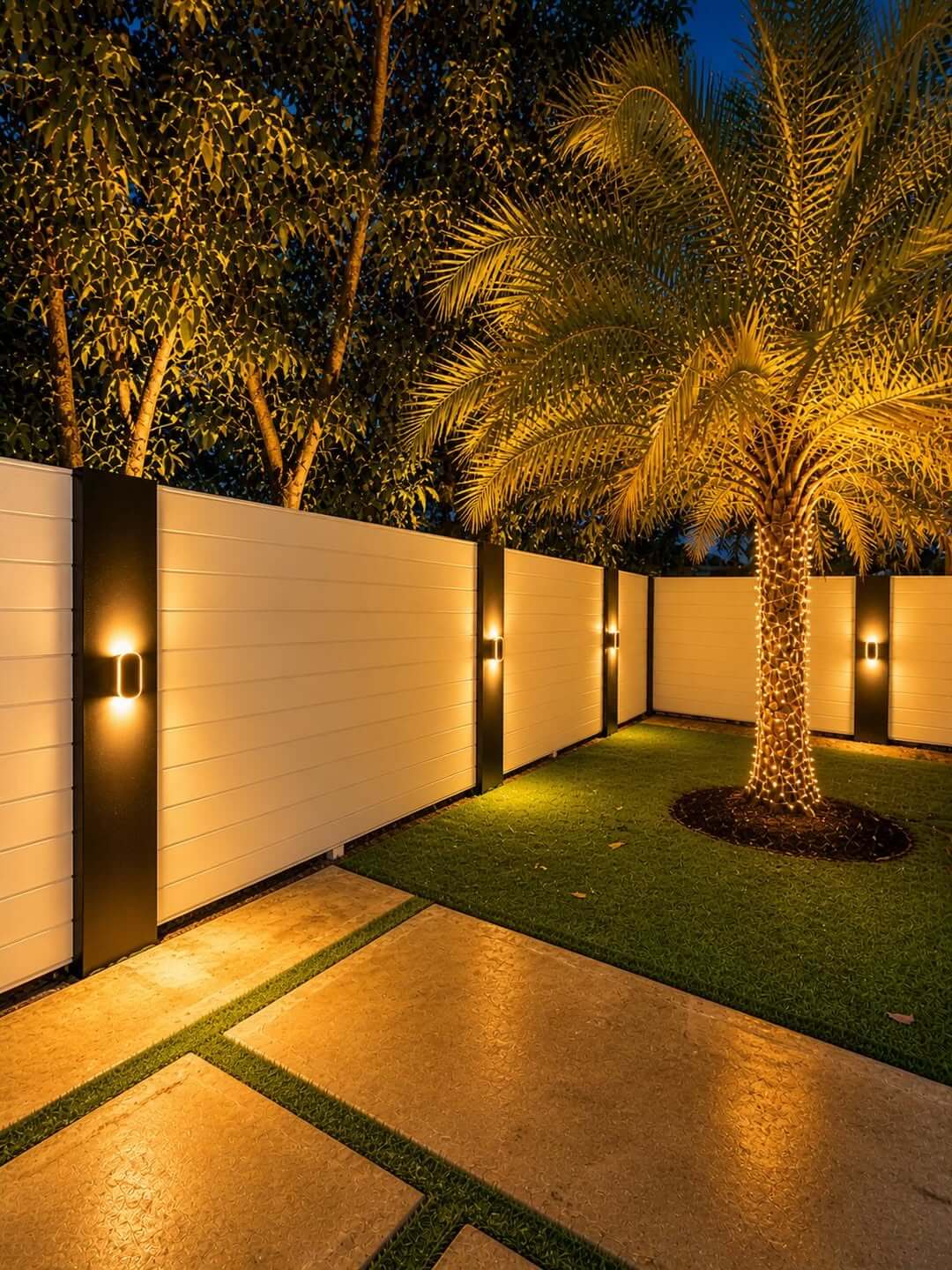
You don’t need a major renovation to make a backyard feel more private.
Sometimes a few simple improvements create the biggest transformation.
1. Add a Privacy Planter
A large planter filled with ornamental grasses or shrubs can instantly improve privacy around a seating area.
2. Install a Trellis
A simple trellis creates screening while adding vertical interest.
It’s one of the highest-impact upgrades available for smaller yards.
3. Hang Outdoor Curtains
Curtains provide privacy, softness, and flexibility.
They’re also one of the fastest upgrades you can make.
4. Rearrange Furniture Around a Focal Point
Sometimes improving privacy is simply about changing the layout.
Position seating toward a garden bed, fire pit, or attractive view.
5. Plant Ornamental Grasses
Grasses add movement, texture, and screening all at once.
They’re one of my favorite budget-friendly privacy solutions.
6. Add Lighting Around Gathering Areas
Lighting helps define spaces and create a greater sense of comfort after dark.
7. Create One Private Destination
Instead of focusing on the entire backyard, improve one area first.
A comfortable destination often changes how the whole yard feels.
Before wrapping up, let’s look at a few mistakes that can prevent privacy projects from reaching their full potential.
Common Backyard Privacy Mistakes
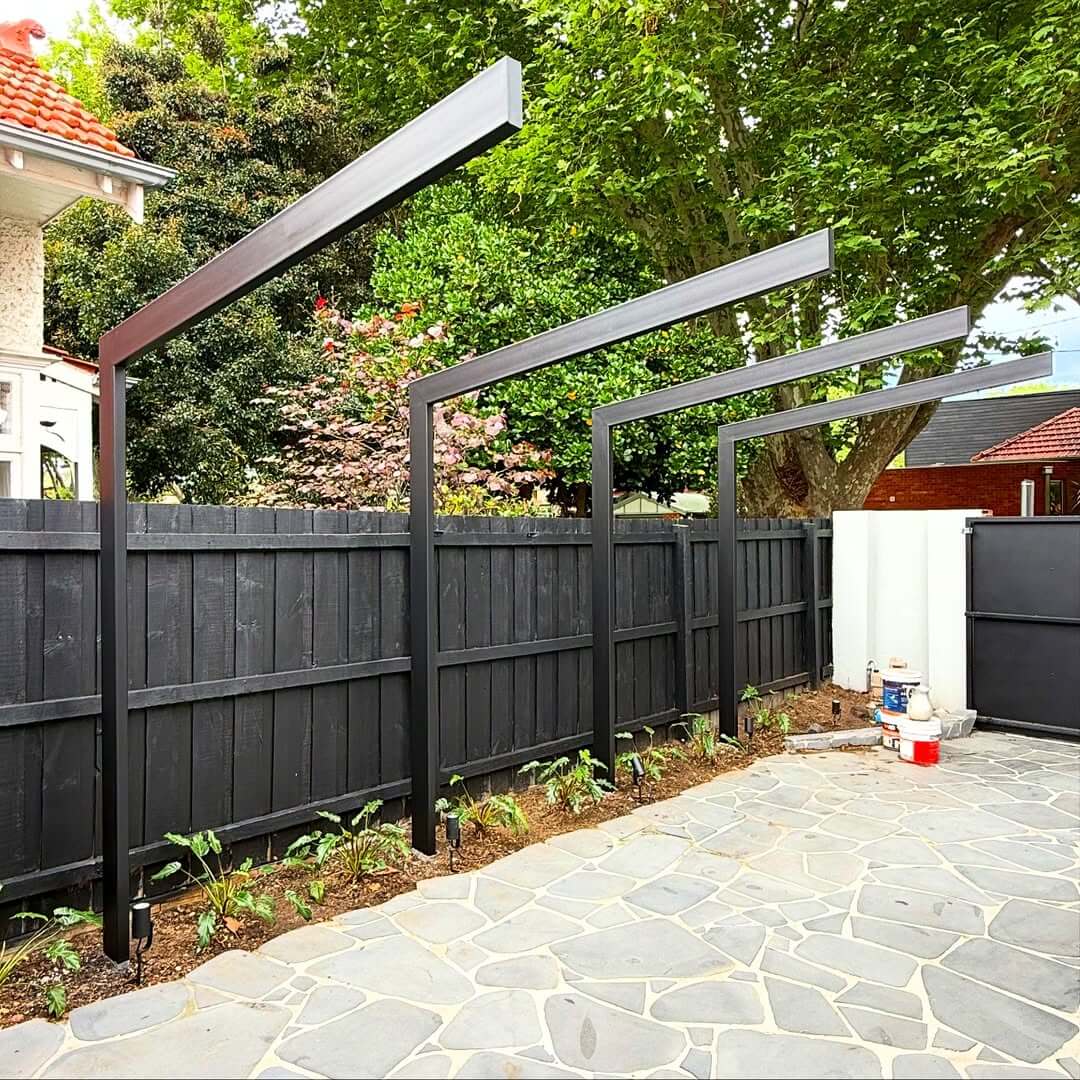
Most privacy problems aren’t caused by a lack of ideas.
They’re caused by focusing on the wrong things.
Fortunately, these mistakes are easy to avoid.
Blocking Every View
Not every view needs to disappear.
Keep attractive views whenever possible.
Remove distractions.
Preserve beauty.
The result usually feels more balanced.
Making the Yard Feel Smaller
Oversized barriers can sometimes create the opposite effect homeowners want.
Look for ways to create separation without creating heaviness.
Ignoring Landscaping
Plants are often the missing piece.
They soften privacy structures and help them blend naturally into the backyard.
Relying on One Solution
A fence.
A screen.
A row of shrubs.
No single solution has to do all the work.
Combining multiple layers often creates a better result.
Focusing on Privacy Instead of Comfort
This is probably the biggest mistake of all.
Privacy is valuable because it improves comfort.
Comfort should always remain the primary goal.
Fortunately, creating that balance is much easier when you focus on the experience first.
And that leads to the biggest takeaway from this guide.
How to Create Privacy Without Losing Openness
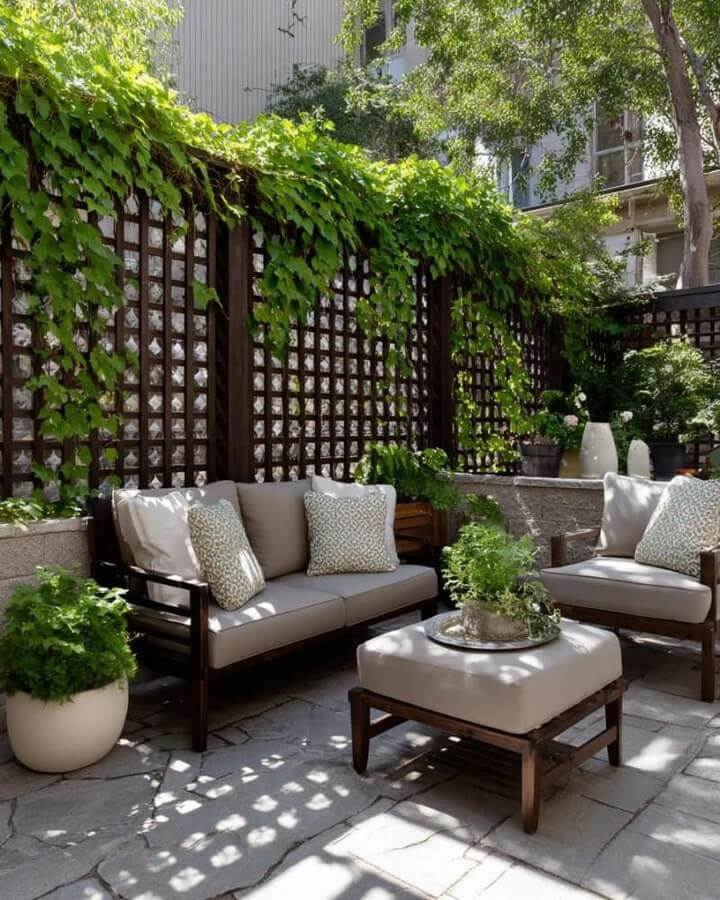
If there’s one thing worth remembering, it’s this.
The best backyard privacy ideas don’t make a space feel closed off.
They make it feel comfortable.
Start with the areas you use most.
Add layers instead of walls.
Combine plants and structures.
Preserve light and airflow whenever possible.
Focus on how the backyard feels rather than how much screening it contains.
I’ve noticed that homeowners are often surprised by how little privacy they actually need.
A few thoughtful improvements can completely change the experience of a backyard.
That’s what makes these projects so rewarding.
Not because they block views.
Because they create comfort.
Final Thoughts
The best backyard privacy ideas aren’t about hiding from the world.
They’re about creating a space where you can relax more easily.
When privacy feels intentional, landscaping feels layered, and outdoor spaces feel comfortable, the entire backyard becomes more enjoyable.
It becomes a place for morning coffee.
A place for family dinners.
A place for quiet evenings.
A place where everyday moments feel a little more peaceful.
Some of the best outdoor spaces aren’t completely hidden.
They’re simply comfortable enough that you stop thinking about who’s around you.
You start paying attention to the things that matter instead.
Good conversation.
Fresh air.
Quiet mornings.
Time outside.
Some of the most inviting backyards aren’t the ones with the tallest fences.
They’re the ones that feel welcoming.
Comfortable.
Personal.
That’s what great privacy design really creates.
Not isolation.
A better outdoor experience.