Small Patio Ideas That Feel Cozy Instead of Cramped
A small patio doesn’t have to feel limiting.
In fact, some of the most inviting outdoor spaces I’ve seen were surprisingly small.
The problem isn’t usually square footage.
It’s how the space is used.
Many homeowners assume a small patio needs more furniture, more decorations, and more features to feel complete. The result is often the opposite.
The patio starts feeling crowded. Walking becomes awkward. The space loses the relaxed feeling that made spending time outside appealing in the first place.
A larger patio can sometimes hide decorating mistakes.
A small patio can’t.
Every chair, planter, table, and decorative accessory has an impact on how the space feels.
That’s actually good news.
Small patios don’t require major renovations to become more comfortable. A few thoughtful changes can make the area feel more functional, more inviting, and much larger than it really is.
I’ve noticed that the most successful small patios aren’t trying to compete with large outdoor living spaces. They’re designed around the way people actually use them.
Morning coffee.
A quiet place to read.
Dinner outdoors on a warm evening.
A comfortable spot to unwind after work.
When a patio supports those everyday moments, size starts to matter a lot less.
In this guide, I’ll share small patio ideas that help create a space that feels cozy instead of cramped, whether you’re working with a townhouse patio, a compact backyard, or a small apartment outdoor area.
Start by Deciding How You Want to Use the Space
Before buying furniture or outdoor decor, take a step back and think about how you want the patio to function.
This is where many small patios go wrong.
People start shopping before they have a clear purpose for the space.
A patio designed for outdoor dining looks very different from one designed for relaxing with a book. A patio used for entertaining friends needs different furniture than a quiet space used for morning coffee.
That’s why purpose should always come before decorating.
Try a simple exercise.
Imagine spending an hour outside tomorrow.
What are you doing?
Are you eating dinner?
Reading?
Working on your laptop?
Talking with family?
The answer usually reveals exactly what the patio needs.
If you love morning coffee outdoors, comfortable seating may be the highest priority.
If you enjoy dining outside, table space matters more.
If you want a place to relax at the end of the day, lighting and comfort become much more important.
When every decorating decision supports a specific activity, the patio naturally becomes easier to use.
And when a space gets used regularly, it starts feeling larger because every inch serves a purpose.
Once you know how you want to use the patio, the next step is avoiding the mistake that makes most small outdoor spaces feel cramped.
Stop Trying to Fit Too Much Furniture
The biggest mistake people make with a small patio is assuming they need to fill it.
A loveseat.
Several chairs.
A coffee table.
Planters.
Lanterns.
Side tables.
Before long, there’s barely room to walk.
More furniture rarely makes a small patio feel better.
It usually makes it feel smaller.
I’ve found that fewer, better pieces almost always create a stronger result.
Two comfortable chairs often work better than an oversized seating set.
A compact dining table may feel more inviting than trying to squeeze in furniture meant for a much larger patio.
One way to evaluate your space is to remove a piece of furniture temporarily.
If the patio instantly feels more open and easier to move through, that’s a sign the space was overcrowded.
Every item on a small patio should earn its place.
If something doesn’t improve comfort, function, or daily use, consider removing it.
The goal isn’t filling the patio.
The goal is creating breathing room.
Leave Room to Move
Open space is one of the most overlooked decorating tools.
People often focus on what they should add.
Rarely do they think about what should remain empty.
Yet empty space is what makes a patio feel comfortable.
You should be able to move between seating areas without turning sideways or stepping around furniture.
Guests shouldn’t feel like they’re navigating an obstacle course just to sit down.
A simple test works well.
Walk across your patio carrying a tray, a cup of coffee, or a stack of books.
Does the path feel natural?
Or does everything feel a little too tight?
Small adjustments can make a surprisingly big difference.
Moving furniture a few inches. Removing one unnecessary piece. Repositioning a planter.
These changes cost nothing, but they often improve the entire space.
Once you’ve created enough breathing room, the next step is giving the patio a stronger sense of focus.
That’s where a focal point comes in.
Create One Strong Focal Point
One reason small patios sometimes feel chaotic is that everything competes for attention.
A colorful rug.
Several planters.
Multiple decorative accessories.
Bright furniture.
String lights.
When every element tries to become the star, the space can start feeling visually crowded.
A stronger approach is choosing one main focal point.
Give the eye somewhere to land.
That focal point might be a beautiful bistro set.
A statement planter filled with greenery.
A cozy seating area anchored by an outdoor rug.
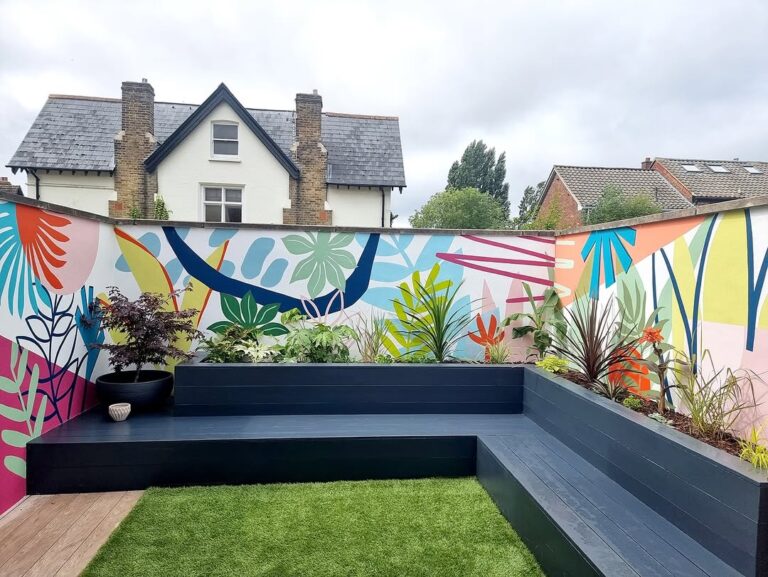
Or even a simple feature wall decorated with climbing plants.
Once you establish a focal point, the rest of the patio becomes much easier to decorate.
Instead of adding more attention-grabbing pieces, you can support the main feature and let it do the heavy lifting.
This creates a calmer atmosphere.
And calm spaces almost always feel larger.
I’ve noticed that the patios that feel the biggest aren’t always the ones with the most space. They’re often the ones where your attention settles naturally on one area instead of bouncing between multiple competing features.
Avoid Competing Features
One mistake I see often is trying to include every idea at once.
A small patio doesn’t need a conversation set, dining area, fire pit, oversized planters, and multiple decorative zones.
Trying to fit too many features into a limited footprint usually creates clutter.
If you’re unsure what to highlight, ask yourself one question.
What’s the first thing you want people to notice when they step onto the patio?
Start there.
Everything else should support that choice.
Once the patio has a clear focal point, it’s time to make sure the furniture works as hard as possible.
Choose Furniture That Works Harder
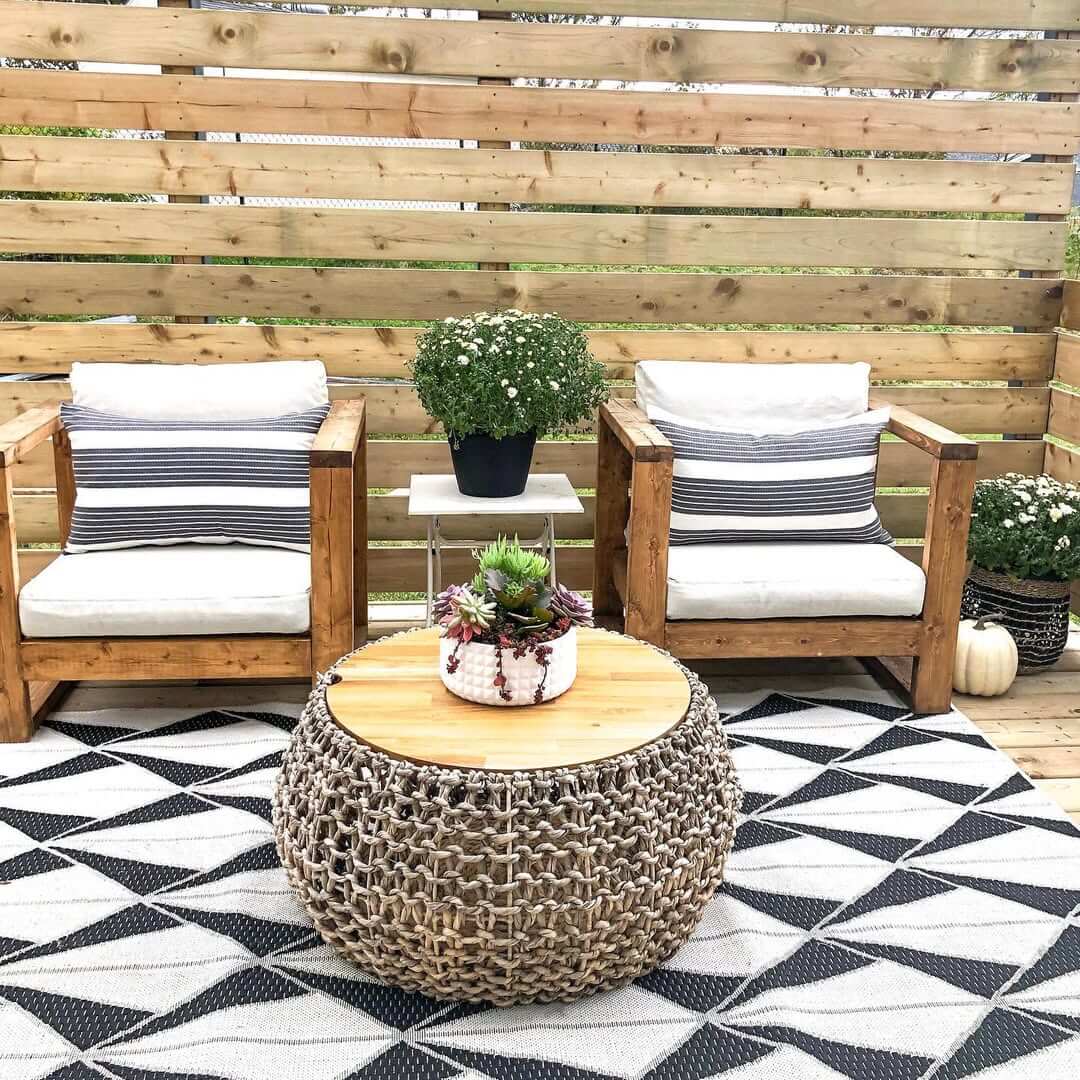
Every piece of furniture on a small patio should have a purpose.
Ideally, more than one purpose.
Large patios have room for furniture that exists purely for appearance.
Small patios don’t have that luxury.
That’s why multifunctional furniture often works so well.
A storage bench can provide seating while hiding outdoor cushions.
A nesting table can expand when needed and tuck away when not in use.
Foldable chairs can provide extra seating for guests without taking up permanent space.
The goal is getting more usefulness from fewer pieces.
That approach naturally helps the patio feel more open.
Scale Matters More Than Style
Many people focus entirely on appearance when shopping for patio furniture.
Scale often matters more.
Furniture that’s too large can overwhelm a small patio no matter how beautiful it looks.
I’ve seen tiny patios swallowed by oversized sectionals that left barely enough room to walk.
Before buying anything, measure carefully.
Then leave extra room around the furniture for movement.
Comfort matters.
But comfort should never come at the expense of usability.
A slightly smaller chair that allows people to move freely often creates a better experience than a larger piece that dominates the entire patio.
Once the furniture is working efficiently, there’s another area many homeowners overlook.
The walls.
Use Vertical Space Instead of Floor Space
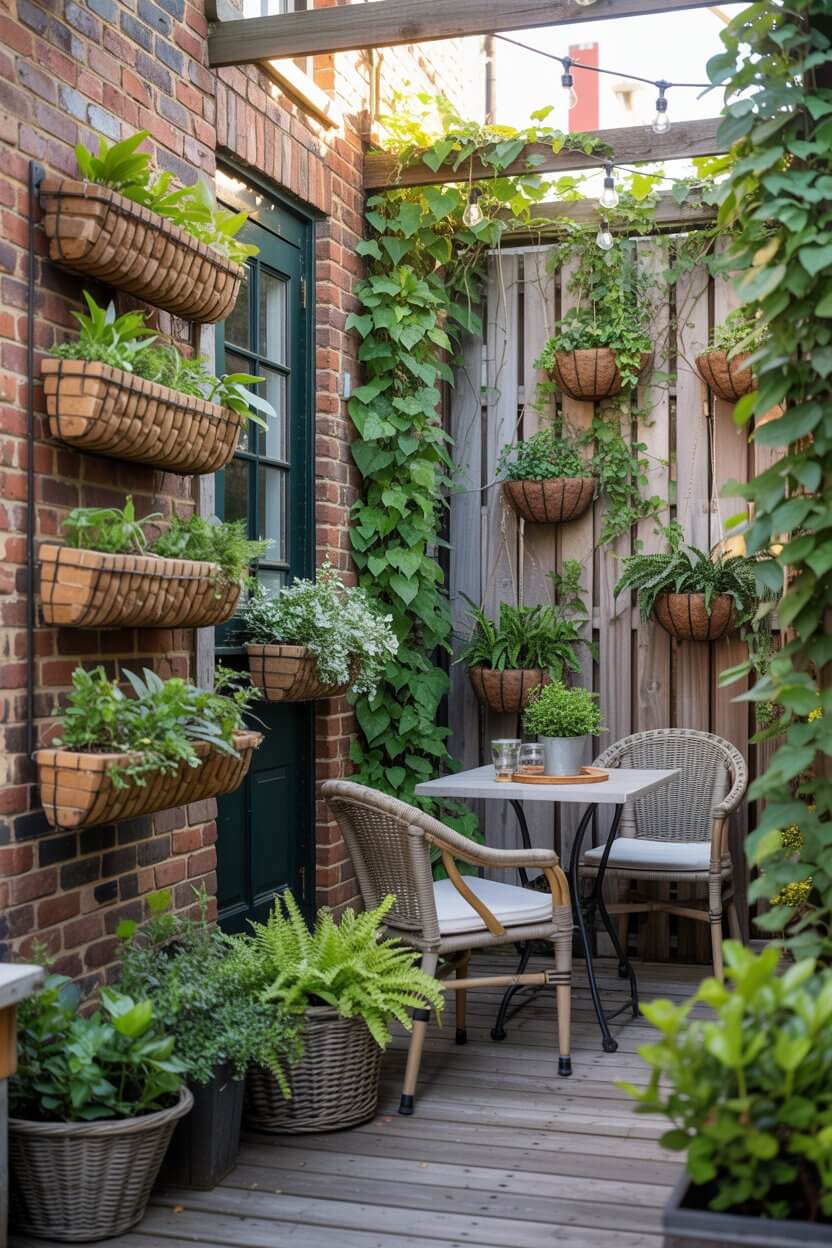
When floor space is limited, look up.
One of the smartest ways to decorate a small patio is using vertical space instead of filling the ground with more furniture and accessories.
The editors at The Spruce offer one of the best small-space tips, writing “Utilize vertical space on a small backyard patio with hanging planters.”
That’s such a useful idea because it solves two problems at once.
You add greenery and personality without sacrificing valuable square footage.
Vertical decorating naturally draws the eye upward.
And when the eye moves upward, the patio often feels larger than it actually is.
Add Wall Planters and Hanging Baskets
Walls are often underused in outdoor spaces.
A few mounted planters can bring life to a blank wall without consuming floor space.
Hanging baskets can add color and texture while keeping pathways open.
This works especially well on apartment patios and townhome patios where every square foot matters.
Use Trellises and Climbing Plants
A trellis can completely change how a small patio feels.
It adds height.
Creates privacy.
Introduces greenery.
And does all of that without requiring much space.
Climbing plants can soften hard surfaces and make the patio feel more secluded.
That’s particularly helpful if neighboring homes or apartment buildings are close by.
Create Privacy Without Building Walls
Privacy is one of the biggest challenges in small outdoor spaces.
Fortunately, you don’t need permanent structures to solve the problem.
Tall planters.
Decorative screens.
Outdoor curtains.
Vertical gardens.
All of these can create separation while maintaining an open feeling.
I’ve found that a little privacy often makes people use a patio more frequently.
When a space feels protected and comfortable, it’s easier to relax.
And that’s ultimately what most people want from their outdoor space.
Now that we’ve made better use of the available space, let’s focus on something equally important.
Making the patio feel cozy without making it feel crowded.
Make a Small Patio Feel Cozy With Layers
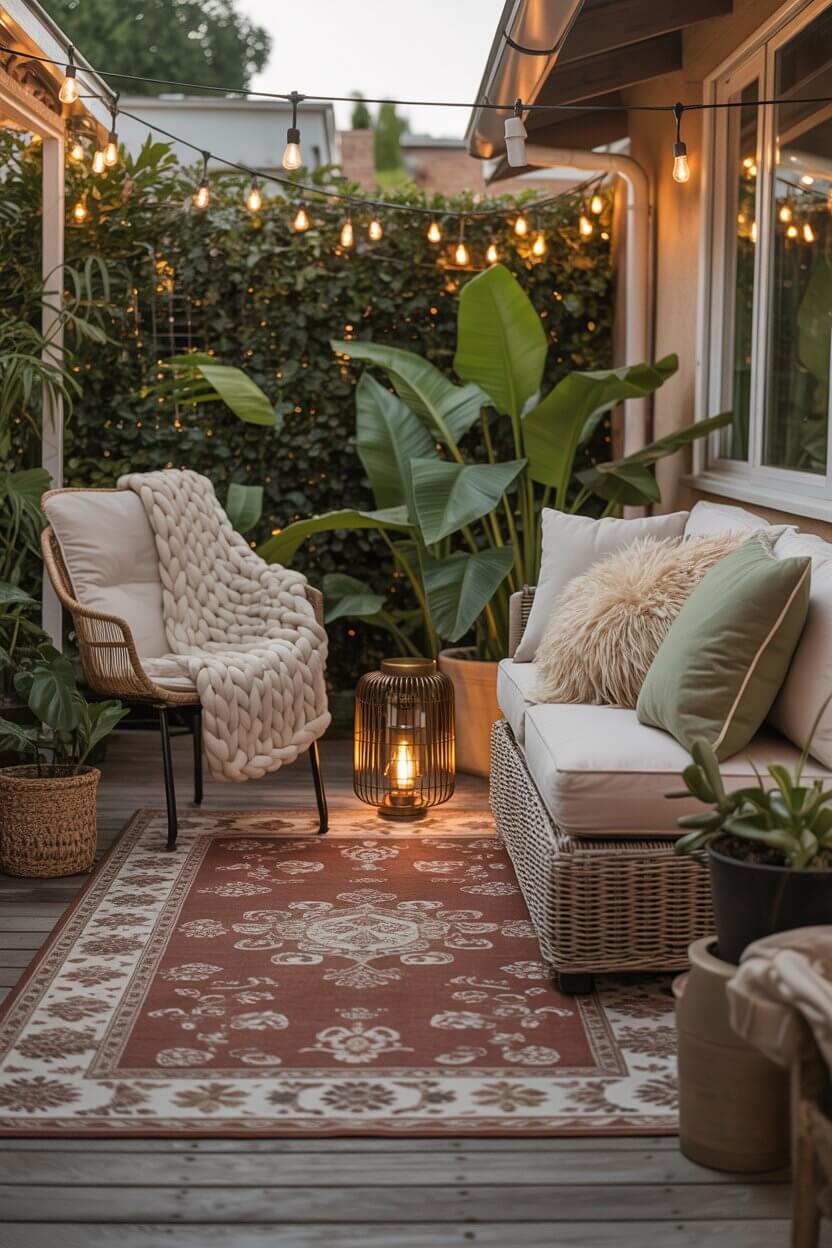
Many people confuse cozy with cluttered.
They’re not the same thing.
A cluttered patio feels busy.
A cozy patio feels comfortable.
The difference usually comes down to intentional layering.
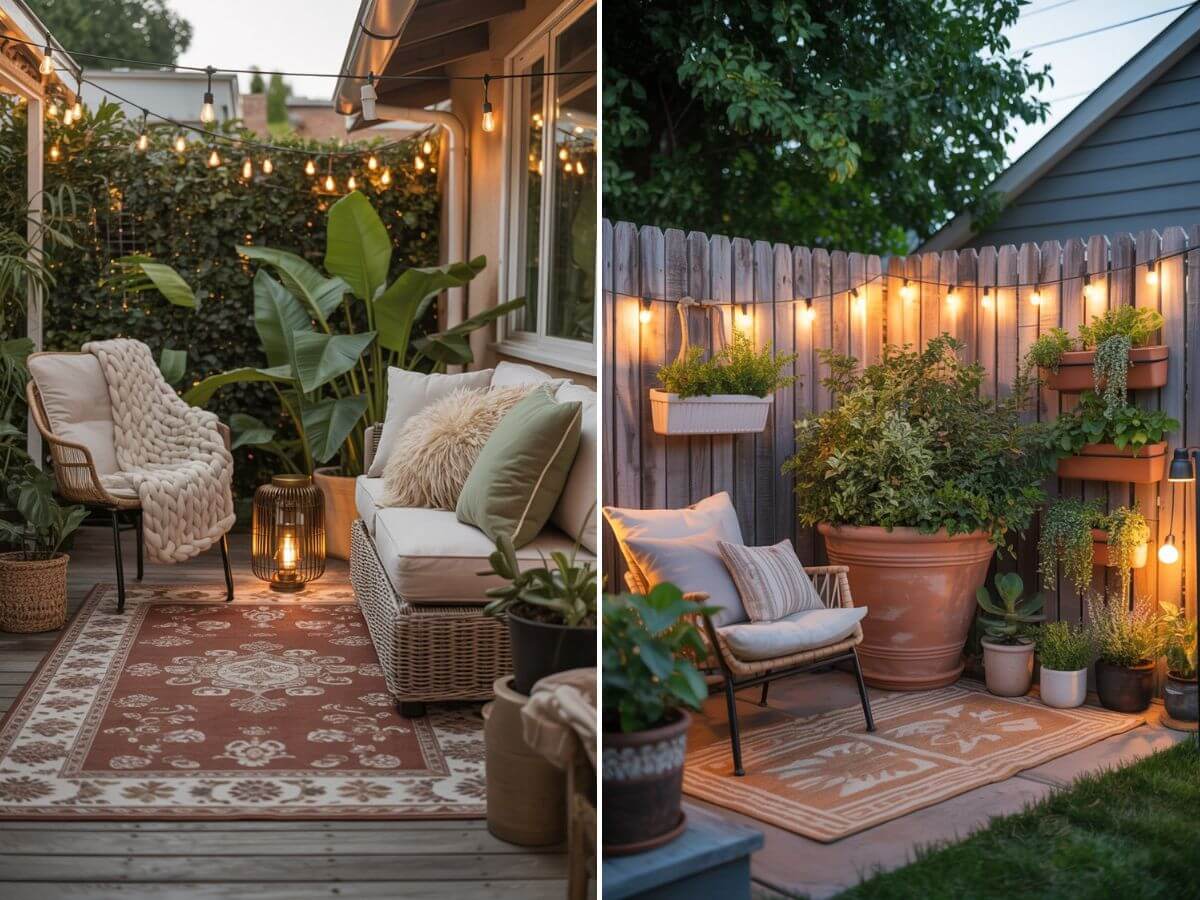
A few outdoor pillows can make seating feel softer.
A lightweight throw can make cool evenings more enjoyable.
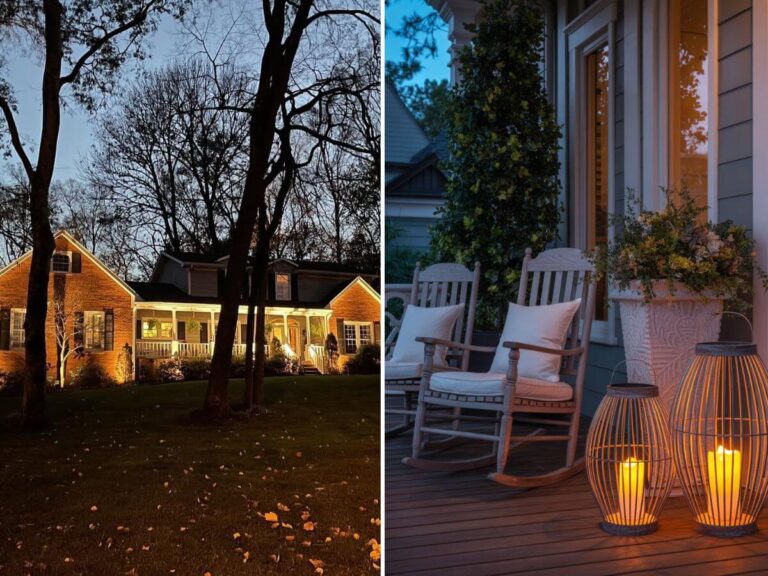
A lantern can introduce warmth without taking over the space.
These small details make a patio feel lived in.
The key is restraint.
Instead of adding ten decorative items, focus on a handful that improve comfort and atmosphere.
Ask yourself a simple question.
Would this make someone want to stay outside longer?
If the answer is yes, it’s probably worth considering.
If not, it may simply be adding visual noise.
Small patios benefit from simplicity.
The goal is creating comfort, not filling every empty corner.
Once the patio feels comfortable during the day, the next challenge is making it feel just as inviting after the sun goes down.
That’s where lighting becomes one of the most powerful tools you can use.
Use Lighting to Expand the Space
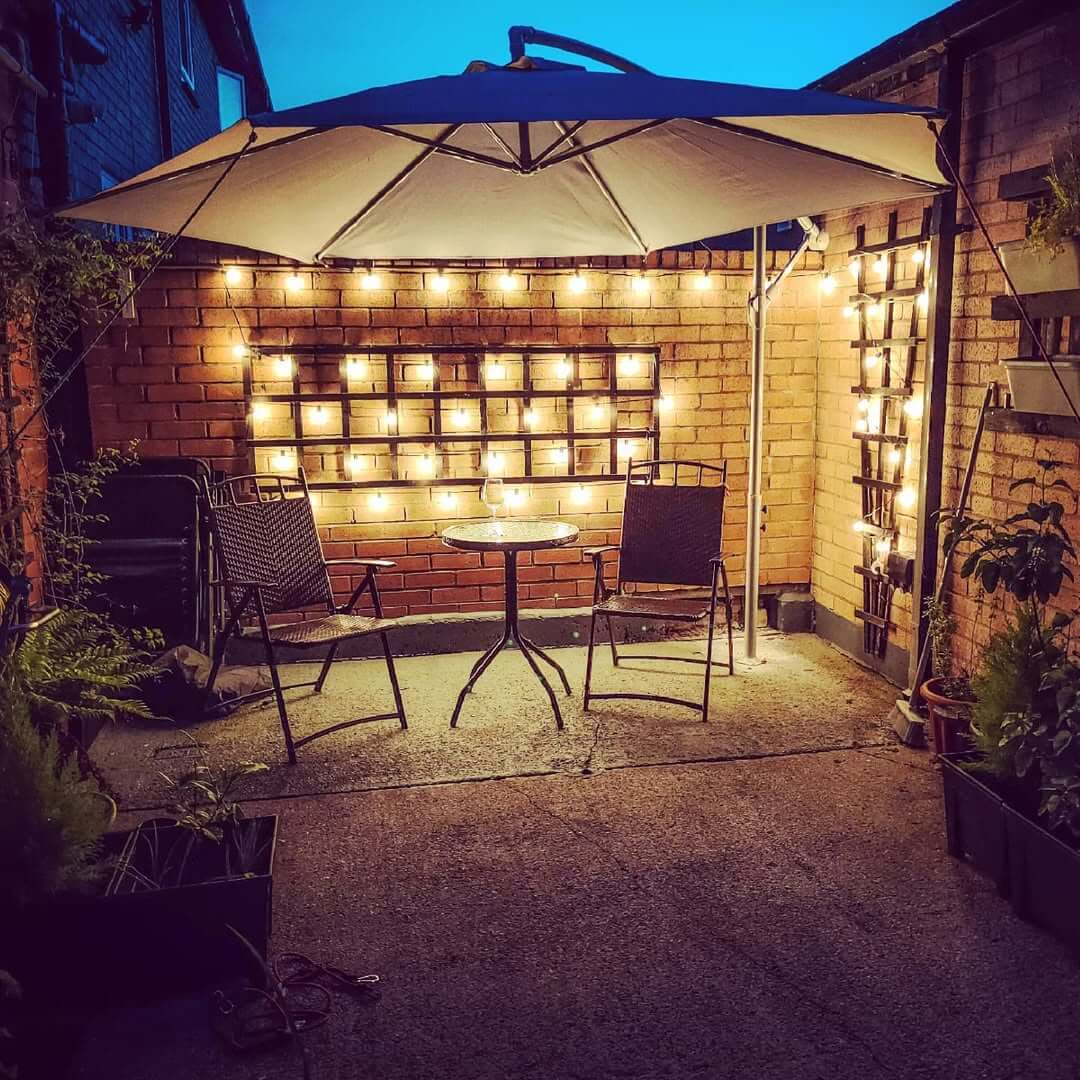
Lighting changes how a patio feels more than almost any other decorating element.
During the day, a small patio is defined by its physical dimensions.
At night, lighting can completely change the atmosphere.
A well-lit patio often feels warmer, more inviting, and surprisingly larger.
The goal isn’t making the space brighter.
It’s making the space more comfortable.
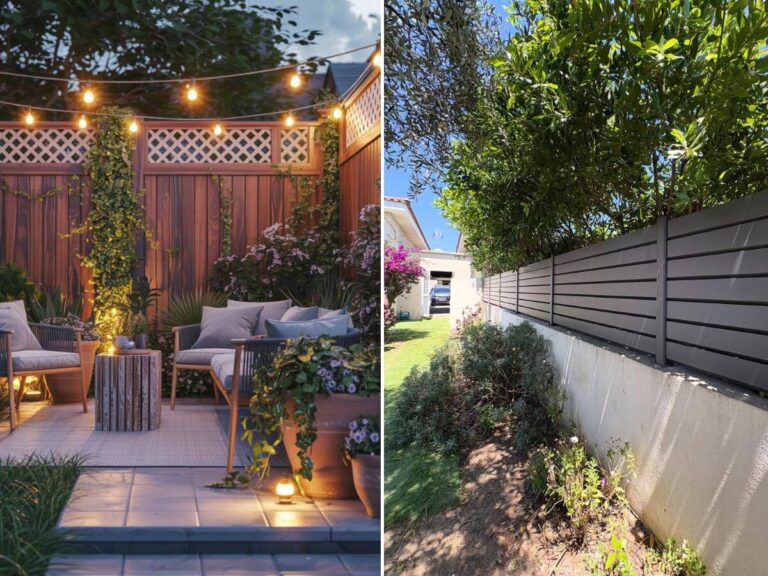
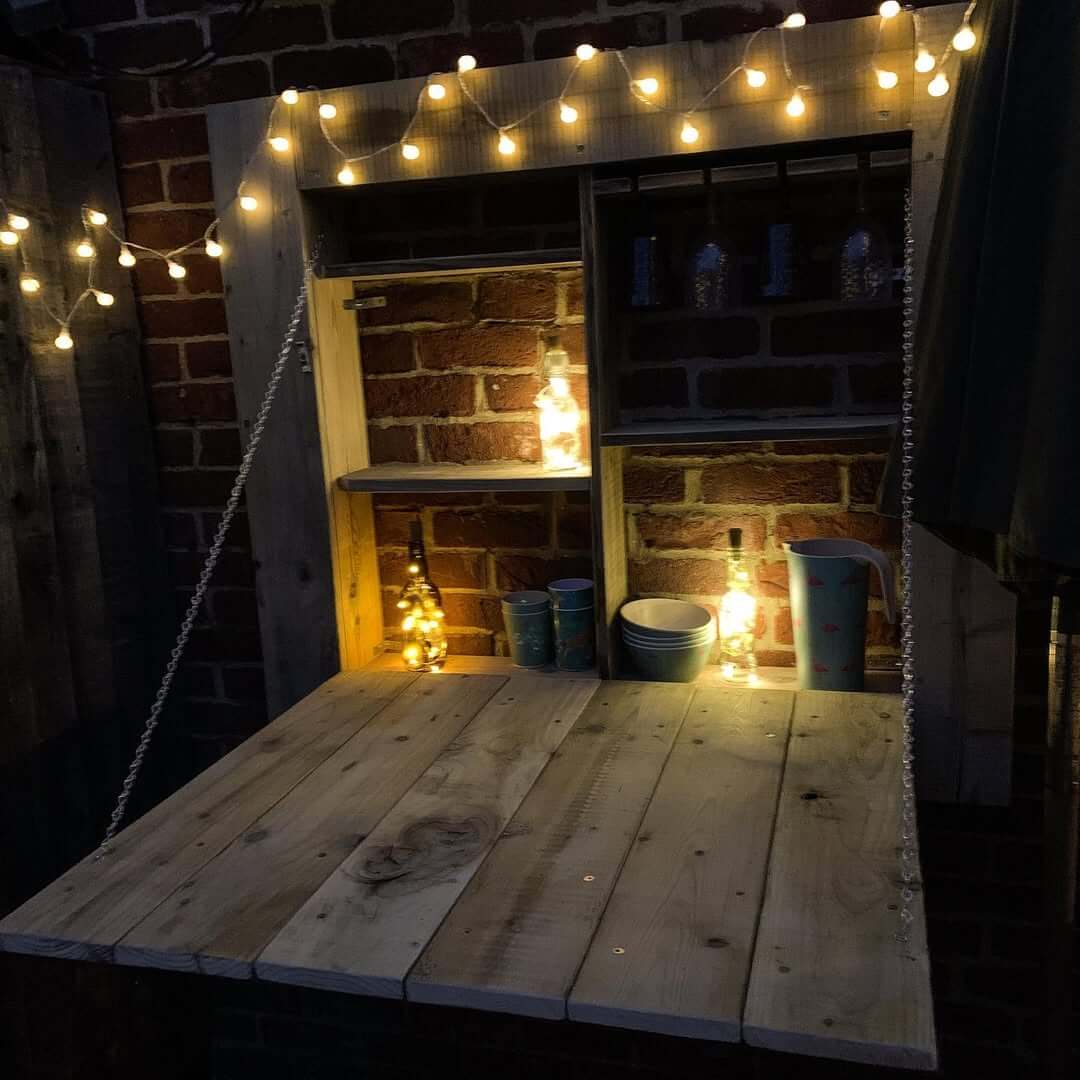
String lights are popular for a reason. They create a soft glow without feeling harsh. Lanterns add warmth around seating areas. Small solar lights can help define pathways and create depth.
One trick I love is layering different types of lighting rather than relying on a single source.
A strand of string lights overhead.
A lantern near seating.
A candle on a side table.
Each layer adds warmth while helping the patio feel more intentional.
Lighting also encourages people to stay outside longer.
A patio that feels inviting after sunset becomes a space you can enjoy throughout the day instead of only during daylight hours.
I’ve found that good lighting changes how people use a patio. A space that sits empty after dinner can suddenly become somewhere people gather for conversations, late-night reading, or a quiet cup of tea before bed.
Once the lighting is working for you, the next step is adapting these ideas to apartment patios and townhomes where space is often even more limited.
Small Patio Ideas for Apartments and Townhomes
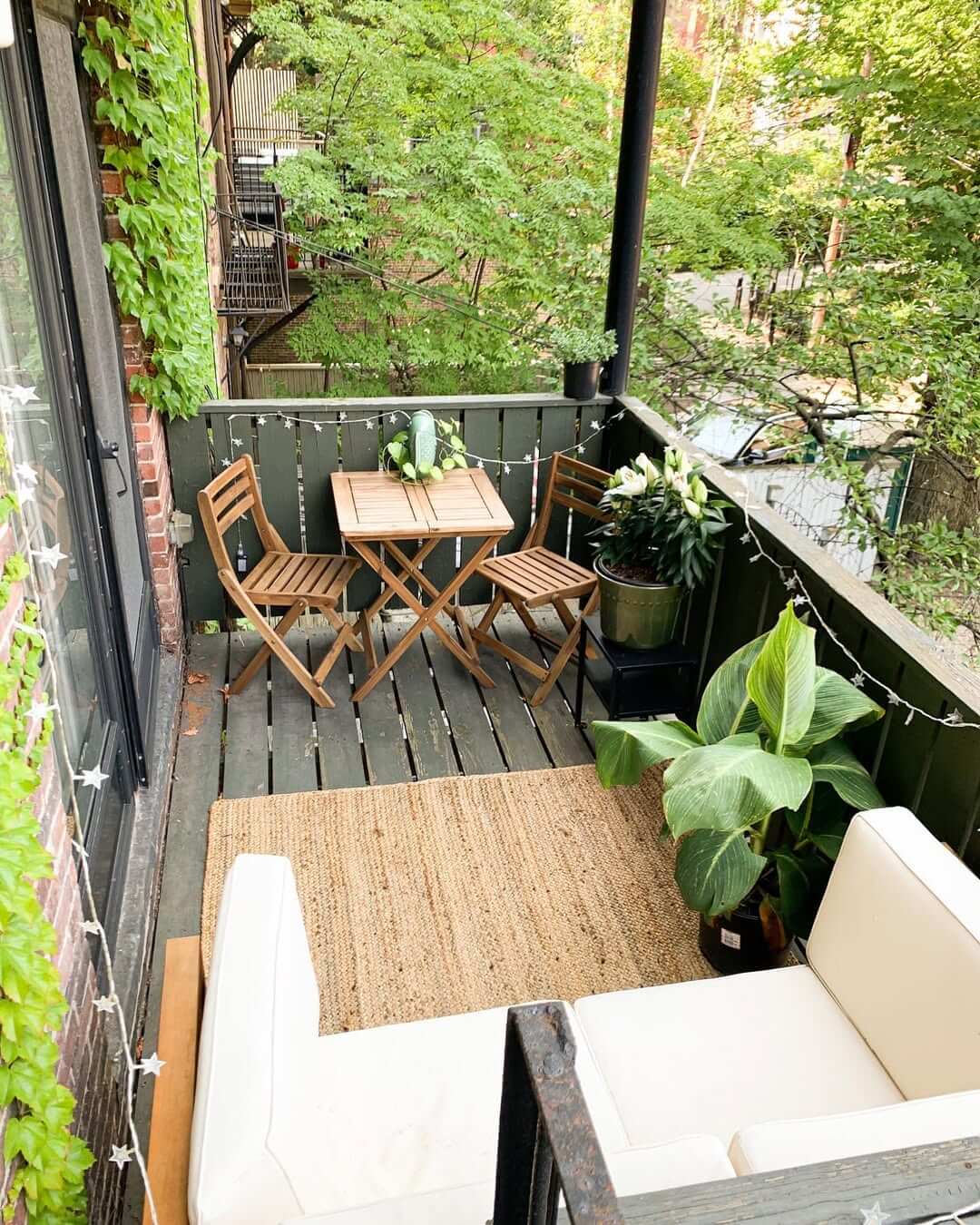
Apartment patios come with unique challenges.
Limited square footage.
Shared walls.
Close neighbors.
Yet some of the coziest outdoor spaces I’ve seen have been apartment patios.
The secret isn’t having more room.
It’s using the available room more thoughtfully.
Create Privacy Without Building Walls
Privacy often makes a small patio feel more comfortable.
People naturally relax more when they don’t feel exposed.
Tall planters, decorative screens, outdoor curtains, and climbing greenery can all create a greater sense of separation without making the patio feel closed in.
Even a small amount of privacy can make a patio feel like a personal retreat.
Use Portable Decor
One advantage renters have is flexibility.
Portable furniture, movable planters, and freestanding screens can easily move with you if you relocate.
That means you can improve the patio without investing in permanent changes.
Decorate for Flexibility
Every item should work hard.
A storage bench can provide seating and organization.
A folding table can disappear when not needed.
Stackable chairs can create guest seating without permanently taking up space.
Small patios reward flexibility.
The easier a space is to adapt, the more useful it becomes.
And usefulness is what ultimately determines whether a patio gets used regularly.
If you’re looking for quick results, there are several improvements you can make this weekend.
7 Small Patio Upgrades You Can Do This Weekend
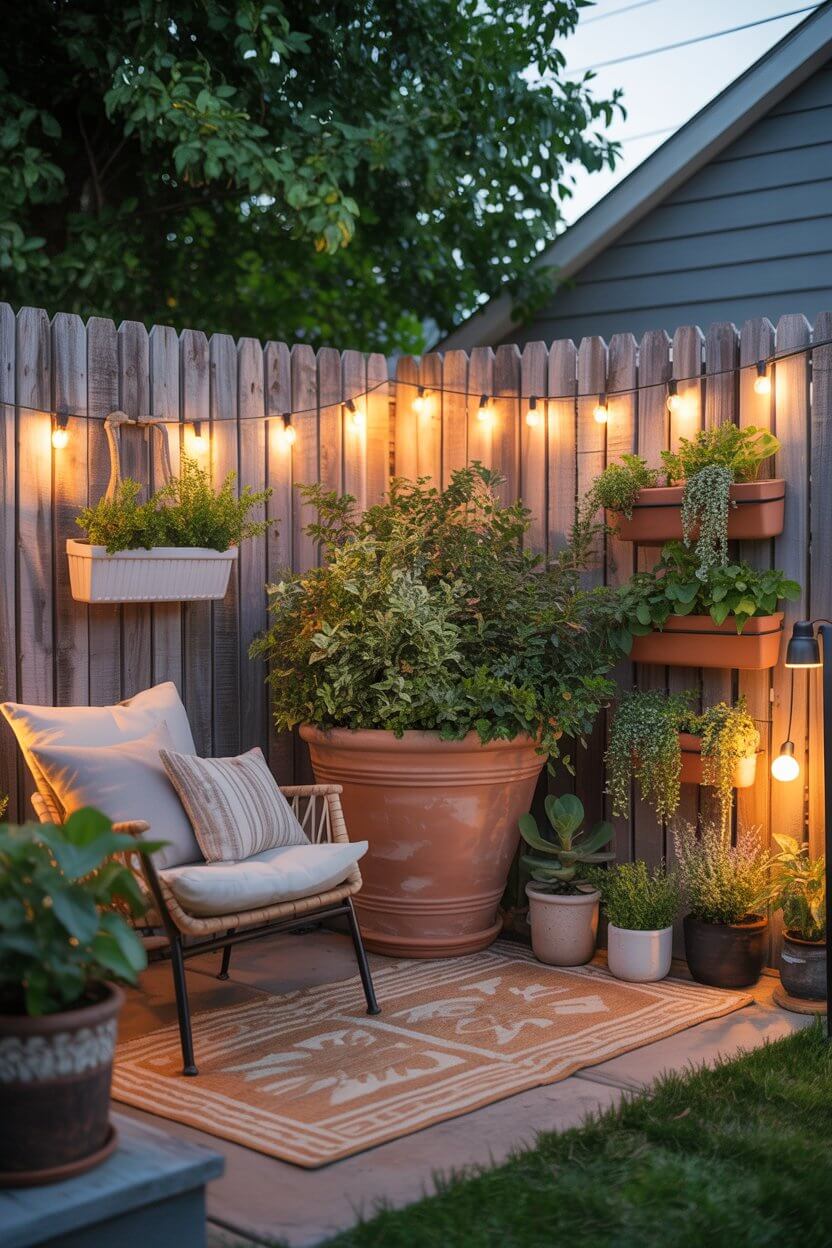
You don’t need a major makeover to improve a small patio.
In many cases, a few simple changes can completely shift how the space feels.
The best part is that most of these upgrades can be done in a single afternoon.
1. Add One Large Planter
A single oversized planter often creates more visual impact than several small containers scattered throughout the patio.
Large planters give the eye a natural focal point and help anchor the space. Place one near a seating area or patio entrance to create a stronger sense of structure.
If you’re working with a very small patio, one statement planter usually works better than five smaller pots competing for attention.
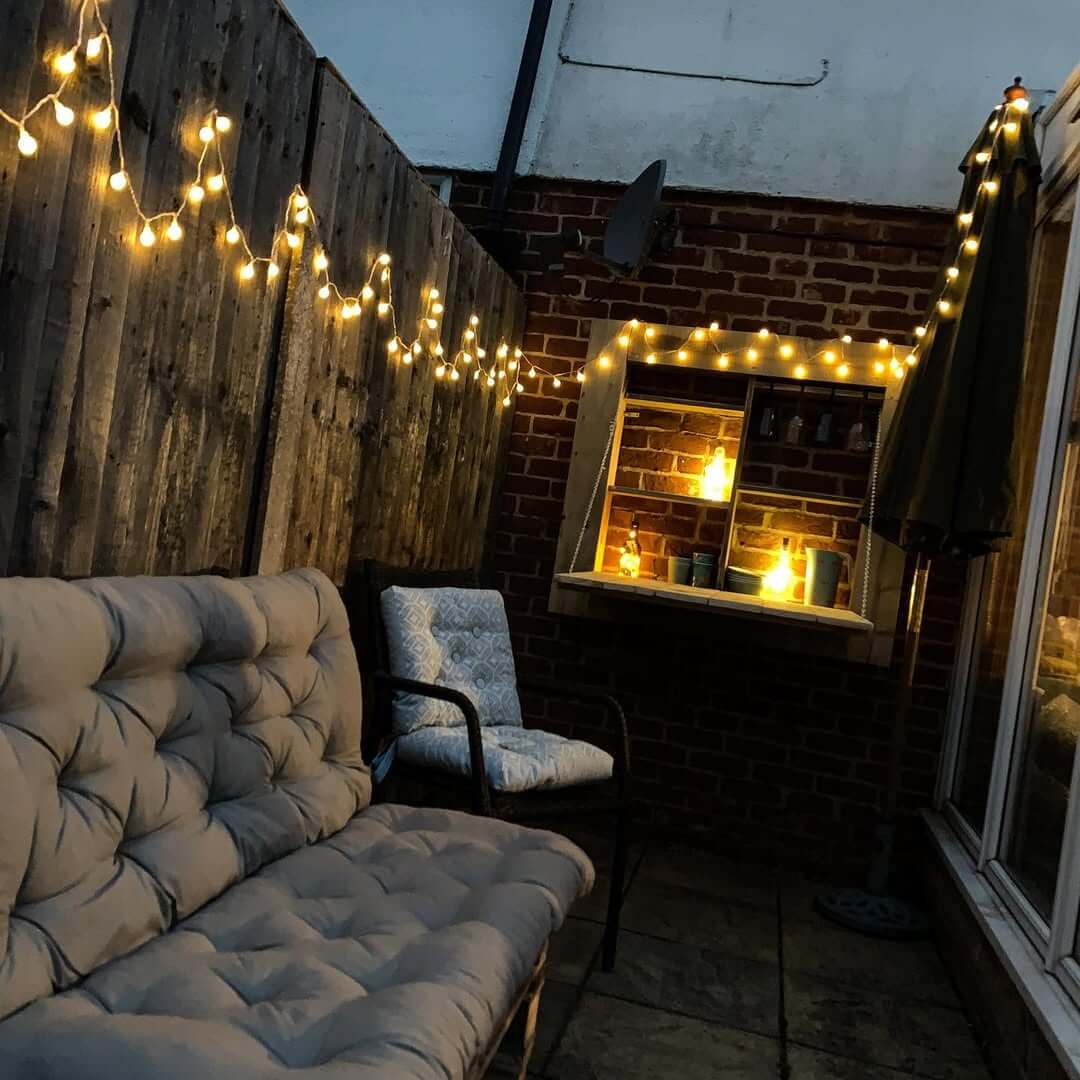
2. Install String Lights
Few upgrades create atmosphere faster than warm outdoor lighting.
String lights help soften the space and make the patio feel inviting after sunset. They also draw the eye upward, which can make a small outdoor area feel more open.
Even a simple strand hung along a railing, fence, or pergola can completely change the mood of the space.
3. Create a Reading Corner
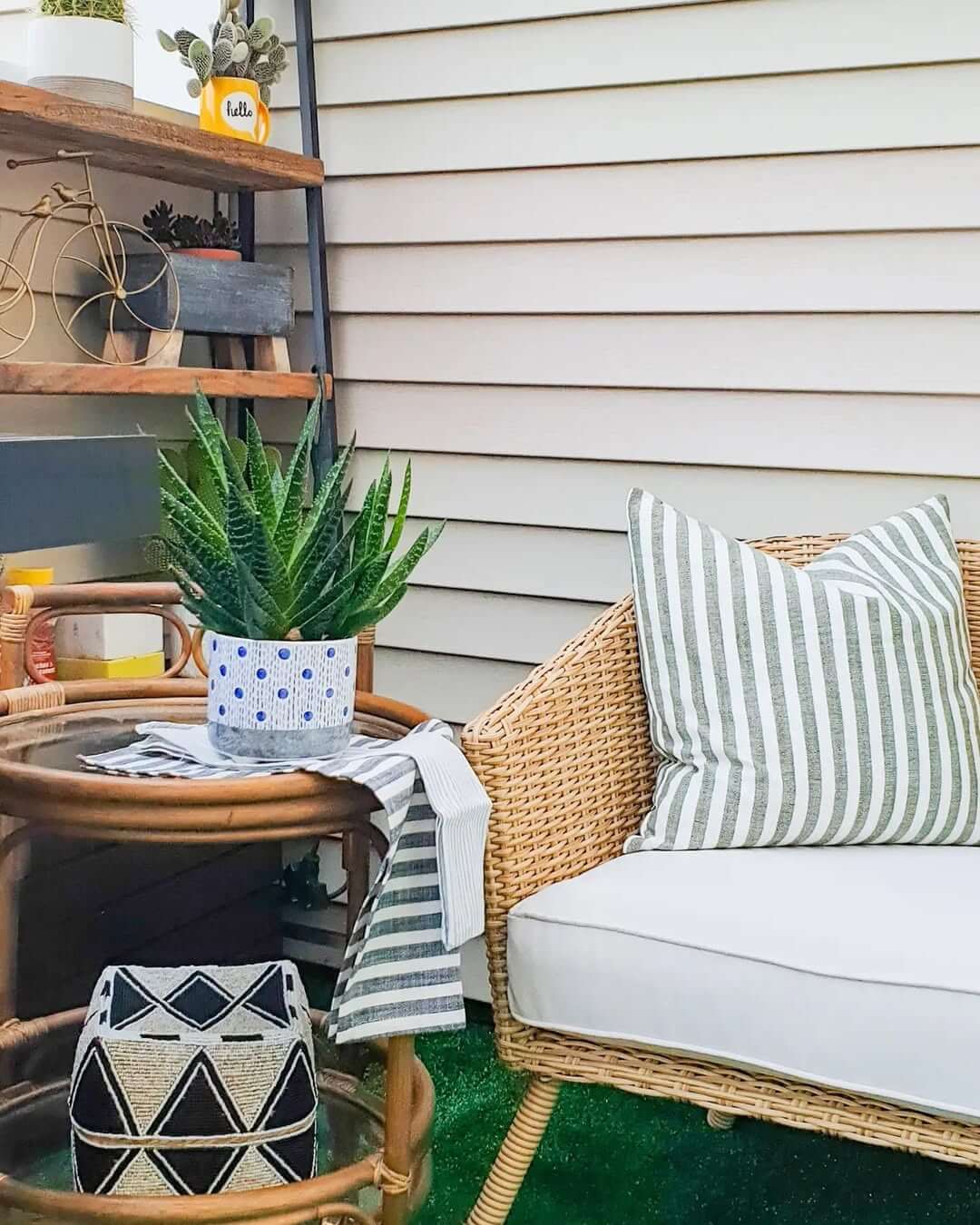
One comfortable chair and a small side table can turn an unused corner into a favorite spot.
Giving a patio a specific purpose often increases how frequently it’s used. A reading corner creates a natural destination for morning coffee, quiet afternoons, or a few minutes of fresh air after a long day.
Sometimes one well-designed corner has a bigger impact than redecorating the entire patio.
4. Replace Oversized Furniture
Furniture that’s too large can make even a decent-sized patio feel cramped.
Take a fresh look at the pieces you’re using. If something dominates the space or makes movement difficult, replacing it with a better-scaled option can instantly improve the layout.
I’ve found that removing one oversized piece often creates a bigger improvement than adding several new decorative items.
5. Add a Small Outdoor Rug
An outdoor rug helps define the seating area and makes the patio feel more intentional.
Without a rug, furniture can sometimes feel disconnected from the rest of the space. A properly sized rug visually brings everything together and helps create the feeling of an outdoor room.
This is one of the easiest upgrades for making a patio feel more finished.
6. Install Wall Planters
Wall planters are a great way to add greenery without sacrificing valuable floor space.
They work especially well on apartment patios, townhome patios, and compact backyard patios where every square foot matters.
A few mounted planters can bring color, texture, and life to an otherwise plain wall while keeping pathways clear.
7. Remove One Unnecessary Item
This might be the most effective upgrade on the list.
Walk onto your patio and ask yourself whether every item serves a purpose.
If something doesn’t improve comfort, function, or appearance, try removing it for a few days.
You may be surprised by how much larger and more comfortable the patio feels.
I’ve noticed that small patios often improve faster through subtraction than addition. Creating breathing room is sometimes the most valuable design decision you can make.
Before wrapping up, let’s cover a few mistakes that often make small patios feel more cramped than they need to.
Small Patio Mistakes That Make Spaces Feel Cramped
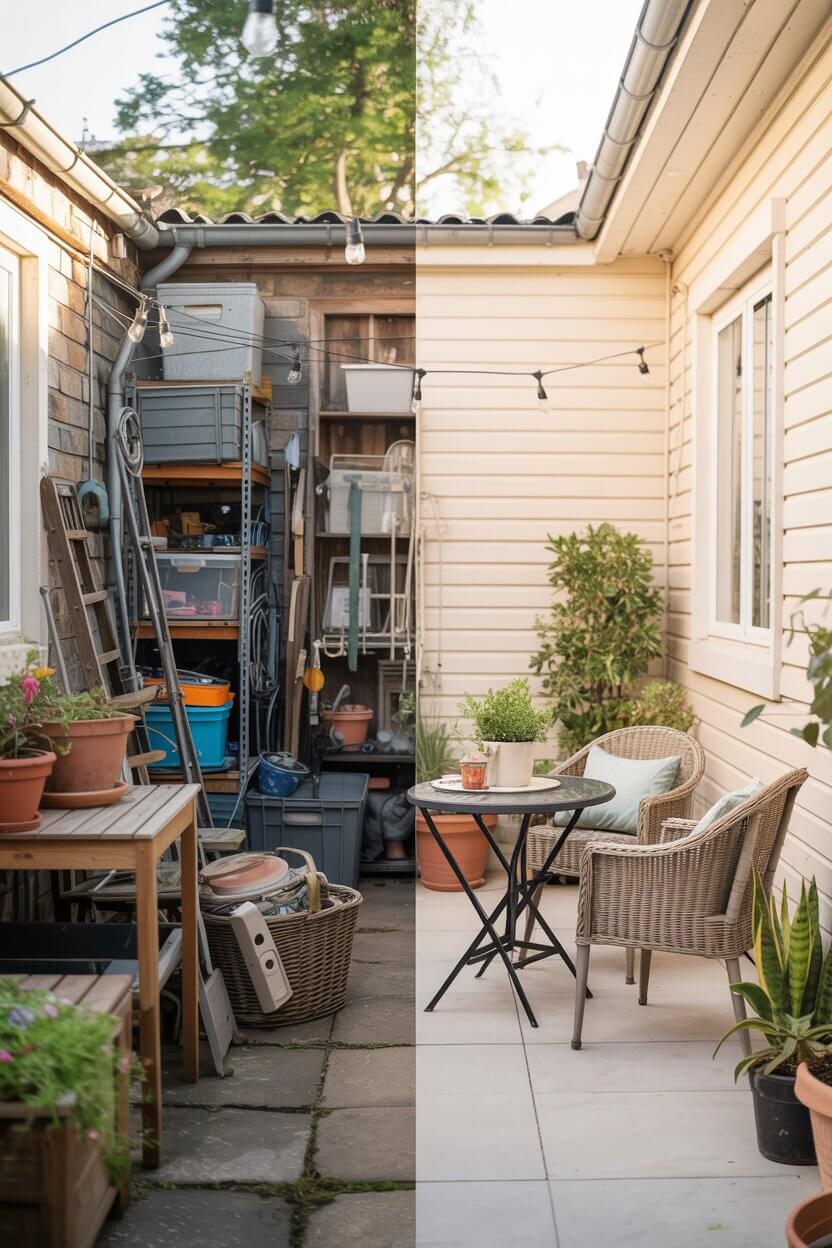
Most small patio problems aren’t caused by a lack of space.
They’re caused by how the space is used.
One of the best reminders comes from Architectural Digest, which advises homeowners to “Keep it simple…. Too much intricacy or clutter will make the space feel more constrictive.”
That advice applies to almost every decorating decision you’ll make.
Too many accessories.
Too many furniture pieces.
Too many competing focal points.
All of them can make a patio feel smaller.
Another common mistake is ignoring vertical space.
When everything stays at ground level, the patio feels compressed.
Adding height through plants, screens, and wall decor helps create a greater sense of openness.
Poor traffic flow is another issue.
If you have to navigate around furniture every time you walk outside, the layout probably needs adjustment.
Small patios don’t have much room for mistakes.
That’s why intentional decorating matters so much.
Fortunately, making a patio feel larger doesn’t require adding more square footage.
How to Make a Small Patio Feel Bigger Without Expanding It
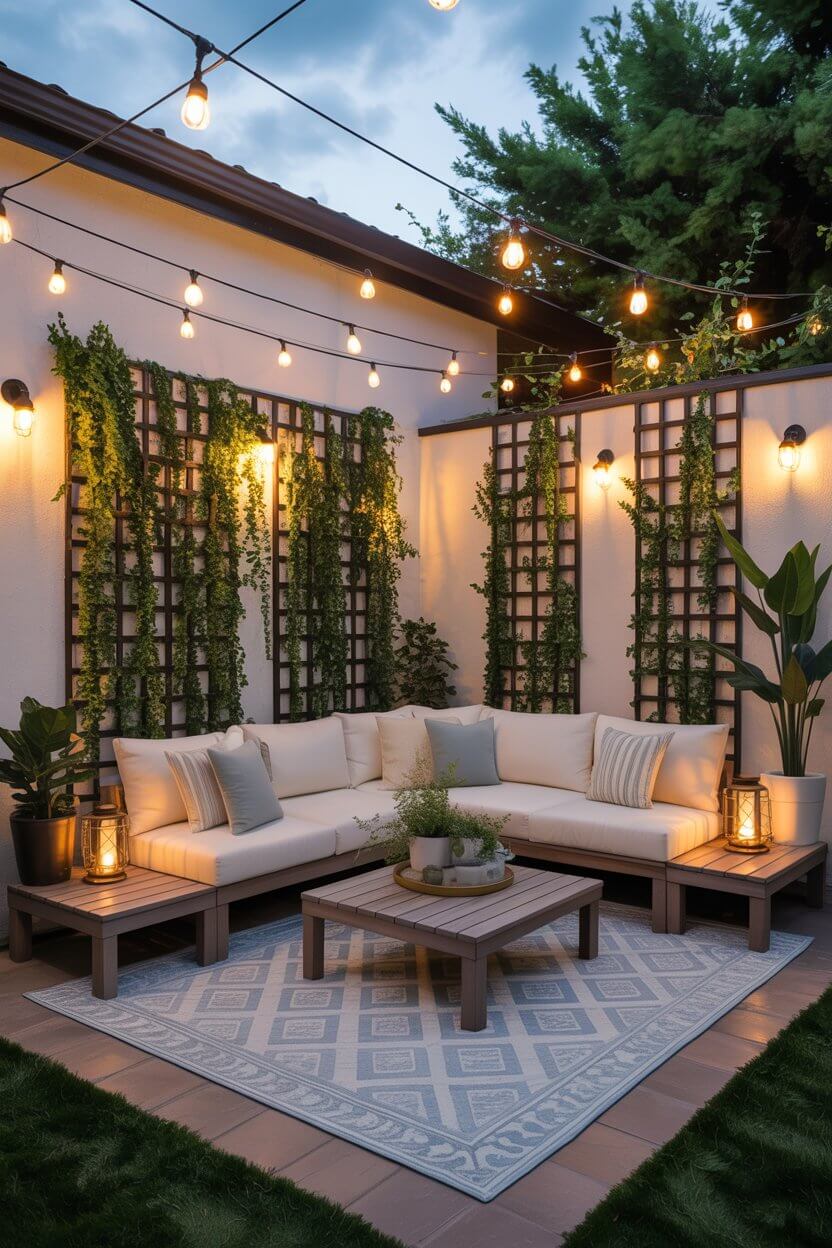
One of my favorite ideas comes from Architectural Digest, which quotes architect Kevin Lichten saying “Patios should be outdoor rooms.”
That’s a powerful way to think about a small patio.
Instead of treating it like leftover outdoor space, treat it like another room in your home.
Give it a purpose.
Create comfortable seating.
Add lighting.
Introduce texture.
Define areas thoughtfully.
When you approach a patio this way, the focus shifts from how much space you have to how well you’re using it.
And that’s where the biggest transformation happens.
I’ve noticed that the small patios people love most aren’t necessarily the most decorated.
They’re the ones that feel intentional.
Every chair has a reason for being there.
Every planter contributes something.
Every inch serves a purpose.
That’s what makes a small patio feel bigger.
Not more space.
Better use of the space you already have.
Final Thoughts
The best small patio ideas aren’t about squeezing more into a limited area.
They’re about creating a space that feels comfortable, functional, and inviting.
When you stop trying to fill every corner, prioritize furniture that fits, make use of vertical space, and focus on how you actually want to live outdoors, a small patio can feel surprisingly spacious.
In many cases, it can become one of the most enjoyable parts of your home.
A place for morning coffee.
A place to unwind after work.
A place to enjoy fresh air without leaving home.
And when a patio supports those everyday moments, it stops feeling small.
It simply feels like exactly the right size.
Also read:
Patio Decorating Ideas That Make You Want to Spend More Time Outside
Patio Garden Ideas That Make Small Outdoor Spaces Feel Peaceful