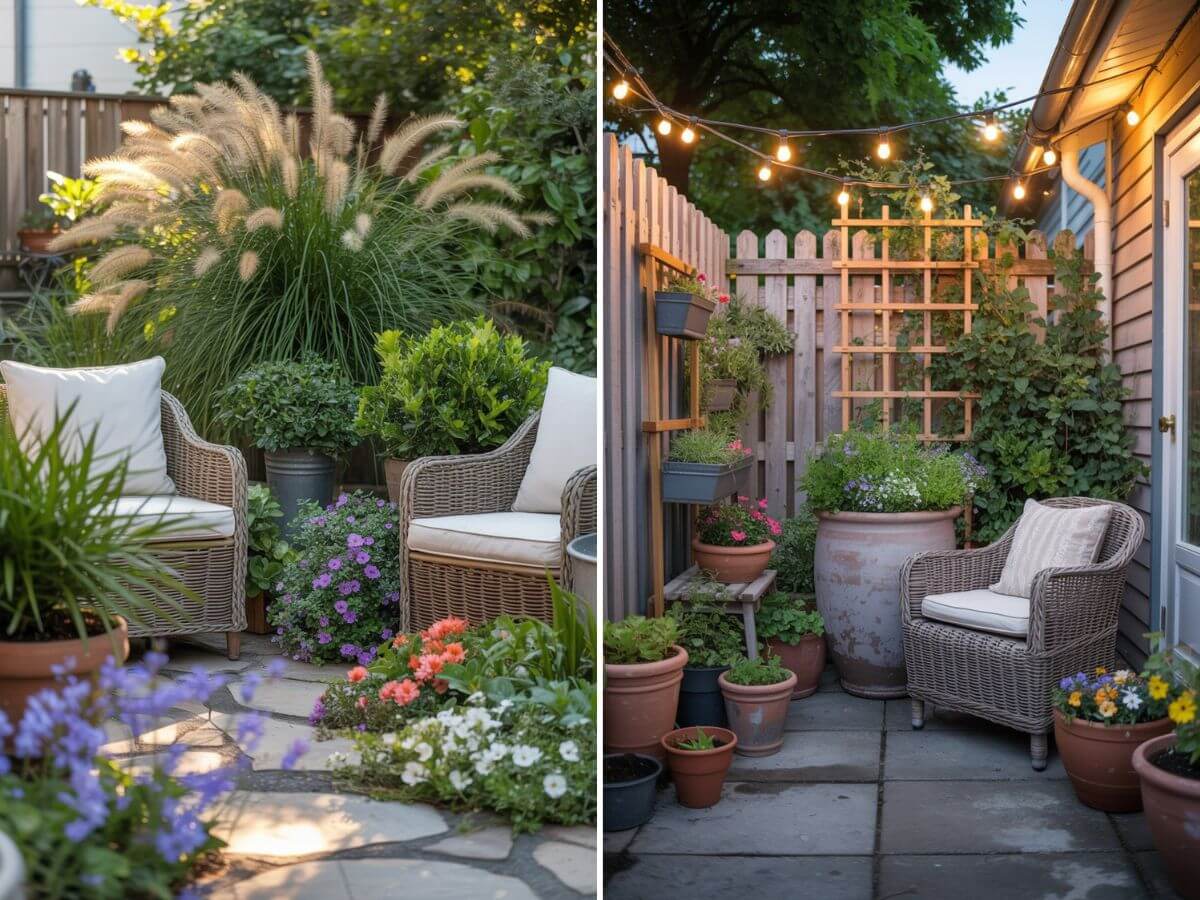
Patio Garden Ideas That Make Small Outdoor Spaces Feel Peaceful
A patio doesn’t need to be surrounded by acres of greenery to feel peaceful.
Some of the most relaxing outdoor spaces I’ve ever seen were surprisingly small.
A compact townhouse patio.
A narrow apartment balcony.
A tiny backyard sitting area tucked behind a fence.
The common thread wasn’t the size of the space.
It was how plants were used.
Many people assume creating a patio garden means filling every corner with flowers, containers, and decorative accessories.
The result is often the opposite of what they hoped for. The patio starts feeling crowded. Maintenance becomes overwhelming. Instead of creating a place to relax, the space begins to feel busy.
A peaceful patio garden works differently.
It uses plants to soften hard surfaces, create privacy, add texture, and help people feel more connected to nature.
That’s why the best patio gardens aren’t necessarily the ones with the most plants.
They’re the ones that create the right feeling.
A place to drink coffee before the day begins.
A place to read for half an hour without distractions.
A place where you can sit outside after work and immediately feel your shoulders relax.
That’s the goal.
Not creating a garden that looks impressive for a photo.
Creating a garden that makes everyday life feel a little better.
In this guide, I’ll share patio garden ideas that help small outdoor spaces feel calmer, greener, and more inviting without making them feel crowded.
Start by Thinking About the Feeling You Want to Create
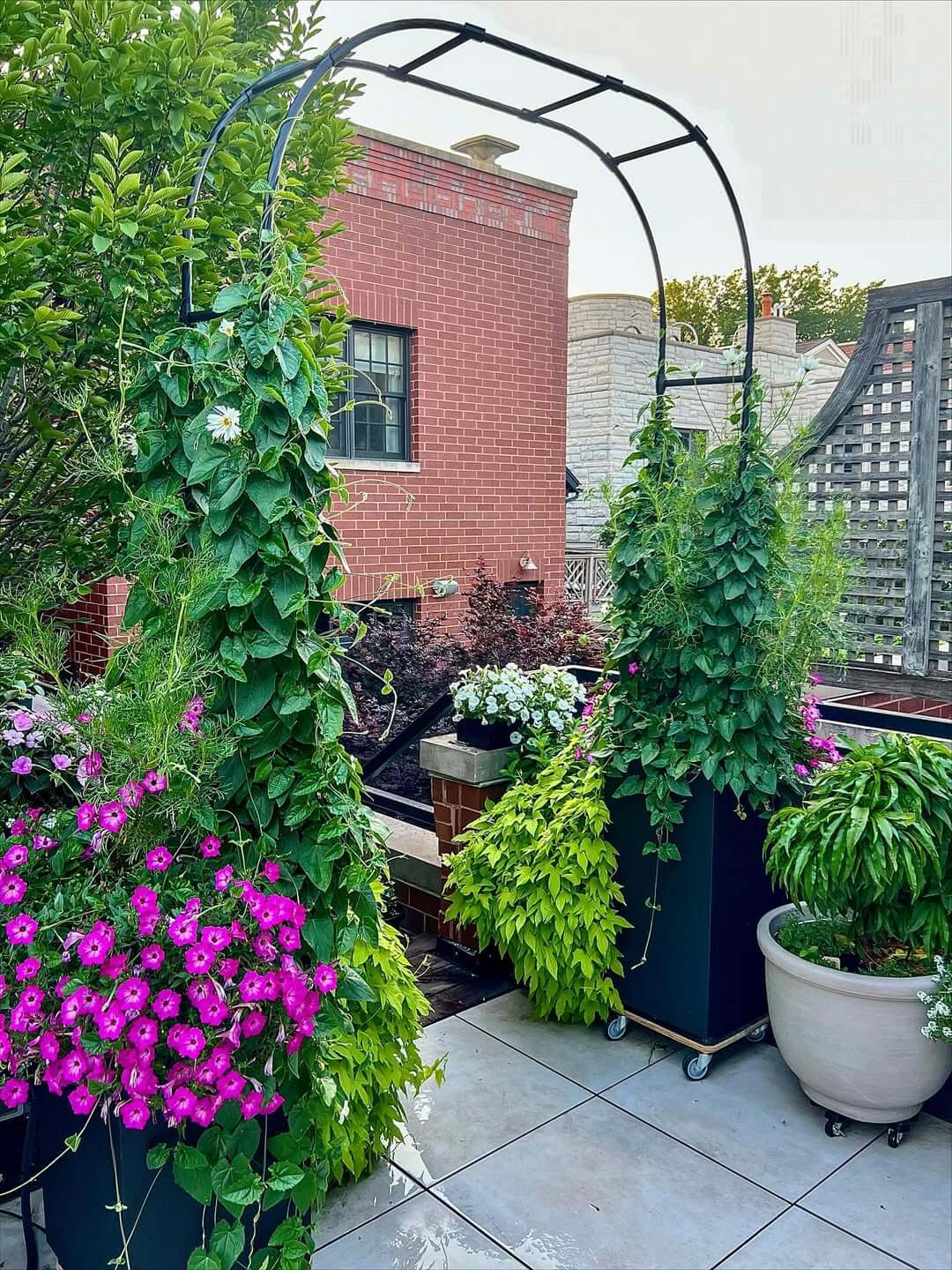
Before choosing a single plant, think about how you want the space to feel.
This sounds simple, but it can completely change your decisions.
Many homeowners start by choosing plants they like.
A better approach is starting with the atmosphere you want to create.
Do you want a quiet retreat for reading?
A garden that feels private from nearby neighbors?
A cozy outdoor dining space?
A place to enjoy morning coffee surrounded by greenery?
The answer helps guide everything that follows.
A reading garden may benefit from soft foliage, comfortable seating, and a calming color palette.
A private patio retreat may need taller plants and layered greenery.
A dining patio may focus more on container gardens placed around the perimeter so the center remains open.
When the feeling comes first, the design becomes much easier.
Every plant, container, and decorative element starts supporting a specific goal.
And that usually leads to a more peaceful result.
Once you know the atmosphere you want, the next step is resisting the urge to buy too many plants.
Use Fewer Plants but Make Them Count
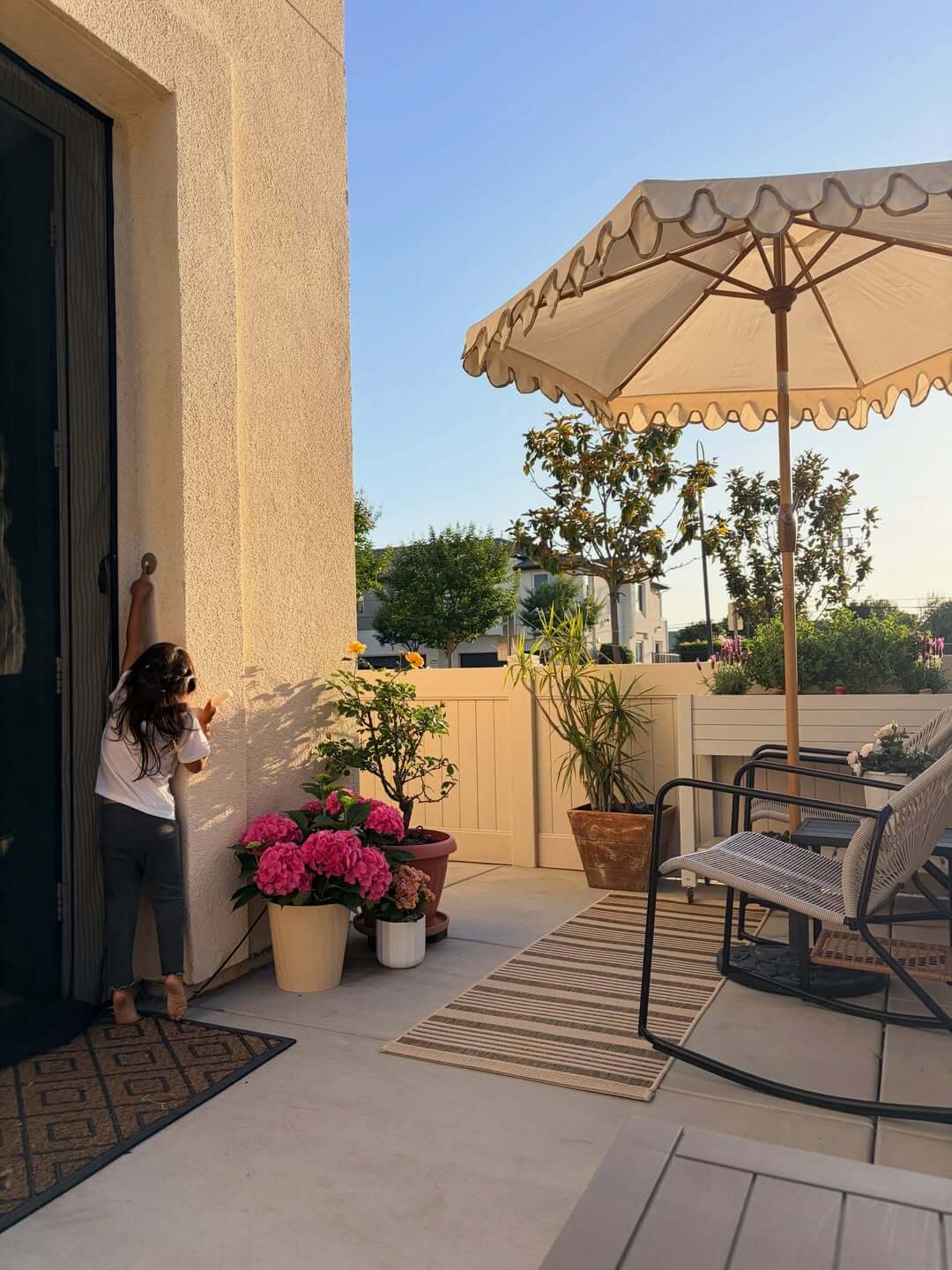
One of the biggest mistakes I see in small patio gardens is trying to fit too much into the space.
More flowers.
More containers.
More colors.
More varieties.
It sounds like it should create a lush garden.
Instead, it often creates visual clutter.
A few carefully chosen plants usually create a stronger impact than dozens competing for attention.
One Large Planter Often Works Better Than Five Small Ones
Large containers naturally draw the eye.
They create structure and help anchor the space.
Five small pots scattered around a patio can sometimes feel random.
One oversized planter filled with beautiful greenery often feels intentional.
I’ve found that larger containers also tend to make maintenance easier. They hold moisture longer and usually require less frequent watering than multiple small pots.
If you’re working with a compact patio, try replacing several smaller containers with one larger statement planter.
You may be surprised by how much calmer the space feels.
Repeat Plants for a More Relaxed Look
Repetition is one of the easiest ways to make a garden feel peaceful.
Instead of using ten different plant varieties, try repeating a few favorites throughout the space.
The eye naturally enjoys consistency.
Repeating the same plant, color, or container style helps create a sense of rhythm that feels more relaxing than a collection of unrelated elements.
A patio garden doesn’t need endless variety to feel beautiful.
Often, simplicity creates a stronger result.
Now that we’ve simplified the plant selection, let’s look at how placement can make a small patio feel much greener without feeling crowded.
Create Layers With Plants
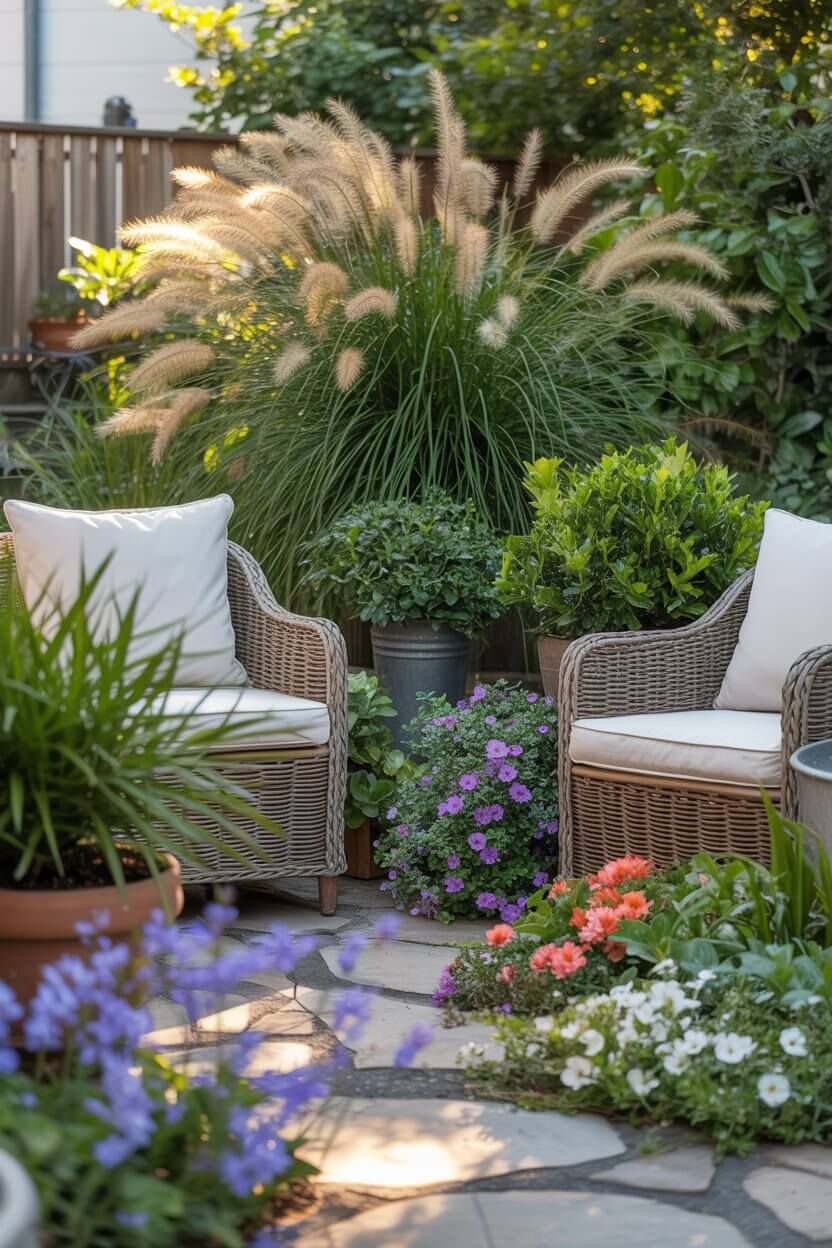
One reason professional gardens often feel lush is that they use layers.
Instead of placing every plant at the same height, they create visual depth.
The same principle works beautifully on patios.
A layered patio garden feels fuller, softer, and more natural.
And it doesn’t require a large amount of space.
Place Taller Plants Behind Seating Areas
Tall ornamental grasses, potted shrubs, or small trees can create a backdrop for the patio.
This adds height while helping define the space.
It’s also a simple way to introduce privacy without building permanent structures.
Use Medium-Sized Plants to Fill the Middle
Mid-height containers help connect taller plants with lower greenery.
They create a smoother transition and help the garden feel more cohesive.
Keep Lower Plants Near Seating Areas
Low-growing plants and trailing containers work well near chairs, benches, and tables.
They soften hard edges without blocking views.
The result is a patio that feels surrounded by greenery rather than overwhelmed by it.
Once layers are working together, the next opportunity is often found somewhere people forget to look.
Up.
Add Vertical Greenery Instead of Taking Up Floor Space
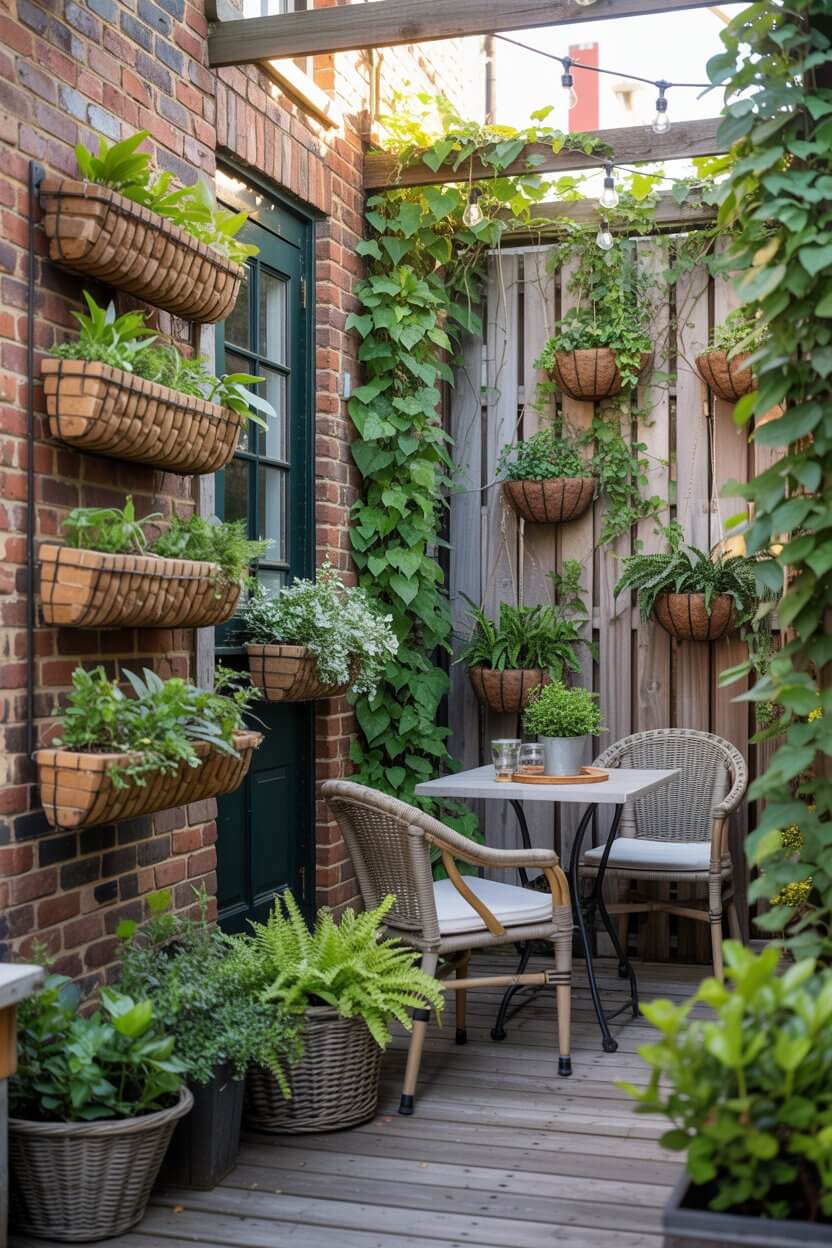
When patio space is limited, the smartest place to garden is often somewhere people overlook.
The walls.
One of the easiest ways to create a lush patio garden without sacrificing valuable floor space is adding greenery vertically.
The team at The Spruce shares a great reminder: “Make the most of your patio wall by outfitting it with both functional and decorative touches.”
That’s exactly why vertical gardening works so well.
It allows you to introduce plants, texture, and visual interest without crowding the areas where people actually sit, walk, and relax.
I’ve noticed that patios often start feeling larger the moment attention moves upward. When greenery extends beyond ground level, the entire space feels more layered and dimensional.
Use Wall Planters to Add Greenery
A blank wall can become one of the hardest-working parts of a patio garden.
Mounted planters can hold herbs, flowering plants, trailing greenery, or a combination of all three.
This approach works particularly well on apartment patios and townhome patios where floor space is limited.
Instead of giving up room for more containers, the wall becomes part of the garden.
Add Hanging Baskets Above Eye Level
Hanging baskets help soften a patio without making it feel crowded.
They also help create the feeling of being surrounded by greenery.
Trailing flowers and cascading foliage can bring movement to the space while keeping pathways clear.
Use Trellises and Climbing Plants
A simple trellis can completely change how a patio feels.
It introduces height.
Creates privacy.
Adds texture.
And helps greenery become part of the structure itself.
Climbing plants are especially useful because they create a lush look without requiring much ground space.
The result is often a patio that feels greener and more secluded while still remaining open.
And that brings us to something many homeowners want from a patio garden.
Privacy.
Create Privacy With Plants
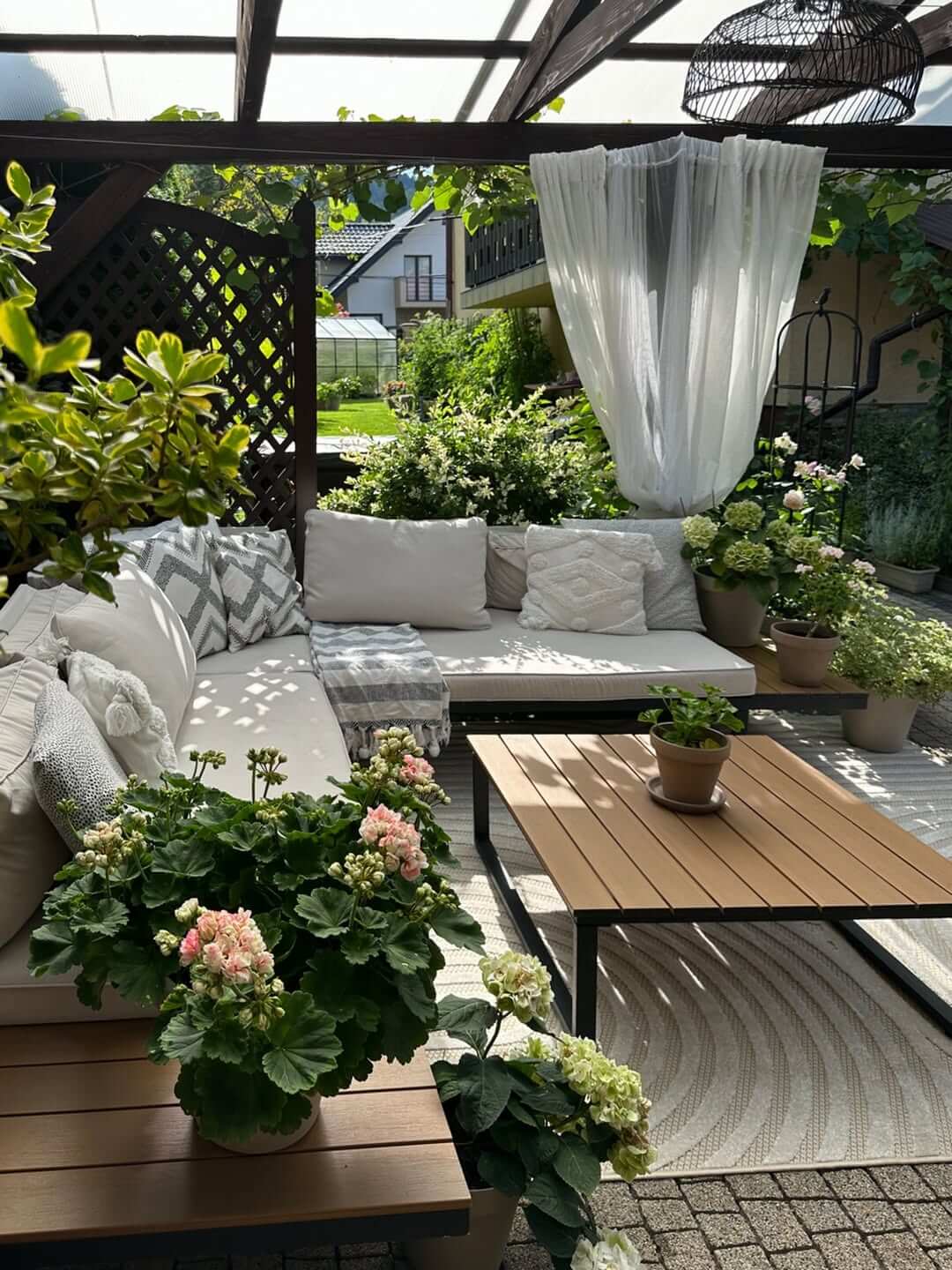
One of the biggest reasons people love patio gardens is the sense of escape they create.
Even a small outdoor space can feel surprisingly peaceful when it feels separate from the surrounding world.
Plants are one of the easiest ways to create that feeling.
Unlike fences or walls, greenery softens the space while still providing privacy.
Use Tall Container Gardens as Living Screens
Tall plants can help block unwanted views while maintaining a natural look.
The editors at Better Homes & Gardens explain this beautifully: “Using tall container gardens as a screen can help separate spaces feel even more like distinct rooms.”
That’s a powerful idea for small patios.
When greenery creates a sense of separation, the patio starts feeling less like an exposed outdoor area and more like a private retreat.
Tall ornamental grasses, potted evergreens, bamboo alternatives, and upright shrubs can all work well for this purpose.
Create Garden Boundaries Without Closing the Space
Privacy doesn’t require completely blocking every view.
Sometimes a partial screen creates a more comfortable atmosphere than a solid barrier.
A few strategically placed containers can soften sightlines while keeping the patio open and airy.
I’ve found that people tend to use outdoor spaces more often when they feel slightly sheltered. Even a modest amount of privacy can make reading, relaxing, or enjoying a meal outdoors feel more comfortable.
Think About What You See From Your Favorite Seat
A simple exercise can help.
Sit in the chair where you spend the most time.
Now look around.
What catches your eye?
A neighboring fence?
A parking area?
An air-conditioning unit?
Those are often the places where a few carefully placed plants can make the biggest difference.
Once privacy is handled, the next step is making sure the greenery actually improves the experience of using the patio.
Bring Nature Closer to Where You Sit
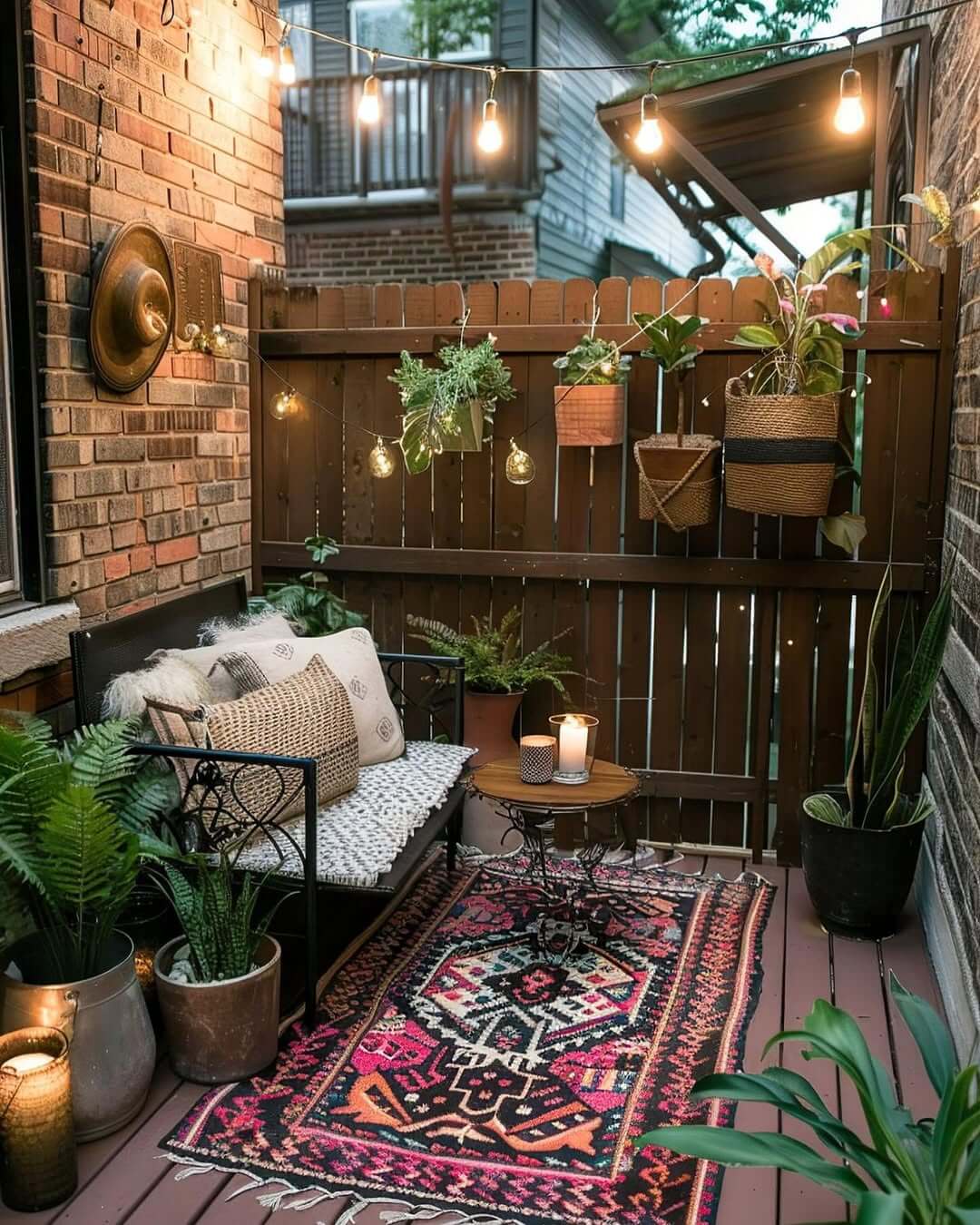
Many patio gardens place all the plants around the edges.
While that can work, it sometimes creates a disconnect between the garden and the people using the space.
One of my favorite patio garden strategies is bringing plants closer to where people actually spend time.
A patio feels more immersive when greenery becomes part of the seating area rather than something viewed from a distance.
I’ve noticed that people tend to spend more time outside when plants are close enough to feel part of the experience. A chair surrounded by greenery simply feels more relaxing than one sitting alone on a bare patio.
Frame Seating Areas With Containers
A pair of planters beside a chair or bench can make a seating area feel more intentional.
They help define the space while adding softness and texture.
This works especially well for reading corners and morning coffee spots.
Soften Hard Edges
Patios are often filled with hard materials.
Concrete.
Brick.
Stone.
Wood.
Plants help balance those surfaces.
A few containers placed near steps, corners, or seating areas can make the entire patio feel warmer and more inviting.
Let Plants Support Everyday Life
The most successful patio gardens aren’t designed around the plants.
They’re designed around the people using the space.
Think about where you sit.
Where you walk.
Where you relax.
Then place greenery where it supports those activities.
That approach often creates a more comfortable garden than simply filling empty areas with plants.
Now that the patio feels greener and more connected to nature, let’s focus on making sure it stays enjoyable without becoming another maintenance project.
Choose Plants That Work With Your Lifestyle
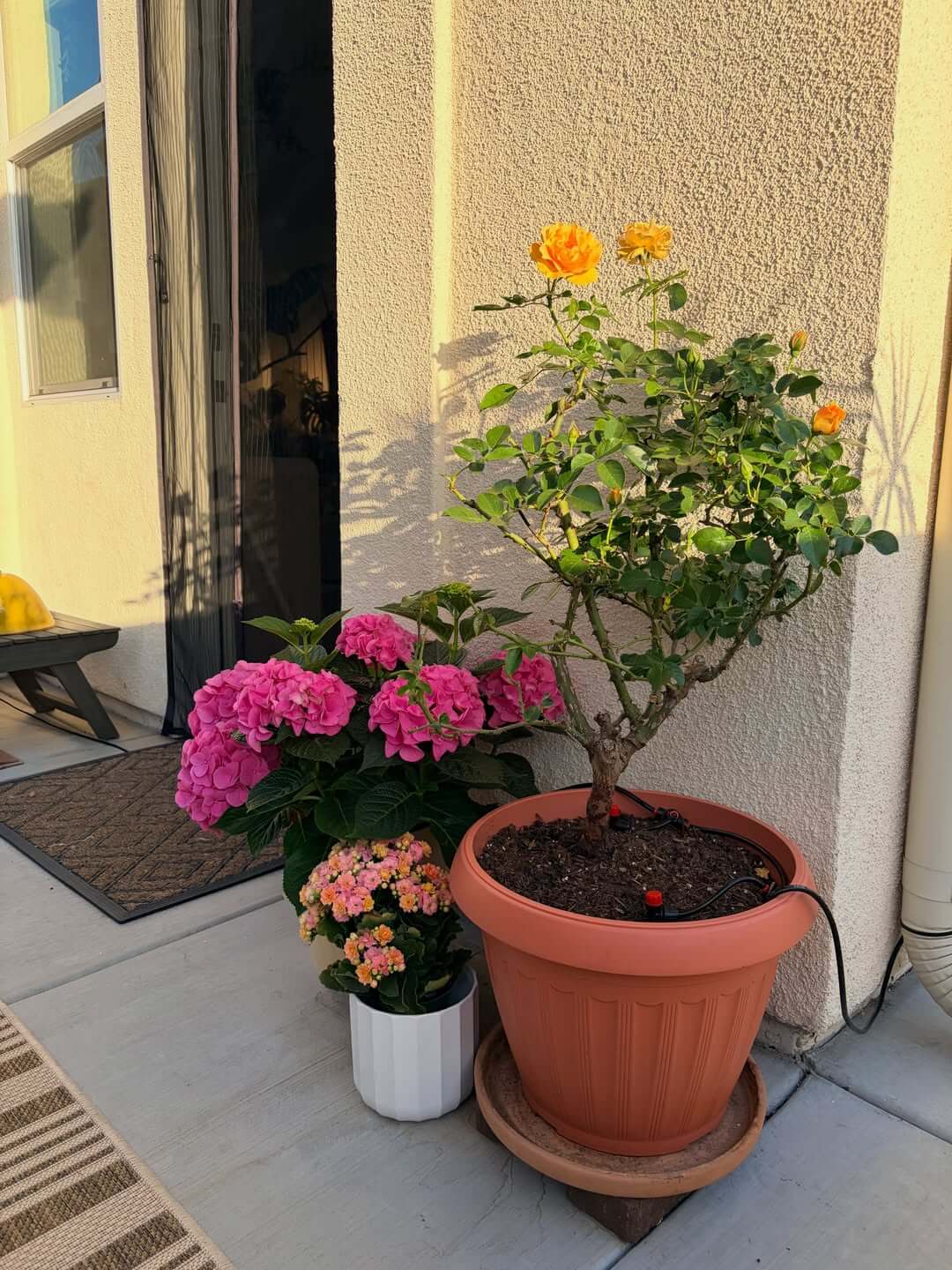
A patio garden should make life easier, not create another weekend chore.
That’s why one of the smartest decisions you can make is choosing plants that fit the amount of time and attention you’re realistically willing to give them.
Many beautiful patio gardens fail because they demand more maintenance than the homeowner expected.
A better approach is being honest from the beginning.
If you’re busy, choose plants that can handle occasional neglect.
If you travel frequently, focus on containers that hold moisture well and plants known for being resilient.
If you enjoy gardening as a hobby, you may be happy caring for more demanding varieties.
The goal isn’t building the most impressive plant collection.
It’s creating a garden you’ll enjoy maintaining.
Group Containers for a Stronger Impact
One of the easiest ways to make a patio garden feel more intentional is grouping containers together rather than scattering them throughout the space.
The editors at Homes & Gardens offer a great tip: “Choose planters of varying heights, plant a different flower in each, and group them together for the most impactful display.”
This works because grouped containers create visual weight.
Instead of dozens of small focal points competing for attention, the eye sees one cohesive arrangement.
The patio immediately feels more organized and more relaxing.
Focus on Plants You’ll Enjoy Looking At
Think about where you’ll spend most of your time.
The view from your favorite chair matters more than what someone sees while standing at the edge of the patio.
Choose plants that make you happy when you look at them.
That might be colorful flowers.
Interesting foliage.
Fragrant herbs.
Or simply greenery that creates a calm backdrop.
The best patio gardens reflect the people who use them.
Now let’s look at how these ideas can work even when outdoor space is extremely limited.
Small Patio Garden Ideas for Apartments and Townhomes
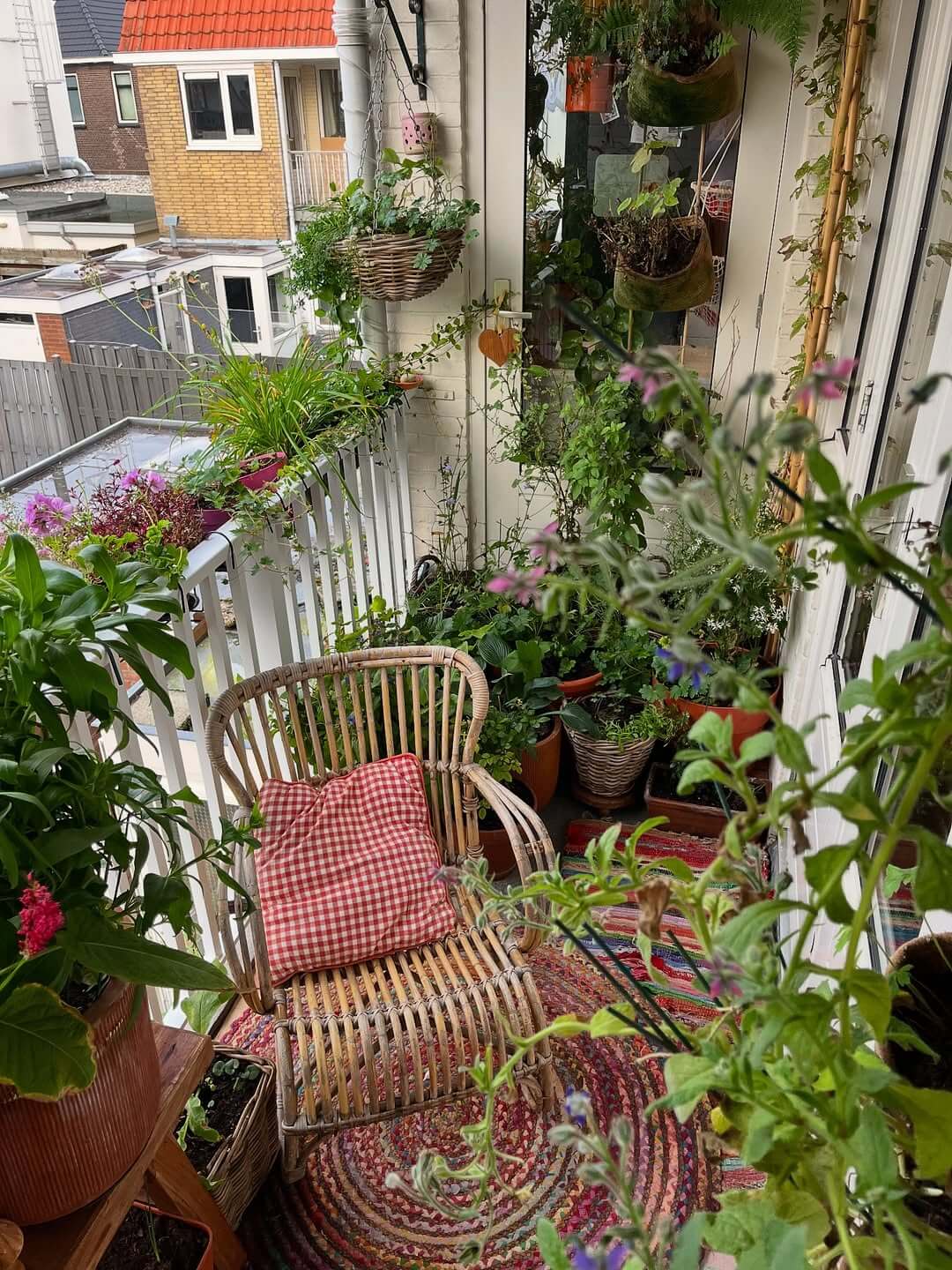
Apartment patios and townhome patios often require a little creativity.
The challenge isn’t usually decorating.
It’s finding room for everything you want.
The good news is that patio gardens don’t require much space to make a big impact.
Make Railings Work Harder
Railings are often overlooked.
Yet they can support planter boxes, trailing flowers, herbs, and compact greenery without consuming floor space.
This is one of the easiest ways to increase planting space on a small patio.
Build a Portable Garden
Portable containers allow you to rearrange the patio whenever needed.
You can move plants to follow sunlight, create temporary privacy, or adjust the layout for entertaining.
Flexibility is often one of the biggest advantages of container gardening.
Focus on Quality Rather Than Quantity
A handful of beautiful containers usually creates a stronger result than dozens of small pots scattered throughout the space.
I’ve noticed that small patios often feel more peaceful when every plant has room to be appreciated.
Crowding tends to create the opposite effect.
The goal isn’t fitting in as many plants as possible.
It’s creating a garden that feels enjoyable to spend time in.
Patio Garden Ideas That Feel Peaceful All Year
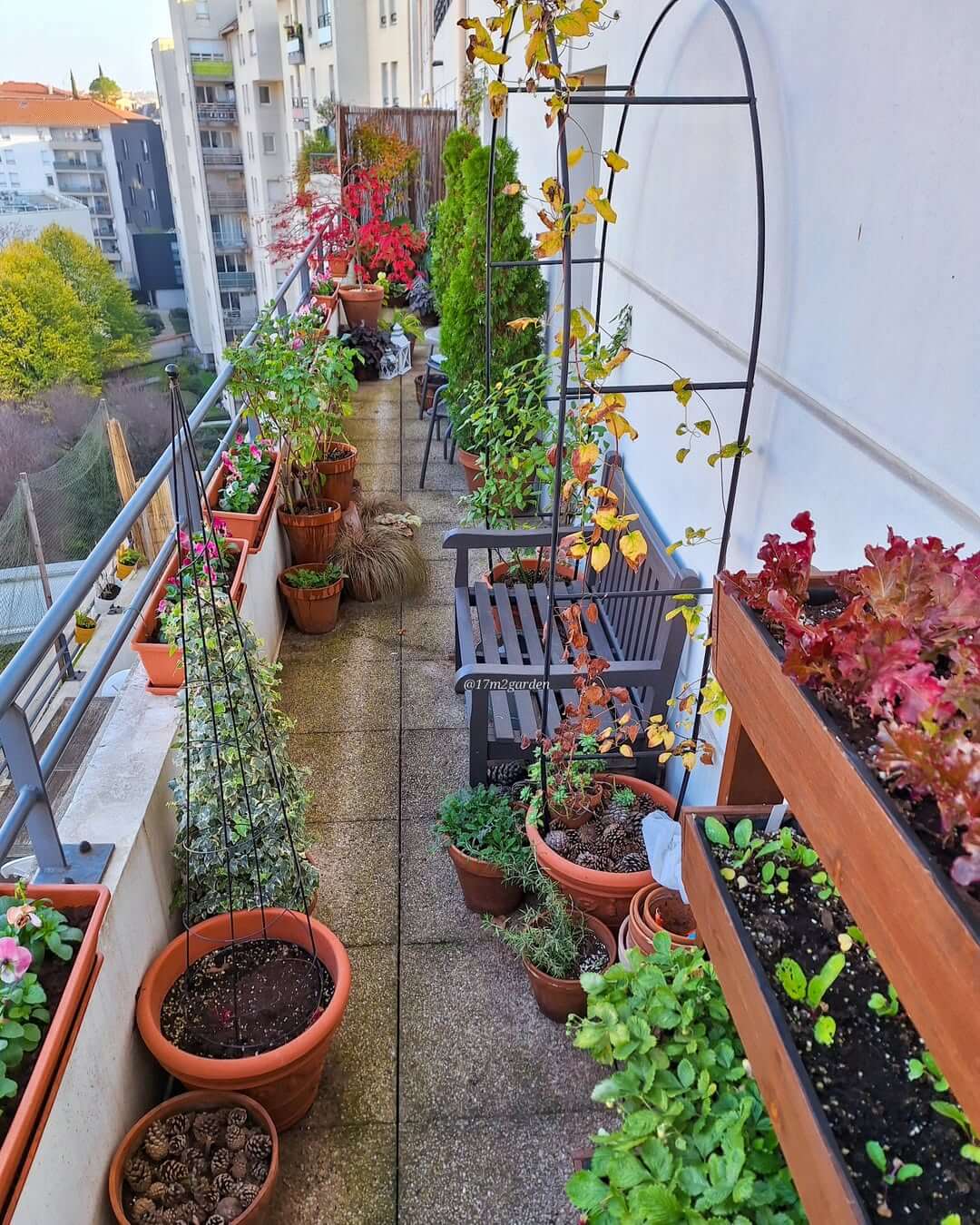
A patio garden shouldn’t only look good for a few weeks.
The most enjoyable outdoor spaces continue offering interest throughout the year.
That doesn’t mean every plant has to look perfect every season.
It simply means planning for more than one moment.
Create an Evergreen Foundation
Evergreen shrubs and foliage plants help provide structure even when seasonal flowers come and go.
They give the patio a sense of consistency.
I’ve found that evergreen structure prevents a patio from feeling empty during colder months. Even when flowers fade, the space still feels intentional and cared for.
Add Seasonal Color Strategically
Instead of replacing everything each season, consider adding a few containers with seasonal flowers.
This keeps the patio feeling fresh without requiring a complete redesign.
A couple of seasonal planters near an entry point or seating area can completely change the mood of the patio without creating extra work.
Think Beyond Flowers
Texture, foliage color, plant shape, and container style all contribute to the overall experience.
Some of the most relaxing patio gardens rely more on greenery than flowers.
When the structure of the garden works well, seasonal updates become much easier.
If you’re looking for immediate improvements, there are several simple upgrades you can tackle this weekend.
7 Patio Garden Upgrades You Can Do This Weekend
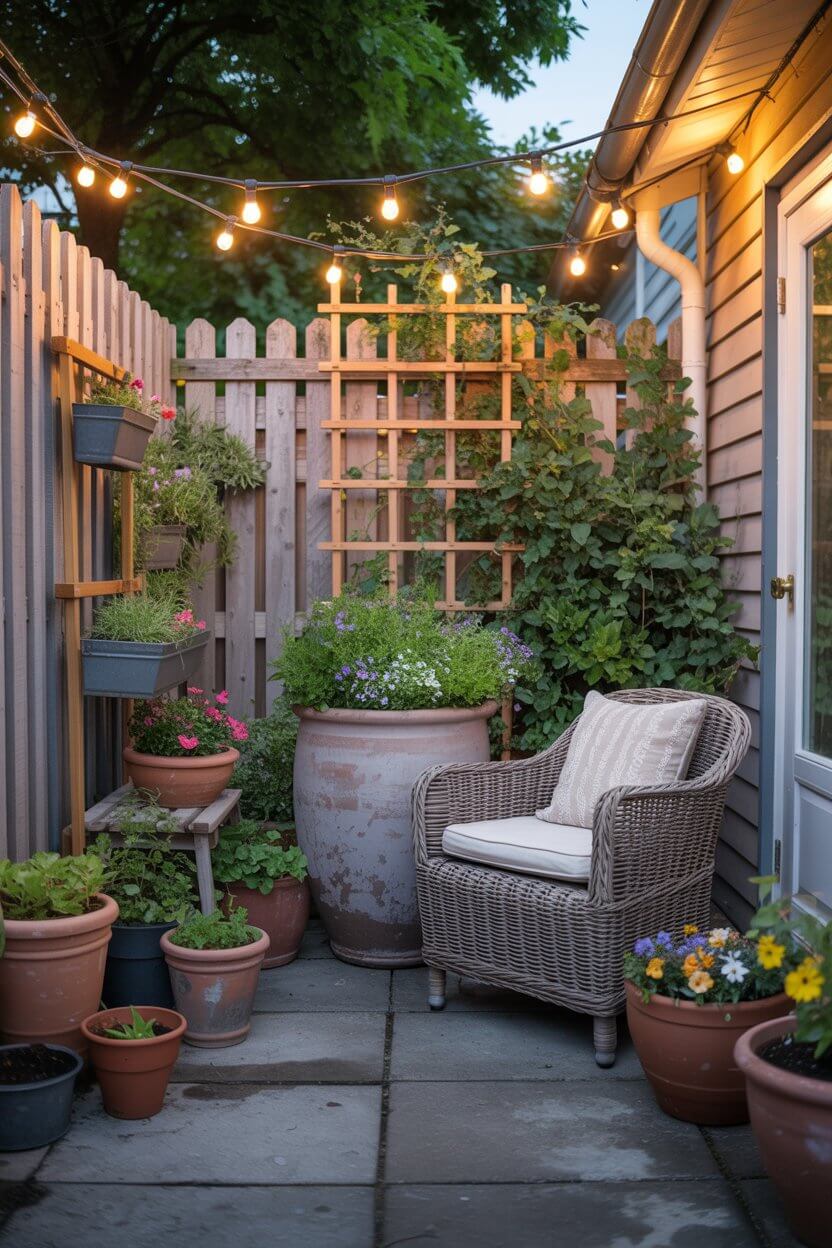
You don’t need a major makeover to create a more peaceful patio garden.
A few thoughtful changes can make a surprisingly big difference.
1. Add One Oversized Planter
A single large planter often creates more impact than several smaller containers.
Place it near a seating area or patio entrance to establish a focal point. One well-positioned container can immediately make the patio feel more intentional and polished.
2. Install a Trellis
A trellis introduces height, texture, and growing space without taking up much room.
It’s one of the easiest ways to make a small patio feel greener. Even a simple trellis against a wall or fence can add structure while creating a home for climbing plants.
3. Create a Reading Corner
A comfortable chair surrounded by a few containers can become the most relaxing spot in the entire garden.
Adding a small side table makes the space even more practical for coffee, books, or quiet evenings outdoors.
4. Add Hanging Baskets
Hanging baskets draw the eye upward and add greenery without consuming valuable floor space.
They’re especially useful on compact patios where every square foot matters.
5. Group Containers Together
Rather than scattering pots throughout the patio, create one intentional arrangement.
This often makes the garden feel calmer and more organized. Grouping containers also makes watering and maintenance easier.
6. Add Soft Lighting
String lights, lanterns, or solar lighting can completely change the atmosphere after sunset.
A patio garden should be enjoyable at night too. Soft lighting helps extend the time you spend outdoors and creates a more relaxing mood.
7. Remove Visual Clutter
Sometimes the most effective improvement isn’t adding something.
It’s removing something.
A few unnecessary accessories can make a small patio feel much busier than it needs to be.
I’ve found that patio gardens often improve faster through subtraction than addition. Creating breathing room allows the plants themselves to become the focus.
Before we wrap up, let’s talk about a few mistakes that can prevent a patio garden from feeling peaceful.
Patio Garden Mistakes That Make Small Spaces Feel Busy
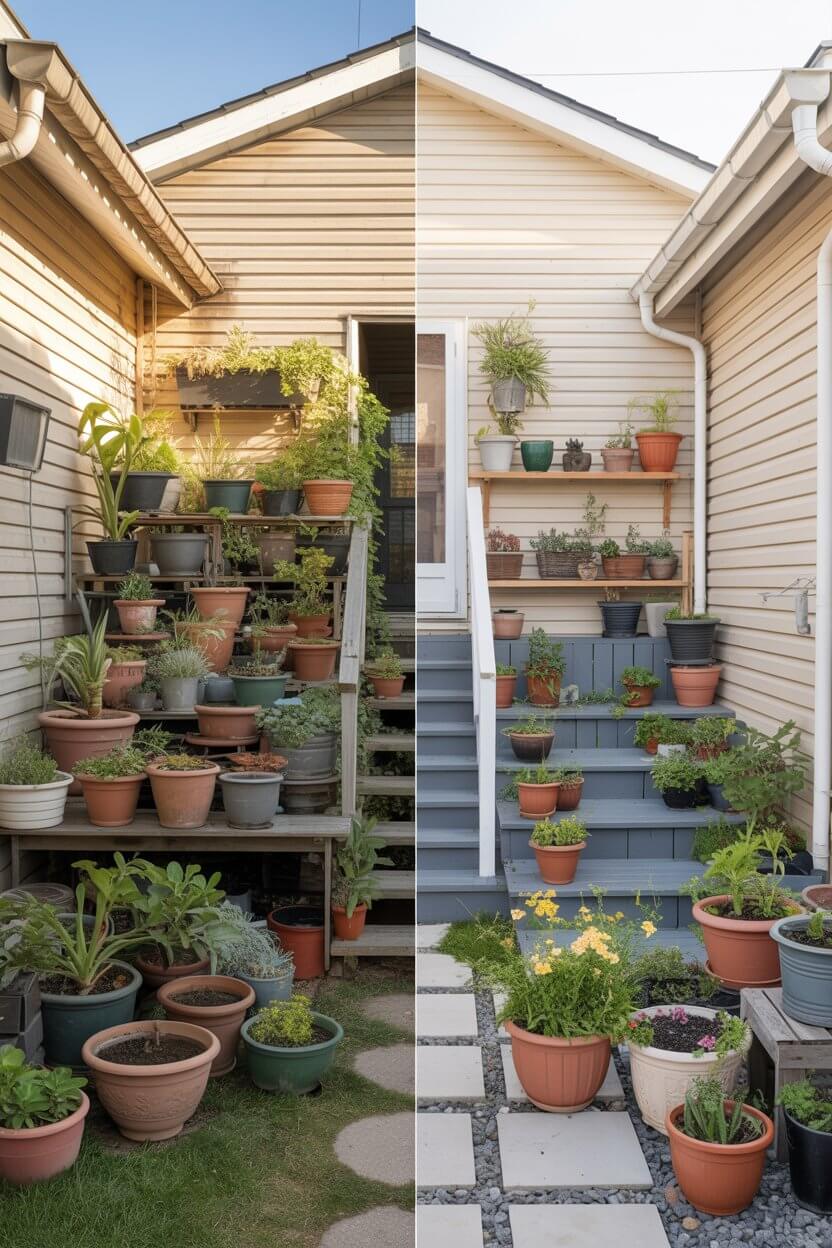
The biggest mistake is assuming more plants automatically create a better garden.
In reality, too much variety can sometimes create visual chaos.
Another common issue is using too many small containers.
Small pots often require more maintenance and can make a patio feel cluttered when used in large numbers.
Ignoring scale can create problems too.
Oversized plants can overwhelm a compact patio just as easily as oversized furniture.
Poor placement is another issue.
When plants block walkways or interfere with seating, they stop supporting the space and start competing with it.
Most patio garden problems aren’t caused by a lack of plants.
They’re caused by a lack of intention.
A few carefully chosen plants almost always outperform a patio filled with random additions.
How to Create a Patio Garden You’ll Actually Spend Time In
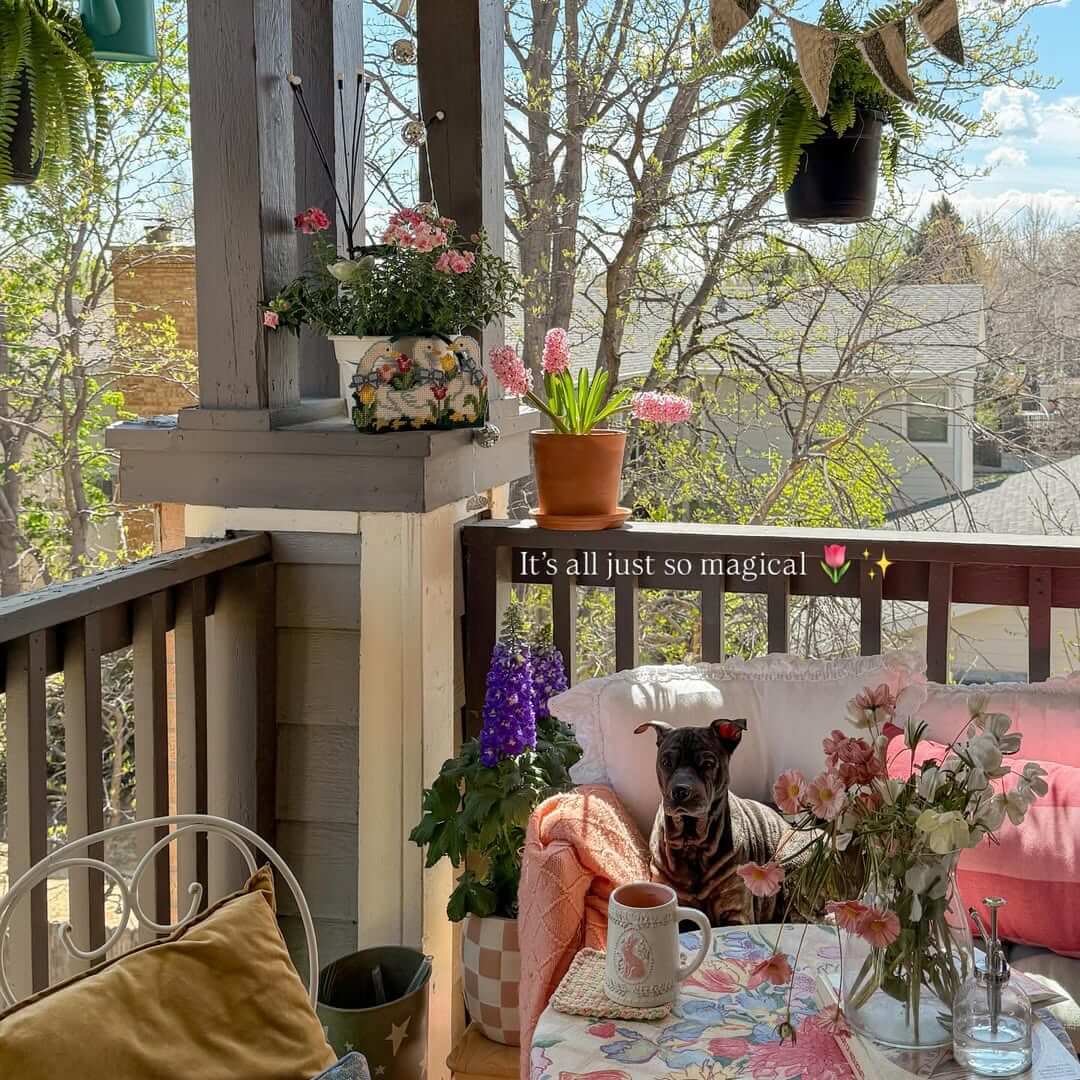
If there’s one thing worth remembering, it’s this.
A patio garden should support your life.
Not the other way around.
Think about how you want to spend time outside.
Morning coffee.
Reading.
Conversations with friends.
Quiet evenings after work.
Then build the garden around those moments.
I’ve noticed that the patio gardens people love most aren’t necessarily the most elaborate.
They’re usually the ones that feel comfortable, personal, and easy to enjoy.
Every container has a purpose.
Every plant contributes to the atmosphere.
Nothing feels unnecessary.
That’s what creates peace.
Not the number of plants.
The experience they help create.
Final Thoughts
The best patio garden ideas aren’t about filling every available inch with greenery.
They’re about creating a space that feels calmer, softer, and more connected to nature.
When plants are chosen thoughtfully, placed intentionally, and designed around how you actually use the patio, even the smallest outdoor space can feel like a retreat.
A place to slow down.
A place to breathe.
A place to step outside for a few minutes and stay much longer than you planned.
And that’s usually the sign of a patio garden that’s working exactly the way it should.
You may also want to read:
Vertical Garden Wall in Balcony: Easy Setup Guide
Patio Decorating Ideas That Make You Want to Spend More Time Outside