Patio Decorating Ideas That Make You Want to Spend More Time Outside
There is a big difference between a patio that looks nice and a patio that actually gets used.
We’ve all seen outdoor spaces filled with beautiful furniture, decorative pillows, and stylish accessories. They look great in photos, but most days they sit empty.
Then there are patios that seem to pull people outside.
A place where morning coffee tastes better. A place where dinner lingers a little longer. A place where you plan to spend ten minutes and somehow end up staying for an hour.
The difference usually isn’t the size of the patio.
And it isn’t about spending more money.
It’s about creating a space that feels comfortable, inviting, and easy to use.
I’ve noticed that the patios people use most often aren’t necessarily the largest or most expensive. They’re usually the ones designed around everyday life. There is comfortable seating. There is a place to set down a drink. There is shade when the sun gets strong and lighting when the evening gets dark.
Most importantly, the space feels like an extension of the home rather than a separate area that’s only used a few times a year.
That’s the goal of good patio decorating.
Not creating a showroom.
Creating a space you genuinely want to spend time in.
In this guide, I’ll walk through practical patio decorating ideas that can help you create a more comfortable outdoor space, whether you’re working with a large backyard patio, a small courtyard, or a compact apartment patio.
Start With How You Want to Use Your Patio
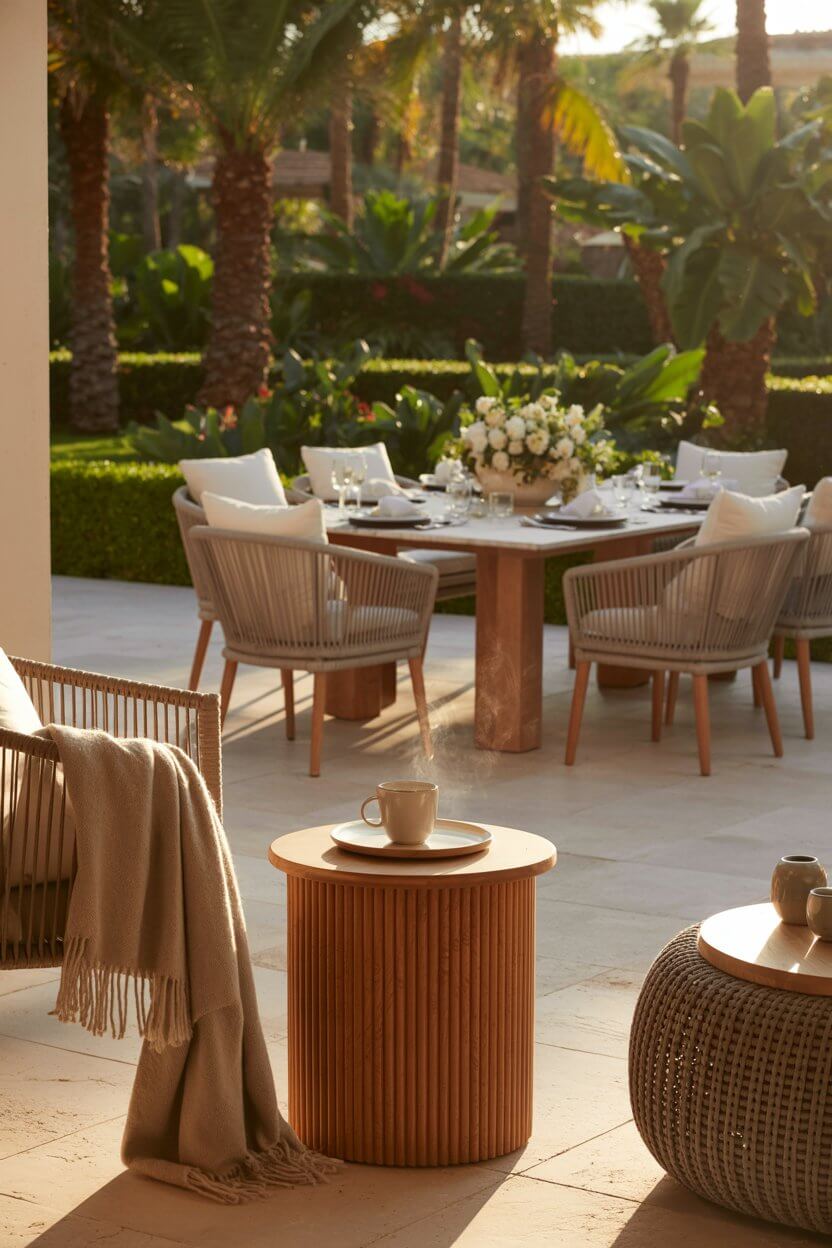
Before buying furniture, outdoor rugs, or decorative accessories, start with a simple question.
How do you want to use the space?
This sounds obvious, but it’s one of the most overlooked parts of patio decorating.
Many people choose furniture based on appearance and only later realize the setup doesn’t fit the way they actually live.
A patio designed for family dinners looks very different from one used for Saturday morning coffee, quiet evening reading sessions, or weekend gatherings with friends.
That’s why I always suggest starting with activities rather than decor.
Picture yourself spending an hour outside tomorrow.
Would you be drinking coffee before work?
Having dinner with family?
Reading a book on a quiet afternoon?
Watching the sunset?
Your answer should guide every decorating decision that follows.
If your patio is mainly used for dining, prioritize comfortable dining chairs and enough table space for meals.
If relaxation is the goal, focus on lounge seating, supportive cushions, and nearby tables.
If you entertain frequently, think about creating seating that encourages conversation rather than lining furniture around the perimeter.
A patio that supports your lifestyle naturally gets used more often because it removes barriers between you and the activities you enjoy.
Once you know how you want the space to function, the next step becomes much easier.
Creating a layout that feels comfortable and natural.
Create a Patio Layout That Feels Natural
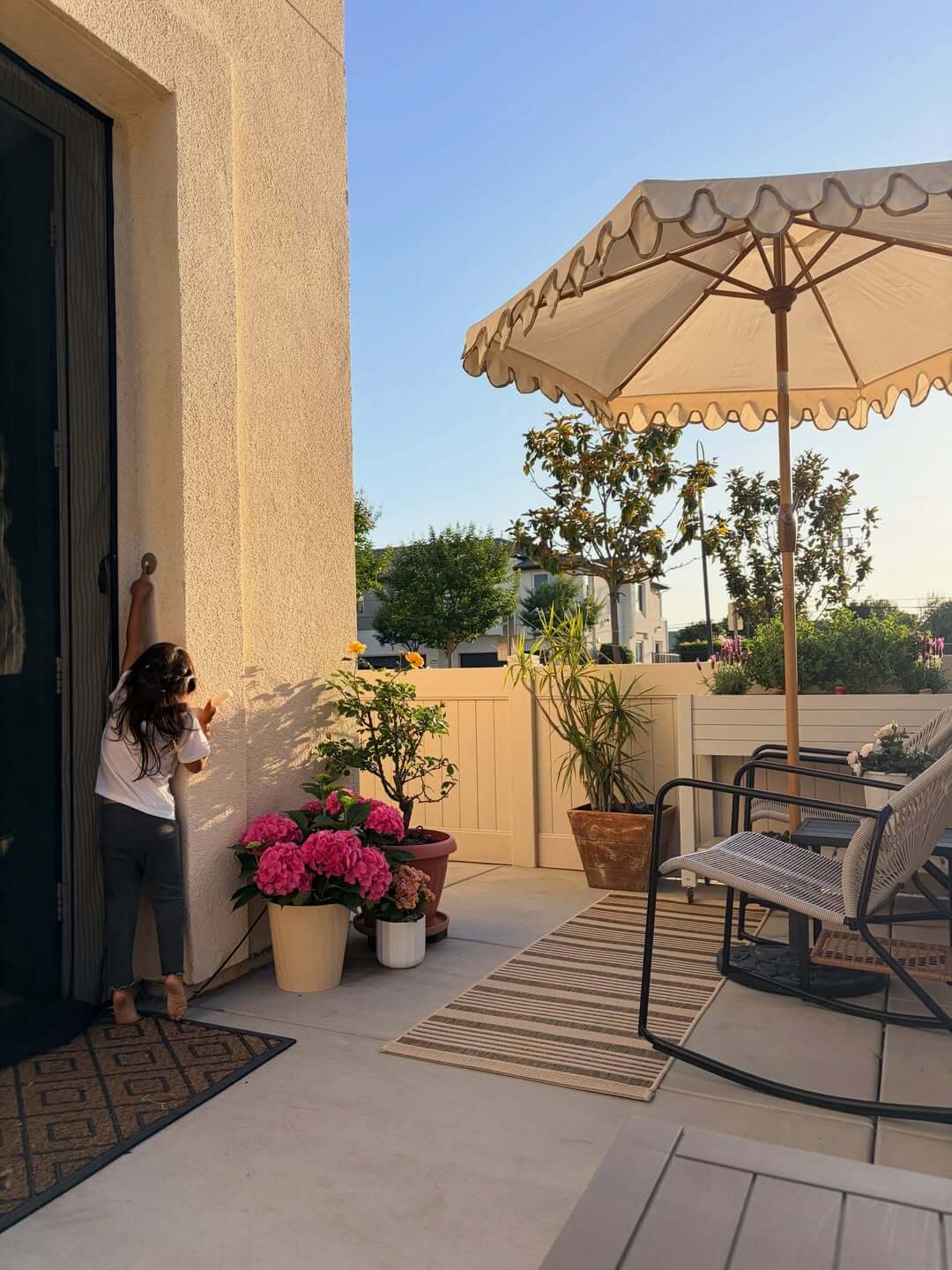
One of the fastest ways to make a patio feel awkward is arranging furniture without a clear purpose.
I’ve seen patios with chairs facing different directions, oversized furniture blocking walkways, and seating arrangements that make conversation difficult.
The result is a space that feels uncomfortable before anyone even sits down.
Good patio layouts usually start with a simple idea.
Every seating area should have a purpose.
One section might be used for dining.
Another might be used for relaxing.
A smaller corner might become a reading spot.
Even on a compact patio, creating small zones can make the space feel more functional because each area immediately tells people how it’s meant to be used.
If your patio is limited in size, don’t worry about creating multiple areas.
A single seating arrangement can still feel intentional.
The key is making sure the furniture works together rather than competing for space.
Another common mistake is pushing everything against the edges of the patio.
People often assume this creates more room.
In reality, it can make the center feel empty while leaving seating disconnected.
Pulling furniture slightly inward often creates a warmer, more inviting atmosphere because it encourages interaction rather than isolation.
A simple conversation test works well here.
Sit in each chair and imagine having a conversation.
Can people talk comfortably without leaning forward or raising their voice?
If not, adjust the layout until it feels natural.
The best patio layouts rarely happen by accident. They are built around comfort, movement, and everyday use.
Once the layout feels right, it’s time to focus on the feature that influences comfort more than almost anything else.
The seating itself.
Make Seating the Star of the Patio
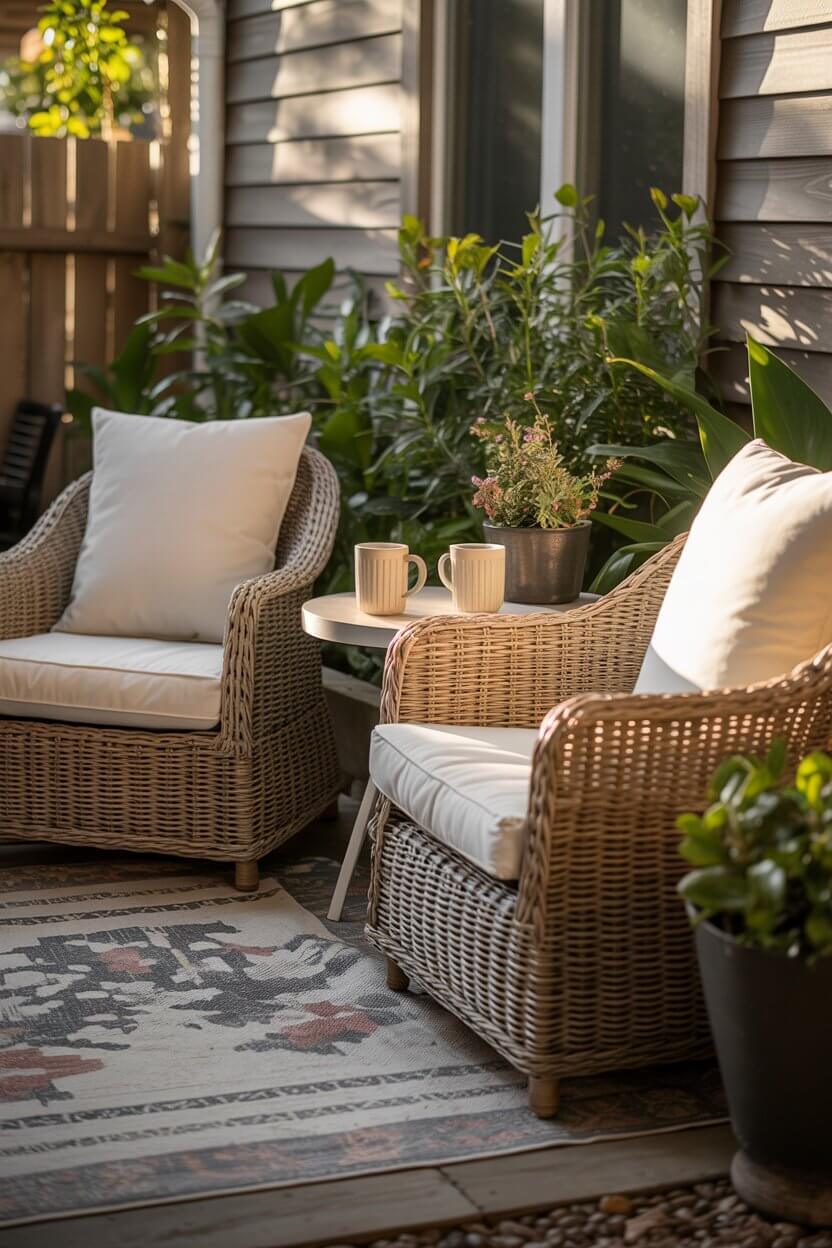
A patio can have beautiful lighting, stunning planters, and attractive accessories.
If the seating isn’t comfortable, people won’t stay long.
Comfort should always come before decoration.
That doesn’t mean buying the biggest furniture available.
It means choosing pieces that make people want to sit down and stay awhile.
Before purchasing furniture, think about how long you realistically want to spend outside.
Ten minutes?
Thirty minutes?
Several hours?
The longer you expect to use the patio, the more comfort matters.
Deep seating, supportive cushions, and chairs with proper back support often get used far more than trendy pieces chosen mainly for appearance.
If you’re decorating a small patio, don’t assume you need less comfortable furniture.
In fact, comfort often becomes even more important because every piece has to work harder.
A compact loveseat with quality cushions may provide more value than several decorative chairs that rarely get used.
I’ve noticed that the patios people use most often aren’t the ones with the most furniture. They’re usually the ones that make it easy to sit down, relax, and stay awhile.
Comfort also comes from convenience.
People naturally stay outside longer when everyday items are within reach.
That’s where side tables, drink tables, and small surfaces become surprisingly important.
We’ll talk more about that next.
Add Small Tables That Make the Patio Easier to Use
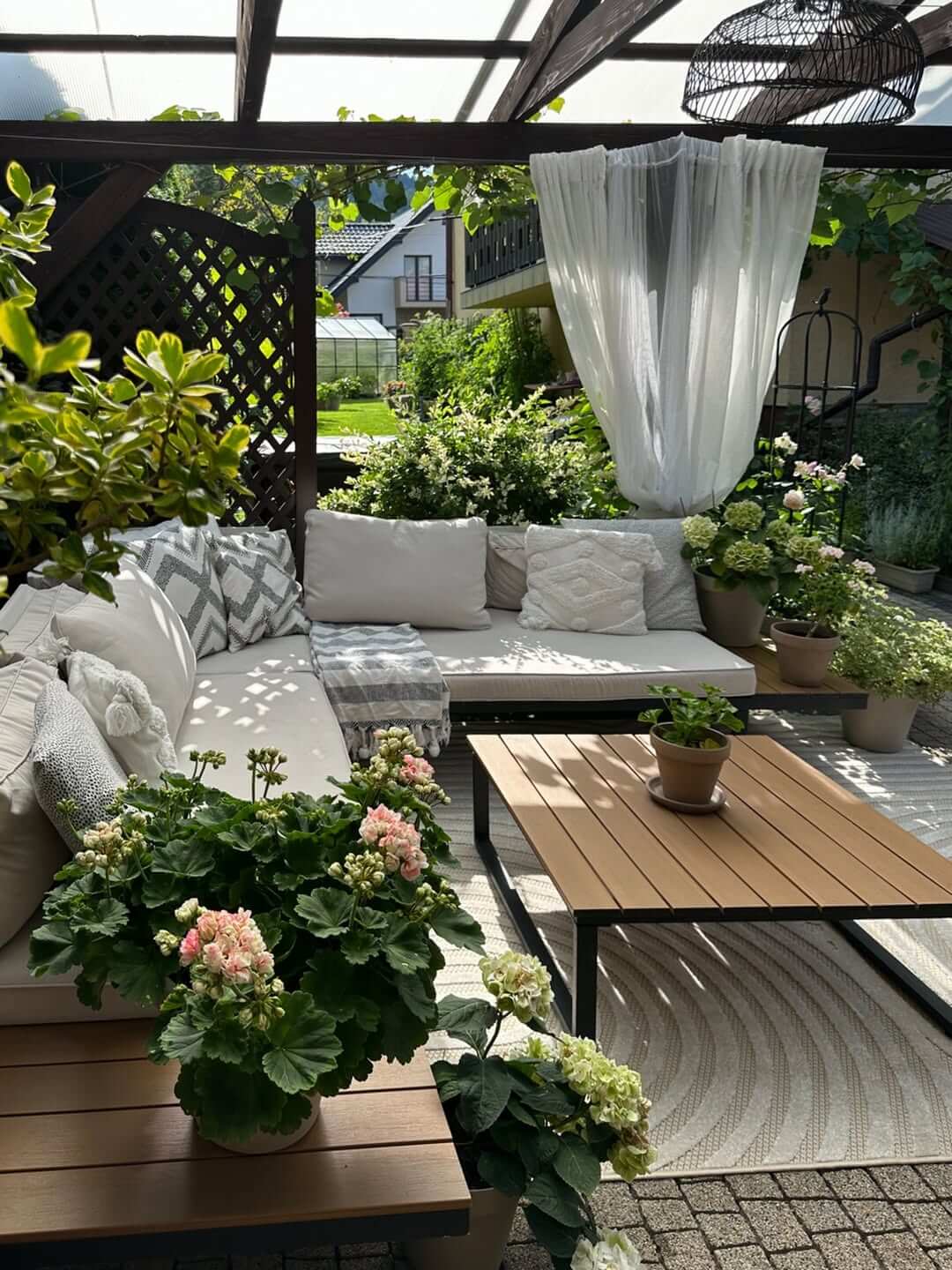
One of the simplest patio upgrades is also one of the most overlooked.
A place to set things down.
Think about how often you bring something outside with you.
A coffee mug.
A cold drink.
A book.
A phone.
Sunglasses.
Without a nearby surface, those items end up balanced on a chair arm, placed on the ground, or carried back inside.
None of those options make the patio feel convenient.
That’s why small tables can have such a big impact.
A side table between two chairs often improves a seating area more than adding another decorative accessory. It removes friction from everyday use. People don’t have to balance drinks, books, or phones on their lap, which makes the patio feel easier to enjoy.
If you’re working with a small patio, look for compact options that can move around easily. A garden stool, narrow side table, or small outdoor accent table can provide the same function without taking up much space.
It’s a simple change, but it’s one that encourages people to stay outside longer.
Once seating feels comfortable and convenient, the next step is helping the entire patio feel more connected.
That’s where outdoor rugs come in.
Use Outdoor Rugs to Define the Space
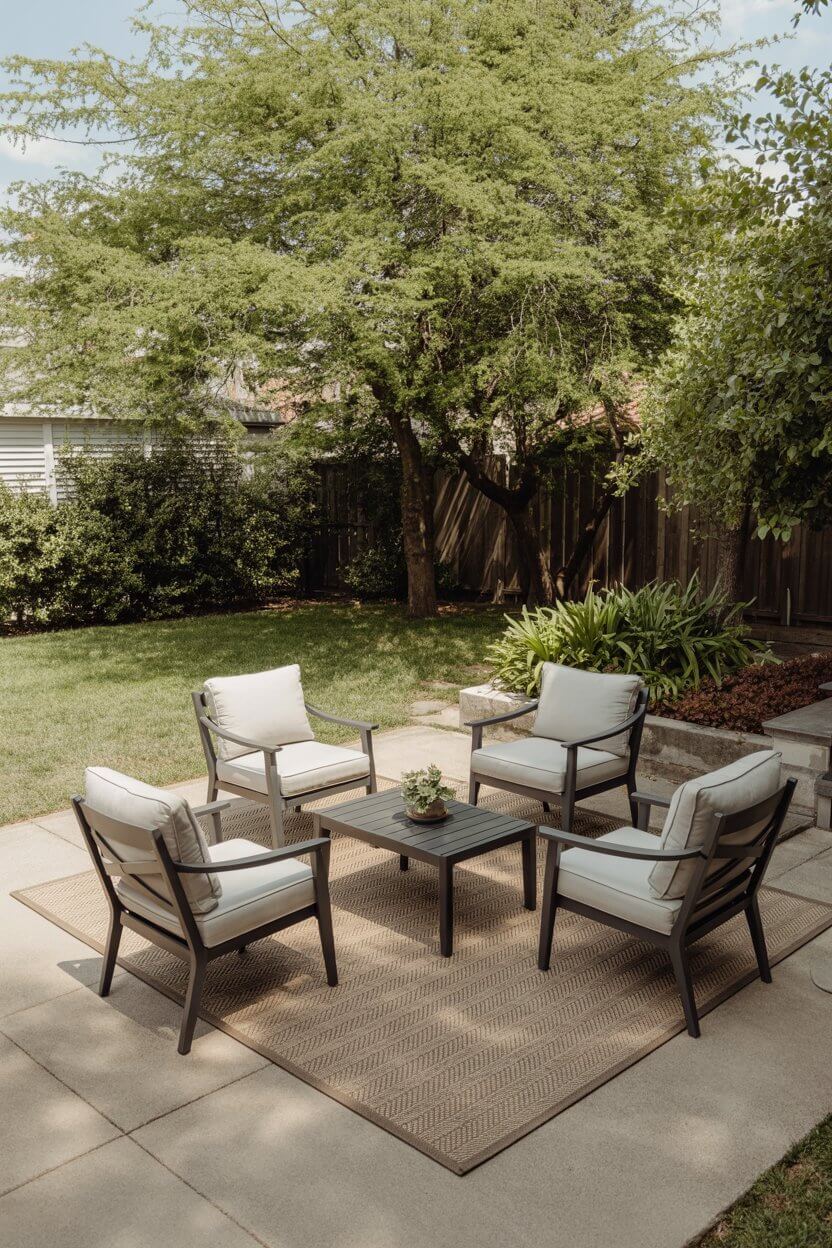
One reason patios sometimes feel unfinished is that the furniture looks disconnected from everything around it.
A few chairs here.
A table there.
Some planters in the corner.
Nothing feels tied together.
An outdoor rug can solve that problem surprisingly quickly.
Rather than thinking of a rug as a decorative accessory, think of it as a tool that helps define the space.
The editors at The Spruce explain this idea perfectly, writing that “Use it to anchor an al fresco dining table or a seating area to create an inviting outdoor living room.”
That’s exactly what a good outdoor rug does.
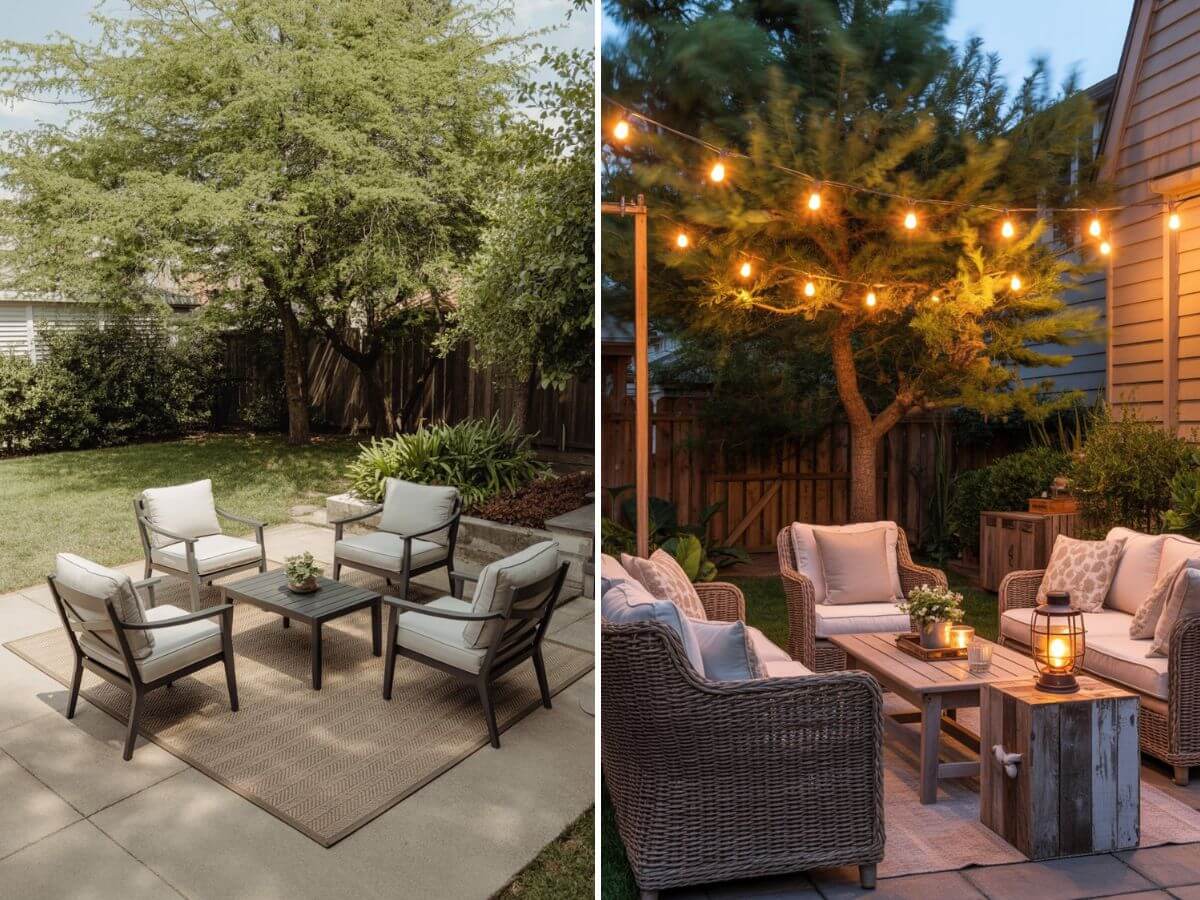
It visually connects the furniture and helps a seating area feel intentional rather than temporary. The moment furniture sits on a shared surface, the patio starts feeling more like an outdoor room and less like a collection of separate pieces.
I’ve noticed that many patios start feeling more comfortable the moment a properly sized rug is added beneath the furniture.
The space suddenly feels like a destination rather than just an area behind the house.
Rug size matters too.
A rug that’s too small can actually make a patio feel less balanced.
The goal is for the rug to comfortably anchor the furniture rather than sit awkwardly underneath a single chair or table.
As a general rule, at least the front legs of the furniture should sit on the rug. On larger patios, allowing all furniture legs to rest on the rug often creates the most polished look.
Even a compact apartment patio can benefit from this approach.
A small rug placed beneath a bistro set can make the entire space feel more finished.
Once the patio starts feeling connected, the next step is adding warmth and personality.
Add Layers Instead of More Stuff
One decorating mistake I see often is trying to fill every empty space.
More lanterns.
More accessories.
More decorative pieces.
Yet the most inviting patios rarely feel crowded.
Instead, they feel layered.
There’s a difference.
Layering focuses on comfort and texture rather than quantity.
A few outdoor pillows can soften a seating area.
A lightweight throw can make cooler evenings more comfortable.
A lantern can add warmth without overwhelming the space.
The goal isn’t creating visual noise.
The goal is creating an environment that feels welcoming.
When decorating a patio, ask yourself a simple question.
Does this item make the space more comfortable, more functional, or more inviting?
If the answer is no, it may not need to be there.
This approach is especially helpful on small patios where every item has to earn its place.
A few thoughtful layers often create a stronger result than filling the space with decorative accessories because each piece contributes to the overall experience rather than competing for attention.
Another benefit is flexibility.
Throws can be swapped seasonally. Pillows can introduce color without requiring a major redesign. Lanterns can move wherever extra warmth is needed.
Small changes often have the biggest impact.
Now let’s talk about one of the easiest ways to make a patio feel more alive.
Plants.
Bring Life to the Patio With Plants
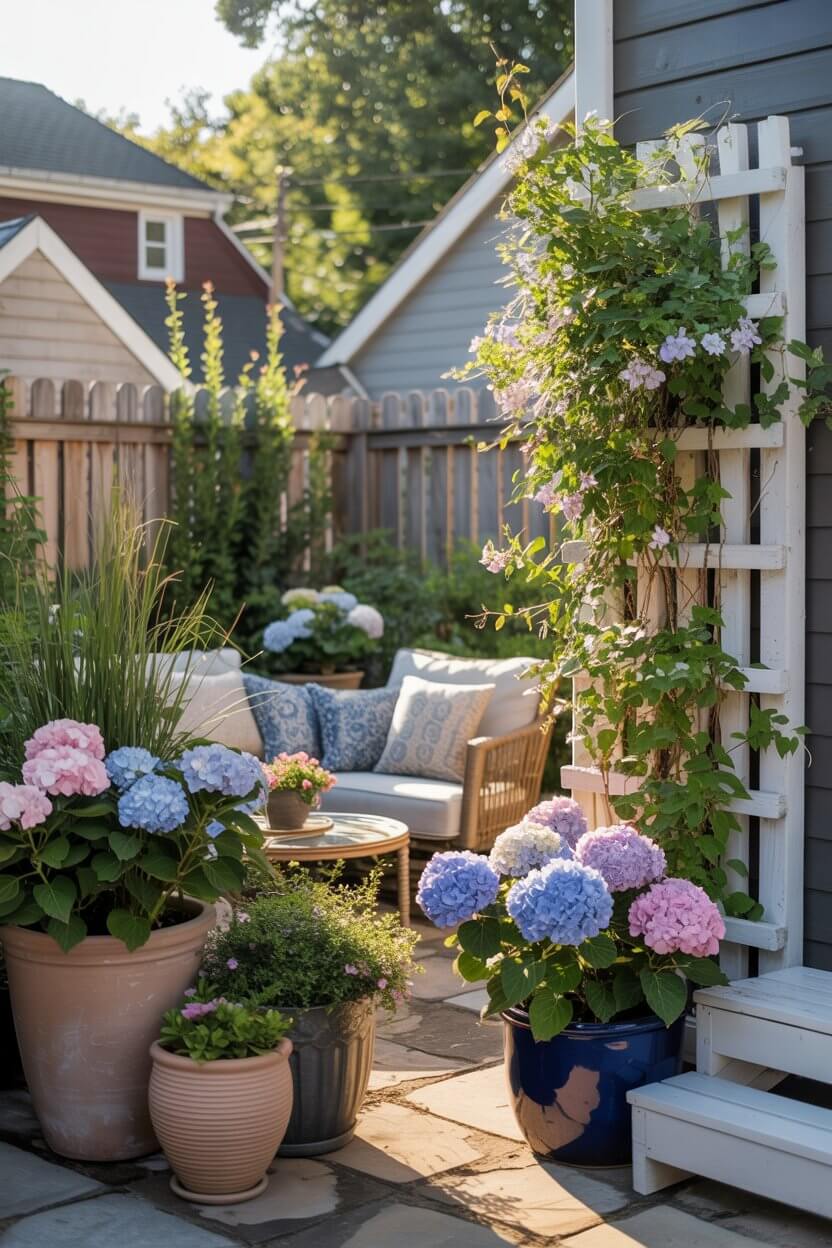
Plants have a way of making outdoor spaces feel complete.
Even a beautiful patio can feel a little flat without them.
The good news is that you don’t need a massive garden to make an impact.
A few well-placed planters can completely change how a patio feels.
One strategy I love is using fewer plants but choosing larger containers.
A single oversized planter often creates more visual impact than several smaller pots scattered around the space. It gives the eye somewhere to land and creates a stronger focal point.
Large planters can also help define different areas of the patio.
Place them near seating arrangements, dining areas, or entry points to create structure.
If privacy is an issue, greenery can help there too.
Tall grasses, potted shrubs, or climbing plants can soften views from neighboring properties while making the patio feel more secluded.
Apartment patios can benefit from vertical planting.
Wall-mounted planters, railing planters, and climbing vines help add greenery without sacrificing floor space.
This approach works especially well because it draws the eye upward. When attention moves vertically, a small patio often feels larger than it really is.
The goal isn’t filling every corner with plants.
It’s creating enough greenery to make the patio feel comfortable and lived in.
Once plants are in place, the patio starts feeling more inviting during the day.
The next challenge is making it comfortable when temperatures rise or the sun starts to move across the space.
That’s where shade and lighting become important.
Make the Patio Comfortable Day and Night
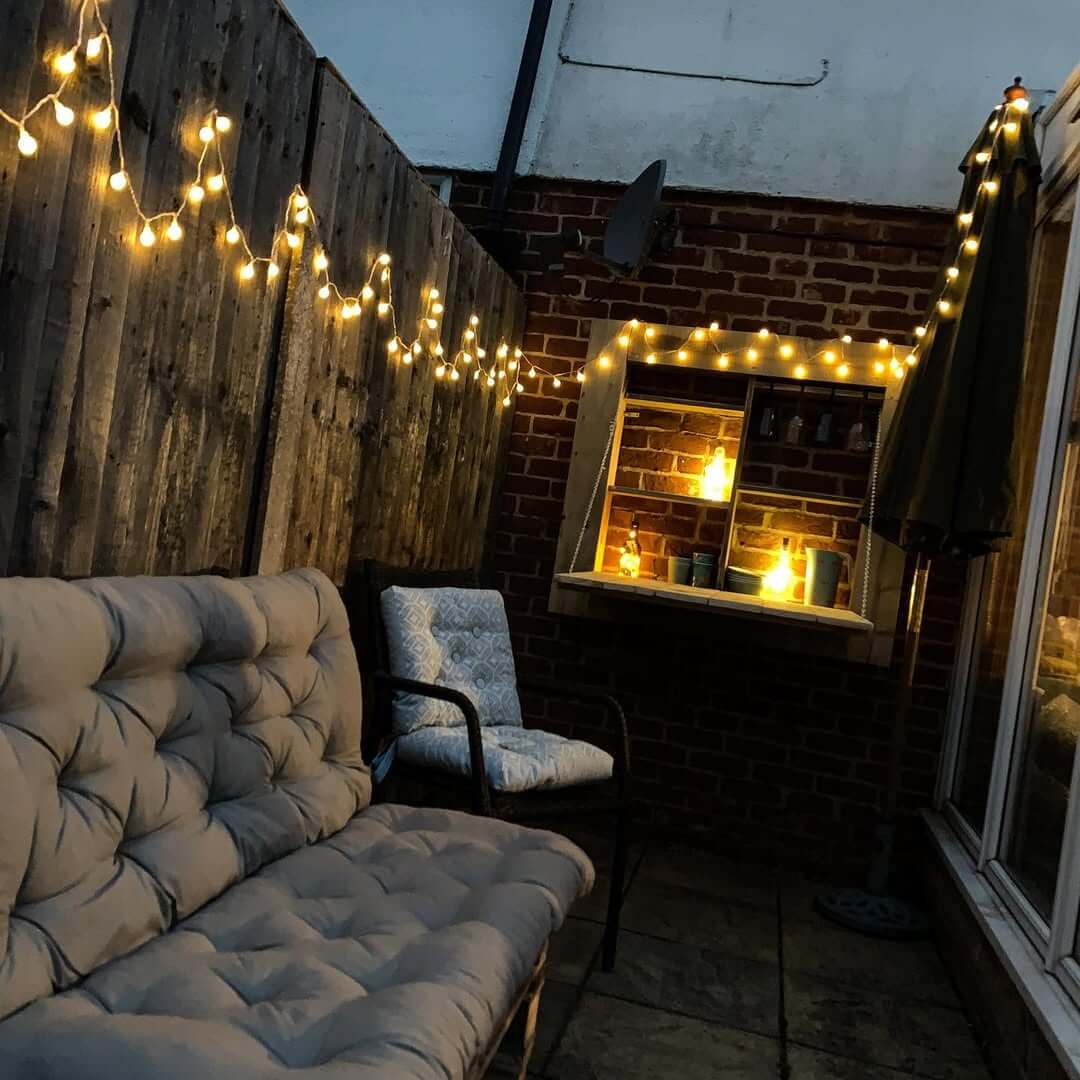
A patio can have beautiful furniture, attractive planters, and thoughtful decor.
If it’s uncomfortable during the hottest part of the day, people won’t use it.
That’s why comfort goes beyond seating.
It also includes shade.
If your patio gets direct afternoon sun, pay attention to where the light falls throughout the day. You may discover that moving furniture a few feet creates a completely different experience.
Many homeowners focus on furniture placement once and never revisit it. Spending a few minutes observing sunlight throughout the day can reveal opportunities to make the space much more comfortable.
For patios that need more protection, umbrellas can provide flexibility. Pergolas create structure while helping filter sunlight. Outdoor curtains can soften harsh light while adding a greater sense of privacy.
The goal isn’t blocking every ray of sunshine.
It’s creating enough relief that people want to stay outside longer.
When people can comfortably enjoy the patio during the hottest hours of the day, the space naturally becomes part of their routine.
Once the sun begins to set, comfort depends on something else.
Lighting.
Add Lighting That Encourages People to Stay Longer
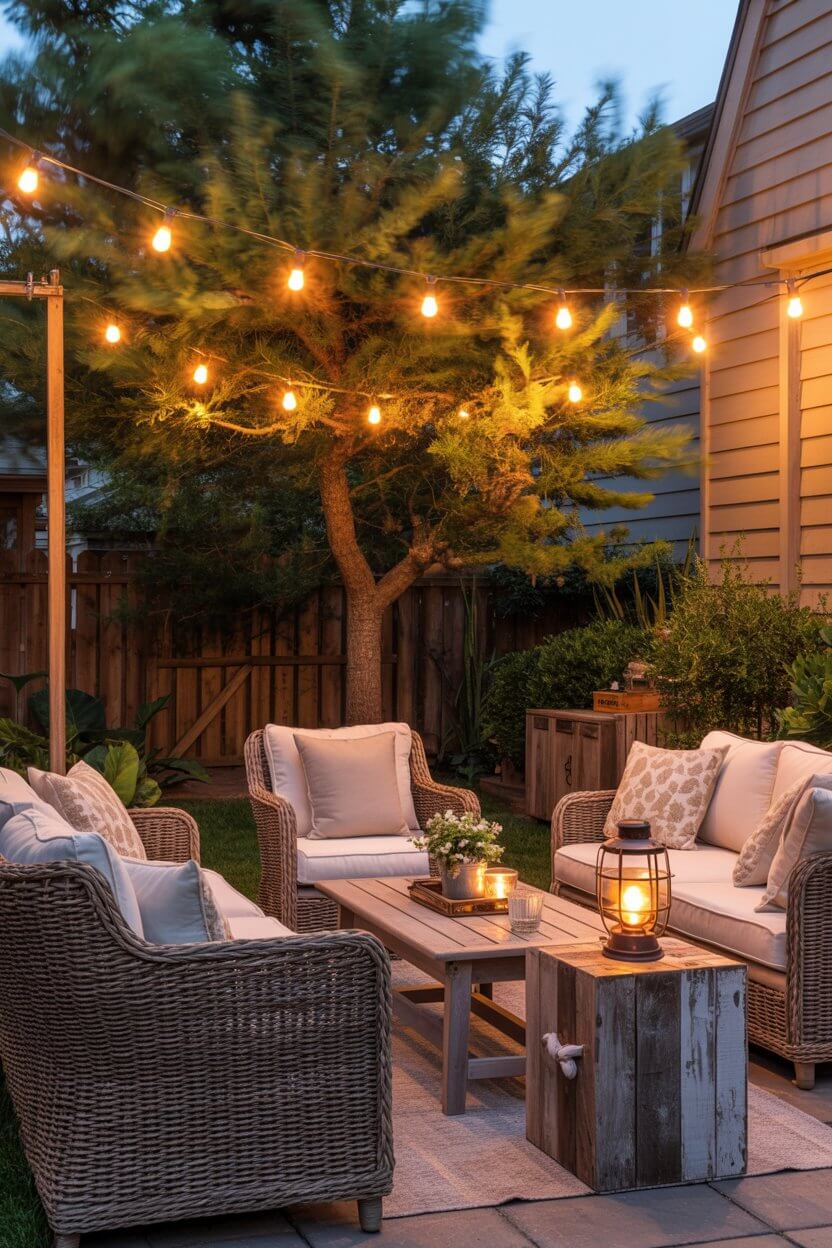
Many patios look beautiful during the day.
The real test happens after sunset.
Without proper lighting, even the most inviting patio can feel unusable.
The good news is that creating a comfortable evening atmosphere doesn’t require a complicated lighting plan.
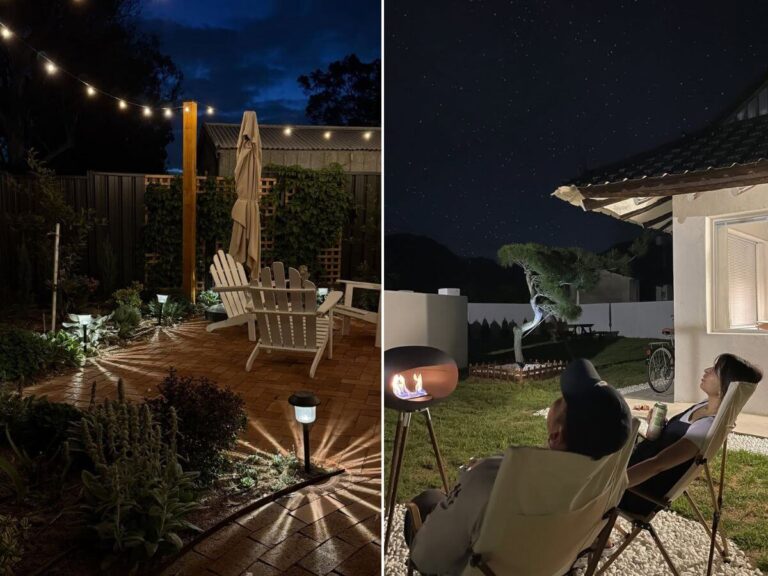
String lights remain popular for a reason. They add warmth without feeling harsh. Lanterns create soft pools of light near seating areas. Wall-mounted fixtures can help illuminate dining spaces and walkways.
The trick is thinking about lighting in layers rather than relying on a single bright fixture.
The editors at Homes & Gardens capture this idea perfectly, writing “Instead, use attractive outdoor lighting ideas to create soft lighting zones around the patio”
That’s exactly why layered lighting feels so inviting.
Instead of flooding the entire patio with brightness, different light sources create comfortable pockets of illumination that encourage people to linger. The effect feels closer to a cozy living room than a brightly lit backyard.
A reading corner might need a little more light.
A dining area may need focused illumination above the table.
A lounge space often benefits from a softer glow.
When each area receives the type of lighting it needs, the entire patio becomes more functional after dark.
Lighting also helps create a sense of atmosphere. Warm lighting naturally feels more relaxing, which is one reason restaurants and outdoor cafés rarely rely on harsh overhead lights.
Once the lighting feels right, another design detail can make a surprisingly big difference.
Scale.
Choose the Right Rug Size for Your Patio
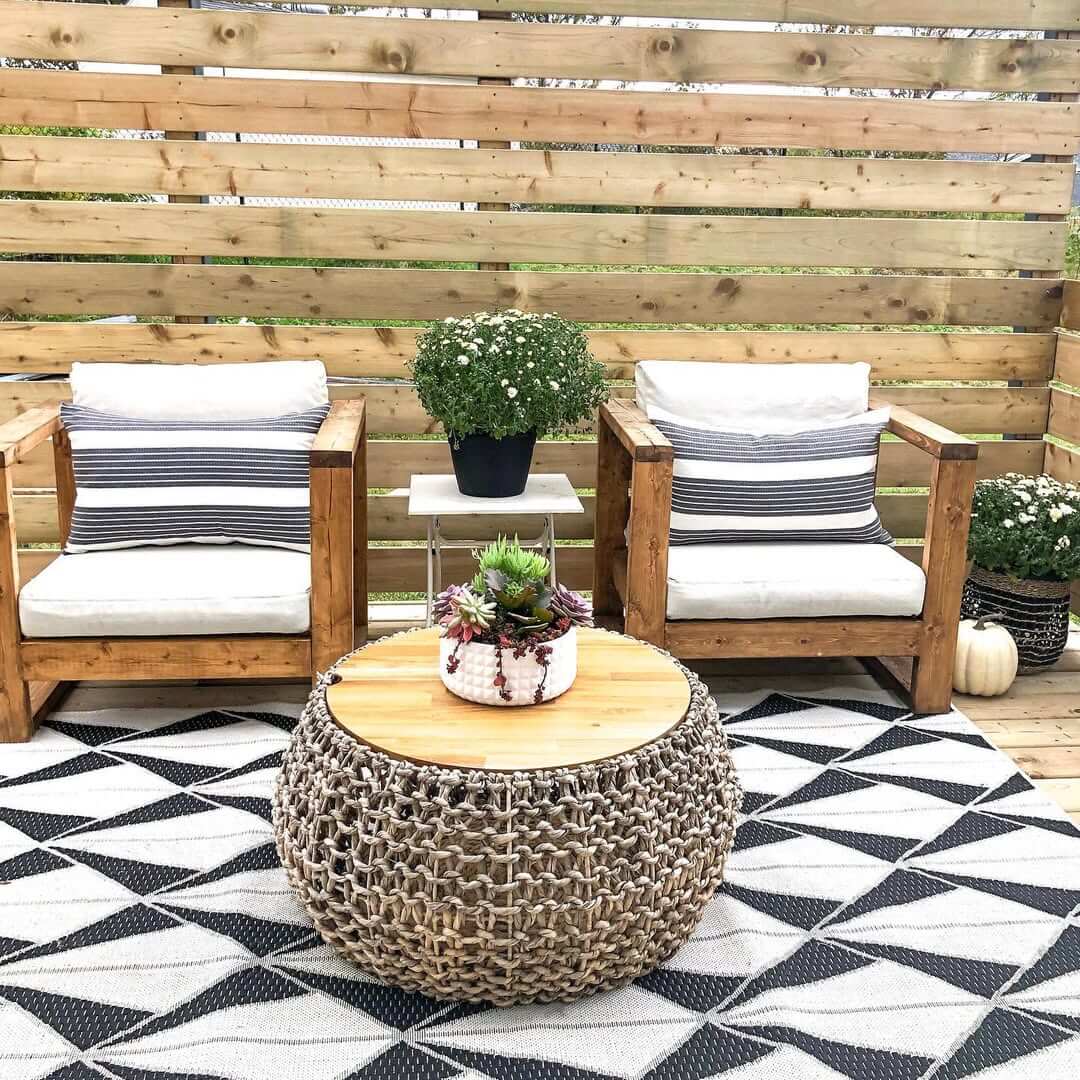
Many homeowners spend time choosing the perfect outdoor rug but overlook one detail that matters just as much.
Size.
A rug that is too small can make furniture feel disconnected. Instead of bringing the seating area together, it can make the layout feel fragmented.
The team at Better Homes & Gardens explains this perfectly, noting that “Just like with interiors, an exterior rug needs to frame the furniture.”
That’s an important guideline to keep in mind when shopping.
Ideally, furniture should feel connected to the rug rather than balanced awkwardly around it.
This is one of those details people don’t always notice consciously, yet they immediately feel the difference. A properly sized rug creates a sense of structure and makes the entire patio appear more intentional.
Even on a small patio, choosing the correct rug size can make the space feel more polished.
If you’re unsure, it’s often better to go slightly larger rather than smaller.
A properly sized rug helps create the outdoor-room feeling many homeowners are trying to achieve.
Now let’s look at a few ideas that work especially well when space is limited.
Small Patio Decorating Ideas That Feel Bigger
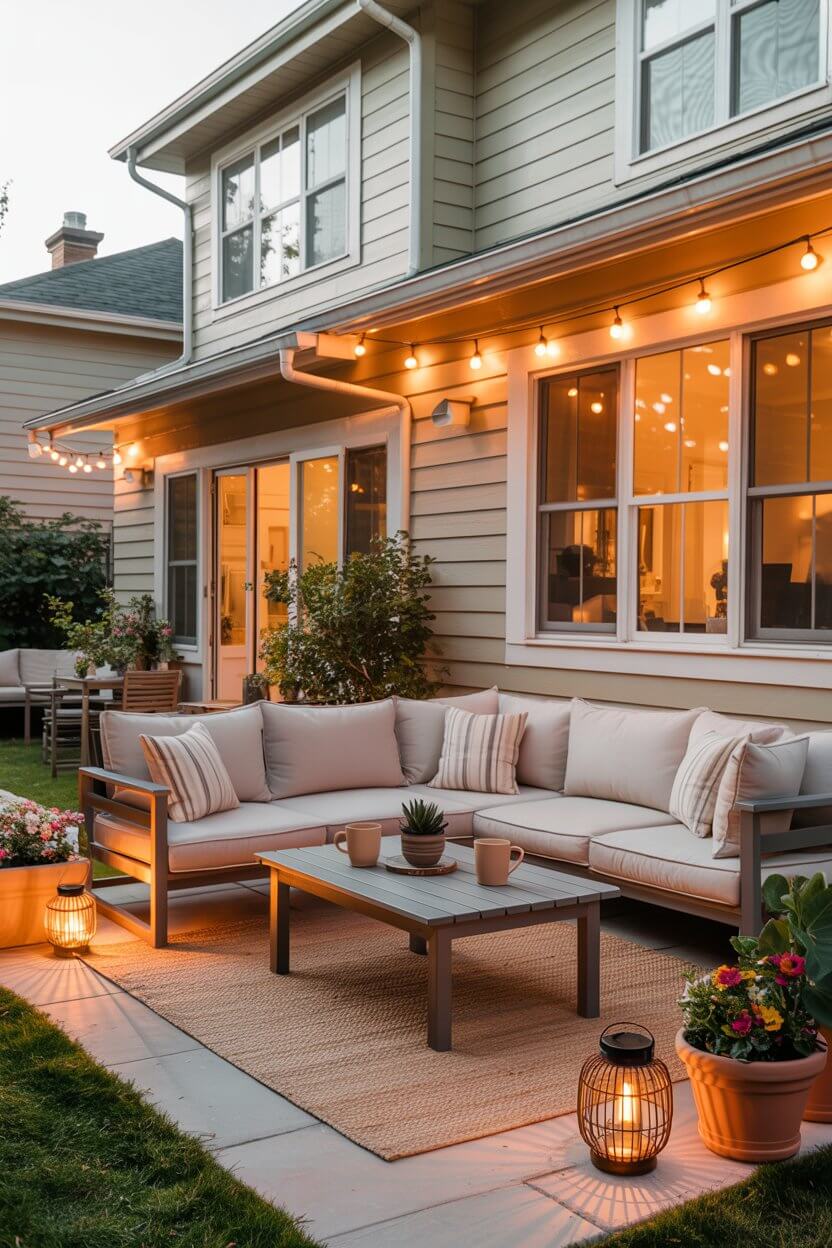
Small patios often come with one major advantage.
Every improvement feels more noticeable.
A few thoughtful changes can completely transform the space.
One of the easiest ways to make a small patio feel larger is reducing visual clutter.
Instead of filling every corner, choose fewer pieces that serve multiple purposes.
A bench with hidden storage can provide seating while helping organize outdoor essentials.
A compact side table can support drinks, books, and decorative accents without requiring additional furniture.
Another helpful trick is creating a single focal point.
That might be a seating arrangement, a large planter, or a statement rug.
When the eye has somewhere to land, the patio feels more organized.
Keeping walkways open is important too.
A patio feels much larger when people can move through it comfortably. Crowded layouts often make even large patios feel smaller than they really are.
The goal isn’t making a small patio look big.
The goal is making it feel easy to use.
Many of these same ideas work beautifully in apartment settings.
Apartment Patio Decorating Ideas That Feel Private
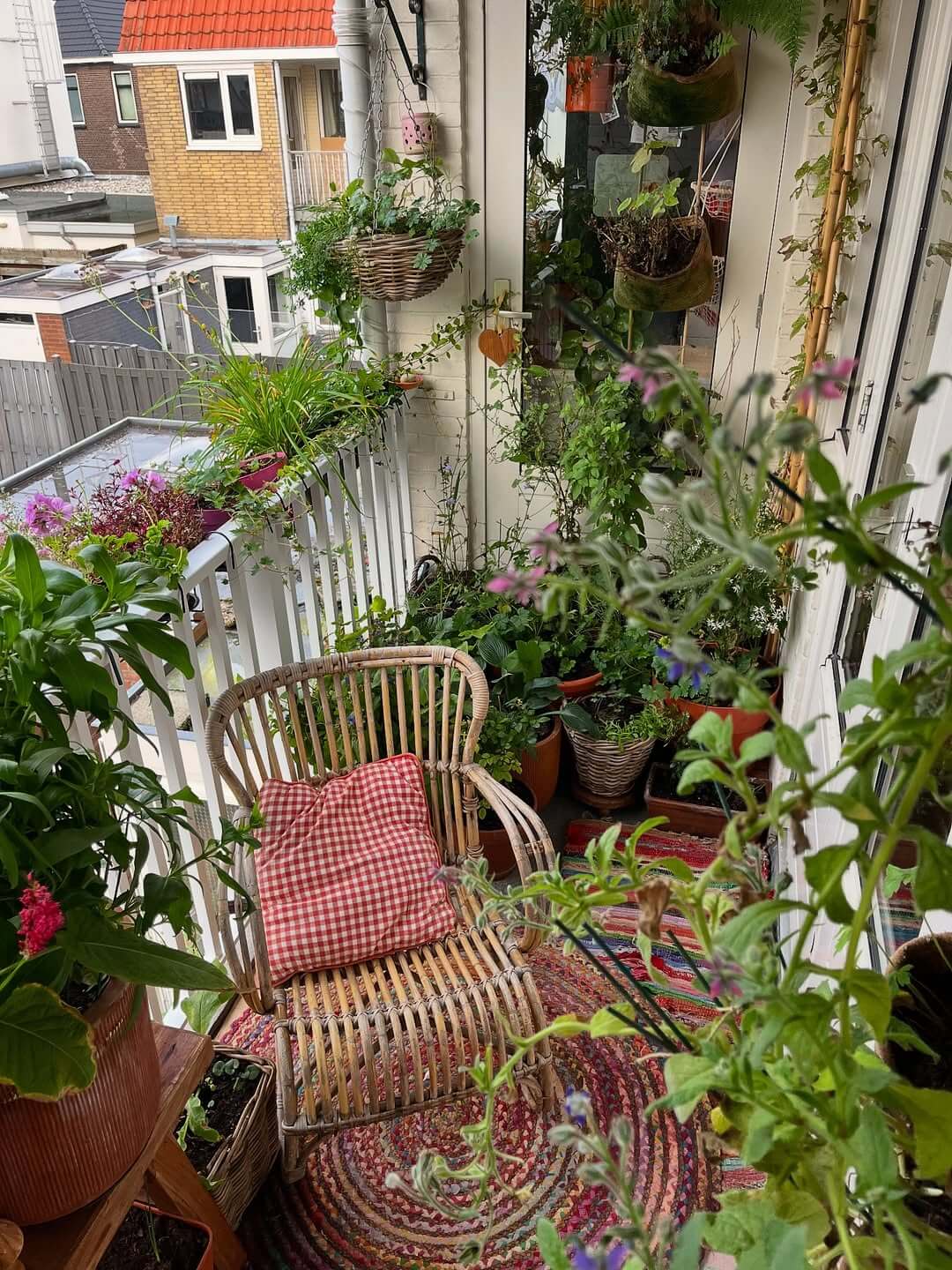
Apartment patios come with unique challenges.
Limited square footage.
Shared walls.
Nearby neighbors.
Yet some of the most inviting outdoor spaces I’ve seen have been apartment patios.
The secret is focusing on comfort rather than size.
Privacy can often be improved with tall planters, outdoor curtains, or portable screens.
Lighting becomes even more important because it helps create atmosphere in a smaller area.
Furniture should be chosen carefully.
Instead of trying to fit multiple seating groups, focus on one comfortable arrangement that supports how you actually use the space.
Vertical elements can help too.
Wall-mounted planters, railing planters, and climbing greenery add personality without consuming valuable floor space.
When every item serves a purpose, even a compact apartment patio can feel surprisingly inviting.
A good apartment patio doesn’t try to imitate a large backyard. It embraces its size and focuses on comfort, function, and atmosphere.
If you’re looking for quick wins, there are several upgrades you can tackle this weekend.
7 Patio Decorating Upgrades You Can Do This Weekend
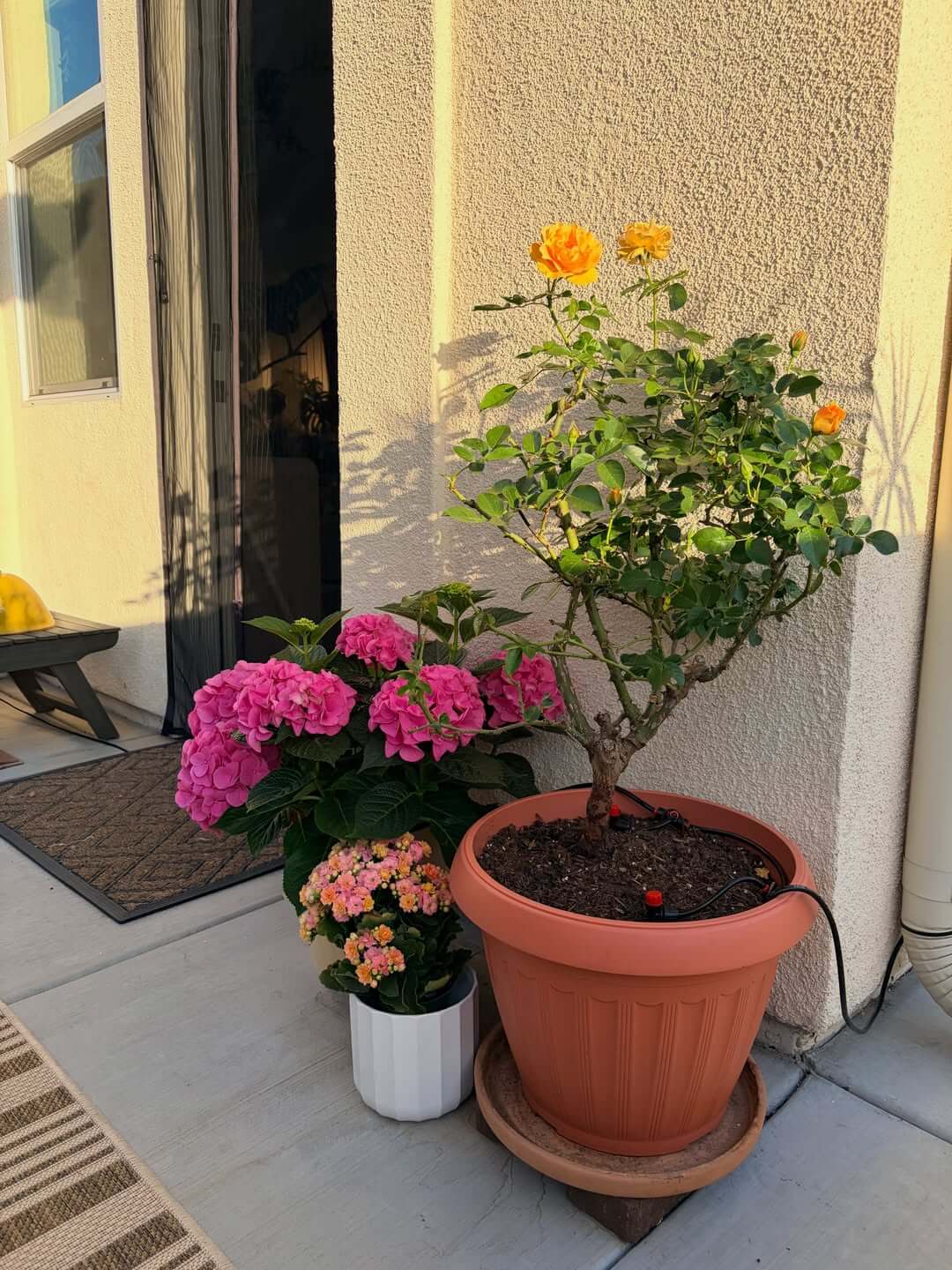
You don’t need a complete patio makeover to see results.
Small changes often have the biggest impact.
1. Add One Large Planter
A single oversized planter often creates more visual impact than several smaller pots. Place it near a seating area or patio entrance to create a stronger focal point.
2. Refresh Outdoor Cushions
Fresh cushions can instantly make seating feel more comfortable and inviting. Even replacing faded cushion covers can make furniture feel new again.
3. Add a Side Table
A practical surface makes the patio easier to use every day. Sometimes convenience matters more than decoration.
4. Install String Lights
String lights are one of the fastest ways to make a patio feel more welcoming after sunset. They create warmth without overwhelming the space.
5. Add an Outdoor Rug
A rug helps define the seating area and makes the patio feel more connected. It’s often one of the highest-impact upgrades for the money.
6. Create a Reading Corner
Even one comfortable chair and a small side table can become a favorite outdoor retreat. Sometimes a dedicated purpose is all a patio needs.
7. Remove One Thing
Look around the patio and remove one item that isn’t adding value.
Sometimes less really is more.
A little breathing room can make the entire patio feel calmer and more inviting.
Before wrapping up, let’s cover a few mistakes that can prevent a patio from reaching its full potential.
Patio Decorating Mistakes That Make Outdoor Spaces Less Inviting
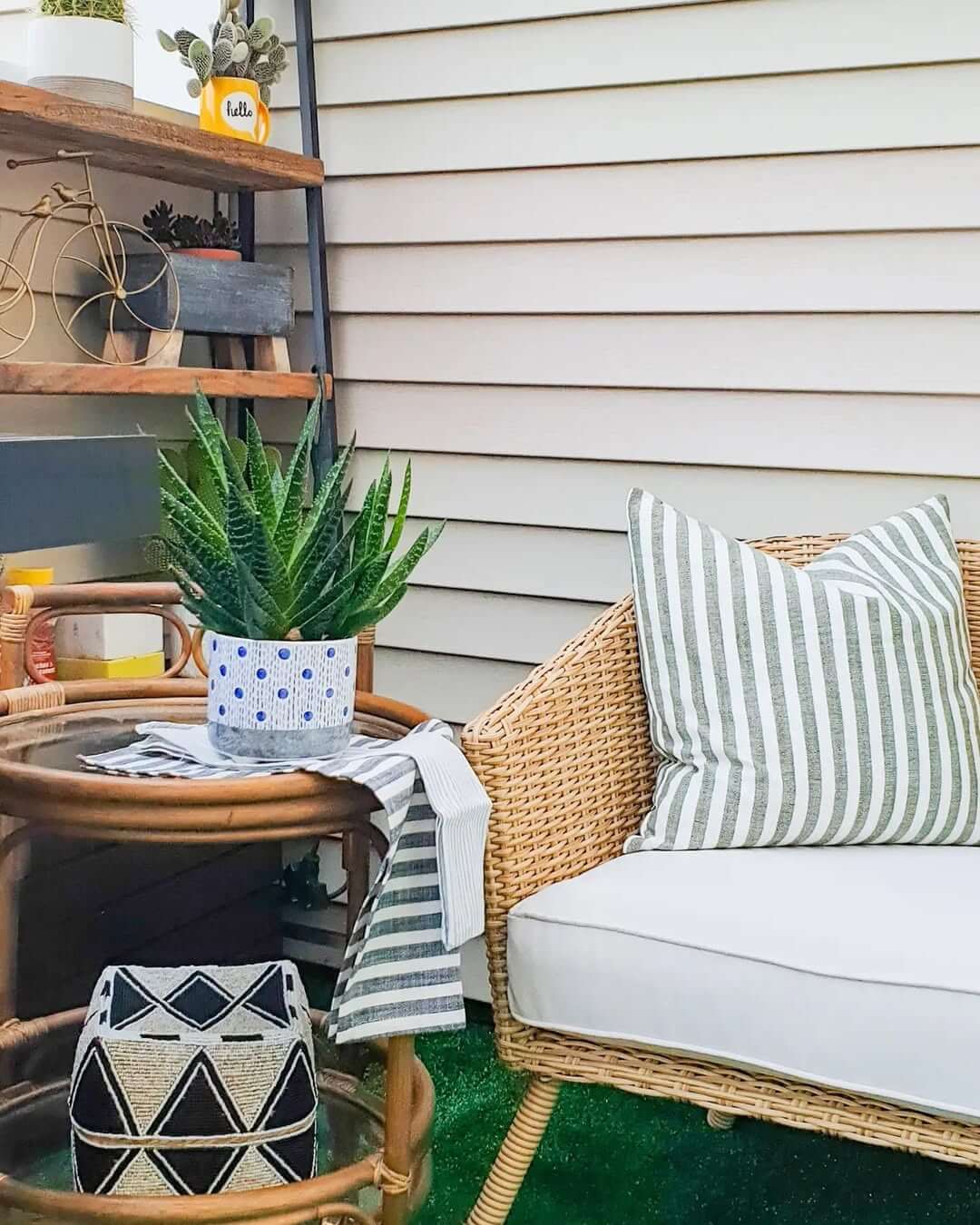
The biggest mistake is decorating without a purpose.
Buying furniture before deciding how you want to use the space often leads to disappointment.
Another common mistake is choosing appearance over comfort.
A beautiful chair that nobody wants to sit in doesn’t improve the patio experience.
Many homeowners also underestimate the role of shade and lighting.
A patio that feels uncomfortable during the day or unusable at night won’t become part of your routine.
Another mistake is trying to copy a patio you saw online without considering your own space. What works beautifully on a large covered patio may not work on a small apartment balcony.
Finally, avoid overcrowding the space.
Patios need room to breathe.
Open space often contributes more to comfort than additional furniture or decor.
How to Create a Patio You’ll Actually Use
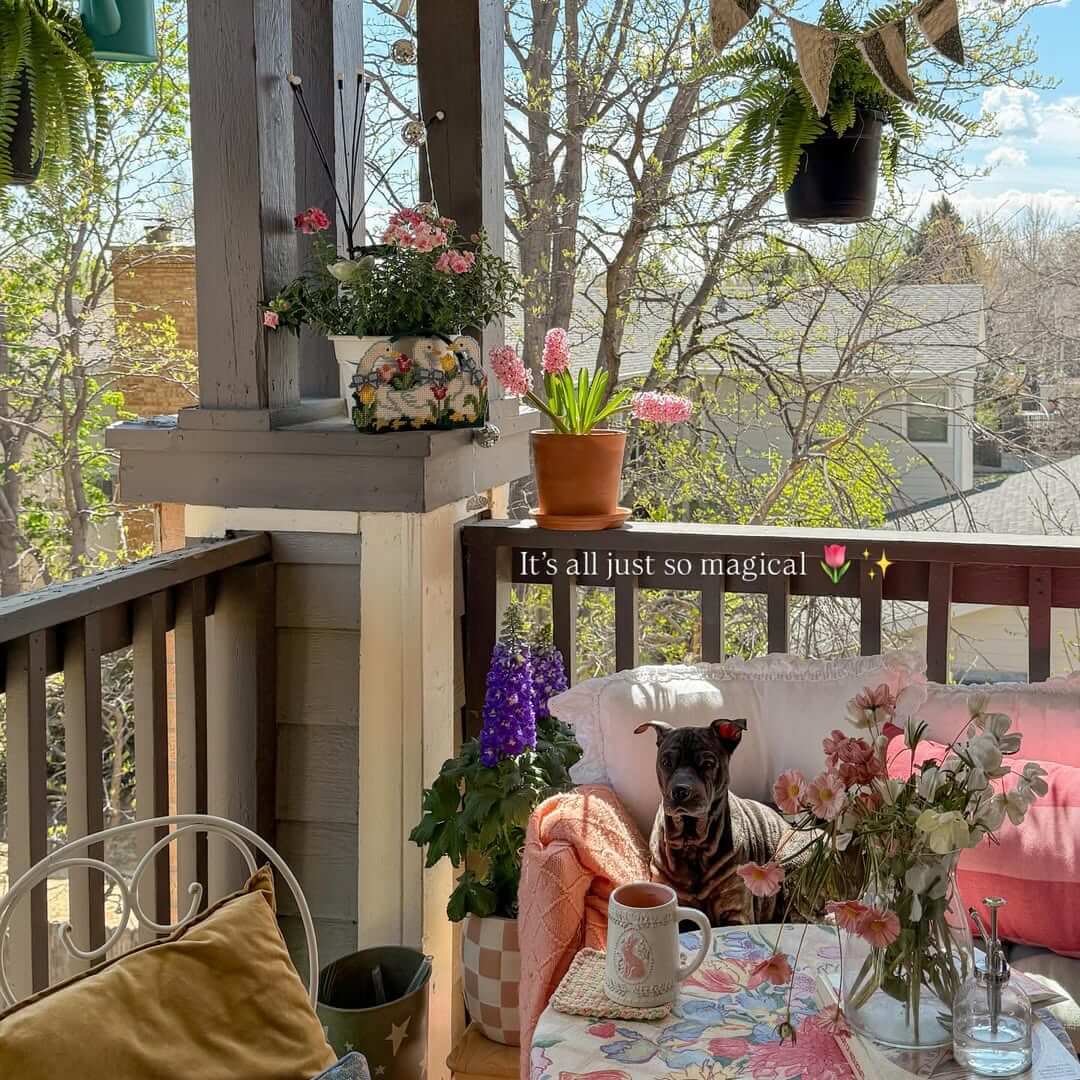
If there’s one lesson worth remembering, it’s this.
A great patio isn’t built around furniture.
It’s built around habits.
Think about the moments you want to enjoy outside.
Morning coffee.
Weekend reading.
Outdoor dinners.
Conversations with friends.
Then create a space that supports those activities.
Start small.
Focus on comfort.
Add pieces that make life easier.
Build the patio around the way you actually live rather than the way you think it should look.
I’ve noticed that the patios people use most often aren’t the ones with the most furniture. They’re usually the ones that make it easy to sit down, relax, and stay awhile.
That’s usually the difference between a patio that gets admired and a patio that gets used.
Final Thoughts
The best patio decorating ideas aren’t about buying more things.
They’re about creating a space that naturally draws you outside.
When seating feels comfortable, lighting feels warm, and the layout supports everyday life, the patio becomes more than an outdoor area.
It becomes an extension of your home.
A place where meals last longer.
A place where conversations feel easier.
A place where you can step outside for a few minutes and end up staying much longer than planned.
And that’s usually the sign of a patio that is working exactly the way it should.
You may also want to read:
15 Simple Fall Patio Decor That’ll Make You Want to Sit Outside All Day
The Joy of Hand-Painted Terra Cotta Pots for Your Home and Patio
Patio Garden Ideas That Make Small Outdoor Spaces Feel Peaceful