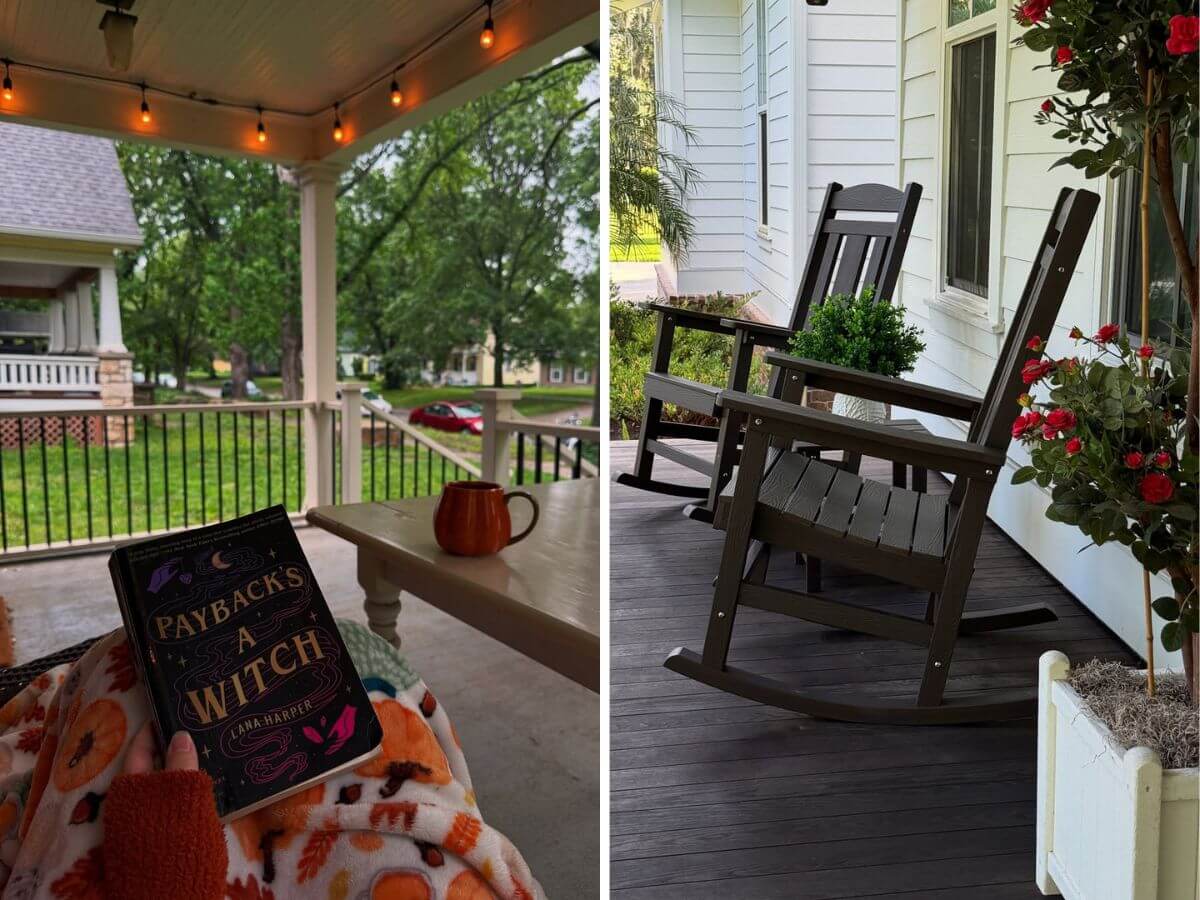
Front Porch Seating Ideas That Make You Want to Stay Outside Longer
There is something special about a front porch that actually gets used.
Not just a porch that looks pretty in photos. A porch where someone drinks their morning coffee before the rest of the house wakes up. A porch where neighbors stop to chat. A porch where you end up spending an extra twenty minutes outside because it’s simply too comfortable to leave.
The funny thing is that many homeowners already have the space for that kind of porch.
They’ve added plants. They’ve bought outdoor decor. They’ve spent time making the front of the house look welcoming.
Yet the porch still sits empty most days.
If that sounds familiar, the problem usually isn’t the size of the porch or the decorating budget.
It’s the seating.
Good seating turns a front porch from something you admire from a distance into a place you genuinely want to use. The right chairs, layout, and comfort details can completely change how often you step outside.
I’ve noticed that the most inviting porches share a few things in common. The furniture fits the space. The seating feels comfortable enough to use for more than a few minutes. There is a convenient place to set down a coffee mug, a book, or a cold drink. Most importantly, the porch feels designed for real life rather than just curb appeal.
That’s good news because creating a porch people actually use doesn’t require a major renovation.
A few thoughtful changes can make even a small front porch feel more comfortable, more welcoming, and much harder to leave.
In this guide, I’ll walk through front porch seating ideas that help create a space you’ll want to use every day, whether you have a tiny entry porch, a classic farmhouse porch, or a large wraparound front porch.
Start With How You Want to Use Your Porch
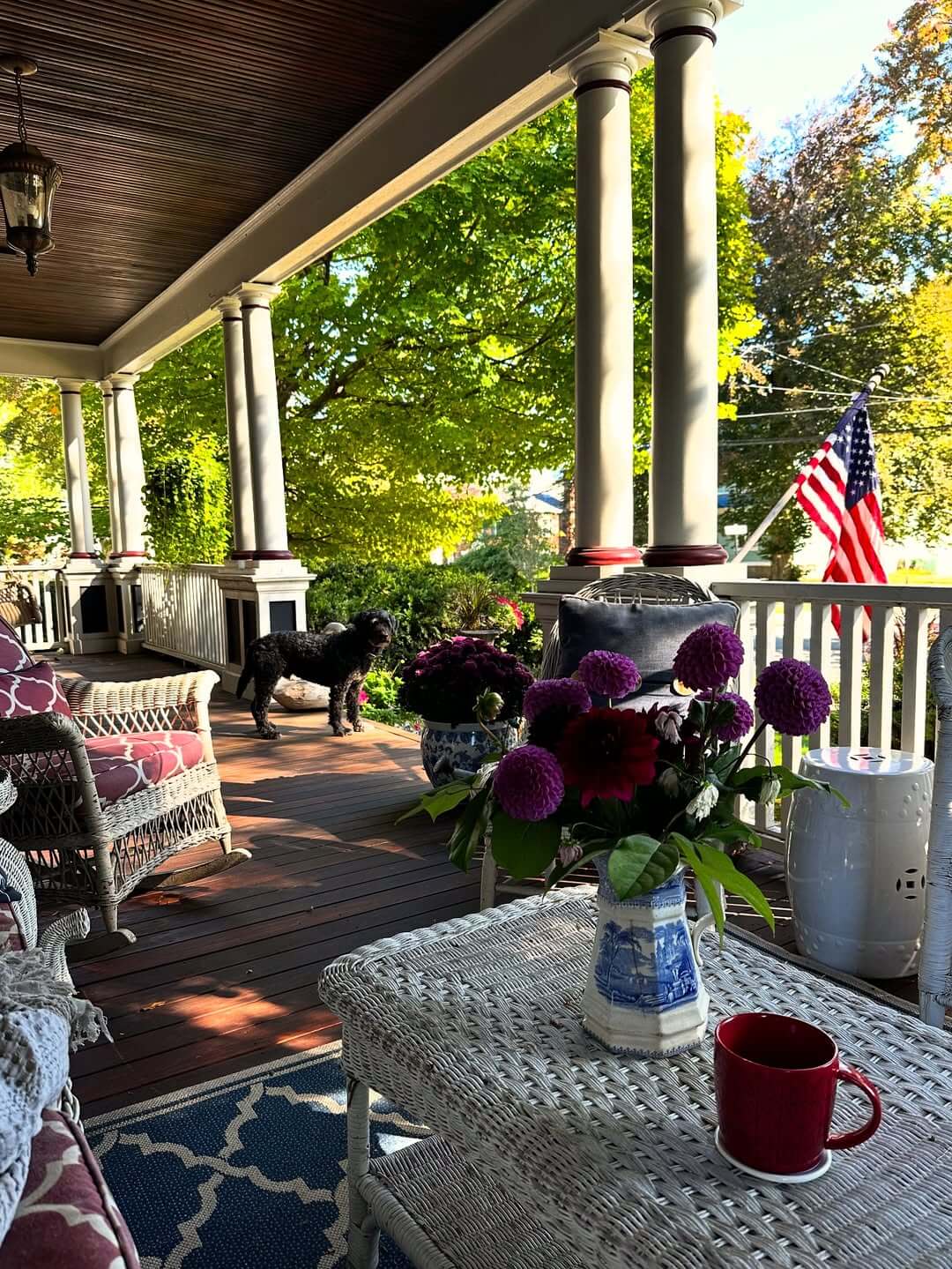
Before buying a single chair, stop and think about how you actually want to spend time outside.
Many homeowners buy furniture first and then try to figure out how the porch should function. That approach often leads to a space that looks nice but rarely gets used.
A seating setup designed for morning coffee looks very different from one built for entertaining guests. A quiet reading corner needs different furniture than a porch where family members gather after school.
Try this simple exercise.
Stand on your porch for a few minutes and picture yourself spending an hour there tomorrow.
Would you be drinking coffee?
Reading a book?
Watching the sunset?
Talking with neighbors?
Where would you put your drink? Would you need shade? Would you prefer conversation or quiet?
The answers often reveal exactly what type of seating arrangement you need.
If your goal is peaceful mornings, a pair of rocking chairs or Adirondack chairs may be enough. Position them where you can enjoy the best view and start your day without distractions.
If you enjoy entertaining, focus on conversation seating. Chairs should face each other rather than point toward the street. People naturally stay longer when talking feels easy.
For reading and relaxing, comfort should come before appearance. Deep seating, supportive cushions, and a nearby side table often get used far more than stylish furniture that feels uncomfortable after twenty minutes.
Once you know how the porch will be used, choosing furniture becomes much easier.
The next step is making sure that furniture actually fits the space.
Choose Seating That Fits the Size of Your Porch
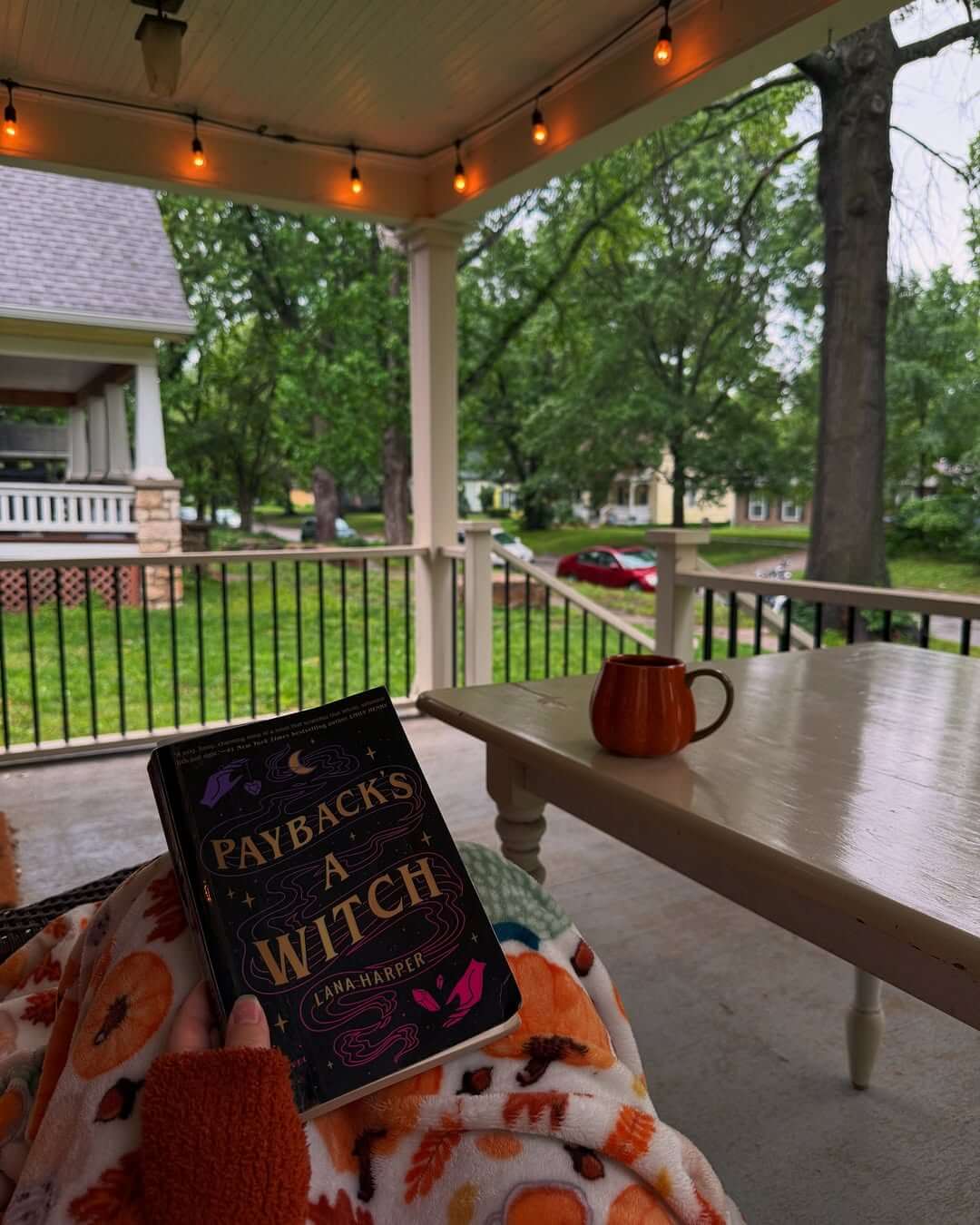
One of the fastest ways to make a porch feel uncomfortable is filling it with furniture that is too large.
I’ve seen beautiful outdoor sets completely overwhelm otherwise charming porches. The front door feels crowded. Walking paths become awkward. Guests end up squeezing between chairs just to reach the entrance.
The goal isn’t fitting as much furniture as possible.
The goal is creating a porch that feels easy to use.
Small Front Porch Seating Ideas
A small porch doesn’t need a complete outdoor living room.
In many cases, two well-chosen chairs create a better experience than forcing a loveseat, coffee table, and several accessories into a limited space.
Compact rocking chairs, folding bistro chairs, and slim benches often work surprisingly well.
Scale matters more than many people realize.
The editors at The Spruce make this point clearly, writing that “Garden furniture like a small French-style table and chairs is the perfect scale for a small front porch.”
That’s exactly why smaller furniture often feels more comfortable. When seating matches the size of the porch, the entire space feels more open and easier to navigate.
Another smart move is adding a small side table between two chairs.
That single piece can hold coffee, books, phones, and drinks without taking up much room.
If your porch is especially narrow, don’t feel pressured to fit multiple seats. One comfortable chair paired with a side table can create a relaxing retreat without making the space feel crowded.
Medium Front Porch Seating Ideas
Medium-sized porches offer more flexibility.
This is where conversation seating starts to shine.
A pair of rocking chairs creates a timeless front porch look. Two lounge chairs with a small table between them feel relaxed and inviting.
You can also mix seating styles.
A bench on one side and chairs on the other often creates more personality than matching every piece perfectly.
Before finalizing the arrangement, sit in each seat and imagine having a conversation. If people would need to twist awkwardly or raise their voice, the layout probably needs adjustment.
Large Front Porch Seating Ideas
A larger porch gives you room to think beyond a single seating arrangement.
One mistake people make is treating the entire porch as one giant seating zone.
Breaking the porch into smaller destinations often works much better.
One area might become a morning coffee spot. Another could focus on conversation. A porch swing or reading chair might occupy a quieter corner.
People naturally gravitate toward smaller gathering spaces.
Large empty areas can sometimes feel less welcoming than a few thoughtfully arranged seating zones.
If your porch isn’t large enough for multiple zones, don’t worry.
A pair of chairs and a side table can create the same inviting atmosphere on a much smaller footprint.
Now that you’ve chosen the right furniture, it’s time to arrange it in a way that encourages people to stay.
Create a Seating Layout That Encourages Conversation
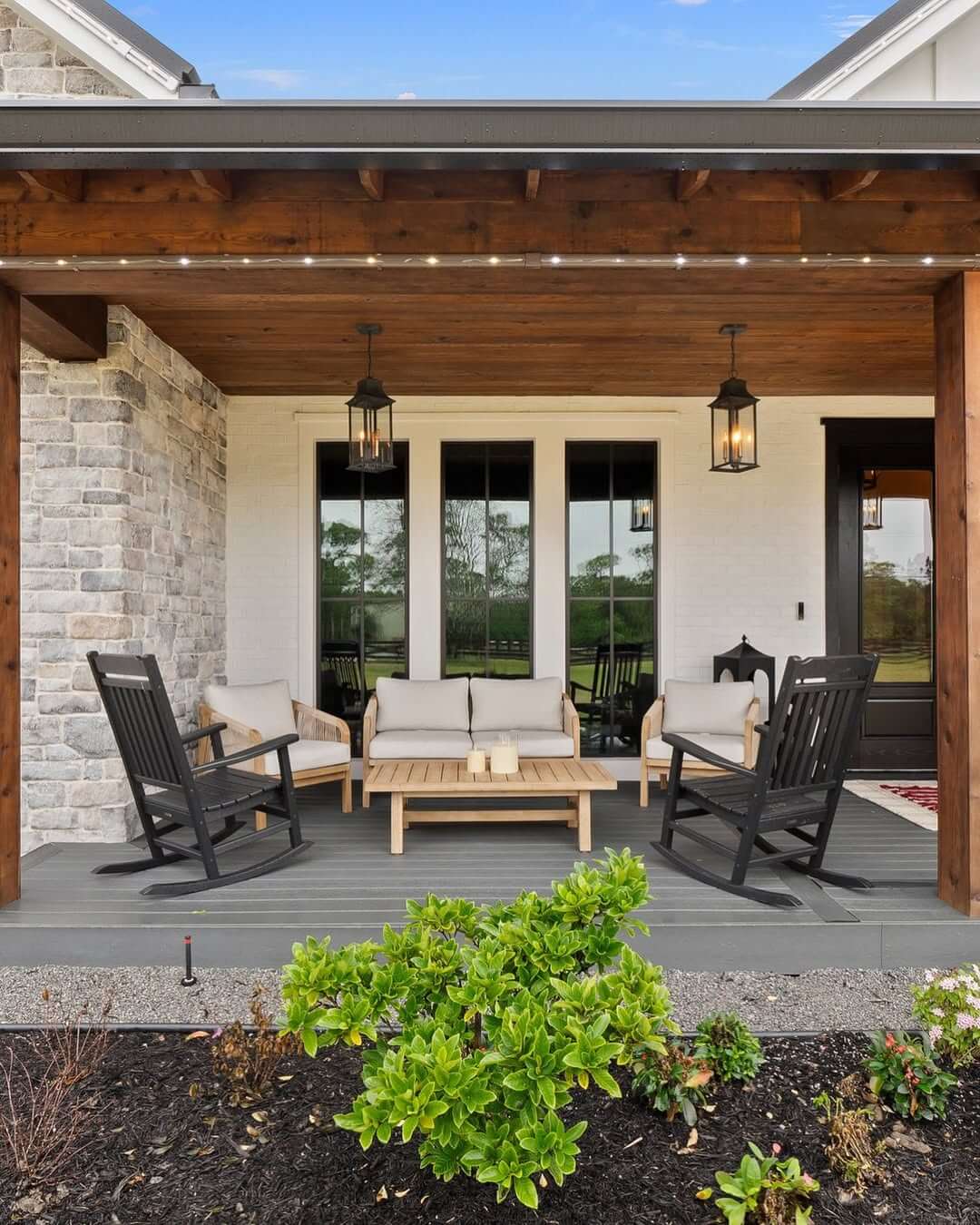
Even beautiful furniture can feel uncomfortable when the layout is wrong.
Think about the last place where you sat for an hour without noticing the time. Chances are you didn’t have to think about where to sit or how to position yourself. Everything felt natural.
That’s exactly what a good porch layout should do.
Two chairs facing each other remain one of the most effective arrangements you can use. People don’t need to twist their body or raise their voice to talk. The setup feels welcoming almost immediately.
An L-shaped arrangement works well too, especially on medium-sized porches. It creates a sense of connection while keeping the space open.
One mistake I see often is pushing every piece of furniture against the wall.
People do this hoping to create more room. The opposite often happens.
The seating area feels disconnected and less inviting.
If space allows, pull furniture forward a few inches and create a more intentional arrangement. A small table, planter, outdoor rug, or even the view itself can become the focal point.
Pay attention to traffic flow as well.
Guests should be able to walk from the steps to the front door without weaving through furniture.
A simple test works well here. Walk the path you normally take when carrying groceries or welcoming guests. If anything feels awkward, adjust the layout.
The best seating arrangements feel effortless.
Guests shouldn’t have to think about where to sit. The layout should guide them naturally.
Once the layout works, comfort becomes the next priority.
Make Hard Seating Feel Comfortable
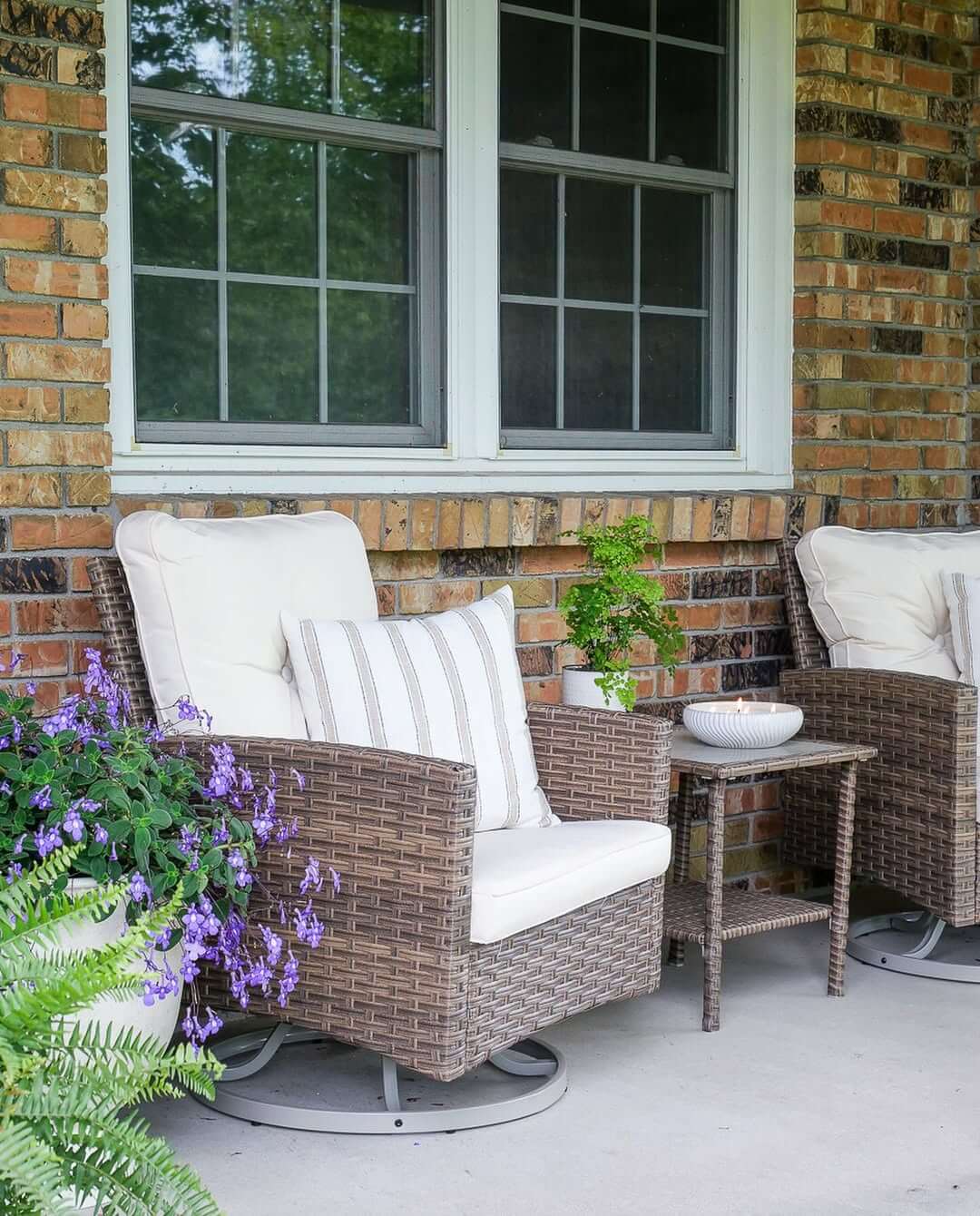
A chair that looks beautiful but feels uncomfortable rarely gets used.
Comfort is what turns a quick five-minute break into an hour spent outside.
That’s why cushions matter more than many homeowners realize.
A simple wooden chair can become a favorite spot with the right cushion. Look for cushions that feel supportive without becoming bulky. Pairing them with a smaller lumbar pillow often creates a comfortable setup without overwhelming the chair.
Think about how you’ll use the porch throughout the day.
Morning coffee.
Afternoon reading.
Evening conversations.
Each activity becomes more enjoyable when seating feels supportive.
The same idea applies to throw pillows.
Too many pillows become something people have to move before they can sit down. Too few can leave furniture feeling unfinished.
A good rule is one or two pillows per seat.
The goal is creating a place where people want to sit down immediately, not a display that feels too precious to use.
As comfort improves, you’ll probably notice something interesting.
People start staying outside later into the evening.
That’s when shade and lighting begin to matter.
Add Shade So People Stay Longer
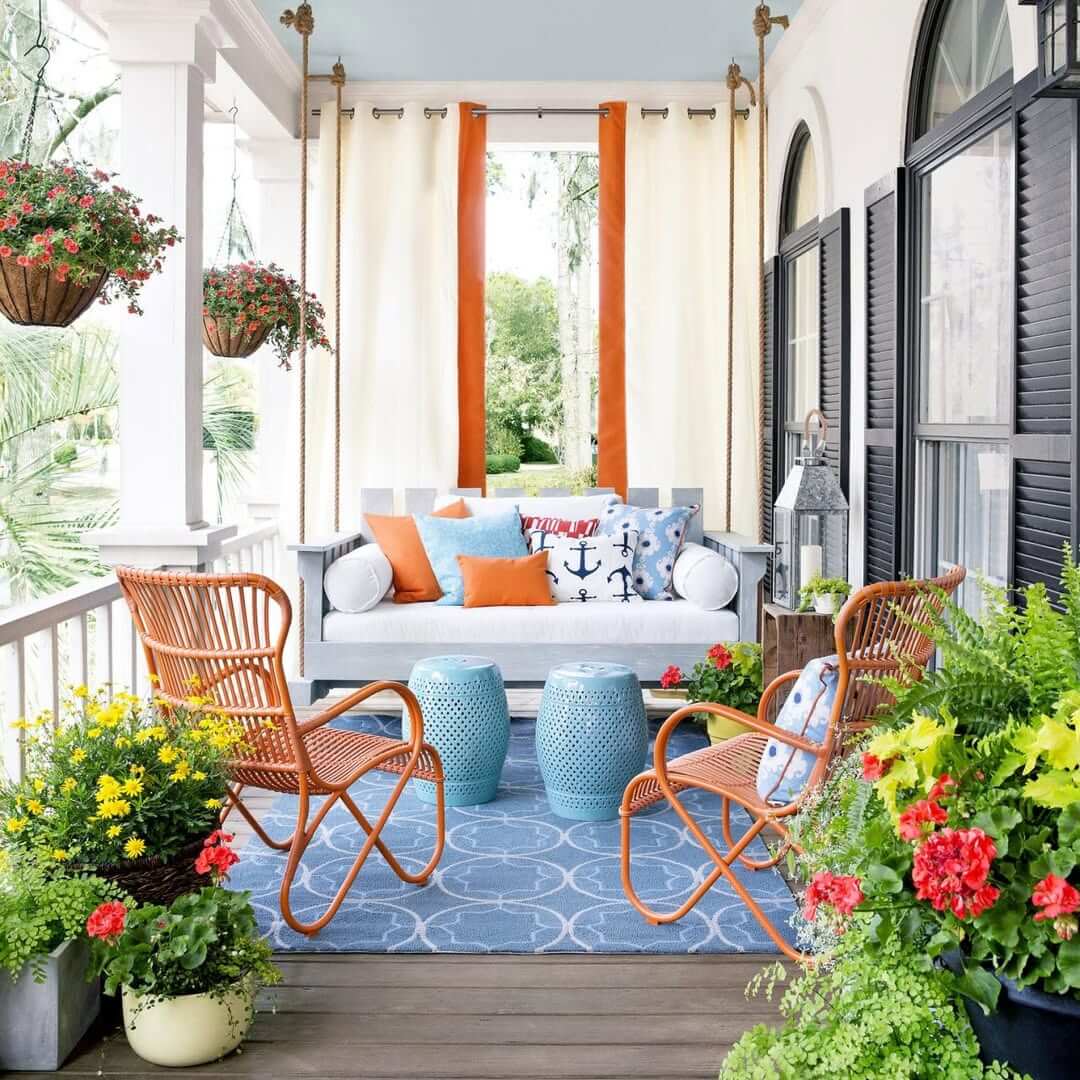
A front porch can have perfect seating and still sit empty.
Often the reason is simple.
Too much sun.
Anyone who has tried sitting outside on a hot afternoon knows how quickly direct sunlight can send people back indoors.
That’s why shade deserves just as much attention as the furniture itself.
If your porch is covered, you’re already ahead. Still, there are ways to make the space more comfortable.
Ceiling fans help move air during warmer months. Outdoor curtains can soften harsh sunlight while adding privacy. A well-placed umbrella can create relief exactly where it’s needed.
Pay attention to how sunlight moves across the porch throughout the day.
Many homeowners only evaluate their porch once and assume conditions stay the same. In reality, morning and afternoon sunlight can create completely different experiences.
Sometimes moving a chair just a few feet makes a huge difference.
Small adjustments often have the biggest impact on how frequently a porch gets used.
Once the sun goes down, another comfort factor takes over.
Lighting.
Layer Lighting Around Your Seating Area
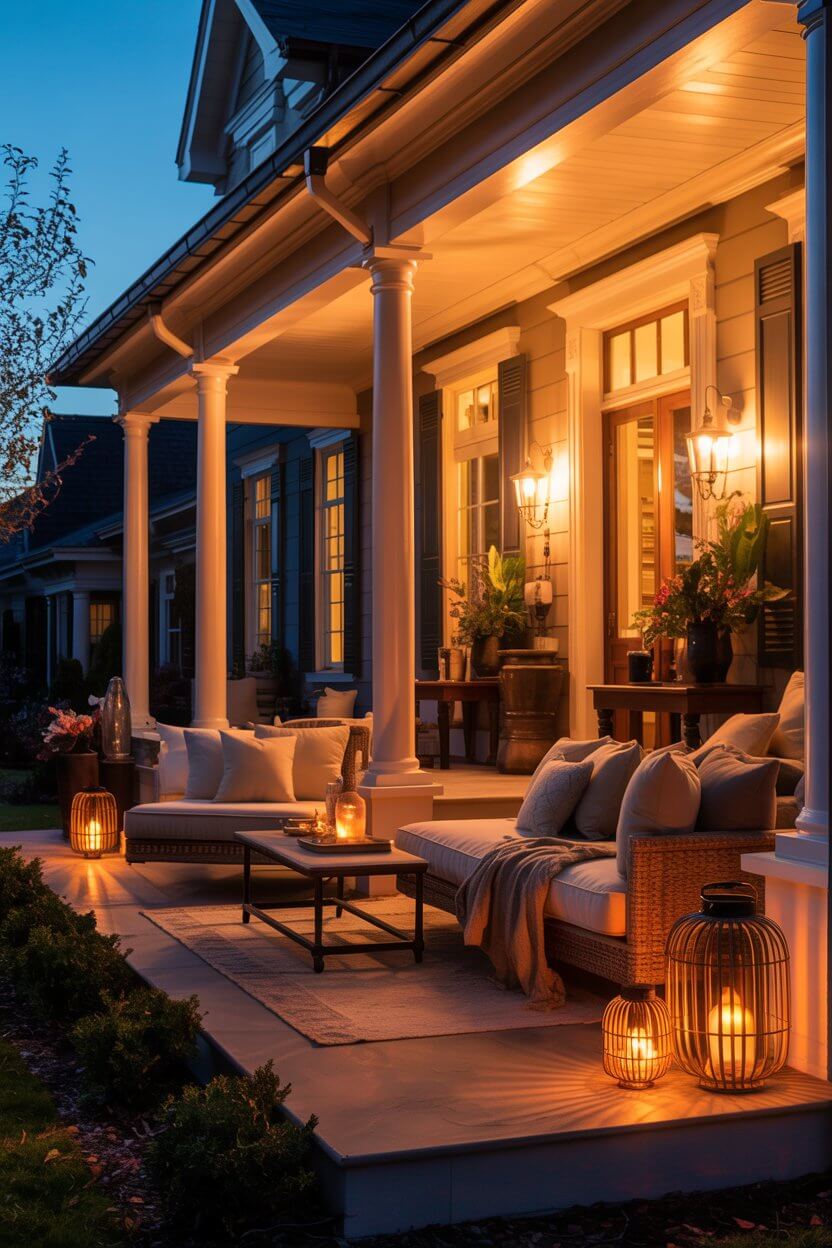
Many front porches look beautiful during the day.
The real test comes after sunset.
If lighting is too bright, the space feels harsh. If it’s too dim, people won’t feel comfortable spending time there.
The best porches create a soft glow rather than flooding the entire area with light.
Wall sconces near the front door provide practical illumination. Lanterns add warmth and character. String lights can make the entire porch feel more inviting without overpowering the space.
Using more than one light source usually creates a better result than relying on a single fixture.
The layers help the porch feel welcoming rather than overly bright.
Warm-toned lighting tends to feel more relaxing for conversation and quiet evenings. Bright white light often works better near entryways where visibility matters most.
Lighting Mistakes That Make Porches Feel Less Comfortable
One common mistake is concentrating all the lighting near the front door.
The entry becomes bright while the seating area feels disconnected.
Another issue is choosing bulbs that are simply too bright.
What feels practical in a store can feel uncomfortable when you’re trying to unwind outdoors.
A few carefully placed light sources often create a better atmosphere than filling the porch with fixtures.
Once lighting feels right, it’s time to make the space feel more alive.
Bring Life Around the Seating Area
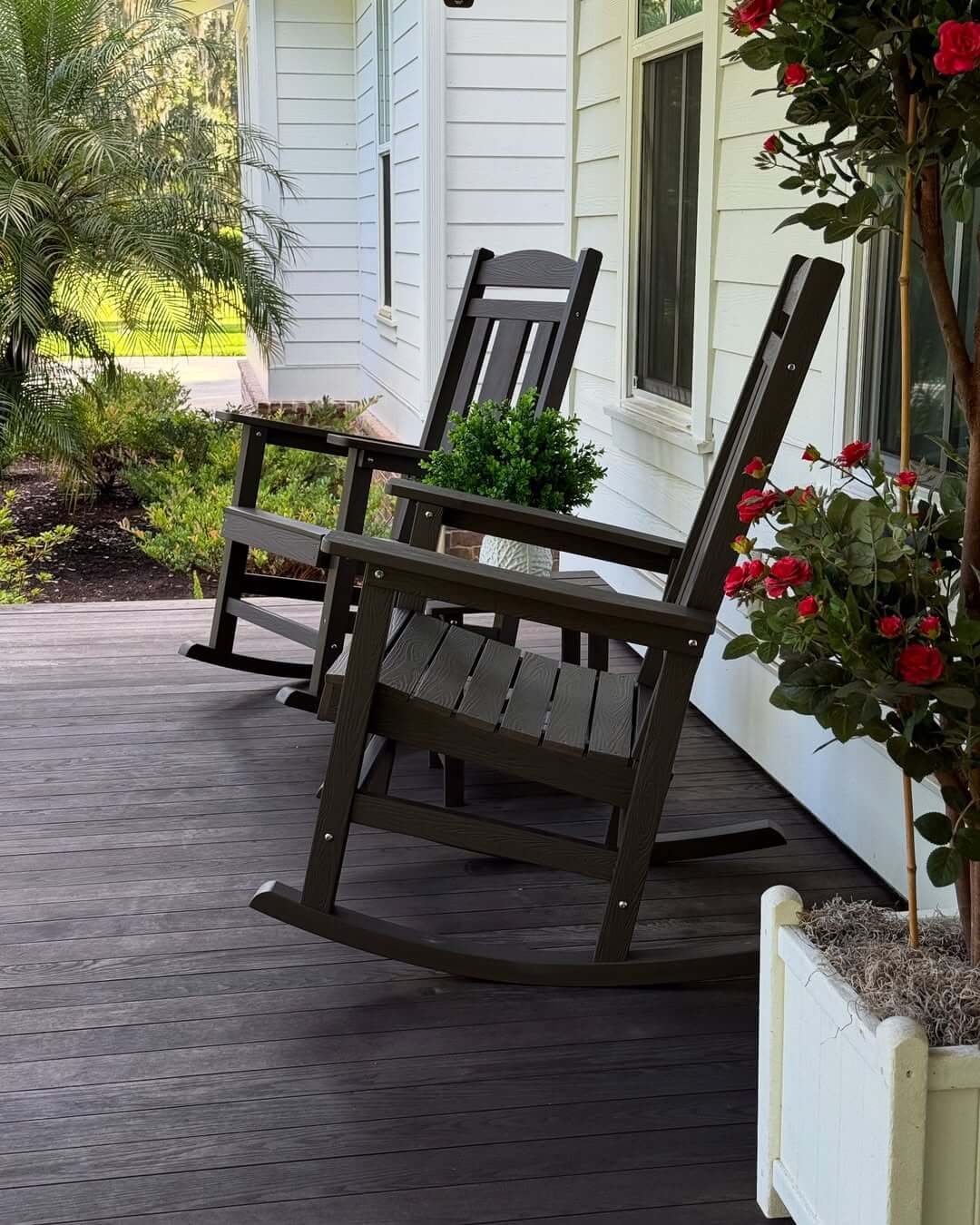
The most welcoming porches rarely rely on furniture alone.
Plants play a huge role in making a seating area feel comfortable and lived in.
The good news is that you don’t need a complicated garden to get this effect.
A pair of planters beside the steps can frame the entrance beautifully. Container gardens near seating areas add color and texture. Hanging baskets help draw the eye upward and create more visual depth.
Plants can also solve practical problems.
If your porch faces a busy street, taller planters may create a greater sense of privacy. If the space feels stark or unfinished, greenery softens hard surfaces almost instantly.
Try placing plants near seating rather than only around the perimeter.
A chair surrounded by flowers, foliage, or planters naturally feels more relaxing than a chair sitting alone on bare concrete.
Some of the biggest improvements come from surprisingly small additions.
That’s especially true when it comes to cozy finishing touches.
Cozy Front Porch Ideas That Make a Big Difference
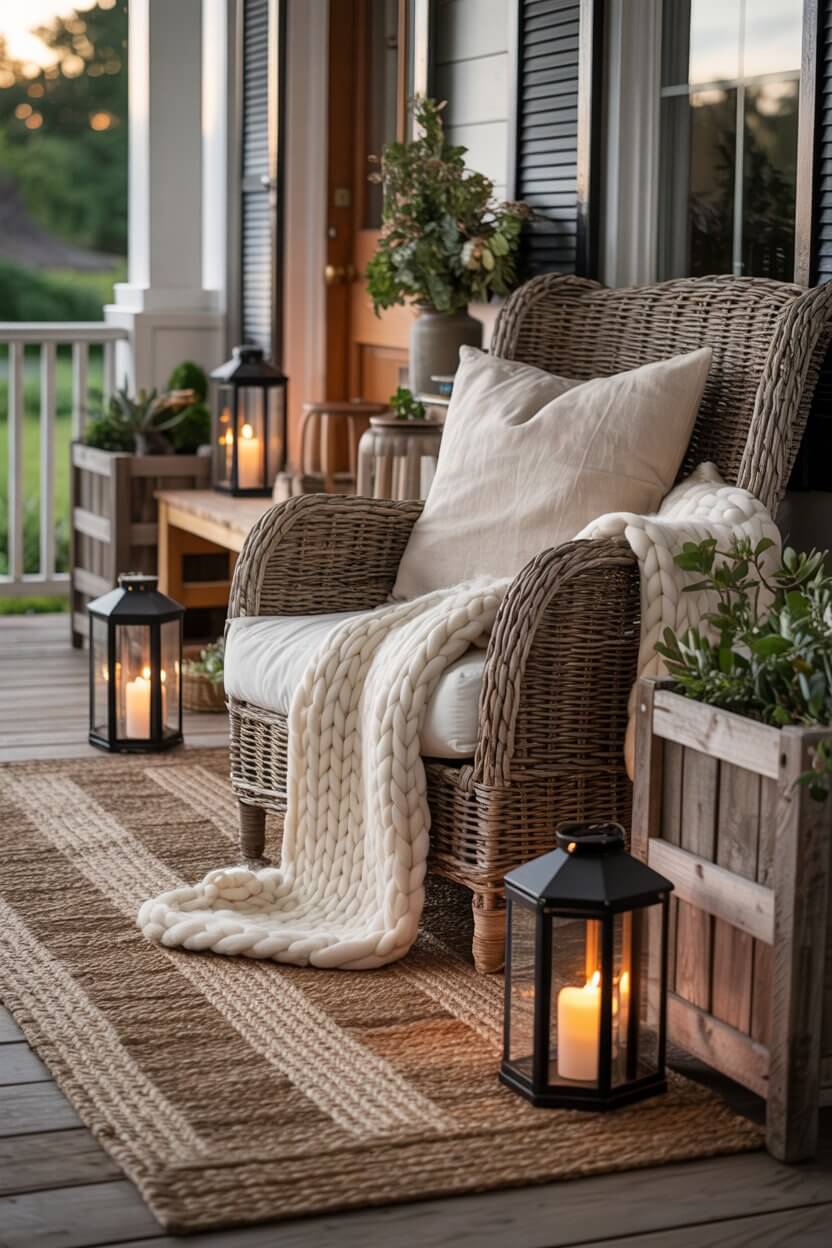
The details are often what transform a nice porch into a favorite place to spend time.
These upgrades don’t require a major budget.
Most can be completed in a single weekend.
Add a Small Side Table
One of the easiest improvements you can make is adding a place to set things down.
Coffee mugs. Books. Phones. Cold drinks. Sunglasses.
Every comfortable seat benefits from a nearby surface.
The team at Architectural Digest captures this idea perfectly, recommending homeowners to “Create a seating area with chairs and side tables.”
That advice may sound simple, but it solves one of the biggest usability problems many porches have.
Without a side table, people constantly balance items on their lap or get up to put things away.
With one, the seating area immediately feels more practical and comfortable.
Use an Outdoor Rug
Outdoor rugs do much more than add color.
They help define the seating area and make it feel intentional.
This becomes especially valuable on larger porches where furniture can otherwise appear disconnected.
The editors at Homes & Gardens highlight this approach, noting that “To help zone off each area, ground the living furniture with a large outdoor rug.”
That’s exactly why rugs work so well beneath seating arrangements.
The rug visually connects the furniture and helps the entire area feel complete.
A well-sized rug can often make a seating arrangement feel more finished than adding another decorative accessory.
Mix Materials for More Character
Some of the most memorable porches combine different textures and finishes.
A wicker chair next to a wooden side table.
Metal lanterns paired with soft cushions.
Natural planters beside painted furniture.
The contrast creates interest without making the space feel busy.
A simple approach works best.
Choose one dominant material and add one or two complementary textures around it.
Include Seasonal Touches
A porch should feel lived in throughout the year.
Seasonal flowers, lightweight throws, lanterns, wreaths, and planters can help refresh the space without requiring a complete redesign every few months.
The best seasonal updates feel natural rather than forced.
A few thoughtful changes are usually enough.
Before wrapping up, let’s cover a few mistakes that can hold back even the most beautiful porch.
Common Front Porch Seating Mistakes to Avoid
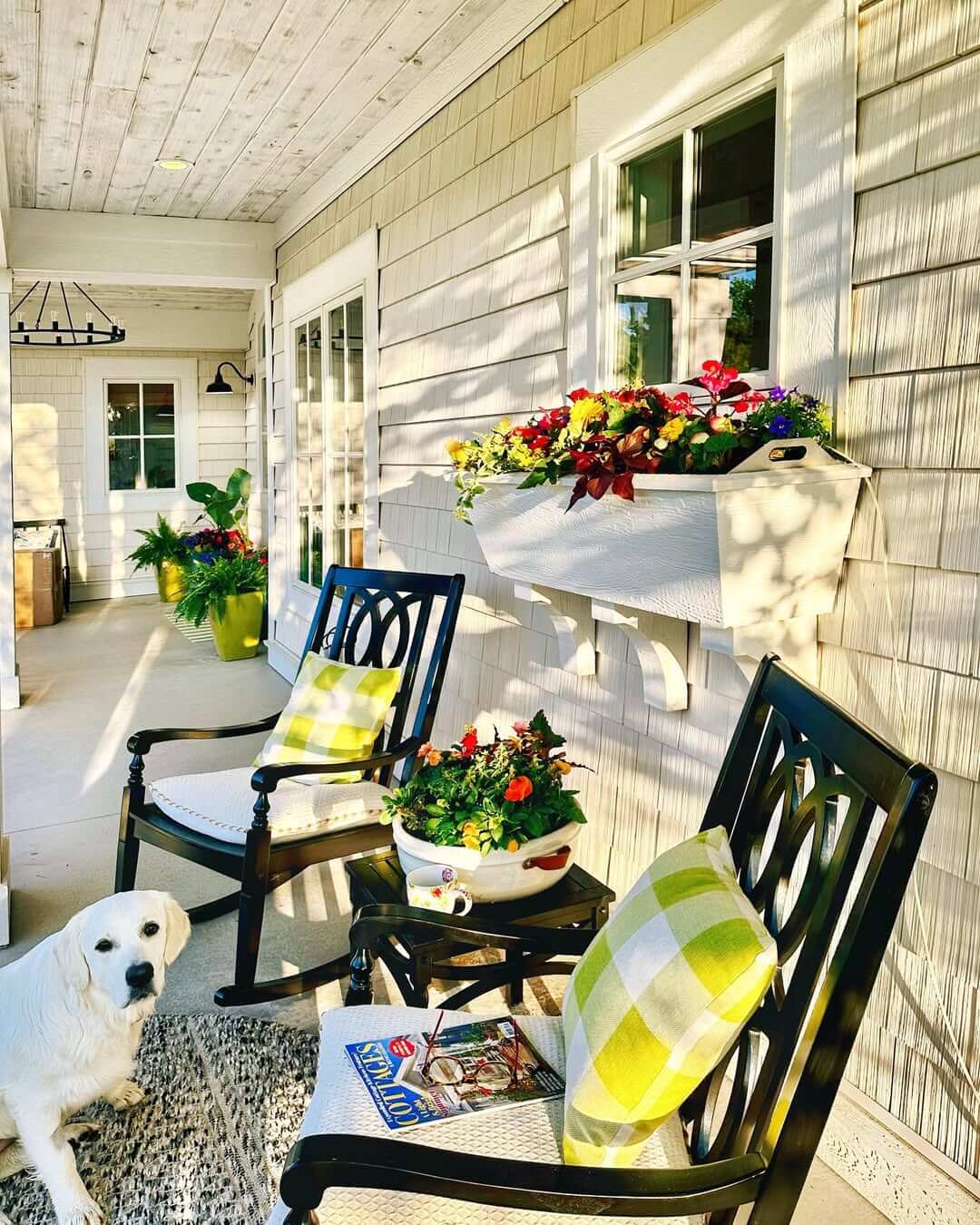
Even a beautiful porch can feel uncomfortable when a few small mistakes get in the way.
The first mistake is choosing furniture based on appearance alone.
A chair can look amazing online and still be uncomfortable after fifteen minutes. If a seat isn’t comfortable enough for a morning coffee or an evening conversation, it probably won’t get used very often.
Another common mistake is ignoring traffic flow.
Guests should be able to walk from the steps to the front door without squeezing between furniture. If people have to navigate around chairs every time they enter the house, the layout needs adjusting.
Many homeowners also underestimate the impact of weather.
A porch that feels comfortable on a mild spring morning may become unbearable on a hot summer afternoon. Paying attention to sunlight, wind, and shade can make a bigger difference than buying new furniture.
One more mistake worth mentioning is filling every available inch of space.
It’s tempting to add one more chair, one more planter, or one more decorative piece.
Resist the urge.
Empty space helps a porch feel open and welcoming. In many cases, removing one item improves the space more than adding another.
The porches people use most often aren’t packed with furniture.
They’re comfortable, practical, and easy to move around in.
5 Things You Can Do This Weekend to Make Your Porch More Inviting
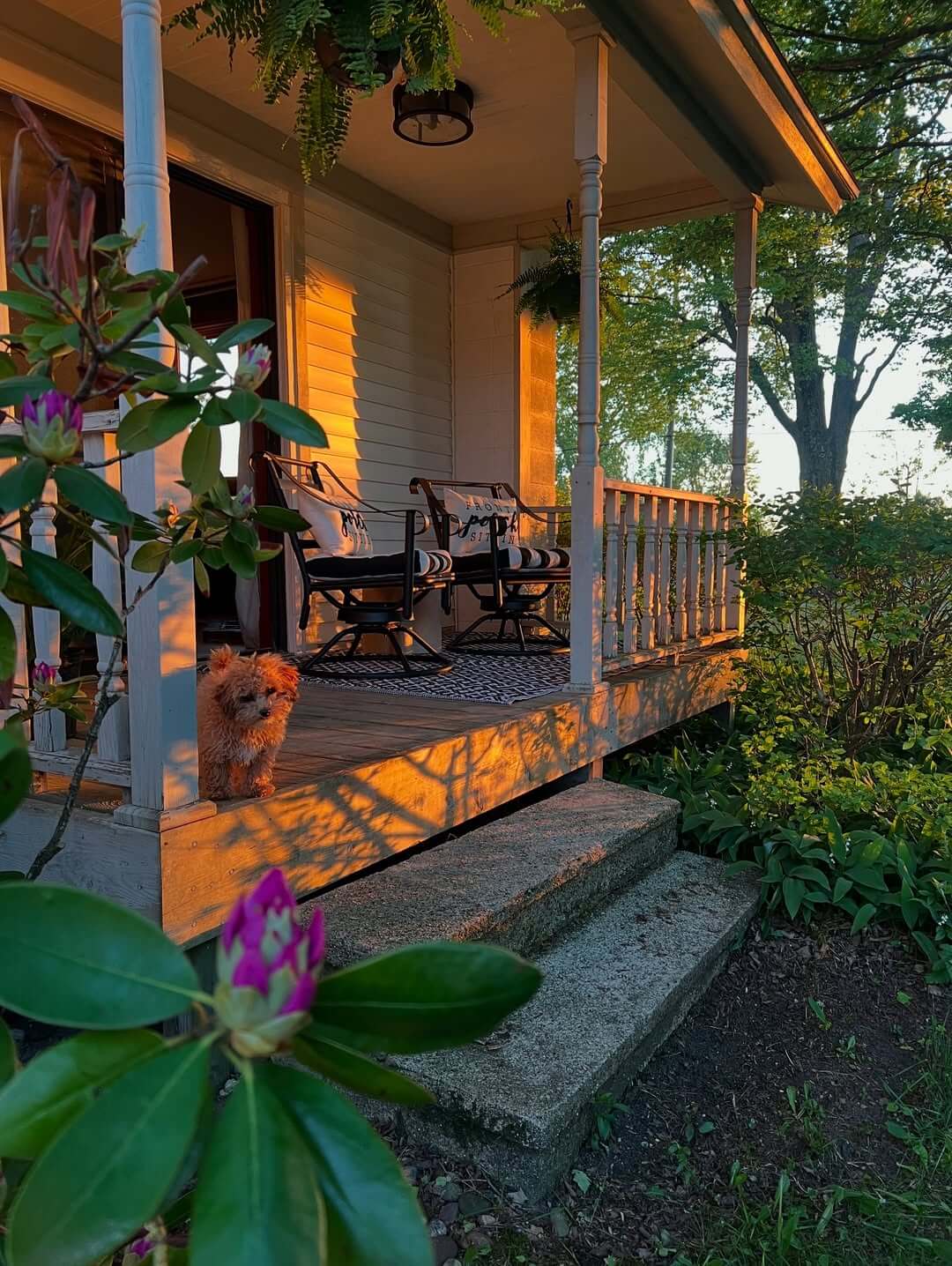
You don’t need a complete porch makeover to make a noticeable difference.
A few small changes can completely change how the space feels.
1. Move Your Chairs Closer Together
If your seating feels disconnected, try moving chairs a little closer.
People naturally talk more when seating encourages interaction.
Even a small adjustment can make the porch feel more welcoming.
2. Add a Side Table
Every comfortable seat needs a place for a coffee mug, a book, or a cold drink.
A simple side table often improves functionality more than buying additional furniture.
3. Bring in One Large Planter
A single oversized planter can make a bigger impact than several smaller ones.
Place it near the entrance or beside a seating area to create a stronger focal point.
4. Add an Outdoor Rug
A rug helps define the seating area and gives the furniture a stronger sense of connection.
This is one of the quickest ways to make a porch feel more finished.
5. Remove One Thing
This may sound counterintuitive.
Look around your porch and remove one item that isn’t serving a purpose.
Sometimes reducing visual clutter is the fastest way to improve a space.
Most of these changes can be completed in less than an afternoon.
And together, they can make the porch feel completely different.
How to Create a Front Porch You’ll Actually Use
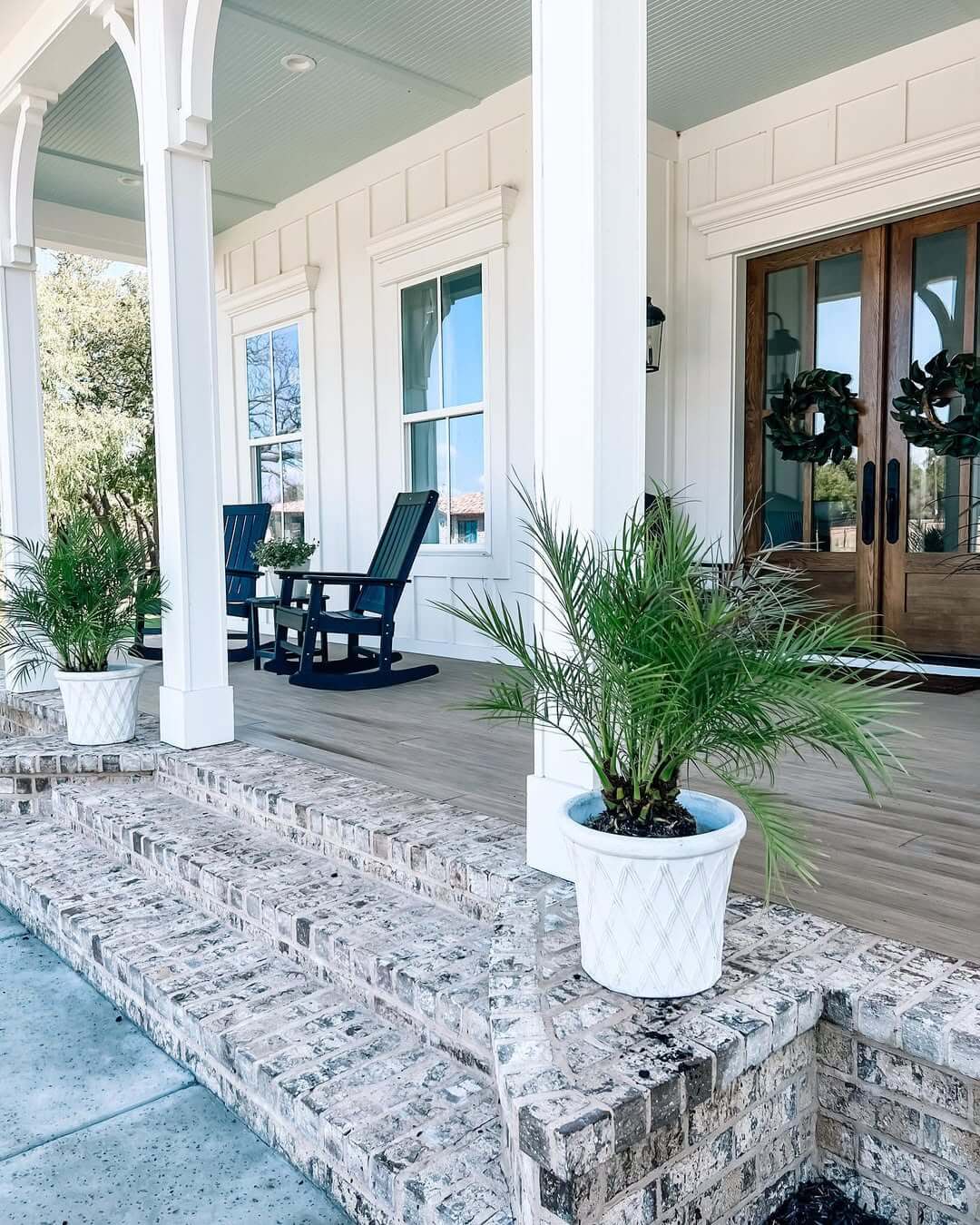
If there’s one lesson worth remembering, it’s this.
A great front porch isn’t built around furniture.
It’s built around habits.
Think about the moments you want to enjoy outside.
Morning coffee before the day begins.
A quiet place to read.
An evening conversation with family.
A spot to unwind after work.
Once those moments become the focus, furniture decisions become much easier.
Choose seating that supports the way you actually live.
Add comfort where it matters.
Create a layout that feels natural.
Make it easy to sit down and stay awhile.
Start small if needed.
A pair of comfortable chairs, a side table, and a few plants can completely change how often you step outside.
Many of the most inviting porches aren’t the largest or most expensive.
They’re simply designed around real life.
Final Thoughts
The best front porch seating ideas aren’t about filling a space with furniture.
They’re about creating a place where you genuinely want to spend time.
When the seating fits the porch, the layout encourages conversation, and comfort comes first, the porch becomes more than part of your home’s exterior.
It becomes part of your daily routine.
A place for slow mornings.
A place for quiet evenings.
A place where a quick five-minute break somehow turns into an hour outdoors.
And that’s usually the sign of a front porch that is doing exactly what it was meant to do.
You may also want to read:
Front Porch Decorating Ideas That Make Your Home Feel Warm