Farmhouse Front Porch Ideas That Feel Warm and Timeless
I used to think creating a beautiful farmhouse front porch came down to buying the right décor.
A wooden sign.
A pair of rocking chairs.
A vintage lantern.
Maybe a seasonal wreath.
That seemed to be the formula everywhere I looked.
So whenever a porch felt unfinished, my first instinct was to add something.
Another planter.
Another decorative accent.
Another seasonal touch.
The funny thing is that the porch rarely looked much better afterward.
It just looked fuller.
But after paying closer attention to the farmhouse porches that actually felt welcoming, I realized something surprising.
The best ones weren’t necessarily decorated more.
In many cases, they were decorated less.
They felt comfortable instead of staged.
Nothing seemed forced.
The furniture looked like it was meant to be used. The planters felt connected to the house. The colors worked together naturally. Even the seasonal touches felt effortless rather than carefully arranged.
Most importantly, the porch felt like an extension of the home rather than a collection of decorations sitting outside.
That’s what makes farmhouse style so appealing.
At its best, it feels warm, lived-in, and timeless.
At its worst, it becomes a mix of signs, accessories, and trends that never quite come together.
If you’ve ever looked at your own porch and felt like something was missing, even though you’ve already added decorations, you’re not alone.
More often than not, the solution isn’t buying more.
It’s making a few thoughtful choices that create comfort, balance, and character.
In this guide, I’ll share farmhouse front porch ideas that focus on comfort, simplicity, natural materials, and practical design decisions you can start using right away.
Let’s begin with the foundation that separates timeless farmhouse porches from trendy ones.
What Makes a Farmhouse Front Porch Feel Timeless?
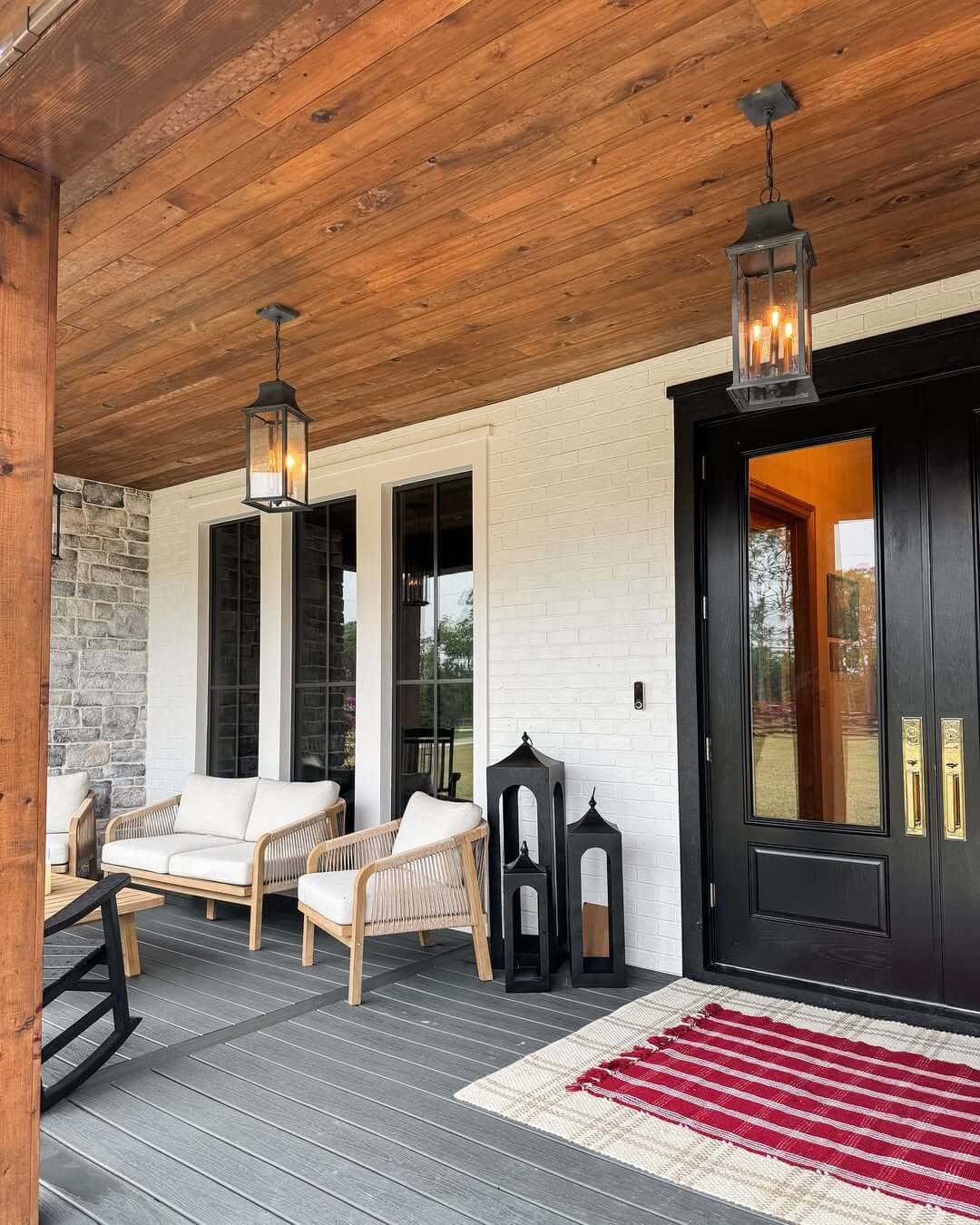
When people think about farmhouse style, they often picture specific items.
Rocking chairs.
Galvanized metal containers.
Lanterns.
Wooden accents.
Those elements can absolutely contribute to the look.
But they aren’t what make a porch feel timeless.
The real secret is much simpler.
Timeless farmhouse porches focus on how the space feels rather than how much décor it contains.
That’s why some porches still look beautiful ten years later while others feel dated after a single season.
The strongest farmhouse designs usually share a few characteristics.
They Prioritize Comfort Over Decoration
A farmhouse porch should feel like a place where someone might actually sit with a cup of coffee on a quiet morning.
Or spend an evening talking with family after dinner.
The furniture isn’t there purely for appearance.
It serves a purpose.
The space invites people to slow down and stay awhile.
When comfort becomes the priority, decorating decisions often become easier.
Instead of asking what decorative item to buy next, you start asking whether the porch feels welcoming enough to use.
They Use Materials That Improve With Age
One reason farmhouse style remains popular is its connection to natural materials.
Wood develops character.
Wicker gains texture.
Metal acquires subtle patina.
Terracotta softens over time.
These materials don’t need to look perfect to feel beautiful.
In fact, small imperfections often make them more appealing.
That lived-in quality helps a porch feel authentic rather than overly polished.
They Leave Room to Breathe
One lesson I learned after decorating my own porch is that empty space matters.
When every corner contains something decorative, nothing stands out.
The porch starts feeling crowded.
Timeless farmhouse porches often leave certain areas intentionally simple.
A chair beside a planter.
A lantern near the steps.
A bench with a single pillow.
The restraint allows individual pieces to have more impact.
The porch feels calmer as a result.
The team at Better Homes & Gardens captures this idea perfectly, noting that “Relaxed decor adds style without overshadowing your porch’s natural architecture.”
That balance is exactly what many farmhouse porches get right.
The décor supports the home rather than competing with it.
They Feel Personal Instead of Trend-Driven
The most memorable farmhouse porches rarely look copied from a catalog.
They reflect the people who live there.
Maybe it’s a bench that’s been part of the family for years.
A collection of planters that changes with the seasons.
A favorite rocking chair that gets used almost every day.
Those details create personality.
And personality tends to outlast trends.
That’s why I encourage homeowners to focus less on recreating a Pinterest image and more on creating a porch that feels right for their own home and lifestyle.
Quick Takeaway
Before adding anything new to your porch this week, remove one item.
Then step back and look again.
You may discover that giving existing pieces a little more breathing room creates a stronger farmhouse look than adding another decoration ever could.
Once the foundation feels right, the next step is creating a porch people actually want to spend time on.
And that starts with comfortable seating.
Start With Comfortable Seating That Invites People to Stay
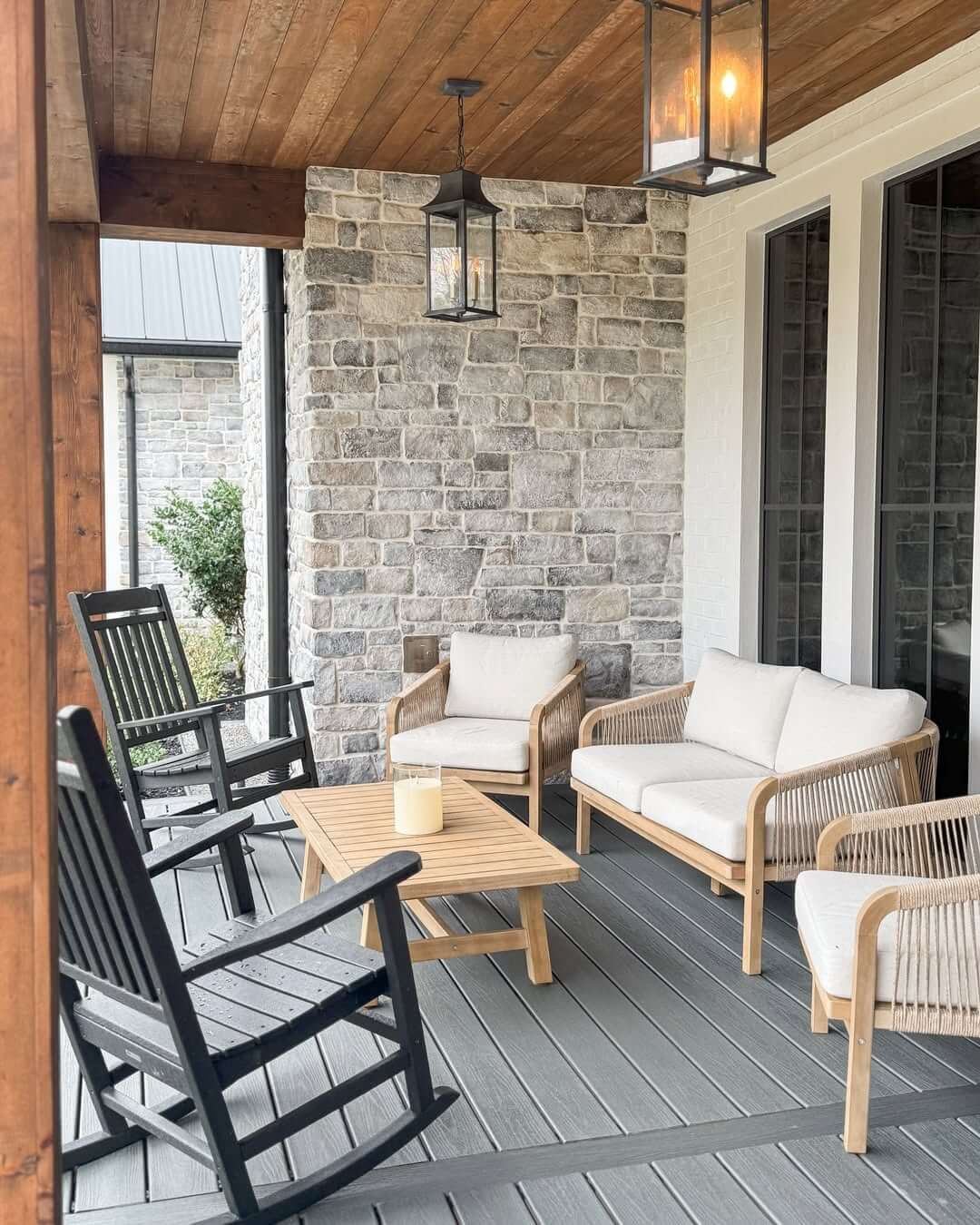
If there’s one feature that instantly changes how a farmhouse porch feels, it’s seating.
Not because chairs are decorative.
Because they signal that the porch is meant to be used.
I’ve noticed that the farmhouse porches people remember most almost always include a place to sit.
It doesn’t have to be elaborate.
Sometimes it’s a pair of rocking chairs.
Sometimes it’s a simple wooden bench.
Sometimes it’s a porch swing tucked into a quiet corner.
The common thread is that the space feels welcoming rather than purely decorative.
You can imagine yourself sitting there.
And that’s exactly the feeling farmhouse style is built around.
Think About How You Want the Porch to Be Used
Before choosing furniture, think about what actually happens on your porch.
Do you drink coffee outside in the morning?
Do you greet neighbors from the front steps?
Do you enjoy sitting outside during cooler evenings?
The answers can help determine what kind of seating makes the most sense.
For some homeowners, two rocking chairs create the perfect setup.
Others may prefer a bench that accommodates family and guests.
A smaller porch might only have room for one comfortable chair and a small side table.
That’s perfectly fine.
The goal isn’t filling the porch.
The goal is creating an invitation to slow down.
Why Porch Swings Never Go Out of Style
Few farmhouse elements feel as timeless as a porch swing.
Part of the appeal is emotional.
A porch swing immediately creates a slower pace.
The editors at Country Living describe it beautifully: “With its slow, creaking rhythm, a porch swing beckons even the busiest to sit and stay a while.”
That idea captures the heart of farmhouse style.
It’s not about impressing people.
It’s about creating a space that encourages people to linger.
Even if your porch can’t accommodate a swing, the principle still applies.
Choose seating that feels comfortable enough to use rather than furniture that exists only for appearance.
Arrange Seating Like a Conversation Area
One mistake I made years ago was placing furniture solely based on symmetry.
Everything looked balanced.
It also felt awkward to use.
Once I started arranging seating around how people naturally interact, the porch became far more inviting.
If you have multiple chairs, angle them slightly toward one another.
Add a small table between them.
Create a spot where someone could comfortably set down a drink, a book, or a phone.
These small details help the porch feel intentional and functional.
Even a modest front porch can feel surprisingly welcoming when the furniture arrangement supports real-life use.
Small Porch Tip
Limited square footage doesn’t mean giving up seating altogether.
In fact, a small porch often benefits from fewer, better pieces.
Instead of several small decorative items competing for attention, consider:
- One comfortable chair
- A narrow bench
- A compact rocking chair
- A slim side table
- A porch swing if space allows
A single quality seating area usually creates more impact than multiple decorative accessories.
The porch feels purposeful rather than crowded.
Let the Furniture Age Naturally
Farmhouse style doesn’t demand perfection.
In many cases, a little wear adds character.
Wood that has softened over time.
Paint with subtle signs of age.
A wicker chair that has developed texture from years of use.
These details often contribute to the charm rather than detract from it.
That’s one reason farmhouse porches tend to feel timeless.
They embrace comfort and authenticity instead of chasing perfection.
Quick Action Step
Walk out to your porch today and ask yourself one simple question:
Would I actually sit here for fifteen minutes?
If the answer is no, identify what’s missing.
Maybe it’s seating.
Maybe it’s shade.
Maybe it’s a small table beside a chair.
Small improvements often create the biggest change in how a porch feels and functions.
Once comfortable seating is in place, the next step is adding life and softness around it.
And nothing accomplishes that better than thoughtfully placed planters.
Layer Planters Instead of Filling Every Corner With Decor
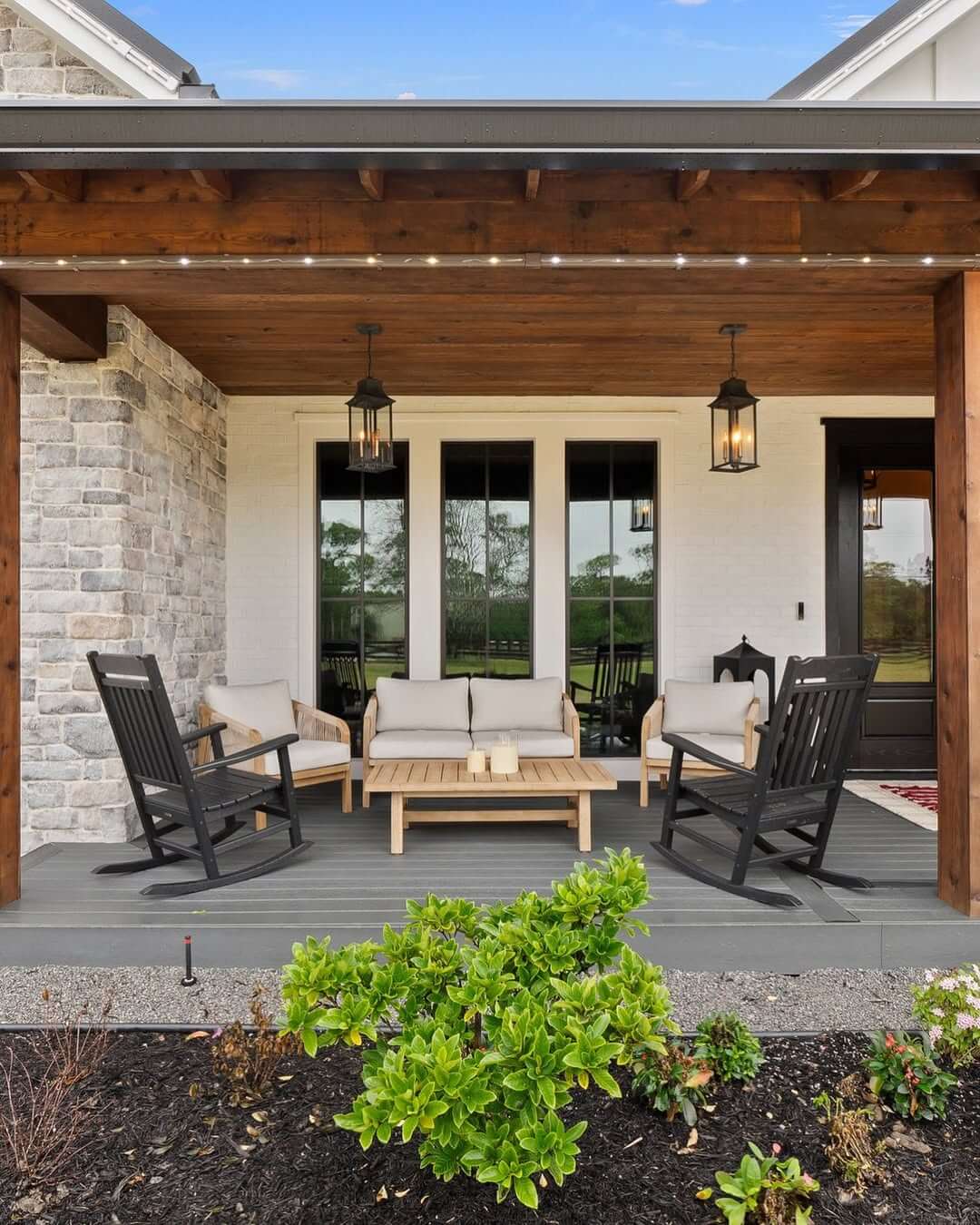
One thing I’ve noticed about the farmhouse porches that feel the most welcoming is that they rarely depend on decorations alone.
Instead, they rely heavily on greenery.
Plants bring life to a porch in a way that signs, lanterns, and accessories simply can’t.
They soften hard edges.
They add texture.
They help connect the home to the surrounding landscape.
Most importantly, they make the porch feel lived in.
That’s why I almost always recommend adding another planter before adding another decorative accessory.
The result usually feels more natural and timeless.
Think in Layers, Not Individual Pots
A common mistake is scattering small planters throughout the porch and hoping they work together.
Sometimes they do.
More often, they look disconnected.
Farmhouse porches tend to feel more intentional when planters are grouped in layers.
Think of it like arranging furniture inside a room.
You want variation in size, height, and shape.
A large planter might anchor one side of the front door.
A medium container can sit nearby.
A smaller pot can fill the foreground.
Together, the arrangement feels balanced without looking overly styled.
The eye naturally moves through the display instead of landing on a collection of unrelated pots.
Let the Entryway Lead the Design
If you’re unsure where to start, begin near the front door.
That’s usually the strongest focal point on the entire porch.
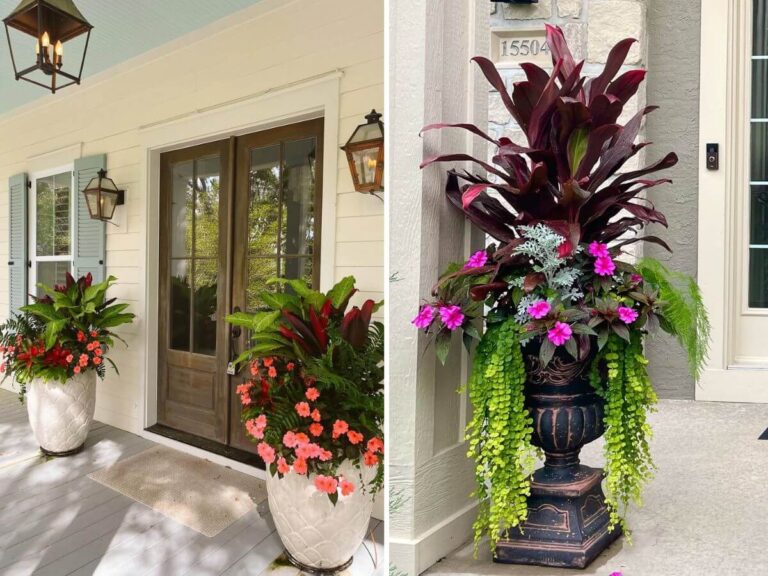
A pair of planters framing the entrance instantly creates structure and helps define the space.
Even simple greenery can make a noticeable difference.
I’ve experimented with decorative accessories that cost far more than a few containers and plants.
Very few produced the same impact.
Planters naturally draw attention toward the entrance while making the porch feel softer and more inviting.
That’s why they’re one of the most effective farmhouse decorating tools available.
Mix Shapes and Heights
Perfectly matching planters can work beautifully in some situations.
But farmhouse style often feels more relaxed when there’s a little variation.
Try combining:
- Tall planters with shorter containers
- Round pots with rectangular planters
- Metal containers with terracotta accents
- Upright greenery with trailing plants
The goal isn’t creating a perfectly coordinated display.
The goal is creating visual interest that feels collected over time.
When every planter is identical, the arrangement can feel overly staged.
A little variation adds character.
Choose Plants That Work Hard All Season
One lesson I learned after several years of porch decorating is that maintenance matters.
Beautiful flowers are wonderful.
Constantly replacing tired plants isn’t.
That’s why I like building arrangements around plants that provide structure for much of the year.
Evergreens.
Ornamental grasses.
Hardy shrubs.
Trailing greenery.
Seasonal flowers can then be added as accents rather than carrying the entire display.
This creates a porch that remains attractive even when blooms come and go.
It’s also much easier to maintain.
Small Porch Tip
If your porch is compact, resist the urge to add multiple small containers everywhere.
That often makes the space feel busier and smaller.
Instead, choose one larger planter and make it a feature.
A substantial container beside the front door can create more impact than four or five tiny pots spread throughout the porch.
In small spaces, simplicity often feels more expensive.
Use Planters to Create Balance
One of the easiest ways to improve a porch is by looking for visual imbalance.
Maybe one side of the entry feels empty.
Maybe the seating area feels disconnected from the rest of the porch.
Maybe the front door lacks definition.
Planters can help solve all of those problems.
They fill empty spaces without feeling bulky.
They connect separate areas visually.
And they help create the balance that makes farmhouse porches feel calm and welcoming.
Quick Action Step
Take a photo of your porch from the sidewalk today.
Look at where your eye goes first.
Then look for any areas that feel empty or disconnected.
Adding one larger planter in the right location often creates more impact than buying several decorative accessories.
And once greenery starts bringing life to the porch, the next step is choosing materials that continue looking beautiful year after year.
That’s where natural textures become one of farmhouse style’s biggest strengths.
Use Natural Materials That Look Better With Age
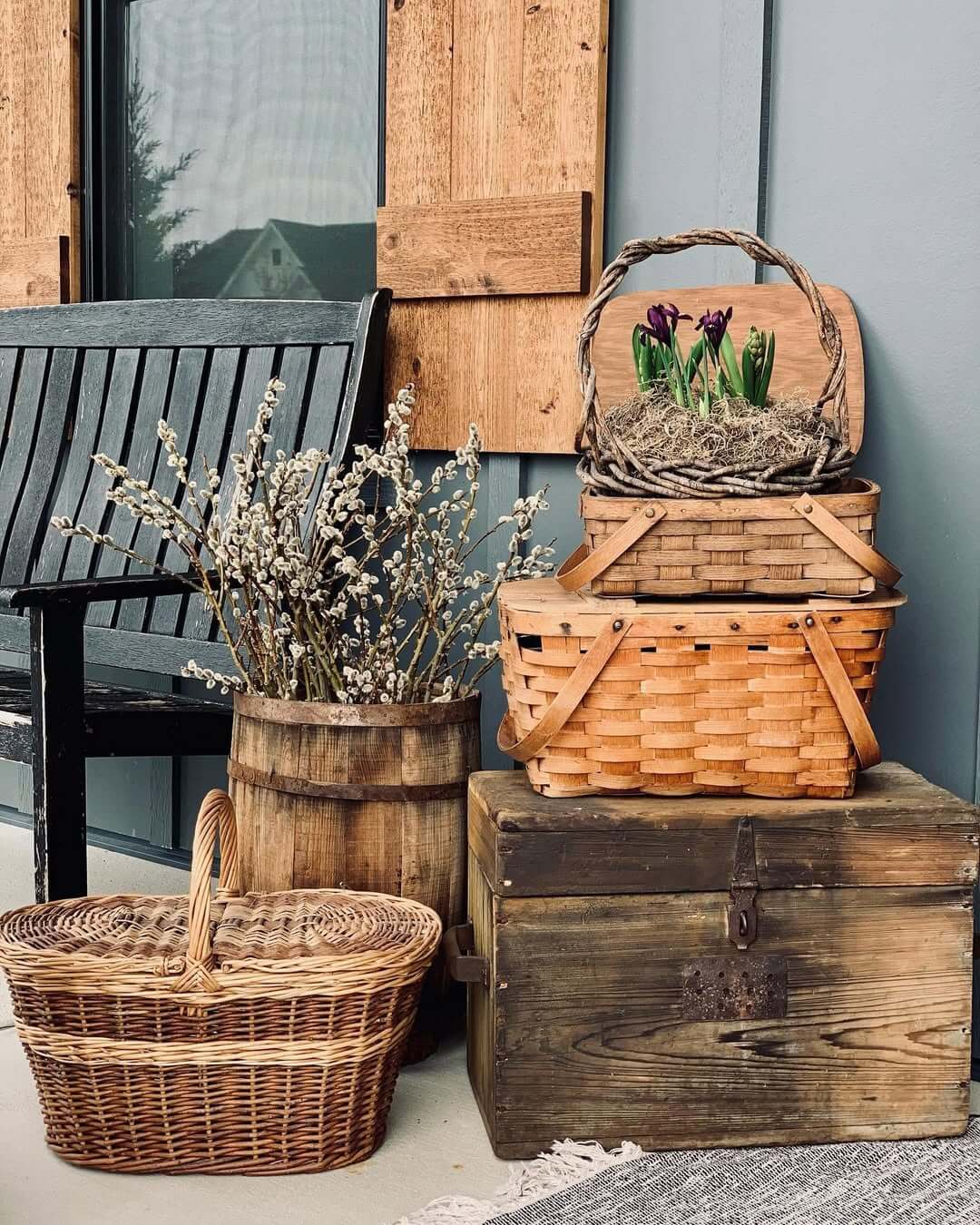
One reason farmhouse style has remained popular for so long is that it doesn’t depend on perfection.
In fact, some of the most beautiful farmhouse porches become even more attractive over time.
The wood develops character.
The wicker softens.
The metal gains subtle texture.
The materials begin telling a story.
That’s very different from many decorating trends that look their best the day they’re installed and slowly lose appeal afterward.
Farmhouse style embraces materials that feel authentic, comfortable, and connected to everyday life.
Wood Brings Warmth to Almost Any Porch
If I had to choose one material that defines farmhouse style more than any other, it would probably be wood.
Few materials feel as naturally welcoming.
A simple wooden bench.
Rocking chairs.
Window boxes.
Planter stands.
A porch swing.
Even small wood accents can make a porch feel warmer and more inviting.
What I especially like is that wood doesn’t need to remain flawless.
A few imperfections often add charm.
Light weathering, subtle grain patterns, and natural variation give the porch character that manufactured materials sometimes struggle to replicate.
Wicker Adds Texture Without Feeling Heavy
Farmhouse porches benefit from texture.
That’s one reason wicker remains such a popular choice.
Wicker furniture introduces visual interest without making the porch feel crowded.
A wicker chair immediately softens a seating area.
A wicker basket can provide storage while contributing to the overall design.
The texture feels casual and relaxed, which fits perfectly with the farmhouse mindset.
If your porch currently feels flat, adding texture is often more effective than adding another decorative object.
Metal Works Best as an Accent
Galvanized metal has become closely associated with farmhouse decorating.
And for good reason.
It pairs beautifully with wood, greenery, and neutral color palettes.
Planters.
Lanterns.
Watering cans.
Decorative containers.
These pieces can add just enough contrast to keep a porch from feeling one-dimensional.
The key is moderation.
When every decorative item is galvanized metal, the look can start feeling themed rather than timeless.
Using metal as an accent allows it to complement the space instead of dominating it.
Terracotta and Stone Add Natural Character
One of my favorite ways to make a porch feel more grounded is incorporating materials that already exist in nature.
Terracotta planters.
Stone accents.
Clay containers.
These materials bring subtle variation in color and texture that works beautifully with farmhouse style.
They also pair well with nearly every type of greenery.
A simple terracotta pot filled with healthy plants often feels more authentic than an elaborate decorative container.
Sometimes simplicity really is the better choice.
Avoid Materials That Feel Too Perfect
This is where many farmhouse porches lose some of their charm.
Everything matches.
Everything looks brand new.
Every surface appears polished and untouched.
The result can feel more like a showroom than a home.
Farmhouse style tends to feel strongest when there’s a little variation.
A weathered wood bench beside a metal lantern.
A wicker chair paired with a terracotta planter.
A mixture of textures that feels collected naturally over time.
The goal isn’t creating a perfectly coordinated display.
The goal is creating warmth and personality.
Small Porch Tip
If you’re decorating a smaller porch, natural materials become even more important.
You may not have room for lots of furniture or decorative accessories.
Texture can do much of the heavy lifting instead.
A wooden chair, woven basket, and terracotta planter often create more visual interest than several decorative pieces competing for attention.
Fewer items.
More character.
That’s often the sweet spot.
Quick Action Step
Take a look at the materials currently on your porch.
Are most of them smooth, shiny, or manufactured-looking?
If so, consider introducing one natural element this week.
A wooden planter.
A wicker basket.
A terracotta pot.
Even a small material change can make the entire porch feel warmer and more inviting.
Once those natural textures are in place, the next step is bringing everything together around the focal point every visitor notices first.
The front door.
Create a Welcoming Entry With Symmetry
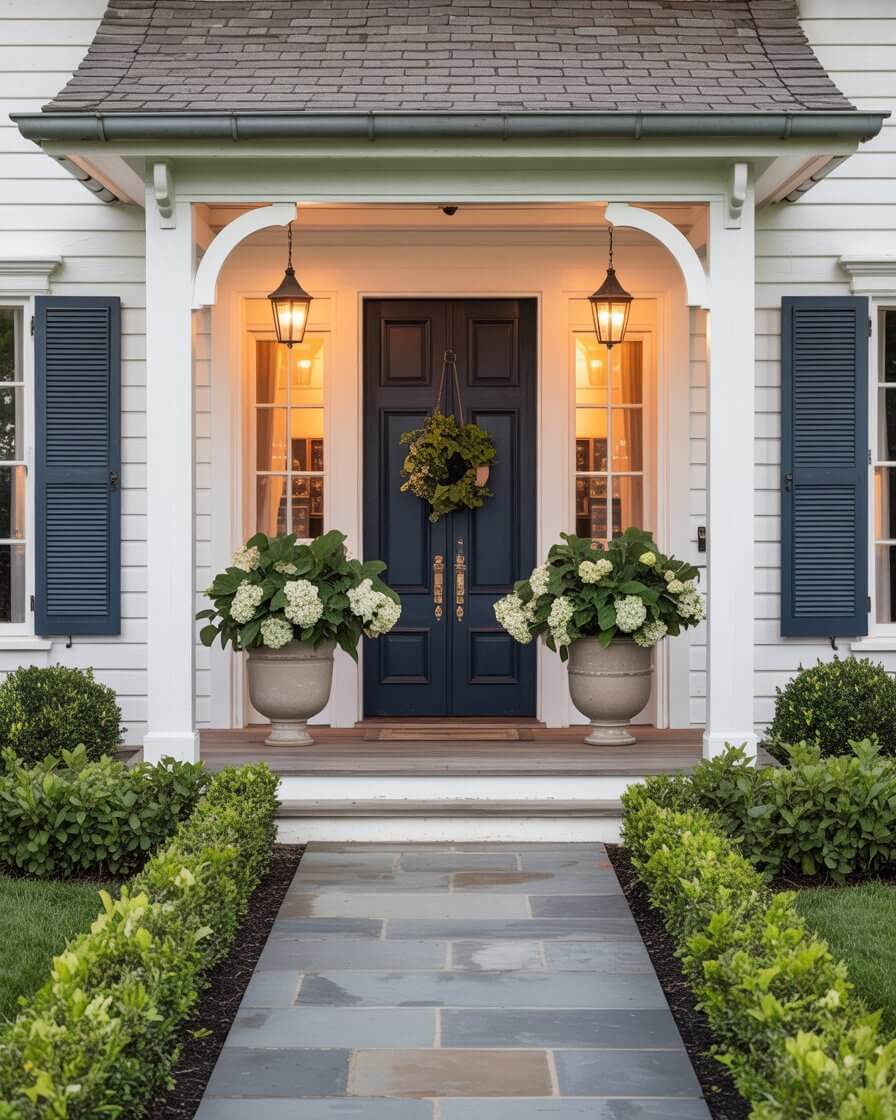
If there’s one decorating principle that consistently makes a front porch feel more welcoming, it’s symmetry.
Not because symmetry is trendy.
Because it creates a sense of balance that immediately feels comfortable to the eye.
When people walk toward a home, they naturally look for visual cues.
A centered front door.
Matching planters.
Balanced lighting.
Evenly arranged furniture.
These details quietly communicate order and intention.
That’s why so many memorable farmhouse porches use symmetry as their foundation.
The design feels calm before you even step onto the porch.
Start With the Front Door
The front door is usually the focal point of the entire exterior.
Everything around it should help support that role.
One of the simplest ways to accomplish this is framing the entrance.
Matching planters on each side of the door work beautifully.
So do coordinating lanterns or wall sconces.
The goal isn’t making everything identical.
The goal is creating visual balance around the entrance so your eye naturally lands where it should.
I’ve tested dozens of porch arrangements over the years.
Very few changes create as much impact as properly framing the front door.
Even when the rest of the porch remains unchanged, the entrance immediately feels more polished.
Symmetry Doesn’t Mean Everything Must Match
This is where many homeowners get stuck.
They assume symmetry requires buying two of everything.
It doesn’t.
Balance can come from visual weight rather than identical pieces.
For example:
- A large planter on one side balanced by a bench on the other
- A lantern paired with a grouping of smaller containers
- A chair balanced by a substantial planter arrangement
The two sides don’t need to mirror each other perfectly.
They simply need to feel balanced when viewed from a distance.
This approach often feels more relaxed and natural than strict matching.
Use Symmetry to Create Calm
One thing I love about farmhouse style is that it rarely feels chaotic.
The best farmhouse porches feel settled.
Comfortable.
Easy to take in.
Symmetry contributes heavily to that feeling.
Without balance, the eye keeps searching for a focal point.
The porch can feel visually busy even when there aren’t many decorative elements present.
Balanced arrangements solve that problem.
The eye knows exactly where to go.
Everything feels connected.
Lighting Should Support the Entry
Symmetry becomes even more effective after sunset.
Matching wall sconces, lanterns, or evenly placed lighting around the entrance help reinforce the focal point.
The front door remains clearly defined during both day and night.
This doesn’t require elaborate lighting.
Often two simple fixtures positioned thoughtfully create all the balance a porch needs.
The effect feels welcoming rather than dramatic.
Which is exactly what farmhouse style does best.
Small Porch Tip
If your porch is narrow, symmetry can actually make the space feel larger.
When decorative elements are balanced, the porch appears more organized and less cluttered.
A pair of matching planters beside the entry often works better than several unrelated decorative accessories spread throughout the space.
The porch feels intentional instead of crowded.
Don’t Forget Seasonal Updates
One advantage of using symmetry as your foundation is that seasonal decorating becomes much easier.
The framework stays the same.
The planters remain in place.
The lanterns remain in place.
The front door remains the focal point.
You simply update a few seasonal elements around that foundation.
This keeps the porch looking fresh throughout the year without requiring a complete redesign every season.
Quick Action Step
Stand at the curb and take a photo of your front porch.
Now imagine drawing an invisible line down the center of the front door.
Does one side feel noticeably heavier than the other?
If so, look for a simple way to restore balance.
A planter.
A lantern.
A chair.
Small adjustments often create a surprisingly dramatic improvement.
Once the entry feels balanced and welcoming, the next step isn’t adding more decorations.
It’s adding layers of texture that make the porch feel comfortable, cozy, and lived in.
Add Texture Before Adding More Decorations
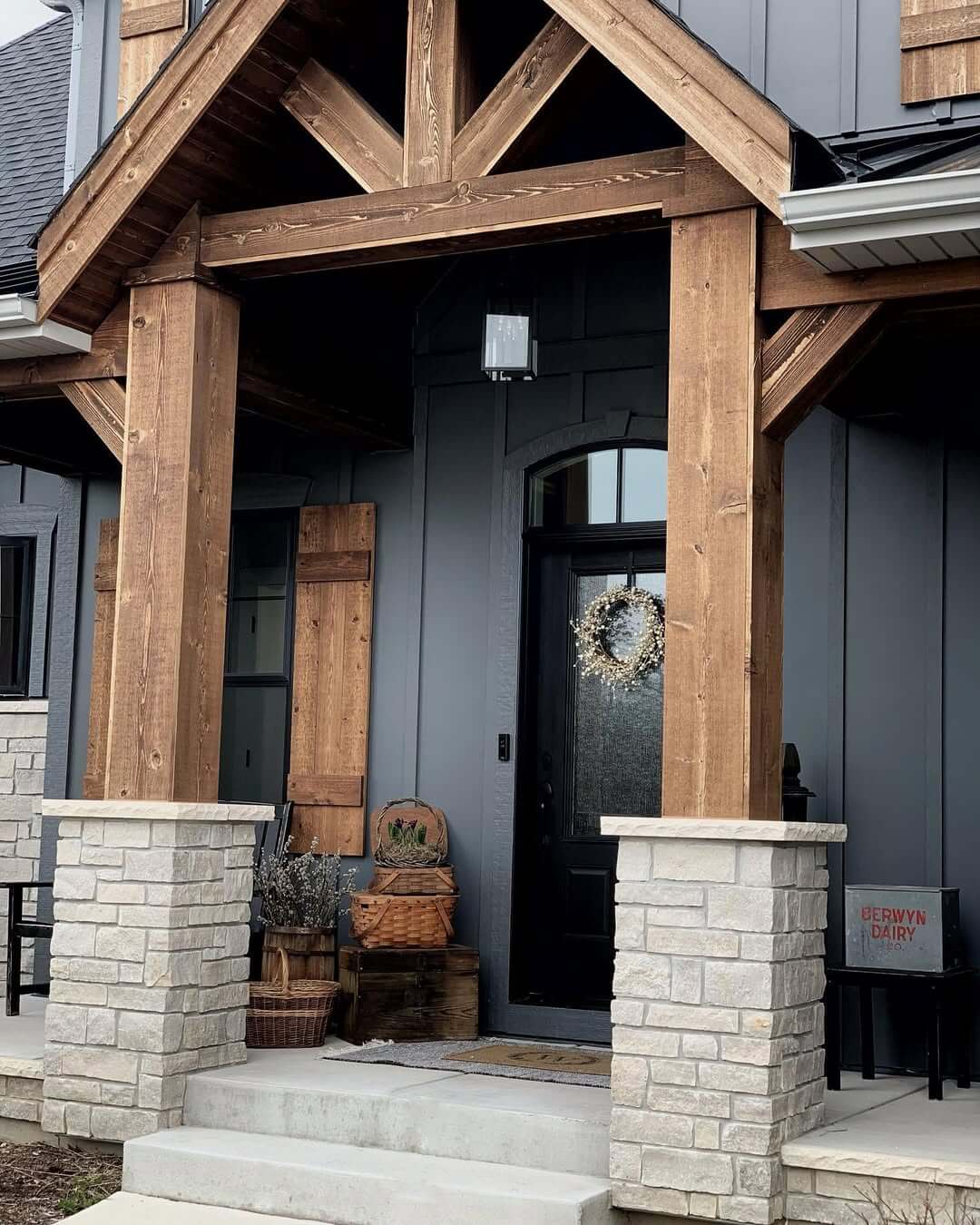
When a farmhouse porch feels unfinished, most people assume it needs more decor.
Another sign.
Another lantern.
Another decorative accessory.
I’ve made that mistake myself.
And more often than not, adding another decorative object didn’t solve the problem.
The porch still felt flat.
What it actually needed was texture.
Texture is what gives a porch warmth and depth. It’s the difference between a space that looks nice in a photo and a space that feels inviting in real life.
The good news is that texture doesn’t require major changes.
A few thoughtful layers can completely change how a porch feels.
Start With Soft Textiles
One of the easiest ways to make a porch feel more welcoming is introducing something soft.
Farmhouse style works because it balances natural materials with comfort.
Wood and metal provide structure.
Textiles provide warmth.
A simple outdoor pillow can make a chair feel more inviting.
A lightweight throw draped over a bench creates a relaxed atmosphere.
Even small additions can have a noticeable impact.
The decorating team at The Spruce offers a simple suggestion: “Add a throw pillow and a light blanket to your front porch bench to make it feel cozy and inviting.”
That advice perfectly captures why texture matters.
The goal isn’t decorating for decoration’s sake.
The goal is making the space feel comfortable enough that people actually want to spend time there.
Layer an Outdoor Rug
A rug does more than protect the floor.
It helps define the space.
Without one, furniture can sometimes feel like it’s floating on the porch.
An outdoor rug creates visual structure and helps connect seating, planters, and decorative elements into a cohesive arrangement.
This is especially useful on larger porches where furniture groups can otherwise feel disconnected.
I noticed this on my own porch after adding a simple neutral rug beneath a seating area.
The furniture didn’t change.
The planters didn’t move.
Yet the entire arrangement immediately felt more complete.
Use Baskets for Practical Texture
Farmhouse style works best when decorative pieces serve a purpose.
That’s why baskets are such a natural fit.
They add texture while providing storage for:
- Outdoor pillows
- Lightweight blankets
- Gardening gloves
- Seasonal decorations
- Small porch accessories
The woven texture softens the space while helping reduce visual clutter.
That’s a combination I always appreciate.
Mix Textures Instead of Matching Everything
One thing I love about farmhouse decorating is that everything doesn’t need to match perfectly.
In fact, too much matching can make a porch feel staged.
Texture creates interest through contrast.
Consider combinations like:
- A wicker basket beside a wooden bench
- A soft pillow on a metal chair
- A woven rug beneath terracotta planters
- A linen throw draped across a rocking chair
Each material contributes something different.
Together, they create the layered appearance that makes farmhouse porches feel collected rather than purchased all at once.
Small Porch Tip
If your porch is small, texture becomes even more valuable.
You may not have room for additional furniture or decorative accessories.
That’s okay.
A single textured pillow.
A woven basket.
A simple outdoor rug.
These elements add personality without consuming valuable space.
In compact areas, texture often creates more impact than additional décor.
Avoid Over-Layering
Texture is powerful.
Too much can quickly become overwhelming.
Not every chair needs a pillow.
Not every corner needs a basket.
Not every surface needs a decorative accessory.
One thing I’ve learned is that farmhouse style feels strongest when the layers appear effortless.
A few carefully chosen textures usually outperform a porch packed with decorative accents.
When in doubt, remove one item and see how the space feels.
Often the result looks better.
Quick Action Step
Look at your porch seating area today.
If it feels a little plain, don’t rush to buy another decorative object.
Instead, add one layer of texture.
A pillow.
A lightweight throw.
A woven basket.
A simple rug.
Small changes like these often make a porch feel warmer and more welcoming almost immediately.
Once the texture is in place, the next step is making sure the porch continues feeling inviting after the sun goes down.
That’s where lighting can completely change the atmosphere.
Choose Lighting That Feels Warm After Sunset
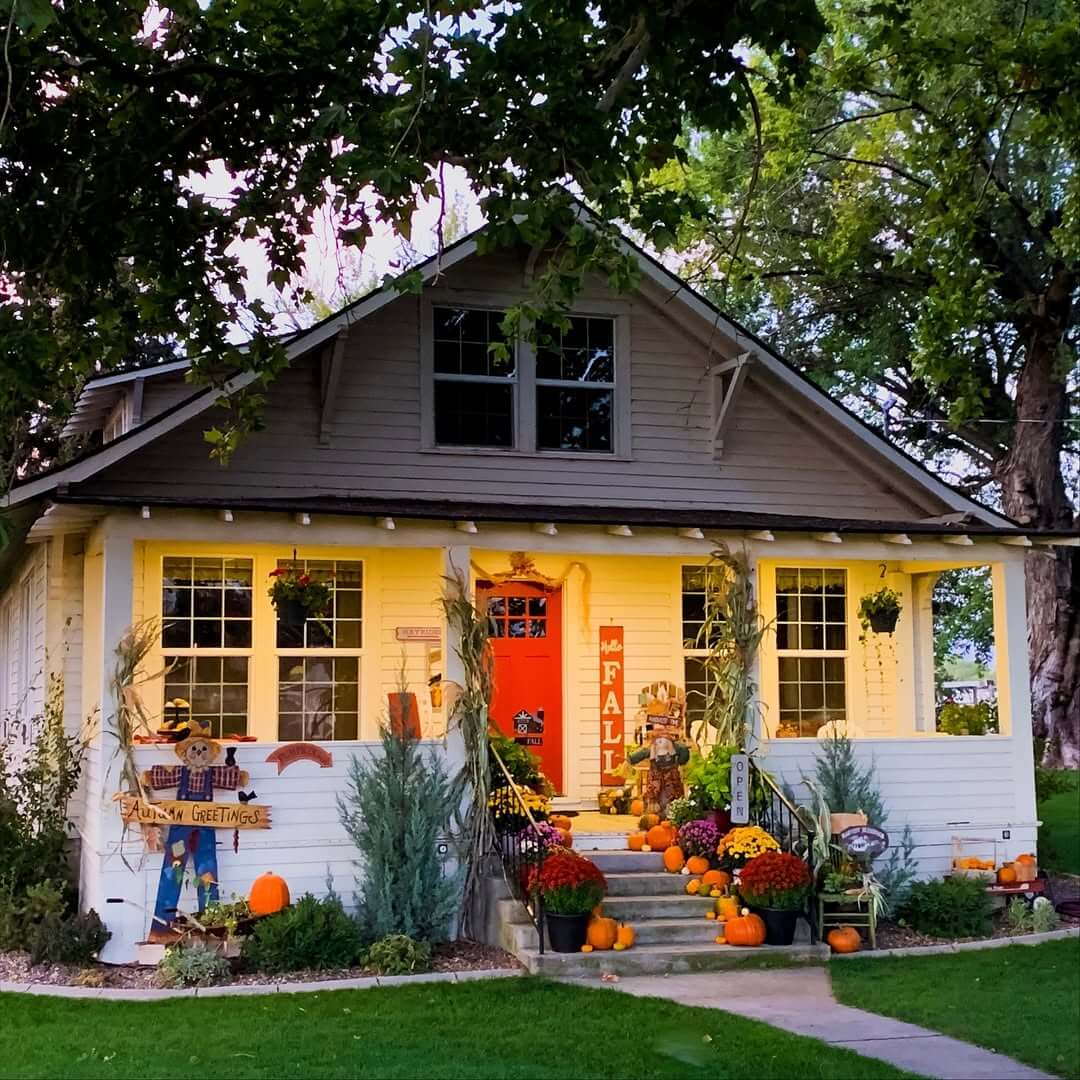
A farmhouse porch should feel welcoming during the day.
But some of its best moments happen after dark.
The sun goes down.
The neighborhood gets quieter.
The porch light comes on.
And suddenly the entire space takes on a different personality.
That’s why lighting deserves more attention than many homeowners give it.
A beautifully decorated porch can lose much of its charm at night if the lighting feels harsh or uninviting.
On the other hand, even a simple porch can feel incredibly warm with the right glow.
Think Atmosphere Before Brightness
One mistake I see often is treating porch lighting purely as a practical necessity.
People focus on visibility.
Security.
Brightness.
Those things matter.
But atmosphere matters too.
The goal isn’t turning your porch into the brightest spot on the block.
The goal is creating a space that feels comfortable to come home to.
When lighting is too intense, textures disappear.
Shadows flatten.
The porch can feel sterile rather than inviting.
A softer approach usually works much better for farmhouse style.
Warm lighting highlights natural materials, adds depth to greenery, and creates the cozy feeling that makes people want to linger a little longer.
Lanterns Add Character Instantly
Few decorative elements fit farmhouse style better than a lantern.
Part of their appeal comes from the atmosphere they create.
A lantern doesn’t flood the porch with light.
Instead, it introduces a soft glow that feels relaxed and welcoming.
That’s why lanterns work so well beside:
- Planters
- Benches
- Rocking chairs
- Porch swings
- Entry steps
They help create small focal points throughout the porch without overwhelming the overall design.
One of my favorite arrangements pairs a lantern with a large planter near the front door.
The greenery adds texture during the day.
The lantern helps highlight it at night.
Together they create a simple focal point that works in every season.
Warm Bulbs Make a Bigger Difference Than New Fixtures
Before replacing light fixtures, I usually recommend evaluating the bulbs first.
The color of the light often affects the mood more than the fixture itself.
I’ve changed nothing but a bulb on a porch and watched the entire atmosphere improve.
The porch felt calmer.
More inviting.
More connected to the farmhouse aesthetic I was trying to create.
It’s one of the easiest upgrades available because it doesn’t require new furniture, new décor, or a major investment.
Just a better quality of light.
Use Lighting to Highlight What Matters
Good lighting doesn’t illuminate everything equally.
It guides attention.
Maybe that’s the front door.
Maybe it’s a pair of beautiful planters.
Maybe it’s a porch swing or seating area.
The best farmhouse porches usually have one or two features that become focal points after sunset.
The lighting helps draw attention to those areas naturally.
This creates depth and makes the porch feel thoughtfully designed without appearing overly styled.
Small Porch Tip
If your porch is compact, resist the urge to add multiple decorative lights everywhere.
A single lantern and one well-placed fixture often create more atmosphere than several competing light sources.
Small spaces benefit from restraint.
One warm glow near the seating area can completely change how the porch feels.
Don’t Forget the View From the Street
Whenever I adjust porch lighting, I always check the results from the sidewalk.
That’s where most people experience the house.
A lighting arrangement that looks perfect from the porch itself may feel completely different from the street.
Take a few minutes after dark to step back and view your home from a distance.
You’ll often notice opportunities to improve balance, reduce glare, or highlight features that deserve more attention.
Quick Action Step
Tonight, turn on your porch lights and walk across the street.
Ask yourself one question:
Does the porch feel welcoming?
If the answer is no, don’t immediately buy more lighting.
Try moving a lantern.
Adjust a planter.
Swap a bulb.
Small changes often create the biggest improvement.
Once the lighting foundation feels right, maintaining a farmhouse look throughout the year becomes much easier.
Instead of completely redecorating every season, you can build around the same timeless framework and simply refresh a few details as the months change.
Decorate Seasonally Without Starting Over Every Few Months
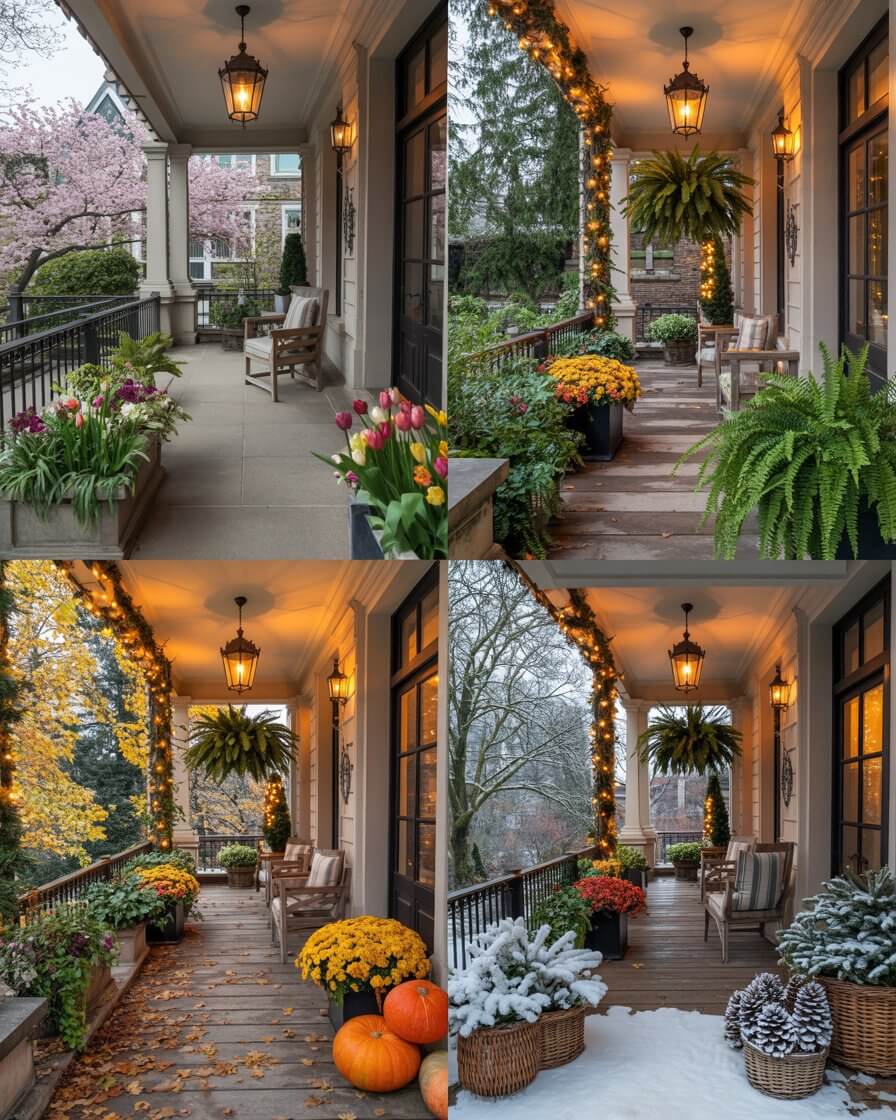
One reason farmhouse style remains so appealing is that it doesn’t require constant reinvention.
The foundation stays the same.
The rocking chairs remain.
The planters stay in place.
The lanterns continue working year-round.
The natural materials still feel relevant season after season.
What changes are the small details.
That’s good news because constantly replacing decorations can become expensive, time-consuming, and surprisingly stressful.
The most timeless farmhouse porches avoid that cycle altogether.
Instead of rebuilding the porch every few months, they refresh a few elements while keeping the overall design intact.
Start With a Year-Round Foundation
Think of your porch as having permanent pieces and temporary accents.
Permanent pieces include things like:
- Seating
- Planters
- Lighting
- Rugs
- Baskets
- Architectural details
These elements create the backbone of the porch.
They should work beautifully regardless of the season.
Once that foundation feels right, seasonal decorating becomes much easier.
You’re no longer trying to redesign the entire space.
You’re simply updating it.
Welcome Spring With Fresh Greenery
After a long winter, spring is usually less about decoration and more about life returning to the porch.
Fresh flowers.
New growth.
Brighter colors.
This is when planters naturally become the stars of the space.
One thing I like about spring decorating is that it doesn’t need to be dramatic.
A few healthy plants and seasonal blooms often create all the freshness the porch needs.
The farmhouse aesthetic already provides the structure.
The plants simply bring it back to life.
Summer Is About Comfort
Summer is when many porches get used the most.
People linger outside longer.
Neighbors stop to chat.
Evenings stretch later into the day.
This season is a great opportunity to focus on comfort.
Lightweight pillows.
Outdoor throws for cooler evenings.
Fresh planters.
A pitcher table or side table near seating.
The goal is making the porch somewhere you genuinely want to spend time.
Not just somewhere that looks nice from the street.
Fall and Farmhouse Style Naturally Belong Together
If farmhouse style has a signature season, it might be fall.
Natural textures.
Warm colors.
Layered planters.
Lanterns.
Simple seasonal accents.
Everything feels right at home.
The key is resisting the temptation to overdecorate.
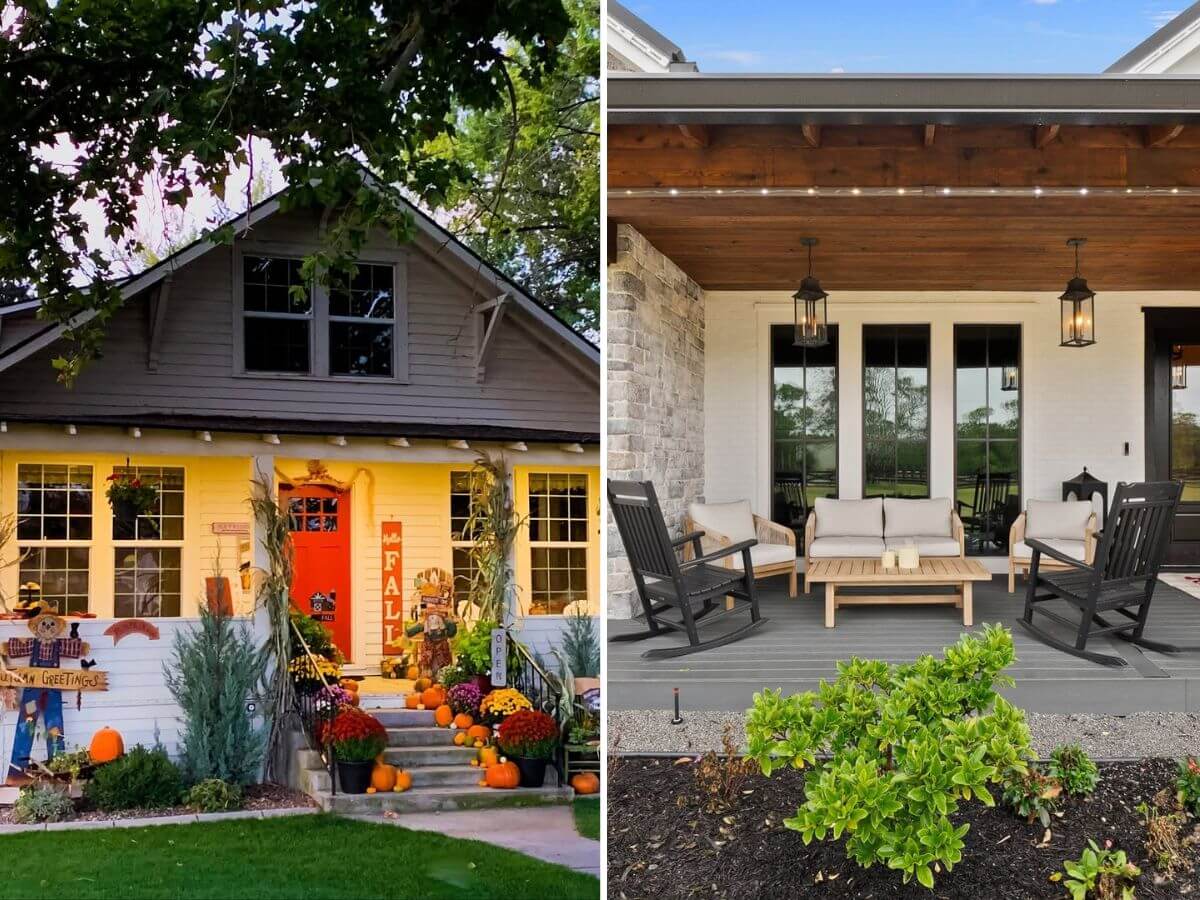
A few pumpkins beside a planter.
A seasonal wreath.
Some ornamental grasses.
Those touches usually create more impact than filling every available space with autumn décor.
The farmhouse look works best when seasonal elements complement the porch rather than overwhelm it.
Winter Doesn’t Need Much
Many homeowners assume winter decorating requires extensive holiday decorations.
It doesn’t.
Some of the most beautiful winter porches are surprisingly simple.
Evergreen planters.
Natural branches.
Warm lighting.
A wreath.
A lantern glowing beside the front door.
These elements create atmosphere without making the porch feel crowded.
One thing I’ve noticed is that winter often highlights the strength of the porch’s foundation.
If the furniture, planters, and lighting look good without seasonal decorations, the porch will feel timeless year-round.
Avoid Chasing Every Trend
This is probably the most important seasonal decorating advice I can give.
Not every trend deserves a place on your porch.
Social media constantly introduces new decorating ideas.
Some are beautiful.
Some disappear six months later.
Timeless farmhouse porches tend to ignore most of that noise.
They rely on classic materials, comfortable furniture, healthy plants, and a welcoming atmosphere.
Seasonal accents simply add variety around that foundation.
That’s why they continue looking good year after year.
Seasonal Refresh Formula
Whenever a new season arrives, I follow a simple rule:
Keep the furniture.
Keep the planters.
Keep the lighting.
Update only the accents.
That might mean changing:
- Flowers
- Wreaths
- Pillows
- Throws
- Seasonal containers
The porch feels fresh without requiring a complete redesign.
Quick Action Step
Look at your current porch and identify three items that could stay in place for every season.
Now identify one thing you could swap when the seasons change.
Building around a timeless foundation makes decorating easier, less expensive, and far more cohesive throughout the year.
And if your porch happens to be small, that approach becomes even more valuable because every item needs to earn its place.
Make a Small Farmhouse Porch Feel Bigger
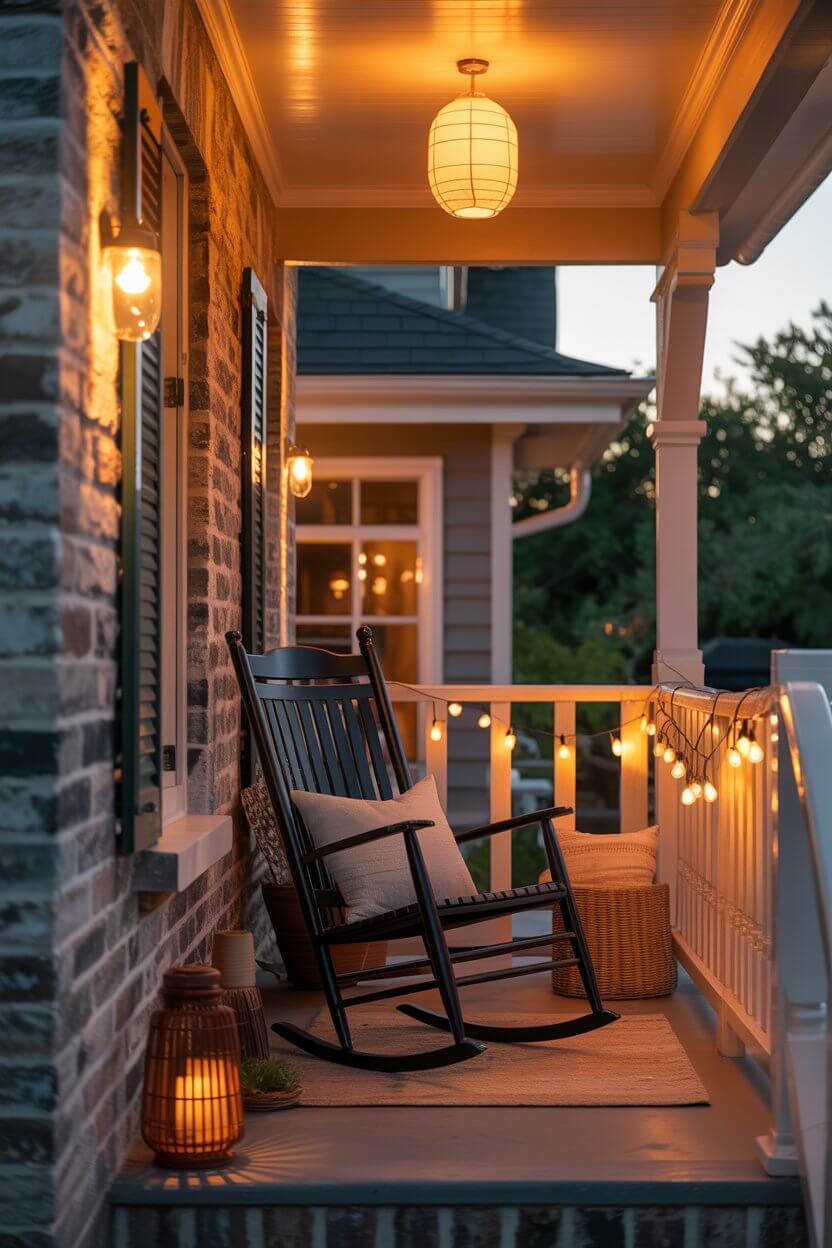
A small porch doesn’t have to feel limiting.
In fact, some of the most charming farmhouse porches I’ve seen were surprisingly compact.
They didn’t rely on size.
They relied on smart design choices.
The mistake many homeowners make is trying to squeeze too much into a small space. More signs. More furniture. More planters. More decorative accents.
The result often feels crowded rather than welcoming.
Farmhouse style works best when every piece has room to breathe.
That’s especially true on smaller porches.
Focus on Fewer Pieces With More Impact
When space is limited, every item becomes more noticeable.
That’s why I prefer choosing a few substantial pieces instead of filling the porch with lots of smaller accessories.
For example:
- One large planter instead of four small pots
- One comfortable chair instead of several decorative accents
- One lantern instead of multiple tiny decorative lights
- One quality rug instead of several competing elements
This approach creates visual calm.
The porch feels intentional rather than cluttered.
One thing I’ve learned is that empty space isn’t wasted space.
It’s part of the design.
Use Vertical Space Whenever Possible
When floor space is limited, look up.
Vertical elements naturally draw the eye upward and make a porch feel larger.
This can include:
- Tall planters
- Hanging baskets
- Vertical greenery
- Porch columns
- Wall-mounted lanterns
- Seasonal wreaths
These features add visual interest without taking up valuable walking space.
The eye travels through the entire porch rather than stopping at ground level.
As a result, the space often feels taller and more open.
Create One Strong Focal Point
A common mistake on small porches is creating too many competing areas of attention.
A sign on one wall.
A collection of décor on another.
Several unrelated planters.
Multiple decorative accents.
The eye doesn’t know where to look.
Instead, choose one primary focal point.
Most often, that should be the front door.
Then support it with surrounding elements such as:
- Matching planters
- A wreath
- Balanced lighting
- A bench nearby
When everything works together, the porch feels more cohesive and spacious.
Keep Walkways Clear
Farmhouse style should feel relaxed and functional.
Nothing ruins that feeling faster than squeezing around decorations just to reach the front door.
Before adding anything new, consider how people move through the space.
Can guests comfortably approach the entrance?
Do planters block the path?
Does furniture make the porch feel cramped?
The best farmhouse porches allow movement to feel effortless.
If an item interferes with that flow, it may not belong there.
Let Light Create More Space
Good lighting can dramatically change how large a porch feels after dark.
A softly illuminated planter.
Warm light near the front door.
A lantern beside a chair.
These small touches add depth and help define different areas of the porch.
The space feels larger because the eye can see beyond a single pool of light.
This works particularly well on compact porches where every design decision has a bigger impact.
Small Porch Formula
If you’re starting with a modest-sized porch, try this simple framework:
- One seating area
- One large planter
- One focal point near the entry
- One source of warm lighting
- One layer of texture such as a rug or pillow
That’s enough.
You don’t need dozens of decorative pieces to create farmhouse charm.
In many cases, using less produces a much stronger result.
Quick Action Step
Walk outside and count how many decorative items are currently on your porch.
Now imagine removing two of them.
Would the porch feel emptier or cleaner?
Often the answer reveals exactly what a small porch needs.
More space.
Not more stuff.
Once you’ve created a porch that feels balanced and comfortable, the final step is avoiding the decorating mistakes that often make farmhouse style feel cluttered, dated, or overly themed.
Common Farmhouse Porch Decorating Mistakes
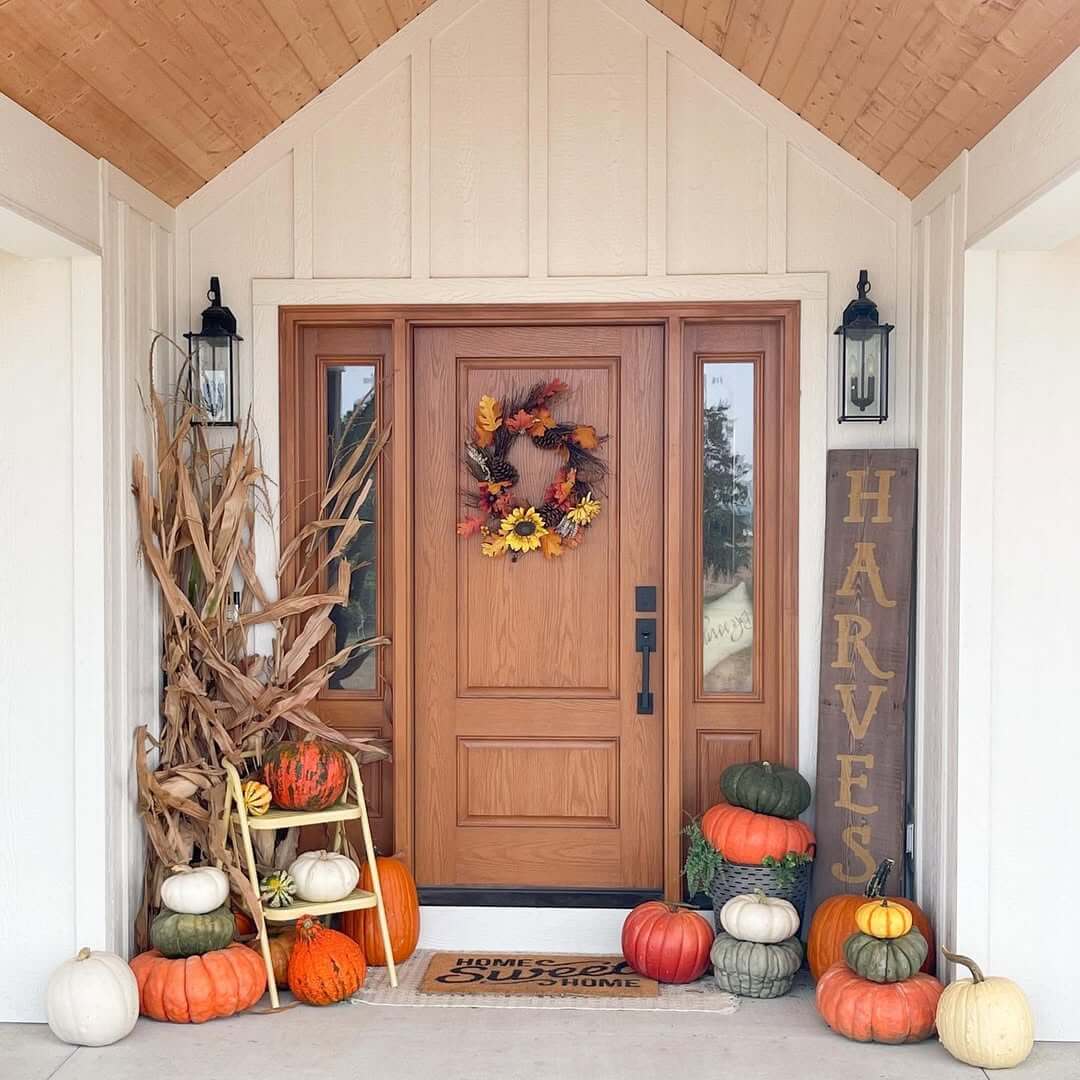
Farmhouse style is often described as simple.
Ironically, that’s where many decorating mistakes begin.
People try so hard to create a farmhouse look that they end up adding too much.
Too many accessories.
Too many trends.
Too many decorative items competing for attention.
The result may technically fit the farmhouse category, but it often loses the warmth and authenticity that made the style appealing in the first place.
The good news is that most of these mistakes are easy to correct.
Too Many Signs
A farmhouse porch doesn’t need a sign explaining that it’s welcoming.
The porch itself should do that.
I’ve seen porches where signs covered walls, benches, shelves, and tabletops.
Each individual piece may have been attractive, but together they created visual clutter.
One meaningful sign can work beautifully.
Several often become a distraction.
When every surface contains words, architectural details, greenery, and furniture begin competing for attention.
The porch feels busier than it needs to be.
Overcrowded Furniture
Furniture should make a porch feel more comfortable.
Not harder to use.
One of the most common mistakes is choosing too many seating pieces for the available space.
A small porch packed with chairs, tables, benches, and decorative accessories can quickly feel cramped.
Before adding another piece of furniture, ask yourself whether it improves the way the porch functions.
If the answer is no, the space may benefit more from breathing room.
Remember, comfort comes from usability, not quantity.
Matching Everything Perfectly
Many homeowners assume a cohesive porch means everything must match.
Identical planters.
Identical finishes.
Identical furniture.
Identical accessories.
While some coordination is helpful, perfect matching can make a porch feel staged.
Farmhouse style usually feels strongest when it appears collected over time.
A wooden bench paired with a metal lantern.
A wicker basket beside a terracotta planter.
Different textures and materials create character.
Too much uniformity can remove that sense of personality.
Ignoring Scale
Scale is one of those design principles that people notice immediately, even if they don’t realize it.
Tiny planters beside a large front door often look lost.
Oversized furniture on a narrow porch can dominate the space.
Small lanterns scattered across a large porch may disappear visually.
Everything should feel proportional to the size of the porch and the architecture surrounding it.
When scale feels right, the entire space becomes more balanced.
Decorating Without Considering Function
This might be the biggest mistake of all.
Farmhouse style was never intended to be purely decorative.
Historically, porches were functional spaces.
Places to sit.
Gather.
Relax.
Enjoy fresh air.
That mindset still matters today.
Every decorative decision should support how the space is actually used.
A beautiful bench that nobody can sit on because it’s covered in accessories isn’t serving its purpose.
A pathway blocked by planters isn’t improving the porch.
When function leads the design, the porch naturally becomes more inviting.
Following Trends Too Closely
Social media moves fast.
One season everyone is decorating with a particular color palette.
A few months later, something entirely different becomes popular.
Chasing every trend can leave a porch feeling inconsistent and dated surprisingly quickly.
Timeless farmhouse porches tend to ignore most short-term trends.
They focus on:
- Comfortable seating
- Natural materials
- Healthy greenery
- Warm lighting
- Simple seasonal updates
Those elements remain attractive regardless of what’s currently popular online.
That’s one reason farmhouse style continues to endure.
It prioritizes comfort and authenticity over novelty.
The Real Goal
When I look at farmhouse porches that feel truly memorable, one thing stands out.
They don’t seem like they’re trying too hard.
Nothing feels forced.
Nothing feels added simply because a trend said it should be there.
The porch feels natural.
Comfortable.
Personal.
That’s the standard I try to follow whenever I’m decorating my own outdoor spaces.
Not more.
Just better.
Quick Action Step
Take a fresh look at your porch and identify one item that doesn’t serve a purpose.
Maybe it’s decorative clutter.
Maybe it’s an accessory you no longer love.
Maybe it’s something that interrupts the flow of the space.
Remove it for a few days and see how the porch feels.
You may be surprised by how much stronger the overall design becomes.
Now that we’ve covered what to avoid, let’s pull everything together into a simple farmhouse porch formula you can use regardless of your home’s size or budget.
A Simple Farmhouse Front Porch Formula You Can Copy
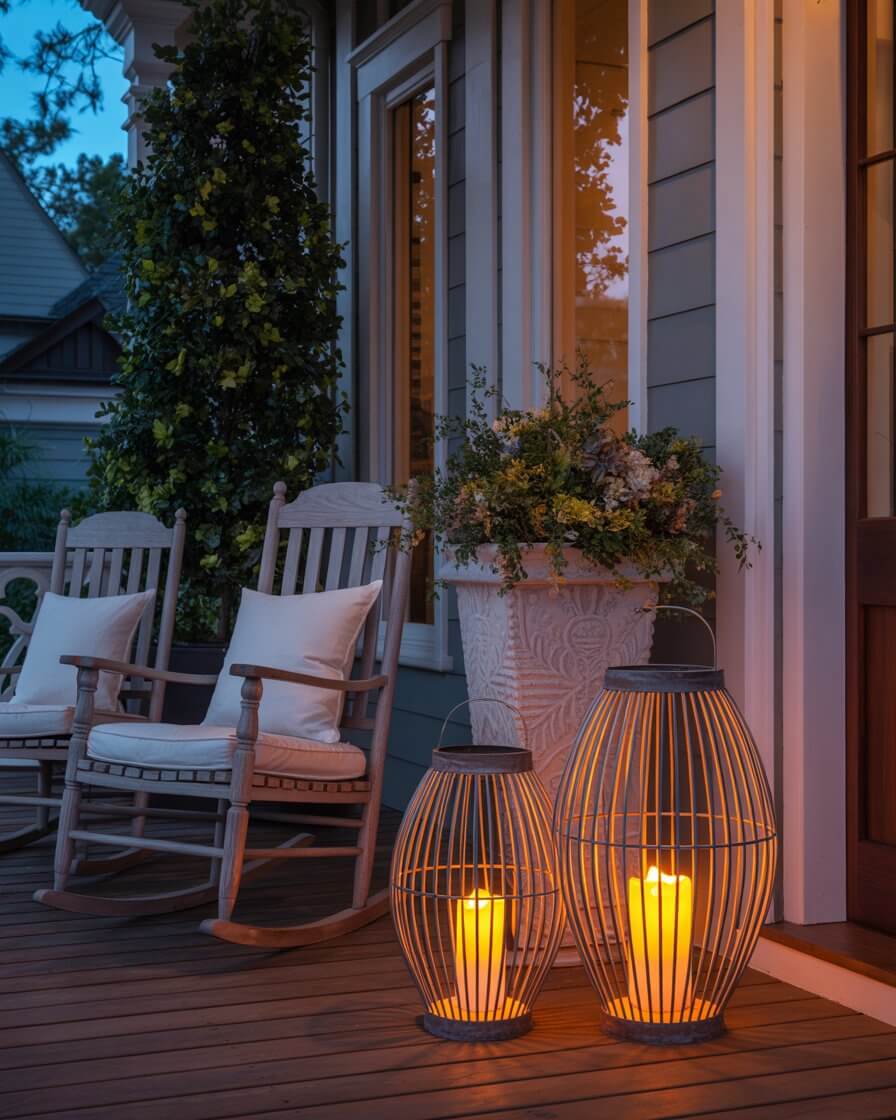
After all the experimenting, rearranging, and decorating I’ve done over the years, I’ve realized something interesting.
The farmhouse porches that feel the most welcoming usually aren’t the ones with the most decorations.
They’re the ones where every element works together.
Comfort.
Greenery.
Texture.
Lighting.
Balance.
None of these things need to be complicated on their own.
The magic happens when they’re combined thoughtfully.
If you’re starting from scratch or simply want a simpler approach, this is the exact framework I would follow.
Step 1: Start With Comfortable Seating
Every farmhouse porch needs a reason for someone to stay.
That starts with seating.
Choose something comfortable enough that you would actually use it.
Maybe that’s:
- A pair of rocking chairs
- A wooden bench
- A porch swing
- A comfortable accent chair
The specific piece matters less than the feeling it creates.
The porch should invite people to sit down rather than simply admire it from a distance.
Step 2: Add Greenery Before Adding Decorations
Once seating is in place, focus on plants.
A porch without greenery can sometimes feel unfinished no matter how many decorative accessories you add.
Start with one or two substantial planters.
Place them where they naturally support the architecture of the porch.
Common locations include:
- Beside the front door
- Near seating areas
- Adjacent to porch steps
Healthy plants add life, texture, and seasonal interest all at once.
Very few decorative items work as hard.
Step 3: Bring In Natural Materials
This is where farmhouse character begins to emerge.
Look for opportunities to incorporate:
- Wood
- Wicker
- Terracotta
- Galvanized metal
- Natural fibers
These materials create warmth and help the porch feel timeless rather than trend-driven.
You don’t need every material represented.
Even one or two natural elements can dramatically change the atmosphere.
Step 4: Create Balance Around the Entry
Now step back and evaluate the front door.
Does it feel like the focal point?
If not, make a few adjustments.
Balance can come from:
- Matching planters
- Coordinated lighting
- Symmetrical arrangements
- Similar visual weight on each side of the entry
When the entrance feels grounded, the entire porch usually feels more polished.
Step 5: Add Texture
Before buying more decorations, look for opportunities to add texture.
This might include:
- An outdoor rug
- A woven basket
- A throw pillow
- A lightweight blanket
- Textured planters
Texture adds depth and warmth without creating clutter.
It’s often the missing ingredient when a porch feels nice but not quite inviting.
Step 6: Introduce Warm Lighting
As daylight fades, lighting becomes one of the most important design elements on the porch.
Focus on creating atmosphere rather than maximum brightness.
A lantern.
Warm wall sconces.
A softly illuminated planter.
Small lighting adjustments can completely change how the porch feels after sunset.
Step 7: Finish With One Seasonal Touch
This is where many homeowners go overboard.
You don’t need dozens of seasonal decorations.
Choose one meaningful seasonal element.
Maybe it’s:
- A wreath
- A planter refresh
- A few pumpkins
- Spring flowers
- Evergreen branches
That single update is often enough to keep the porch feeling fresh while preserving the timeless farmhouse foundation underneath.
The Formula in One Sentence
If I had to summarize farmhouse porch design in a single sentence, it would be this:
Comfort first, greenery second, texture third, and decorations last.
That order prevents the porch from feeling cluttered and keeps the focus on creating a space people genuinely enjoy spending time in.
Quick Action Step
Look at your porch today and identify which of these seven elements is missing.
Not weak.
Missing.
Maybe you have seating but no greenery.
Maybe you have plants but no texture.
Maybe you have beautiful décor but no comfortable place to sit.
Start with the missing piece first.
You’ll usually get a bigger improvement than adding more of something you already have.
With the formula in place, let’s answer a few of the most common questions homeowners have when creating a farmhouse front porch.
Frequently Asked Questions
Can you have a farmhouse front porch without a large wraparound porch?
Absolutely.
Some of the most charming farmhouse porches I’ve seen were barely large enough for a chair and a planter. What matters isn’t the size of the porch. It’s the feeling it creates.
A comfortable place to sit, a little greenery, and a few natural textures can make even a small entry feel warm and welcoming.
What’s the first thing I should add if my porch feels boring?
I’d start with either seating or greenery.
A chair, bench, or porch swing immediately makes the space feel more inviting. If you already have seating, add a substantial planter near the front door.
Those two elements usually create a bigger impact than decorative signs, seasonal accessories, or small accent pieces.
Do farmhouse porches need rocking chairs?
Not at all.
Rocking chairs are popular because they fit the relaxed feel of farmhouse style, but they’re not a requirement. A simple wooden bench, wicker chair, porch swing, or even a pair of comfortable outdoor chairs can create the same welcoming atmosphere.
The goal is comfort, not following a decorating formula.
How do I keep a farmhouse porch from looking cluttered?
This is one of the most common mistakes homeowners make.
Before adding something new, ask yourself whether it serves a purpose or improves the overall look of the porch. If it doesn’t do either, it may not belong there.
I usually find that removing a few unnecessary items improves a porch faster than buying new ones.
What colors work best on a farmhouse front porch?
You really can’t go wrong with a foundation of neutrals.
Whites, creams, soft grays, black accents, and natural wood tones tend to work well because they allow greenery and seasonal decorations to stand out naturally.
That doesn’t mean you can’t add color. It simply means the porch feels timeless even when seasonal accents come and go.
How do you decorate a farmhouse porch for different seasons without buying all new décor?
Keep the larger pieces the same and change only the accents.
Your seating, lighting, planters, and rugs can stay in place throughout the year. Then refresh the porch with seasonal flowers, wreaths, pillows, or a few decorative touches.
This approach is easier, less expensive, and usually creates a more cohesive look than completely redecorating every few months.
What’s the biggest farmhouse porch mistake?
Trying to force the style.
The best farmhouse porches don’t feel like someone checked items off a decorating list. They feel personal.
If every trend, sign, and accessory ends up on the porch at the same time, the space can quickly lose the simple charm that makes farmhouse style appealing in the first place.
Can a farmhouse porch still look modern?
Definitely.
Many homeowners today mix classic farmhouse elements with cleaner lines and a simpler color palette. A black front door, streamlined lighting, natural wood, and a few well-placed planters can feel both farmhouse and current at the same time.
You don’t have to choose between timeless and modern. The best porches often combine a little of both.
Final Thoughts
The best farmhouse front porch ideas aren’t really about décor.
They’re about creating a place that feels good to come home to.
A place where a cup of coffee lasts a little longer on a quiet morning.
A place where neighbors stop to chat.
A place that feels welcoming before anyone even steps through the front door.
That’s why the farmhouse porches people remember most usually aren’t the largest or the most expensive.
They’re the ones that feel lived in.
The ones where a rocking chair sits ready for use instead of display.
The ones where planters soften the entryway and warm lighting glows after sunset.
The ones that feel collected over time rather than decorated all at once.
One thing I’ve learned is that creating that feeling rarely requires a complete makeover.
More often, it’s the result of small improvements made gradually.
A larger planter beside the door.
A more comfortable place to sit.
A lantern that makes the porch feel welcoming at night.
A little less clutter and a little more breathing room.
If you’re looking at your porch right now and feeling overwhelmed, start with one thing.
Not five.
Not ten.
Just one.
Add a chair you’d actually use.
Refresh a planter.
Create a better focal point around the front door.
Then see how the space feels.
The smallest changes often have a way of changing everything around them.
And before long, you may find yourself spending more time on your porch than you ever expected.
You may also enjoy: