Laundry Room Ideas That Make Even the Smallest Space Feel Organized
Laundry rooms have a funny way of becoming the place where everything ends up. A basket waiting to be folded, a bottle of stain remover without a home, a pile of reusable bags, and clothes that were supposed to make it back to the closet three days ago. Before long, the room feels crowded, even when it isn’t that small.
The good news is that you don’t need a full renovation to make your laundry room work better. A few thoughtful changes can save time, reduce clutter, and make laundry feel far less overwhelming.
The goal isn’t to create a picture-perfect room that looks untouched. It’s to create a space that supports your daily routine and makes one of your most repeated household chores feel easier.
I learned this after helping reorganize a tiny laundry area that barely had enough room for a washer, a dryer, and one person standing between them. We didn’t install custom cabinets or buy expensive organizers. We changed how the space worked. Within an afternoon, it felt larger, cleaner, and much easier to use.
What surprised me most wasn’t how different the room looked. It was how different it felt. Laundry stopped feeling like a chore that stretched across the whole day because everything had a place, every task flowed more naturally, and there was less visual clutter fighting for attention.
That’s exactly what this guide is here to help you do. These laundry room ideas aren’t expensive makeover projects or trends that only look good in photos. They are practical changes you can start today to create a room that feels more organized, works harder for your everyday routine, and makes laundry one less thing to think about.
Start by Clearing the Floor Instead of Buying More Storage
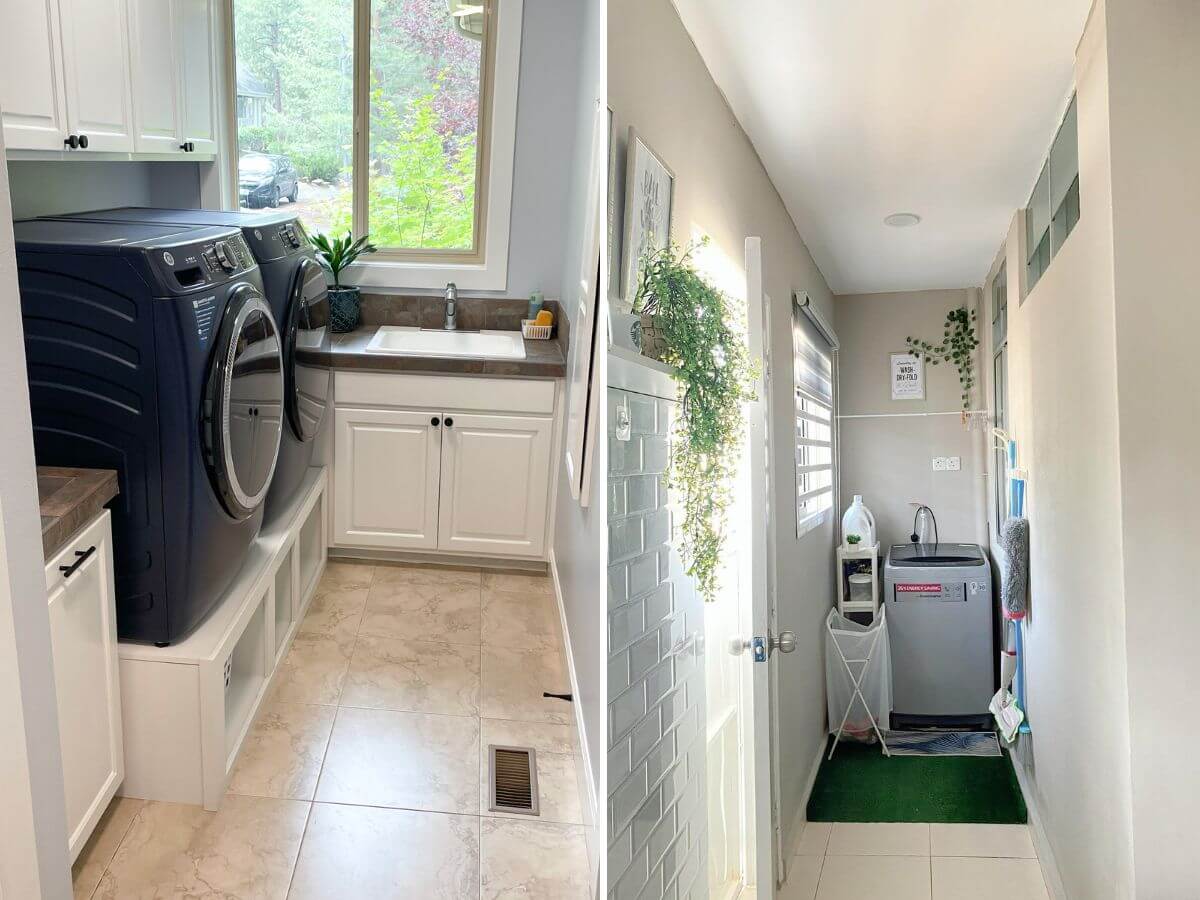
When a laundry room feels cramped, most people assume they need more storage bins or another cabinet. The first thing to tackle is the floor.
Every basket, detergent bottle, or random item left on the floor changes the way you move through the room. Even a roomy laundry space can feel crowded when you have to step around clutter just to reach the washer.
Here is why.
Your eyes naturally follow the open walking path when you enter a room. A clear floor makes the room feel calmer before you even notice the shelves or cabinets. That visual difference costs nothing, yet it changes how the space feels every day.
Walk into your laundry room with a basket in your hands. Can you reach the washer, dryer, and folding area without stepping around anything? If not, you’ve already found your first project.
Start by removing anything that doesn’t belong there. Empty cardboard boxes, old paint cans, forgotten shopping bags, broken hampers, and random household items often stay in place simply because they’ve become part of the background.
Next, move everyday supplies upward instead of outward. A bottle of detergent sitting on the floor takes up valuable walking space. The same bottle stored on a shelf above the washer frees up the room right away.
If you have pets or young children, keeping products off the floor also helps the room feel safer and more controlled.
One quick habit that has helped me is ending every laundry day with a two-minute floor check. Before leaving the room, pick up anything that shouldn’t stay on the ground. That tiny routine keeps clutter from quietly building up again.
Once your floor is clear, the room already feels more open. Now the next job is making sure every supply has one clear place to live.
Give Every Laundry Supply One Permanent Home
Have you ever bought another bottle of stain remover because you couldn’t find the one you already owned?
It happens more often than most people realize.
Laundry rooms become messy when similar items are scattered across different shelves, baskets, and cabinets. Dryer sheets sit in one corner, detergent pods land on another shelf, and stain removers disappear behind paper towels.
Instead of organizing by container, organize by purpose.
Keep all washing products together. Store stain removers beside detergents. Place dryer sheets near the dryer instead of across the room. If you iron clothes often, create one small section for everything related to that task.
The goal is simple. Every category should have one home and only one home.
Many people rush out to buy matching bins before sorting their supplies. Try the opposite approach.
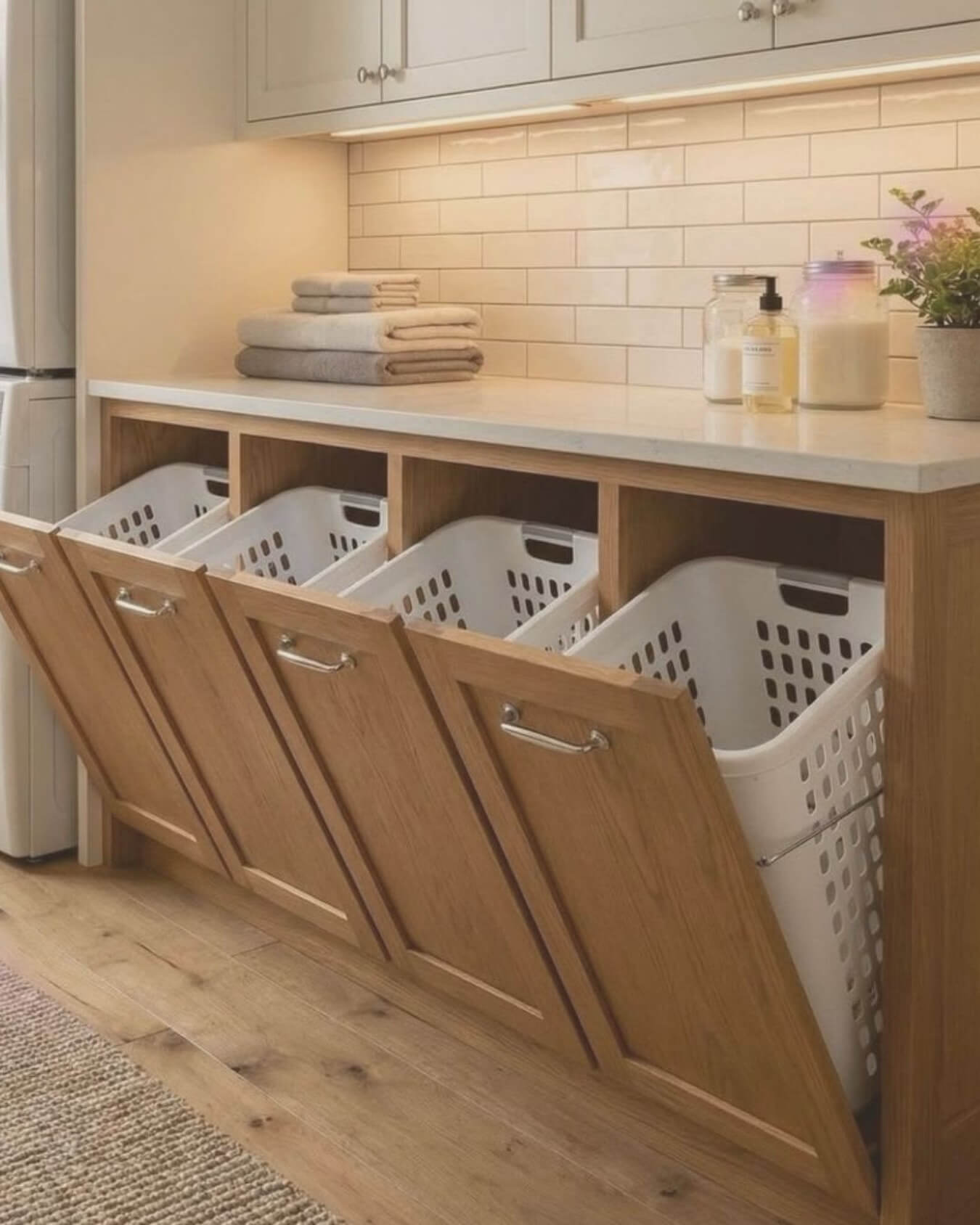
Lay everything on a countertop or table first. Toss empty containers, combine duplicates, and remove products you never use. Only after that should you decide whether baskets, jars, or bins will actually help.
This usually saves money because you buy fewer storage products.
As Better Homes & Gardens points out, “using rolling carts, clear canisters, and matching baskets to keep items easily accessible and tidy” can make everyday laundry supplies easier to manage. The idea isn’t to hide everything. It’s to make every item easy to find and easy to put back.
One trick I love is keeping a small basket labeled “use first.” Whenever a detergent bottle or stain remover is almost empty, it goes into that basket. It helps prevent half-used products from spreading across every shelf.
When every product has a permanent home, cleanup starts to feel automatic. From there, you can make the room work even harder by using space you may be ignoring.
Turn Empty Wall Space Into Your Hardest Working Storage
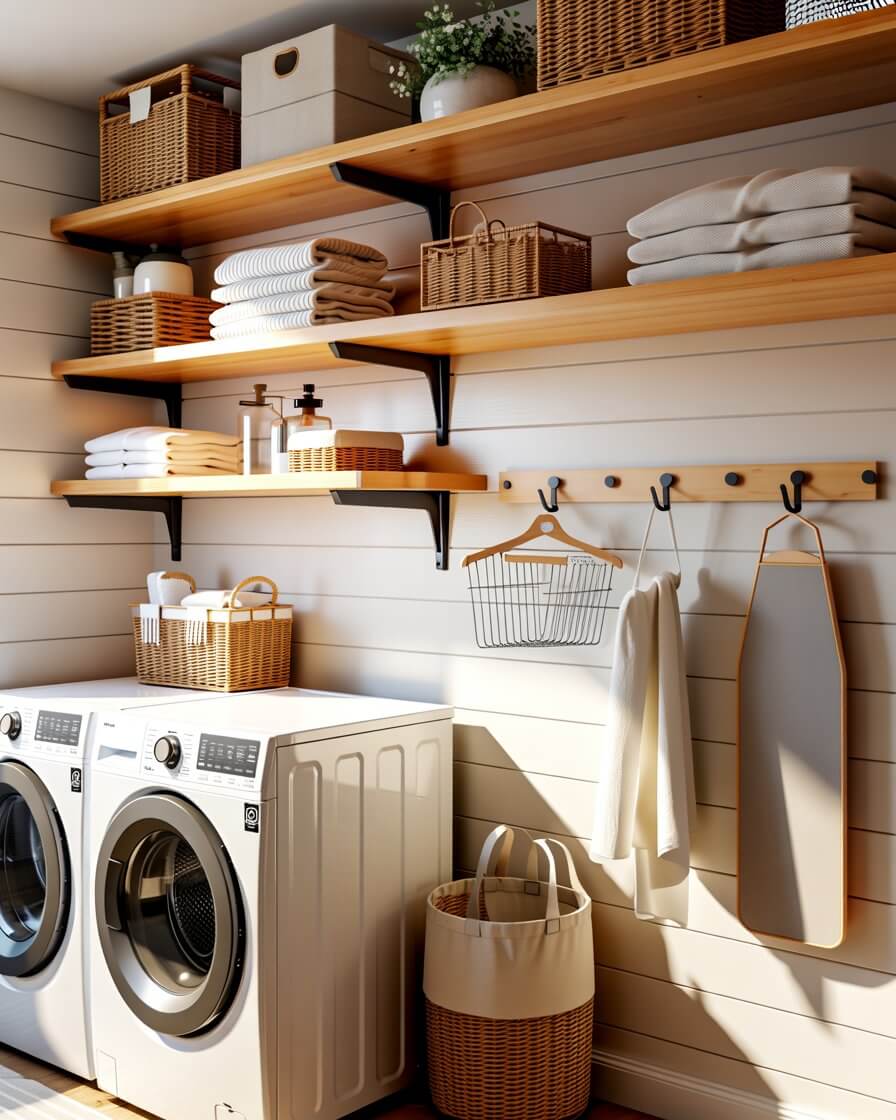
One of the biggest mistakes in a small laundry room is forgetting to look up.
Walls are often the most underused part of the room, even though they can add storage without stealing floor space.
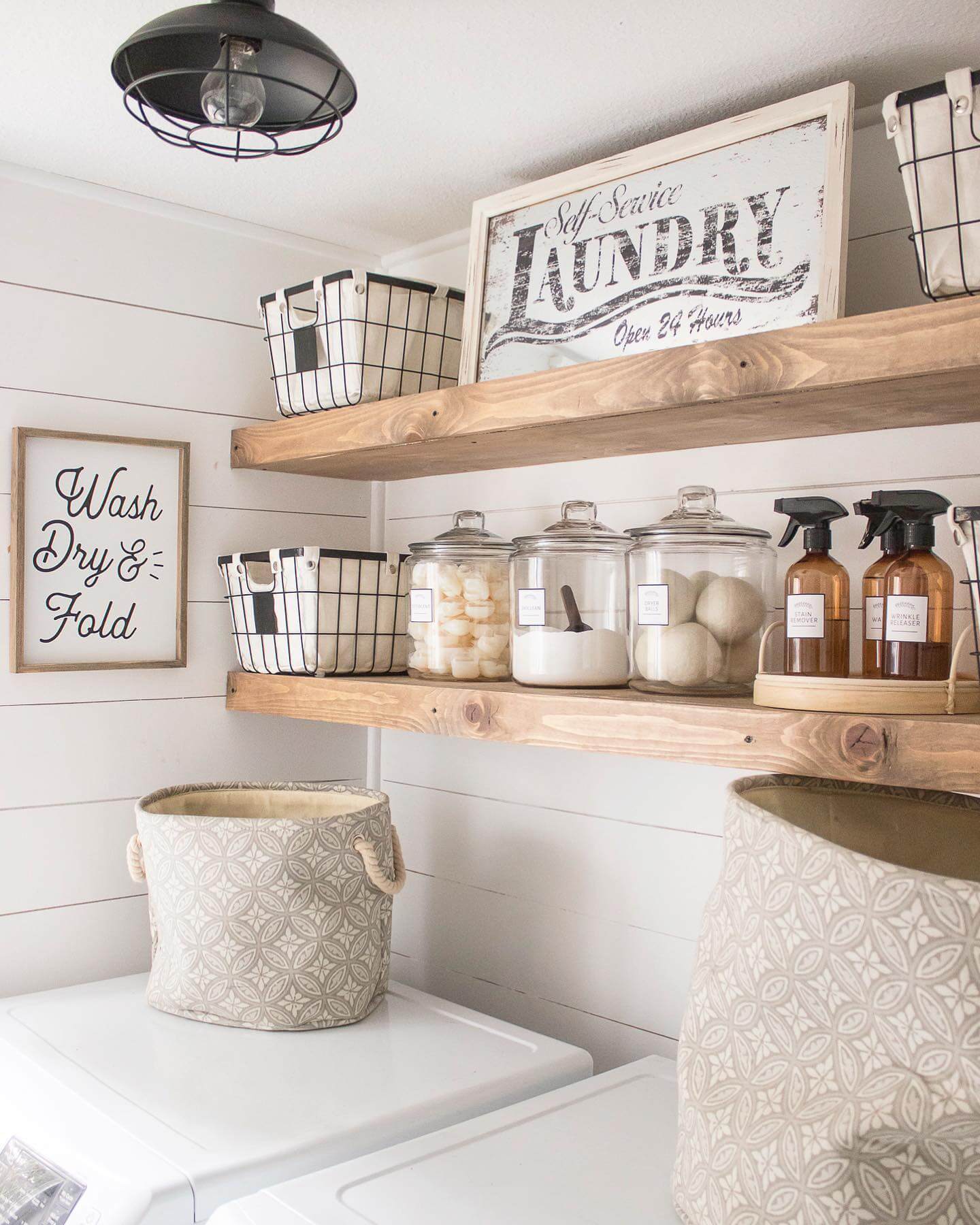
A single floating shelf above the washer can hold detergents, baskets, and extra paper towels. Two shelves can replace a bulky cabinet in many small rooms.
Hooks deserve just as much attention.
Hang reusable laundry bags, lint brushes, ironing boards, drying racks, or garment bags where they are easy to grab. Items you use every week shouldn’t be buried inside a cabinet.
If your laundry room is tucked inside a hallway or closet, slim wall organizers can hold cleaning supplies while keeping the space open.
Open shelving also helps you stay organized because everything remains visible. That doesn’t mean shelves have to look busy. Group similar items together, use matching containers where they make sense, and leave a little breathing room between groups.
I also like adding one shelf that isn’t only for storage. A small plant, framed photo, or candle can soften the room without getting in the way. Those little touches make the space feel less like a utility corner and more like part of your home.
This idea is backed by The Spruce, which notes, “A Beautiful Mess added wall-mounted open shelving above this top-load washer to keep laundry essentials at arm’s reach.” That is the kind of storage that supports the way you actually use the room.
Now that your supplies are off the floor and your walls are working harder, the next step is creating a place to fold clothes before they turn into another pile somewhere else.
Create a Folding Station That Saves Time Every Week
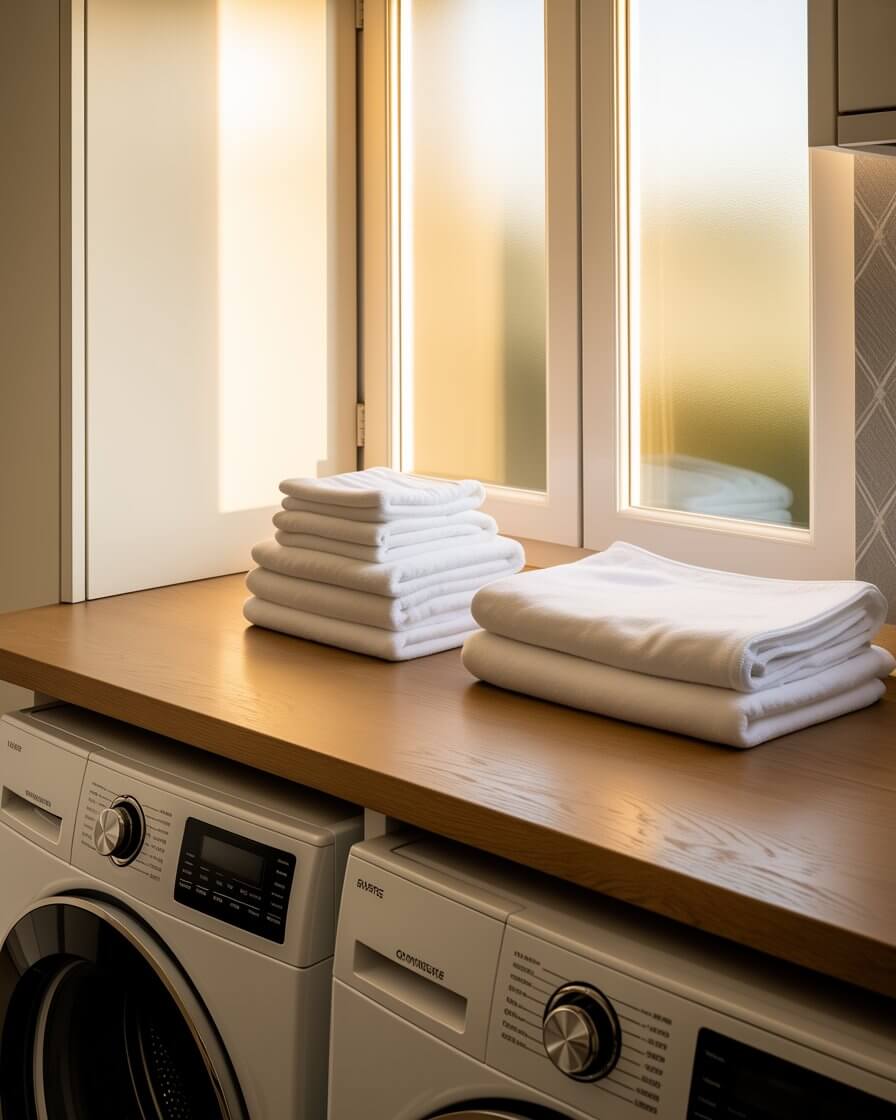
If you’ve ever carried a basket of warm clothes from the laundry room to the bedroom, only to leave it sitting there until tomorrow, you’re not alone.
The easier it is to fold clothes right after they come out of the dryer, the less likely they are to become another pile waiting for attention.
You don’t need a laundry island to make this happen. A small countertop above front-loading machines can create enough space to fold shirts, stack towels, or sort socks before they wrinkle.
If your washer and dryer sit side by side, adding a wood counter across the top creates one flat work surface without taking up extra room.
No room for a permanent counter? A fold-down wall table can work just as well. It stays out of the way when you don’t need it and gives you a useful surface on laundry day.
I also like keeping a small basket nearby for clothes that need extra care. Items that need ironing, stain treatment, or a missing button go straight into that basket instead of getting mixed with clean laundry.
Think about the order you complete laundry. Wash, dry, fold, and put away. When your folding station sits near the dryer, you remove extra steps from the process. That simple change makes it easier to finish the job in one trip.
The goal isn’t perfection. It’s building a routine that feels easy enough to repeat.
Once the folding area works better, the next step is hiding everyday clutter without making your supplies harder to reach.
Hide Everyday Clutter Without Making It Hard to Reach
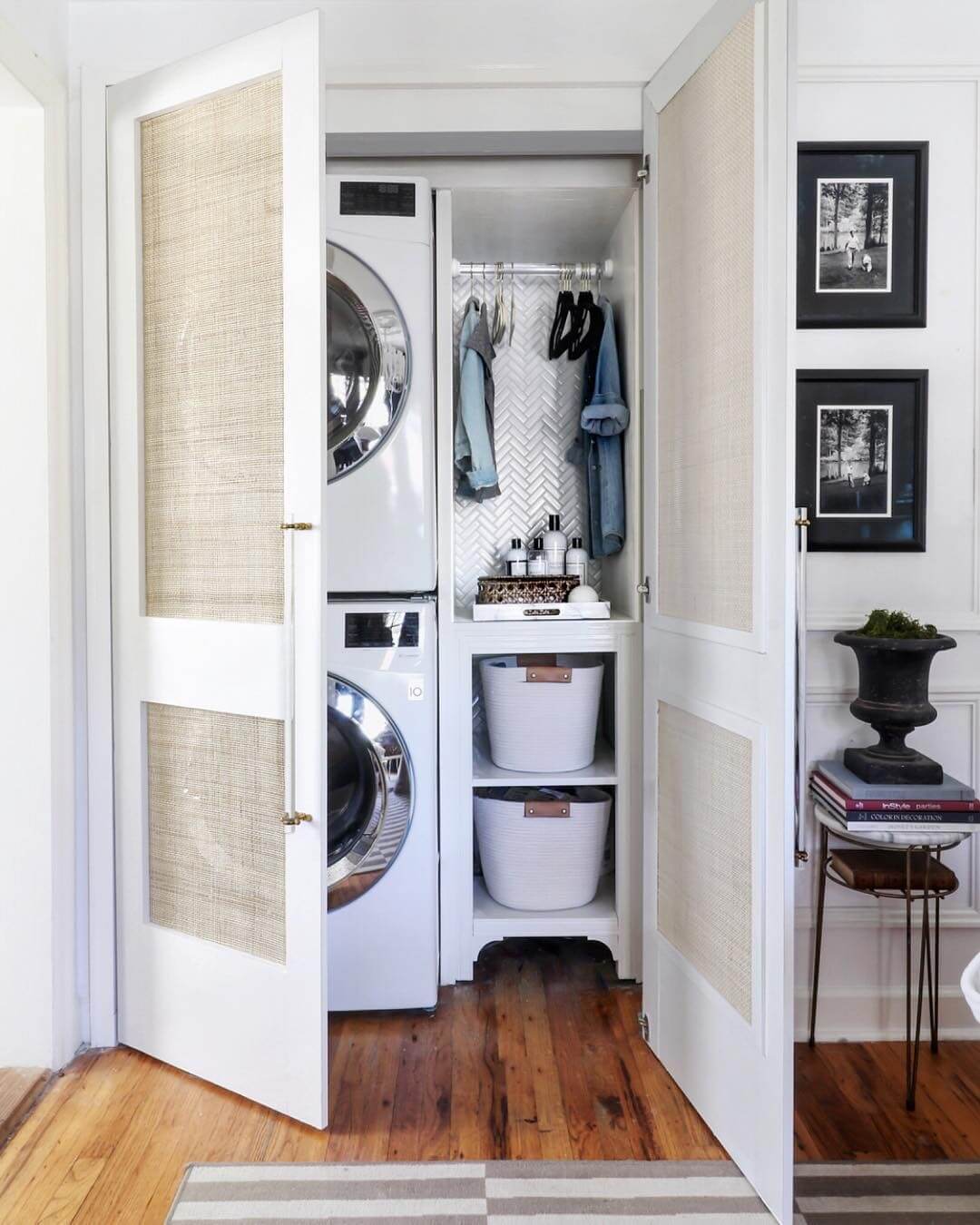
Not everything needs to be on display.
Laundry rooms often hold practical items that don’t add much beauty to the space. Open bottles, extra dryer sheets, stain removers, clothespins, and cleaning cloths can quickly make shelves feel crowded.
The answer isn’t stuffing everything into random cabinets where you’ll never find it again.
Think about what you use every week and what you only reach for now and then.
Keep daily supplies within easy reach. Less-used items can move to higher shelves or closed cabinets. That small change reduces visual clutter without making laundry harder.
Matching baskets can also help. Instead of seeing ten different product labels, you notice a few simple containers that create a calmer look.
One mistake I see often is labeling every bin before the room has a working system. Labels work better after you know where things naturally belong. Otherwise, you may spend more time changing labels than keeping the room tidy.
Drawer dividers are another easy upgrade if your laundry room has cabinets. Small items like clothespins, sewing kits, spare buttons, and mesh wash bags stay separated instead of rolling around together.
Here’s a trick that works well in busy homes.
Keep one small basket labeled “returns.” Whenever something belongs in another room, place it there instead of leaving it on the counter. The next time you walk through the house, grab the basket and put everything back.
Once clutter is under control, the whole room can start to feel brighter and more spacious.
Make Small Laundry Rooms Feel Bigger With Simple Design Choices
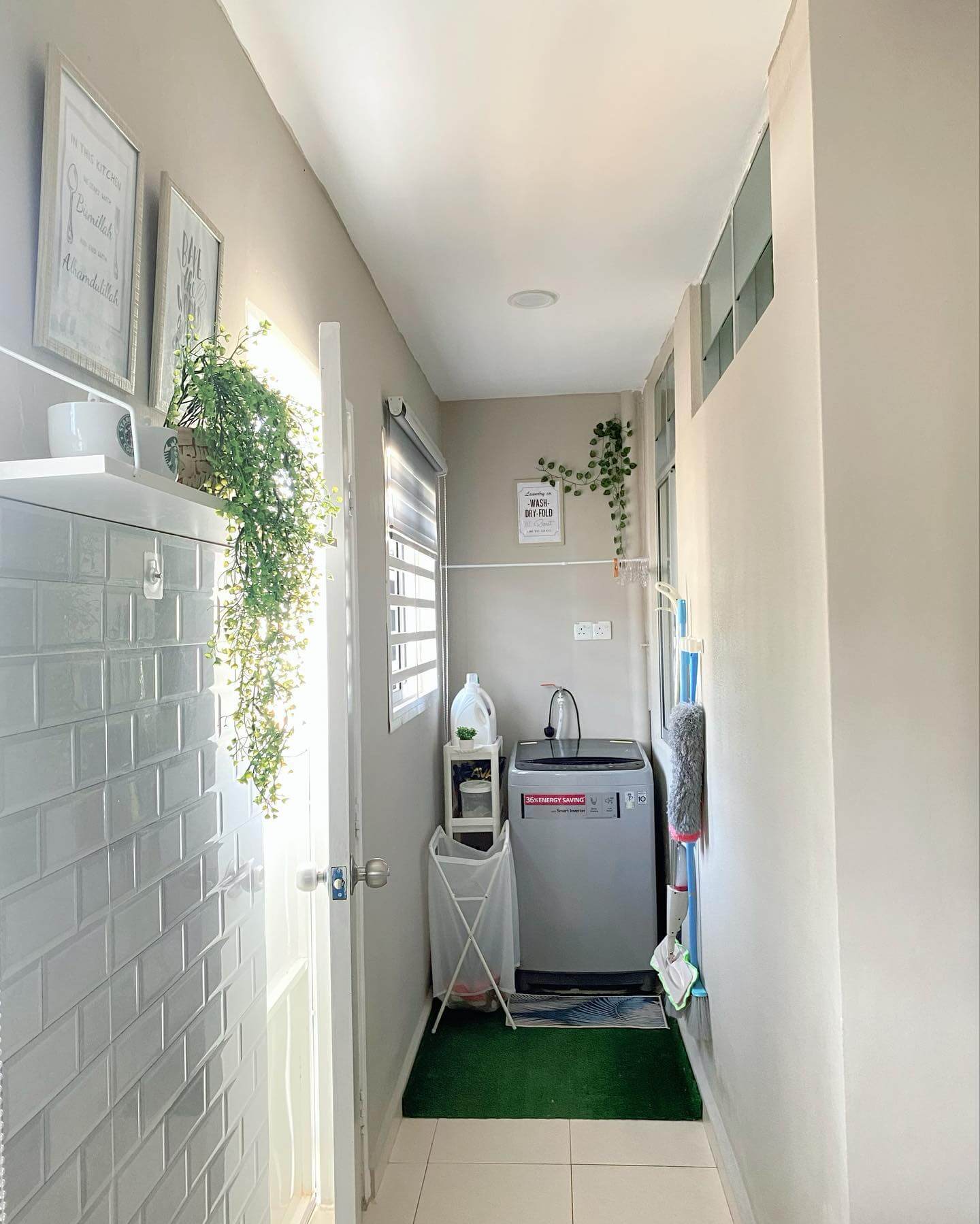
A small laundry room doesn’t have to feel cramped.
Often, the room itself isn’t the problem. It’s the way the space is arranged.
Light colors are one of the easiest ways to create an open feeling. Soft whites, warm creams, pale grays, and light wood tones help the room feel brighter and less crowded.
Keeping storage containers consistent also helps. When every basket is a different size, color, and material, your eyes still read the room as messy even when everything is technically organized. Choosing containers with a similar look creates a calmer space without requiring a full makeover.
Lighting deserves attention too.
Many laundry rooms rely on one overhead bulb that casts shadows across the room. Brighter lighting can change how the room feels right away. It becomes easier to spot stains, fold clothes, and spend time there without feeling boxed in.
If your laundry room doesn’t have a window, a mirror can help bounce light around the space and add the feeling of depth.
One decorating mistake that’s easy to miss is filling every shelf. Leaving a little empty space gives your eyes somewhere to rest and helps the room feel more open.
This approach is supported by Homes & Gardens, which recommends, “Use light colors to make a small laundry room feel bigger.” It’s a simple design choice that can change the feeling of the room without moving a single wall.
Once the room feels brighter and more open, a few personal touches can make everyday chores feel less draining.
Add Details That Make Laundry Feel Less Like a Chore
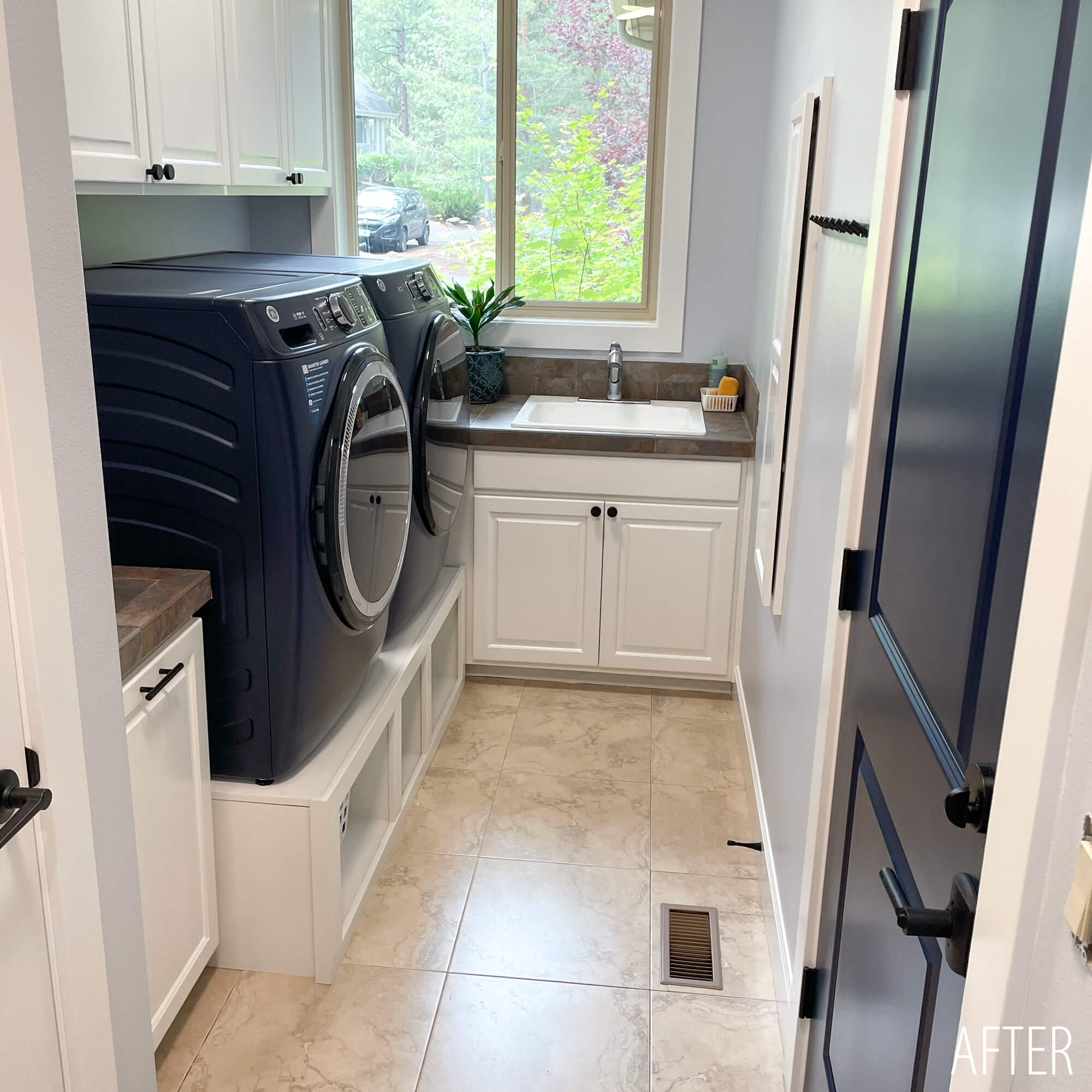
Laundry will probably never become your favorite household task.
That doesn’t mean the room has to feel cold or forgotten.
Some of the most welcoming laundry rooms aren’t the biggest or most expensive. They are simply pleasant places to spend a little time each week.
Start with one or two decorative touches that make you smile.
A framed print, a small potted plant, or a washable runner can soften the room without getting in the way. Even transferring clothespins into a glass jar instead of leaving them in plastic packaging can make the space feel more finished.
Scent also changes the mood of the room.
Fresh towels, regular lint removal, and good airflow can help the space feel clean each time you walk in.
If you enjoy listening to music or podcasts while doing chores, place a small speaker on a shelf. Laundry often feels faster when something enjoyable is playing in the background.
One of my favorite changes was hanging a framed family photo above the folding counter. It sounds small, but it made the room feel connected to the rest of the house instead of feeling like a forgotten work zone.
Decor should not compete with function. It should make the routine feel a little lighter.
Now the room looks better and works better. The final piece is keeping it that way after the first cleanup is finished.
Build a Laundry Routine That Keeps the Room Organized
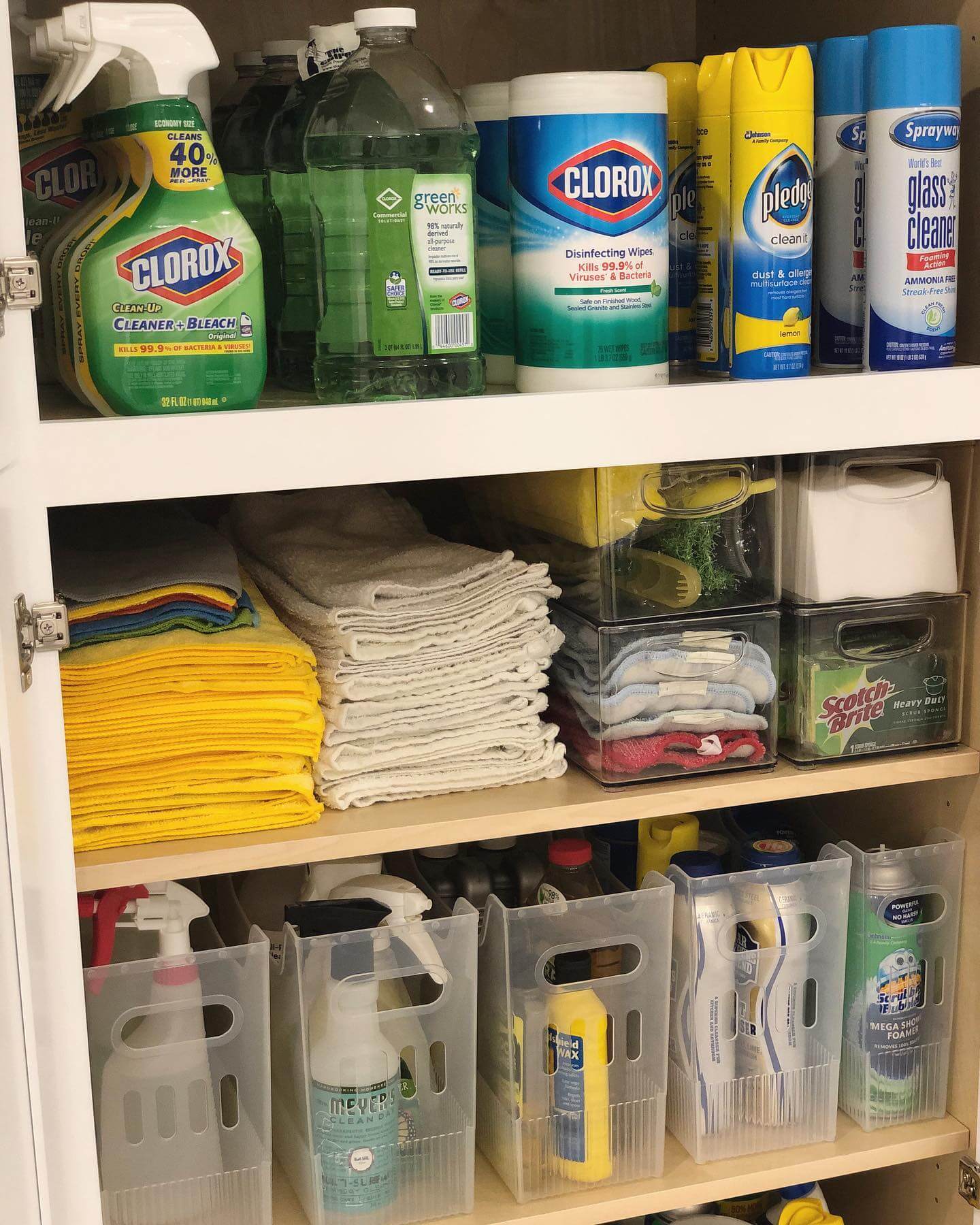
A beautifully organized laundry room can slowly slide back into clutter if it doesn’t have a simple routine behind it.
The good news is that staying organized usually takes much less time than the first cleanup.
Start with a five-minute reset after each laundry day. Wipe the counter, return every product to its spot, empty the lint trap, and pick up anything left on the floor.
Once a week, check your supplies. If detergent or dryer sheets are running low, add them to your shopping list before you run out. That small habit helps you avoid last-minute store trips.
Every season, clear out products you no longer use. Old stain removers, empty spray bottles, and broken baskets only take up space.
Another habit that has worked well in my home is the “one basket” rule. Clean laundry shouldn’t stay in the basket for days. Once it’s folded, the basket goes back to the laundry room so it’s ready for the next load.
If everyone in your household helps with laundry, keep the system simple. Clear shelves, easy-to-reach supplies, and obvious storage spots make it much more likely that things will be put back.
An organized laundry room isn’t built once. It stays that way through small habits that fit into your week.
Once those habits are in place, a few inexpensive upgrades can make the room work even better.
Small Upgrades That Make a Big Difference
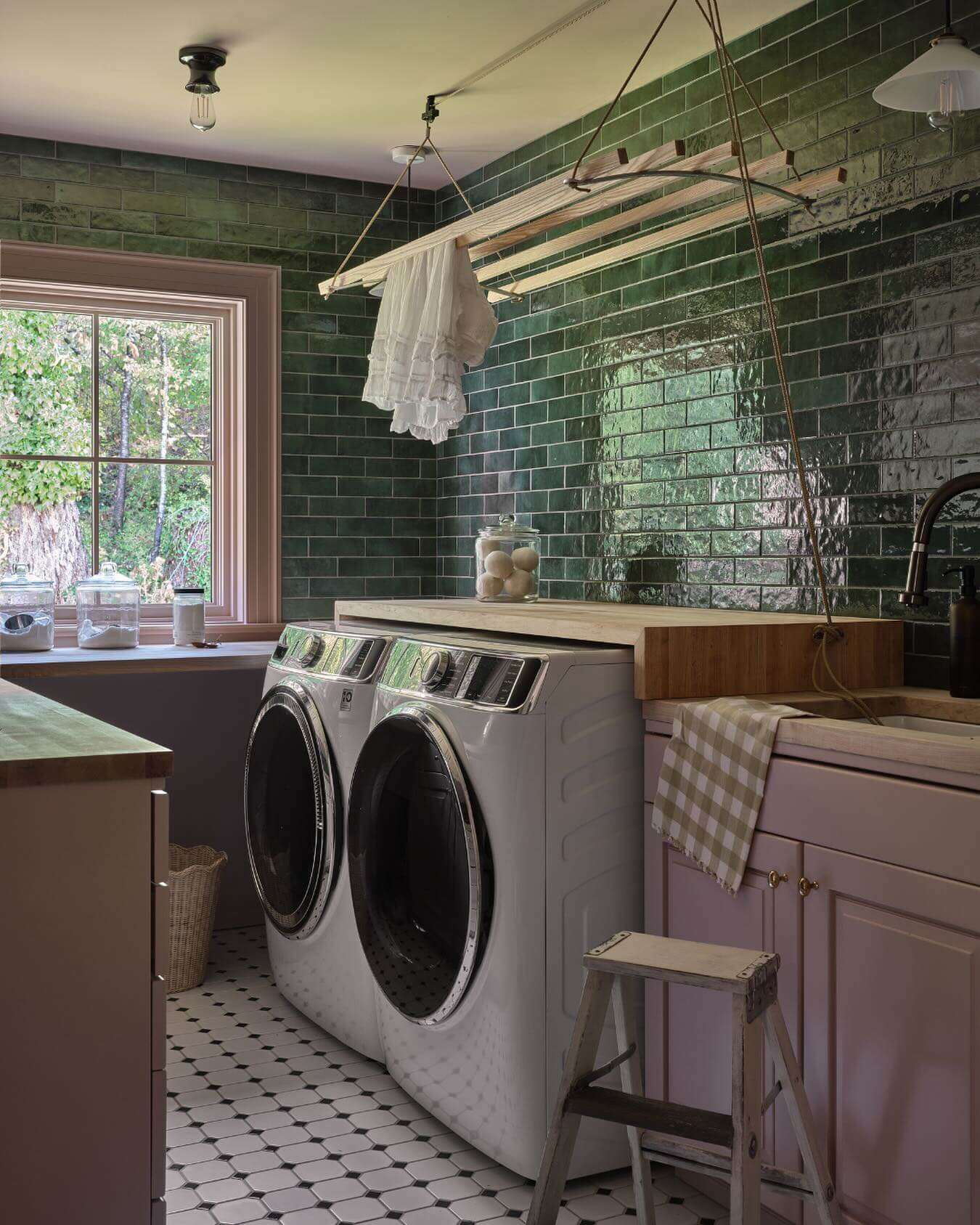
You don’t have to spend thousands of dollars to feel a real change.
Some of the best upgrades are affordable and take only a few minutes to add.
An over-the-door organizer can hold cleaning supplies, clothespins, and extra dryer sheets without using floor space.
Under-shelf baskets are helpful if your shelves have empty space beneath them. They work well for mesh laundry bags, microfiber cloths, and small items that tend to disappear into larger baskets.
If your laundry room is narrow, a slim rolling cart can slide between appliances or beside a cabinet. It gives you an easy place to store detergents, fabric softeners, or cleaning products while keeping everything within reach.
A foldable drying rack is worth having even if you don’t use it every week. It opens when needed and stores neatly against the wall afterward.
One small idea I recommend to almost everyone is a “lost items” container. Single socks, loose buttons, coins, and other small pieces can all go into one basket instead of collecting across shelves and counters.
These upgrades aren’t about filling the room with more stuff. They are about helping the room support your daily routine a little better.
Just as useful as adding smart features is avoiding the habits that create clutter in the first place.
Common Laundry Room Mistakes That Create Clutter
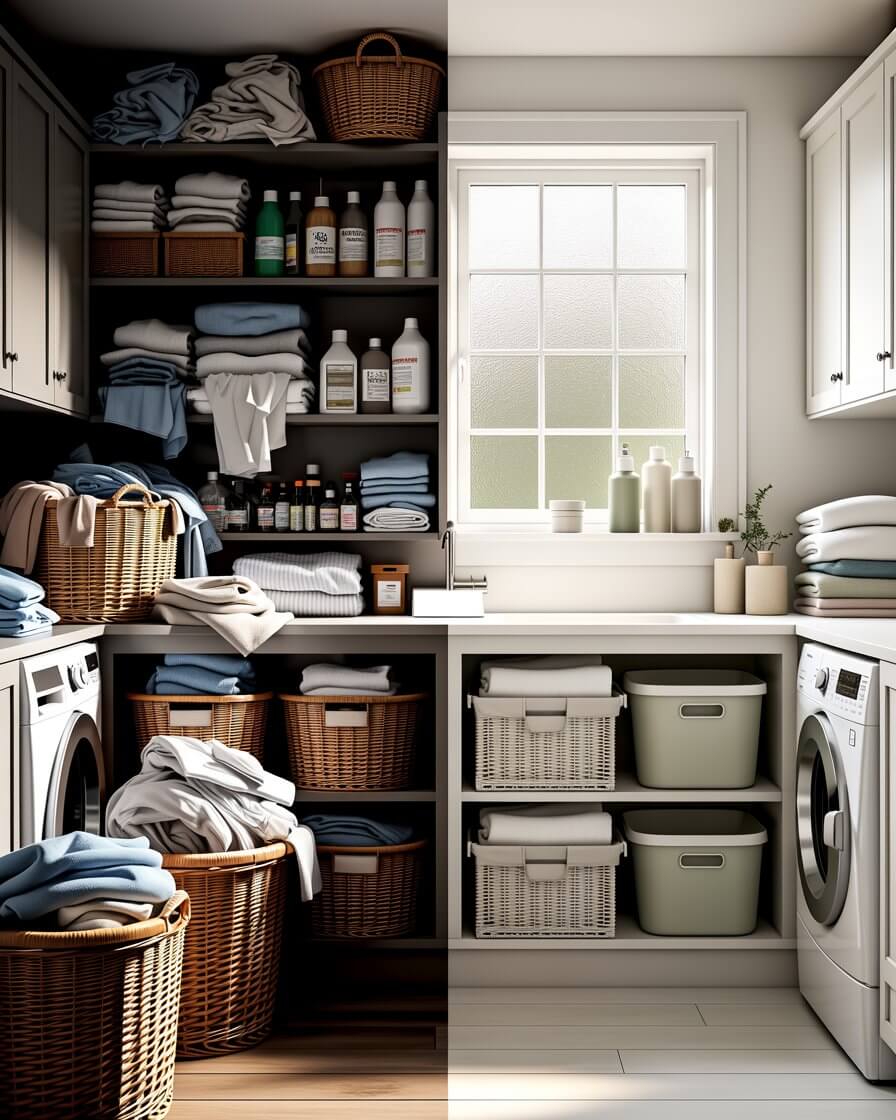
Even a beautiful laundry room can become frustrating when a few common mistakes creep in.
One of the biggest is buying organizers before understanding what actually needs to be stored.
It’s easy to fill a cart with matching bins and baskets. It’s much harder to figure out where everything belongs afterward. Sort your supplies first, then buy storage that fits your routine.
Another mistake is keeping too many products.
Do you really need three fabric softeners or four half-empty stain removers? Keeping only the products you use makes shelves easier to manage and gives you more working space.
Ignoring vertical storage is another missed chance. Walls often sit empty while countertops become crowded. A couple of shelves or sturdy hooks can change how the room functions.
Many homes also need a better hamper system. When everyone drops clothes wherever there is space, clutter builds fast. Separate hampers for lights, darks, or delicate fabrics can make laundry day feel less chaotic.
One last mistake is decorating every surface.
A few thoughtful pieces make the room feel warm and welcoming. Filling every shelf with signs, candles, and ornaments makes the room feel busy and leaves less space for the items you use.
When your room avoids these mistakes, staying organized becomes much easier.
Conclusion
The best laundry room ideas aren’t always the ones with custom cabinetry or designer finishes. They are the ones that make everyday life feel easier.
A clear floor gives you room to move. Thoughtful storage keeps supplies close without creating clutter. A folding station saves time, while small decorative touches make the space feel more welcoming.
You don’t have to tackle everything in one weekend. Start with one improvement that solves the biggest frustration in your laundry room today. Clear one shelf. Add one hook. Create one folding space.
Those small changes build momentum. Before long, your laundry room can feel organized, practical, and far more enjoyable to use every week.