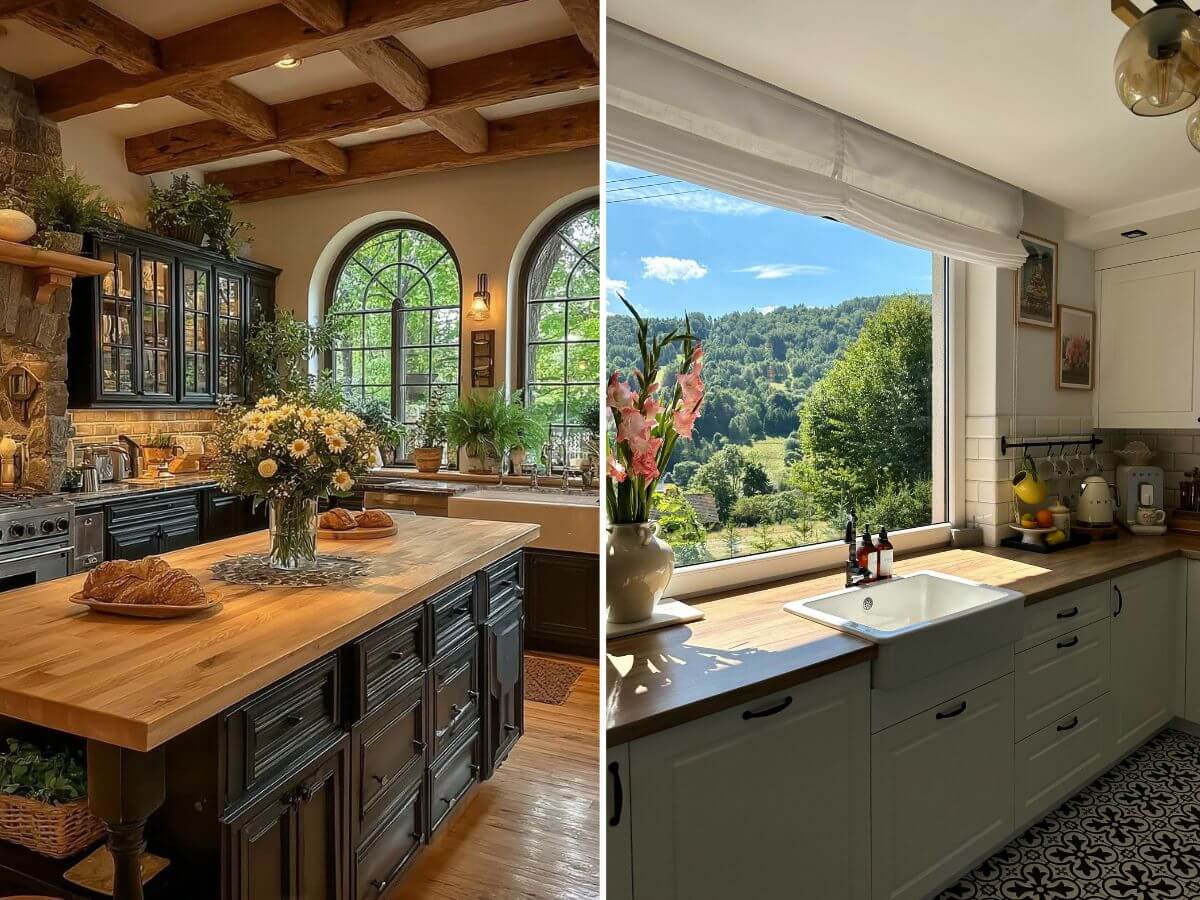
Modern Farmhouse Kitchen Ideas That Look Warm, Not Dated
I’ve seen modern farmhouse kitchens that feel warm the second you walk into the
There’s natural wood, soft color, comfortable lighting, and just enough character to keep everything from feeling too polished.
Then I’ve seen kitchens with all the recognizable farmhouse ingredients that somehow feel much less inviting.
White cabinets. Black hardware. Subway tile. Lantern pendants. Rustic signs. Open shelves.
Nothing is necessarily wrong with those things individually.
The problem usually starts when the kitchen tries too hard to prove that it’s farmhouse.
That’s why I’d approach a modern farmhouse kitchen differently.
Instead of asking, What farmhouse features should I add? I’d ask, What would make this kitchen feel warmer without making it feel themed?
Before buying anything, take one straight-on photo from the doorway.
Look at the cabinets, countertops, flooring, backsplash, lighting, hardware, appliances, and decor together.
Which three things make the kitchen feel dated or overly farmhouse?
Write them down.
Those are much better places to start than a shopping cart full of new decor.
Start With What You Aren’t Changing
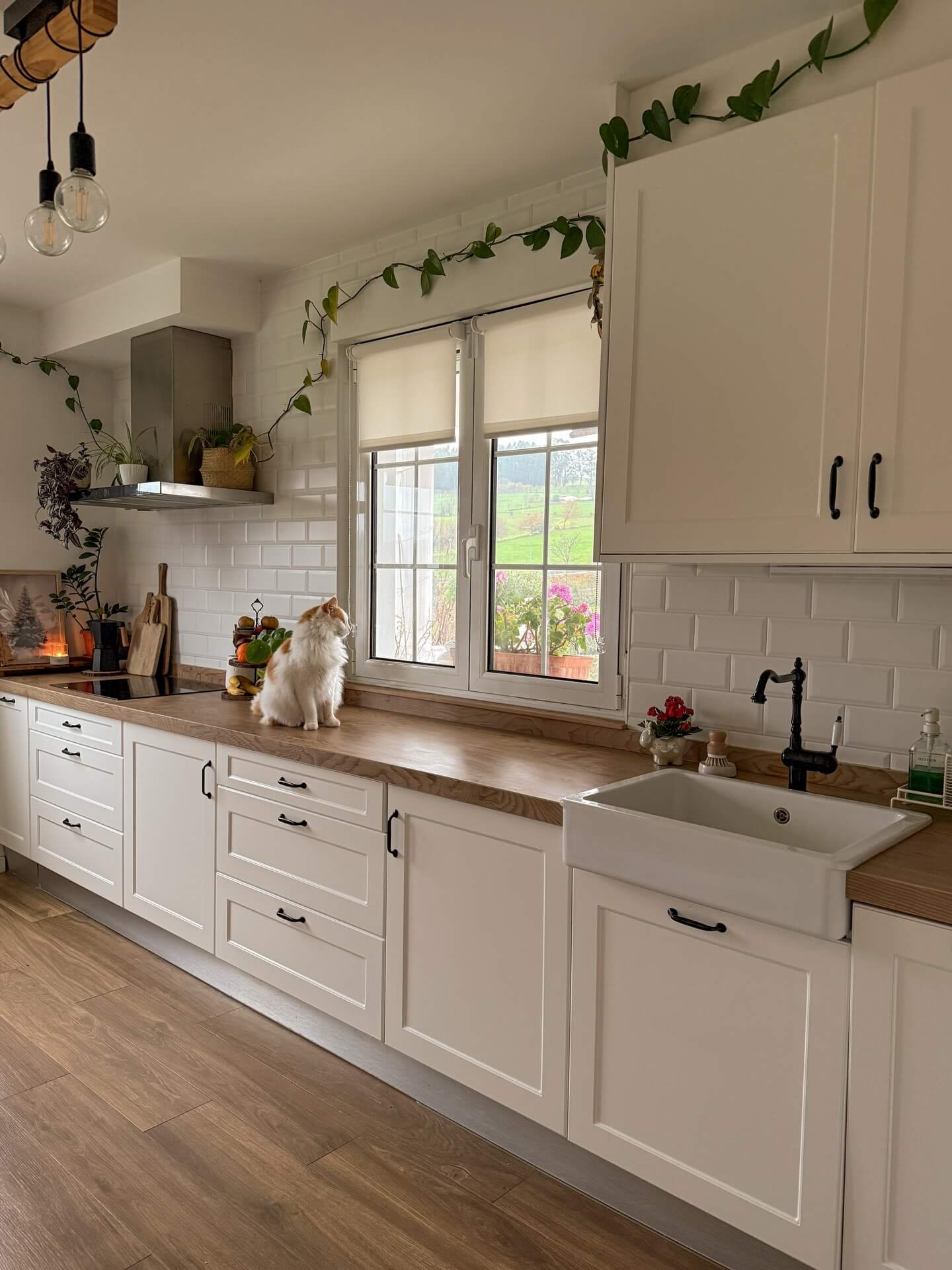
Before choosing cabinet colors or pendant lights, identify the expensive things that are probably staying.
Countertops.
Flooring.
Cabinetry, if you’re not replacing it.
Appliances.
Backsplash.
Maybe the island too.
These finishes already determine much of the kitchen’s visual direction.
Say you have warm oak floors and creamy stone countertops.
A kitchen inspiration photo filled with icy white cabinetry, cool gray tile, and stark black accents may look beautiful online, but those choices won’t necessarily work beside what you already own.
Make two quick lists.
Staying: flooring, countertop, appliances.
Changing: paint, lighting, hardware, stools.
Now you know what the new decisions need to work with.
This also helps you avoid one of the easiest modern farmhouse mistakes.
Trying to make everything white.
Choose Warm Whites Instead of Clinical Whites
White still has a place in a modern farmhouse kitchen.
I just wouldn’t assume every white works.
Some whites feel crisp and cool.
Others have enough cream or warmth to sit much more comfortably beside wood, stone, woven textures, and other natural-looking materials.
Better Homes & Gardens points to this broader shift in its guide to updating a modern farmhouse kitchen, where Stephanie Pierce says, “Instead of sticking to black-and-white palettes or shiplap, we’re seeing warmer stains, muted colors and softer cabinet profiles.”
That’s exactly where I’d start if your current kitchen feels too stark.
Bring several warm white or softly muted samples into the room.
Put them directly beside the countertop.
Then beside the backsplash.
Then near the flooring.
Look again in the morning and after sunset.
One white may suddenly make the countertop appear yellow.
Another may turn unexpectedly gray.
The right white should make the materials you’re keeping look more intentional.
And remember, white doesn’t have to provide all the warmth.
Wood can do much more of that work.
Let Natural Wood Bring the Farmhouse Warmth
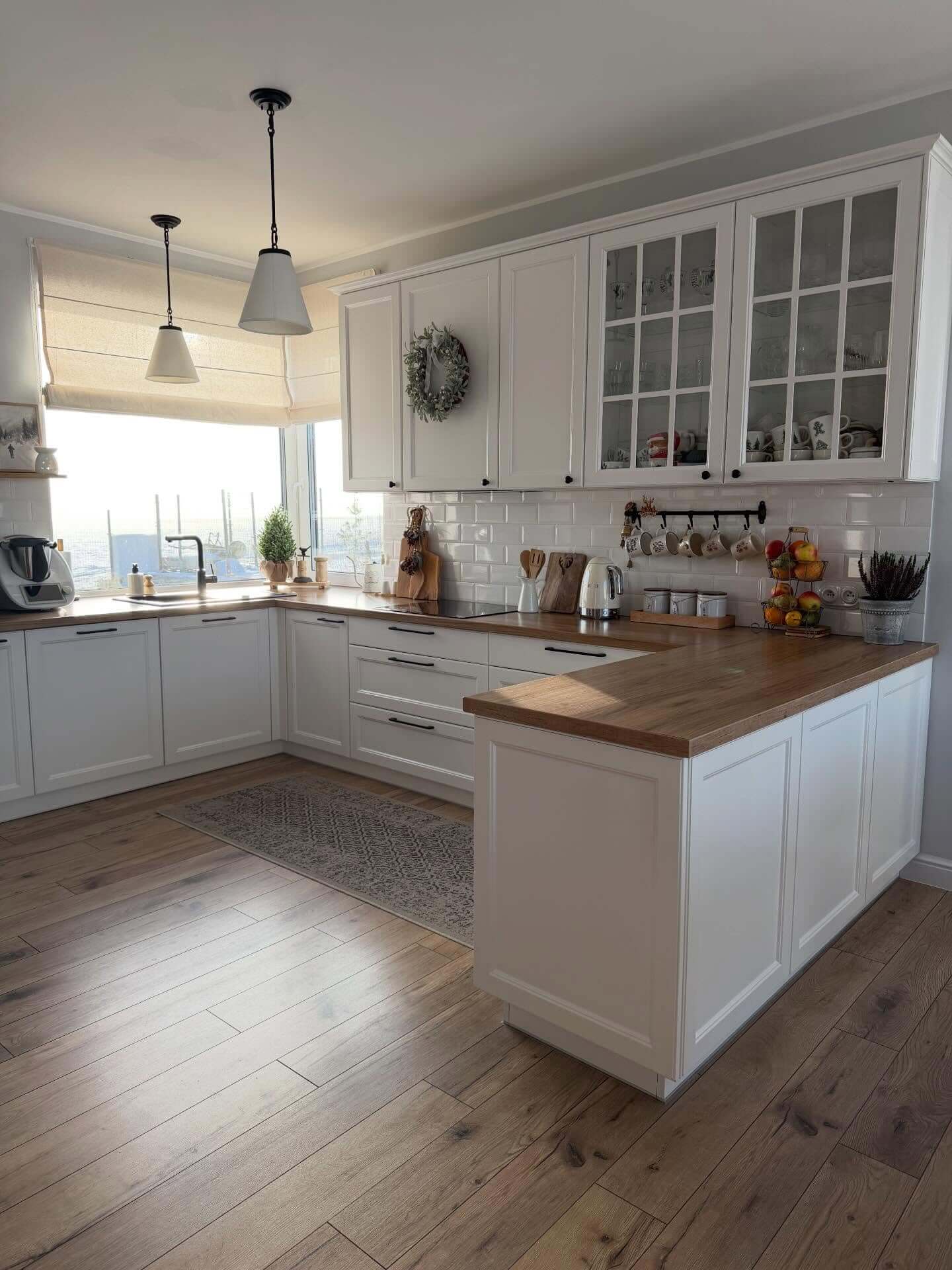
If I had to choose between adding another piece of farmhouse decor and introducing one beautiful wood element, I’d usually choose the wood.
It brings warmth without announcing a decorating style.
That could mean wood stools at the island.
A wood shelf.
A butcher-block section.
Natural cabinetry.
A wood-framed detail.
Or simply allowing existing wood floors to become part of the palette instead of trying to visually fight them.
But I’d avoid introducing several unrelated wood tones at once.
Look around the kitchen and count them.
Flooring.
Stools.
Cutting boards.
Shelving.
Table.
Cabinetry.
If you already have several, another wood finish may not be what the kitchen needs.
You may need to simplify instead.
And if the cabinets are the biggest visual element in the room, that’s where I’d look next.
Don’t Assume Every Cabinet Needs to Be White
Modern farmhouse cabinetry has more possibilities than white.
Mushroom can work.
Putty.
Muted taupe.
Soft green.
Natural wood.
Even a restrained combination of painted and wood cabinetry can bring warmth without making the kitchen feel overly rustic.
If you’re considering changing the cabinet color, start with the countertop.
Tape large samples directly beneath it.
Then compare them with the backsplash and flooring.
Which color makes the entire combination look better?
If you love a deeper shade but worry it will overwhelm a small kitchen, you don’t necessarily need to use it everywhere.
The island could carry it.
Lower cabinets could provide contrast while upper cabinetry stays lighter.
Or natural wood could become the feature while painted cabinetry remains quiet.
Let the cabinetry create the foundation rather than asking decorative objects to create the style.
Keep the Cabinet Style Simple
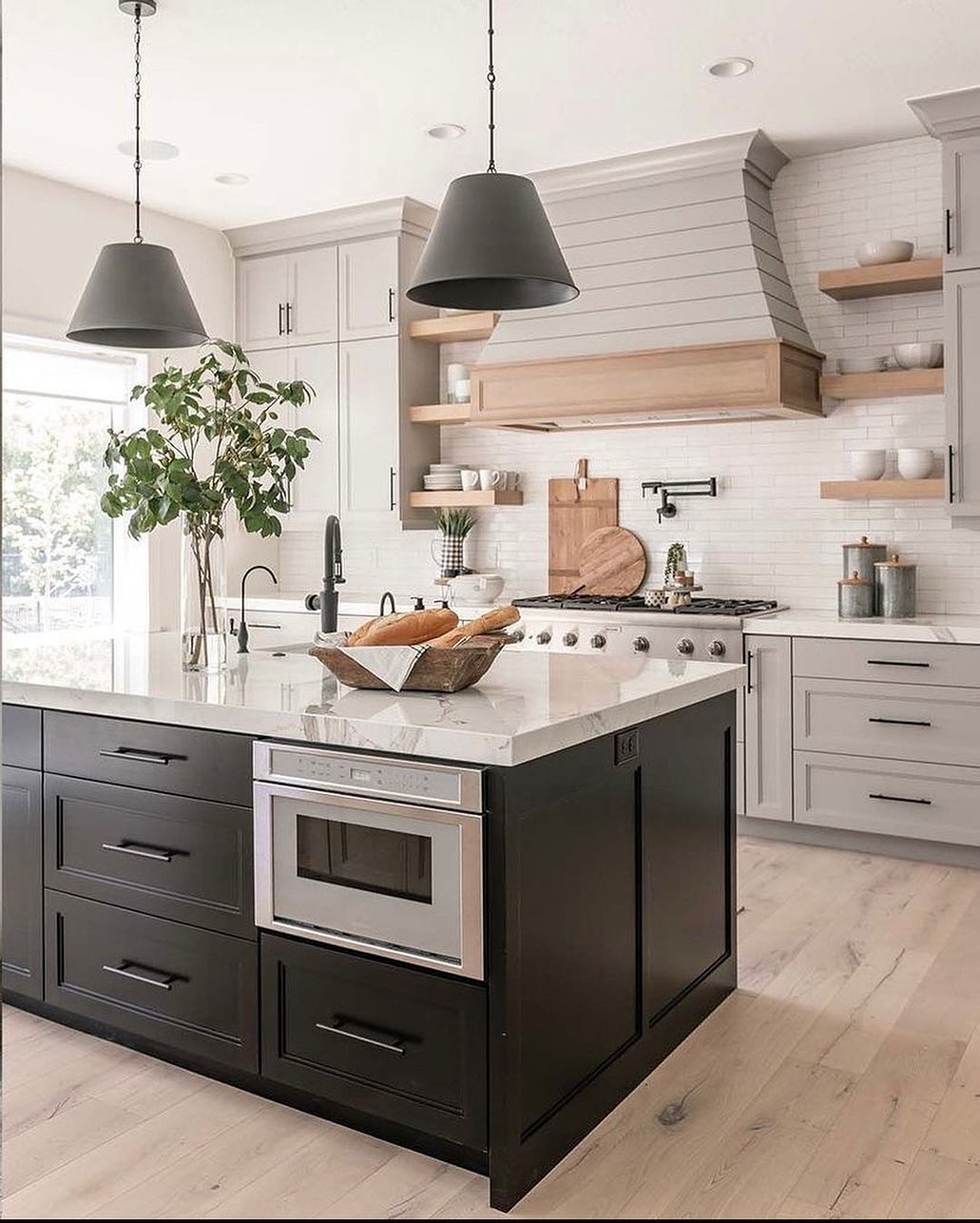
There’s already a lot happening in a kitchen.
Cabinet doors repeat across the room.
Hardware repeats.
Countertops create long horizontal lines.
Then you have appliances, lighting, backsplash, flooring, stools, and everything sitting on the counter.
The cabinetry doesn’t need extra ornament if the materials and proportions are already doing enough.
If you’re choosing new doors or considering modifications, look at the profile from several feet away.
Does it already have plenty of detail?
If yes, let the finish and hardware do the rest.
I like thinking of cabinetry as the background architecture of the kitchen.
It should give everything else somewhere to live.
And once that background is relatively quiet, contrast becomes much easier to control.
Especially black.
Use Black as an Accent, Not the Entire Personality
Black became almost shorthand for modern farmhouse.
Black cabinet pulls.
Black faucet.
Black pendants.
Black window frames.
Black stools.
Black shelf brackets.
Black door hardware.
Used selectively, it can give a light kitchen useful definition.
Used everywhere, it can start looking formulaic.
Stand at the doorway and count the black elements you can see.
If your eye jumps from one black outline to another all the way around the kitchen, ask whether every one needs to be there.
Maybe the dark pendant lights are enough.
Perhaps the window frames already provide strong contrast.
You don’t necessarily need every metal finish repeating the same idea.
And you certainly don’t need the countertop competing with all of it.
Choose Countertops for Your Kitchen, Not the Trend
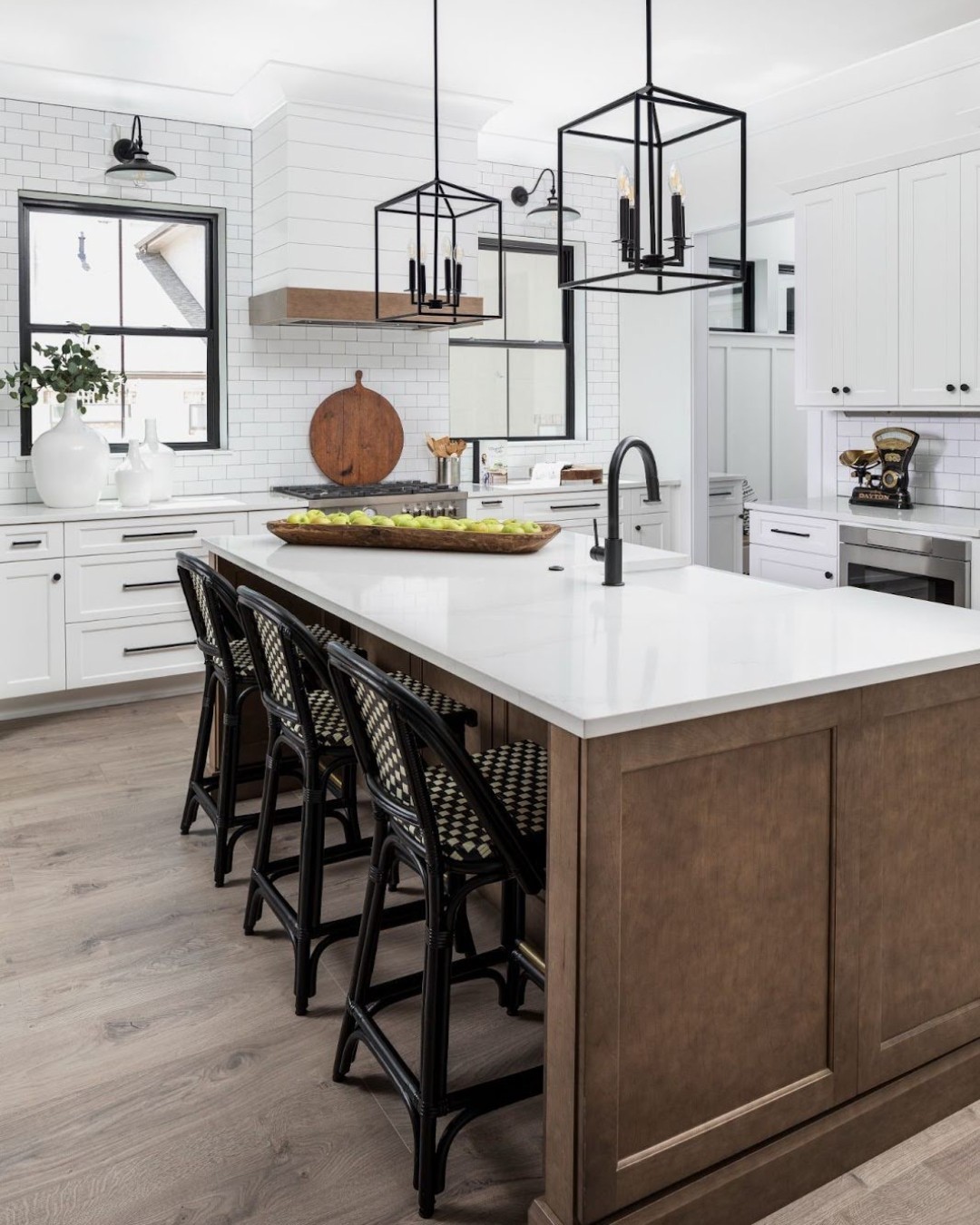
A countertop occupies too much space to choose simply because a particular stone is popular.
First decide what role you want it to play.
Should it be the star?
Or should it support something else?
If you’re choosing dramatic stone with strong veining, quieter cabinetry and backsplash choices can give it room to breathe.
If the countertop is relatively simple, the cabinetry may be able to carry more color or character.
Put your samples together.
Cabinet.
Countertop.
Backsplash.
Don’t evaluate each one separately.
If all three are trying to lead, pull one back.
You rarely need three statement surfaces in the same kitchen.
That’s why I’d often let the backsplash quiet the room down when everything else is already doing plenty.
Let the Backsplash Quiet the Room Down
The backsplash doesn’t have to become the kitchen’s focal point.
Sometimes its best job is connecting the cabinetry and countertop without demanding much attention.
If your countertop has movement, try something calmer behind it.
If the cabinetry has a stronger color, give it a backsplash that doesn’t compete.
And if you’re keeping the existing backsplash, look at the grout and undertones before deciding it’s the problem.
A familiar material can look completely different once the surrounding finishes change.
Which brings us to subway tile.
Don’t Treat Subway Tile as Automatically Dated
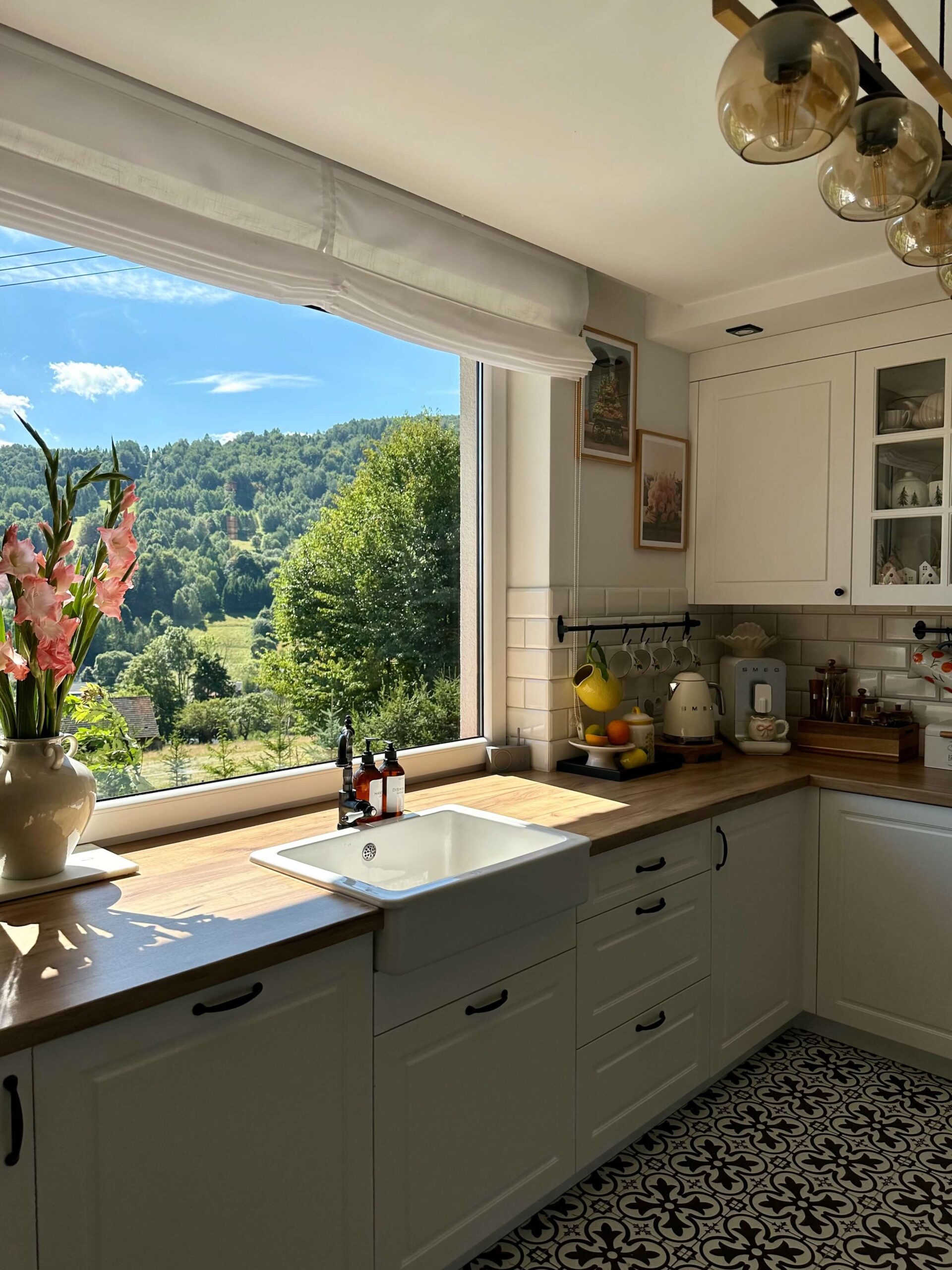
A familiar material isn’t automatically a dated material.
Context changes everything.
Think about tile size.
Finish.
Layout.
Grout.
Surrounding cabinet color.
Countertop.
Lighting.
Traditional white subway tile with strong dark grout creates a very different look from a quieter installation with lower grout contrast.
So if you already have subway tile, I wouldn’t tear it out simply because you’re worried it’s too farmhouse.
Maybe the tile isn’t what dates the kitchen.
Maybe it’s the combination of subway tile, distressed stools, black lantern pendants, word signs, and several other farmhouse signals appearing simultaneously.
Remove one layer and the familiar tile may suddenly feel much more neutral.
The same principle applies to metal finishes.
Mix Metals Instead of Matching Everything
Your faucet doesn’t necessarily need to match the cabinet hardware.
And your pendant lights don’t necessarily need to match either one.
The Spruce shares interior designer Jojo Barr’s advice in its guide to avoiding dated kitchen finishes: “Don’t be afraid to mix metals. Matching your finishes will create a monochromatic and dated look. Mixing them up adds interest and character.”
I’d still give the mix some structure.
Choose one dominant finish.
Then introduce a second where it makes sense.
Maybe most of the cabinet hardware is warm metal while dark lighting provides contrast.
Or perhaps the faucet and hardware relate while another finish appears through stools or lighting.
You may discover the kitchen already has a good mix.
Or you may notice that one finish is repeated so heavily that changing just the lighting would make the room feel completely different.
And lighting is one place where a farmhouse kitchen can date itself quickly.
Make the Lighting Less “Farmhouse”
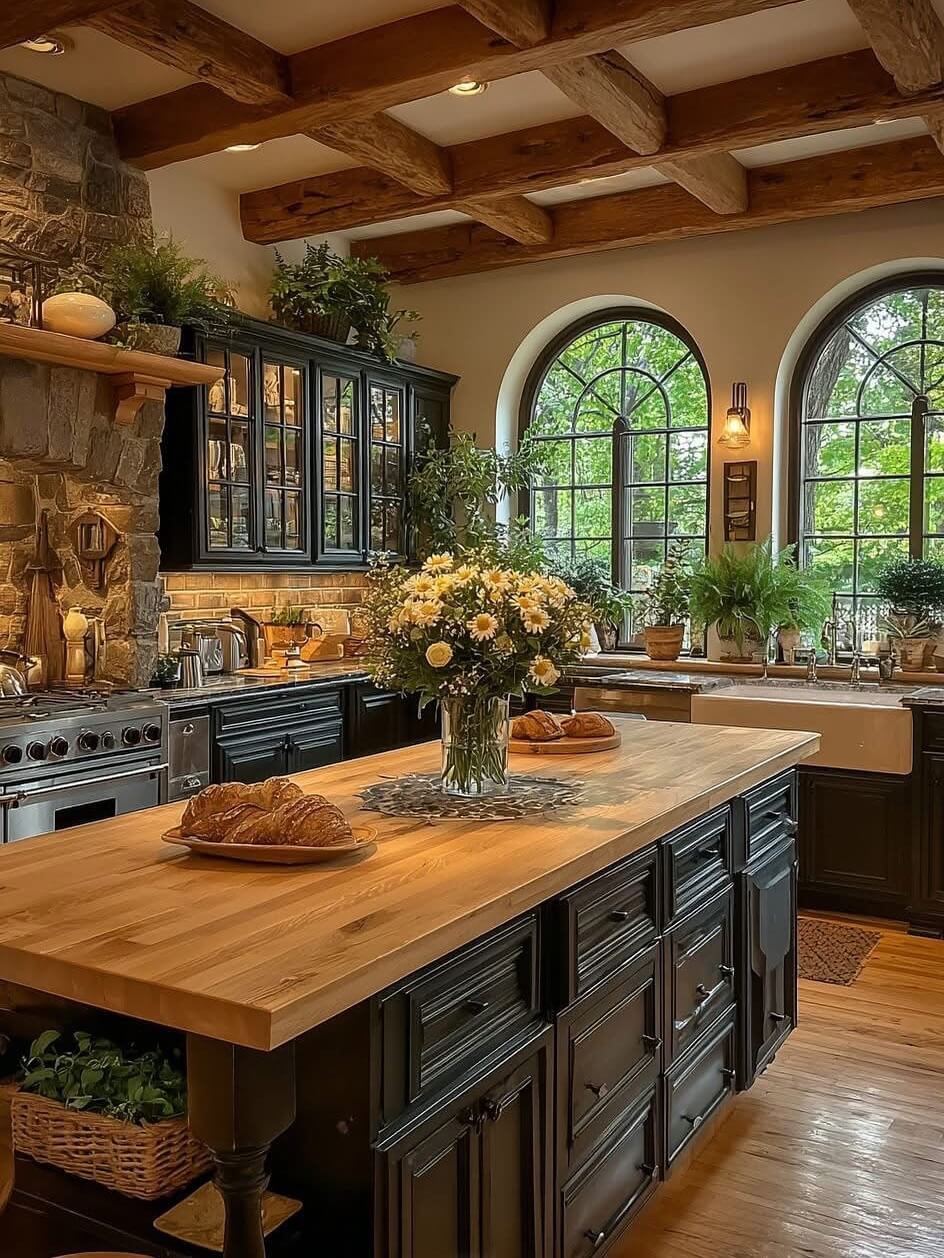
Lighting doesn’t need to tell people what style the kitchen is.
It needs to light the room well and look good while doing it.
If you already have rustic cabinetry, wood floors, and an apron-front sink, adding oversized farmhouse lanterns may be one signal too many.
Try something simpler.
Clean-lined pendants can give rustic materials some contrast.
A softer shape can balance cabinetry filled with straight lines.
Before ordering anything, test the scale.
Use cardboard or paper to approximate the dimensions of the pendant.
A fixture that looked enormous on the product page may suddenly look tiny over a large island.
Also consider the sightline.
Can you comfortably see across the island?
Does the fixture visually overwhelm the room?
Good lighting should strengthen the architecture rather than becoming another farmhouse prop.
The same restraint applies to open shelving.
Don’t Automatically Add Open Shelving
Open shelves look wonderful when they make sense.
But they’re not a requirement for modern farmhouse style.
Ask what you’re giving up.
If removing upper cabinetry means losing storage you genuinely need, think carefully before doing it purely for appearance.
Especially in a small kitchen.
One short shelf may give you the warmth you’re after without sacrificing an entire wall of closed storage.
And if you already have open shelving, use it like real storage.
Put everyday dishes there.
Glasses you actually reach for.
A bowl you actually use.
Don’t fill every inch with objects purchased specifically to decorate the shelf.
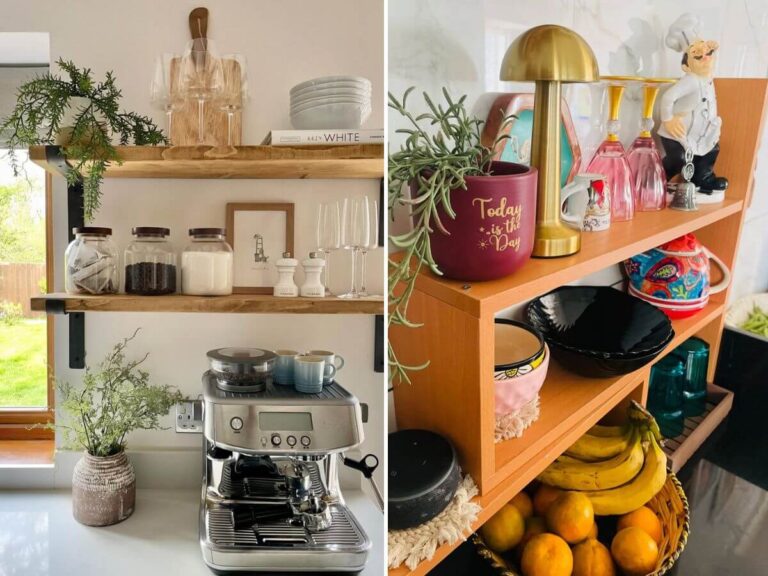
Style Open Shelves Like Storage
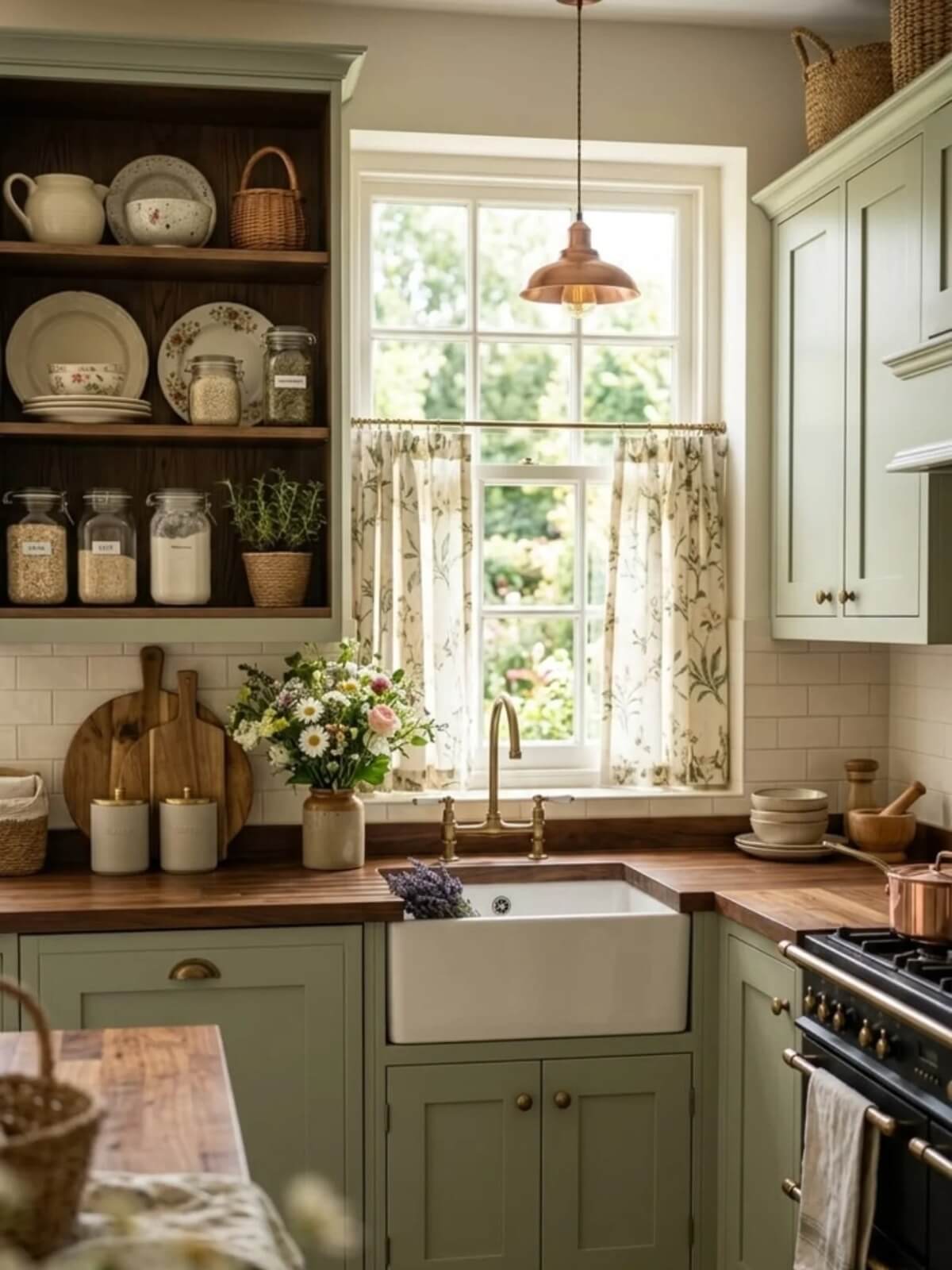
Take everything off one shelf.
Then return the items you genuinely use.
Maybe you have a stack of bowls.
A few glasses.
One ceramic pitcher.
A cutting board.
Now stop.
You don’t necessarily need to fill the remaining space.
If the shelf still feels unfinished, repeat a material or color that’s already in the kitchen rather than introducing something new.
Often the shelf doesn’t need better styling.
It simply needs fewer things.
Which brings me to something I’d remove from many farmhouse kitchens before adding anything else.
Skip the Farmhouse Signs
You don’t need a sign telling people they’re standing in a kitchen.
And you don’t need “FARMHOUSE” written across the wall to create farmhouse warmth.
I’d rather use objects that belong naturally in the room.
A ceramic bowl.
A beautiful cutting board.
A useful basket.
Linen towels.
Pottery.
Cookware.
A small piece of art you genuinely like.
These things can bring personality without turning the kitchen into a theme.
Try removing the most obviously farmhouse-specific decorative object.
Did the kitchen lose character?
Or did the materials suddenly become easier to notice?
If the room feels slightly bare afterward, add texture rather than another sign.
Bring in Texture Instead of More Decor
Kitchens contain a lot of hard surfaces.
Stone.
Tile.
Metal.
Glass.
Painted cabinetry.
Stainless steel.
Texture can make those materials feel warmer without adding much visual clutter.
Maybe it’s linen at the window.
Wood stools.
A woven seat.
Ceramic pottery.
A small washable textile.
Natural-looking baskets used where they actually solve a storage problem.
You don’t need all of them.
Look for the coldest part of the kitchen and introduce one softer material there.
The goal is balance, not accumulating every texture associated with farmhouse interiors.
The same restraint makes vintage pieces much more effective.
Use Vintage Pieces Sparingly
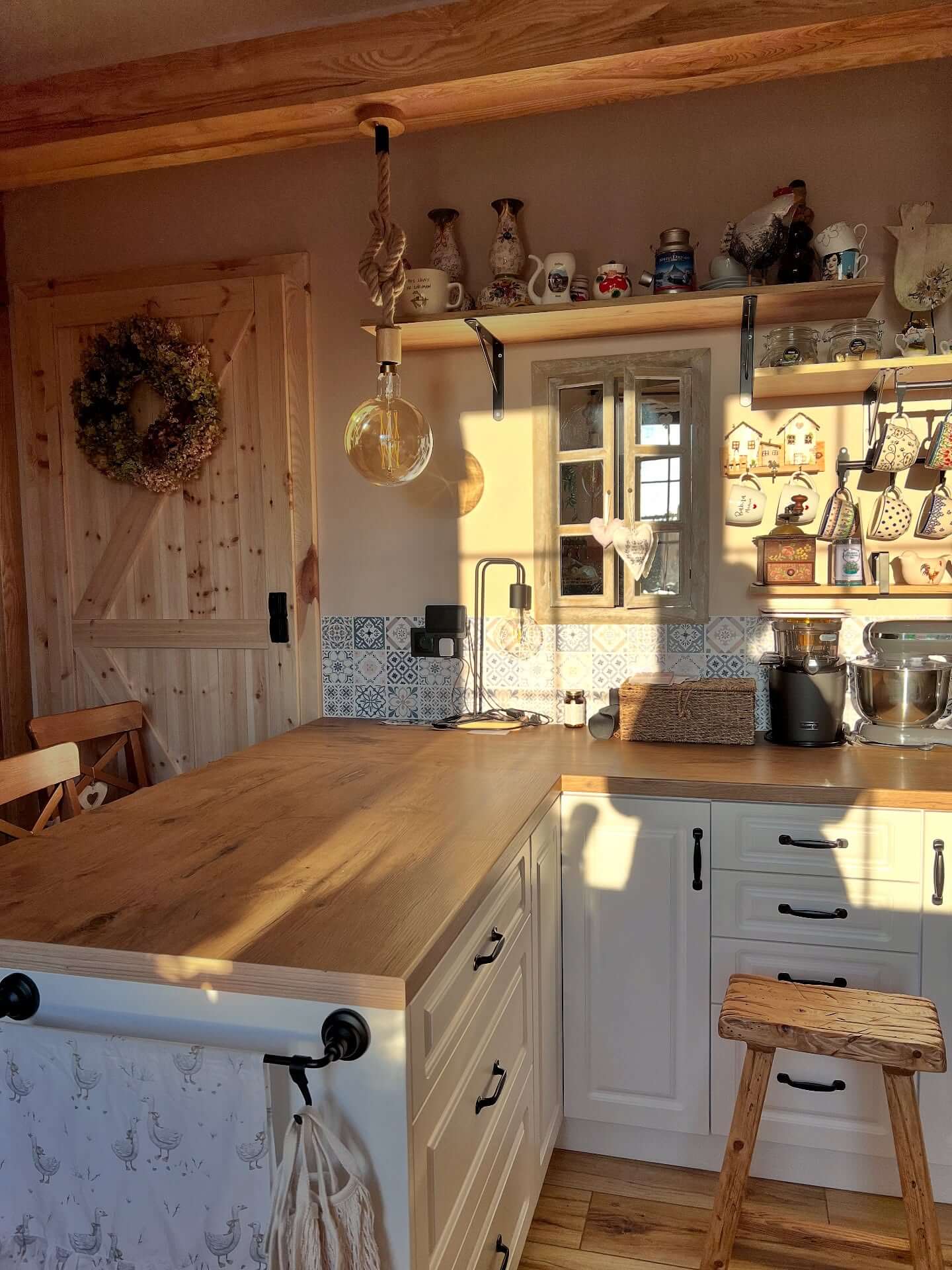
One older piece can bring enormous character to a modern kitchen.
A vintage stool.
A piece of artwork.
A ceramic vessel.
An old wood board used appropriately.
A small furniture piece.
What makes it work is contrast.
The older object becomes interesting because everything around it isn’t pretending to be old too.
Homes & Gardens captures that balance well in its guide to modern farmhouse kitchens. Interior designer Luis Carmona explains, “Blending the two aesthetics is an art that needs to be strategically executed for the look in the space to not appear forced.”
That’s the principle I’d carry through the entire kitchen.
Choose where the age and character should come from.
Then let cleaner elements surround it.
A genuinely old table beside simple cabinetry can be beautiful.
That doesn’t mean the cabinets also need distressing and the lighting needs faux rust.
Sometimes one piece can carry the history for the whole room.
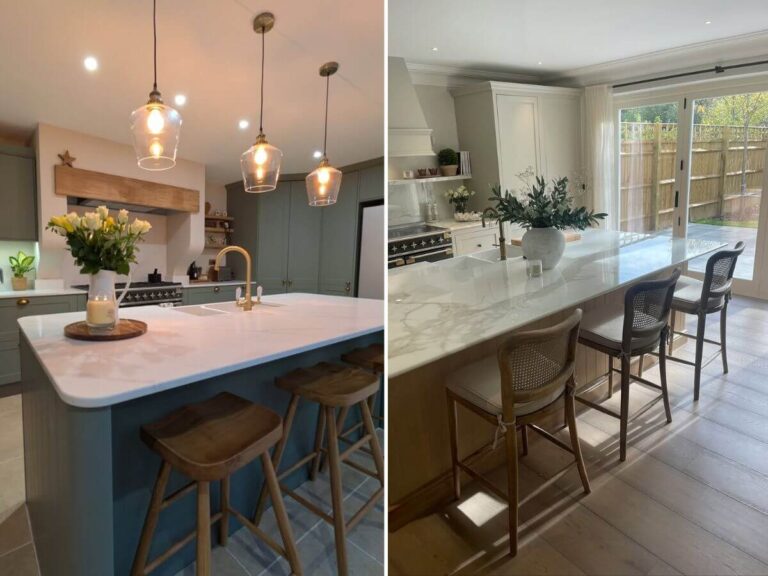
Make the Island Feel Like Furniture
The island is one of the easiest places to introduce character without changing every cabinet.
If the perimeter cabinetry is light, the island might carry a muted green, taupe, or natural wood finish.
If the kitchen already has plenty of color, the island may need to stay quiet.
Ask whether it deserves to become a focal point.
If yes, give it one strong distinction.
Different cabinetry.
Different wood tone.
Interesting stools.
A beautiful countertop.
Not necessarily all four.
If the island already has dramatic stone, you may not need a dramatic cabinet color underneath.
Let one thing lead.
That becomes especially important if your kitchen already contains several rustic finishes.
Don’t Overdo Rustic Finishes
Imagine a kitchen with reclaimed-looking beams.
Distressed cabinets.
Weathered stools.
A rustic dining table.
Aged metal lighting.
Exposed brick.
Vintage accessories.
Individually, any of those can work.
Together, they may start feeling like a set.
I like choosing one rustic hero.
Maybe it’s the beams.
If so, let the cabinetry be cleaner.
Maybe it’s a beautiful old table.
Then the lighting can be simpler.
Perhaps you have original brick.
Let that provide the age and texture instead of adding several faux-aged surfaces nearby.
Identify the strongest rustic feature.
Now ask whether the other rustic elements support it or compete with it.
Removing one may make the feature you love look better.
And sometimes the most natural-looking decor is already sitting on your countertop.
Make Everyday Objects Part of the Design
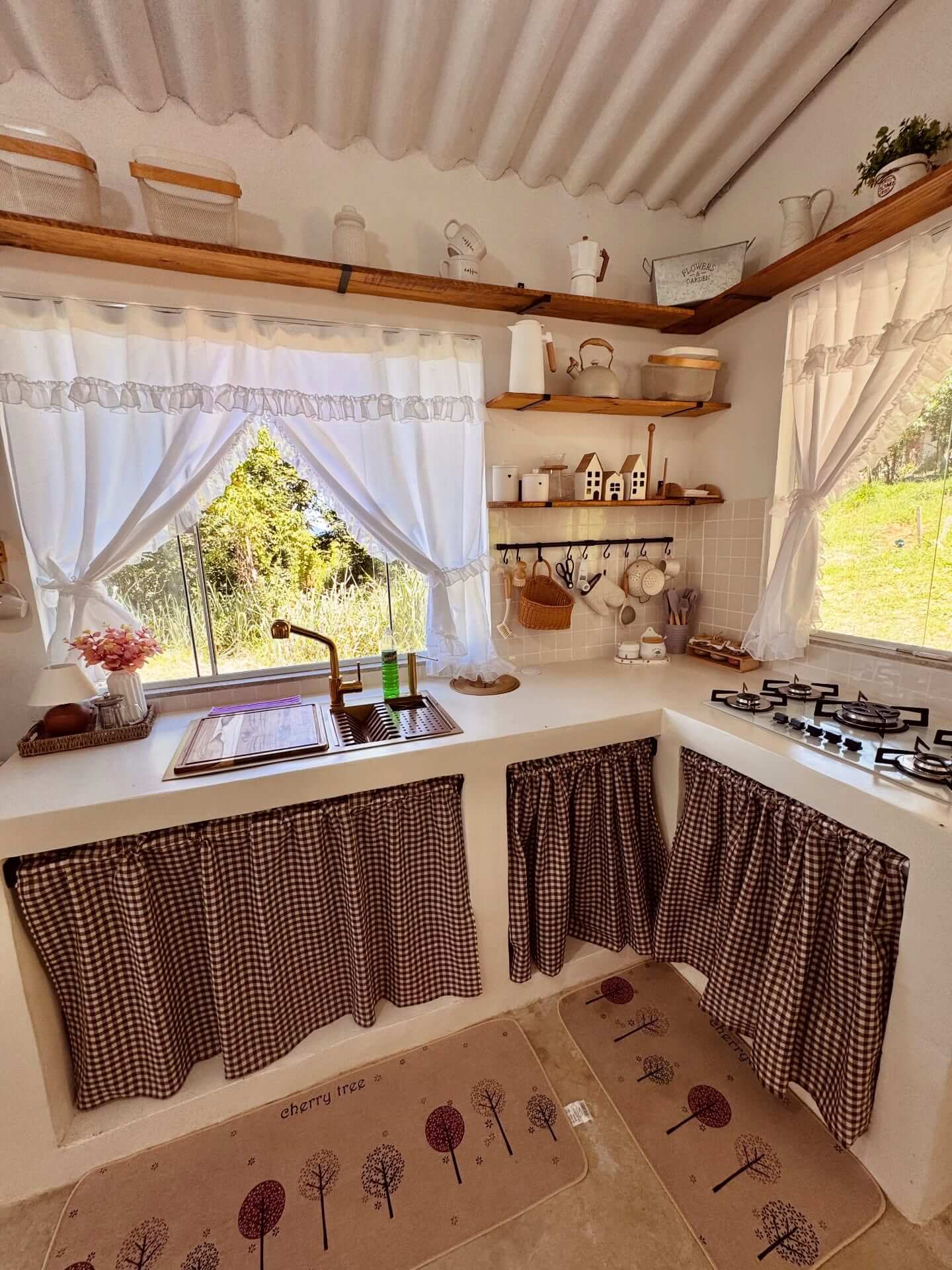
A kitchen has to work.
You’re going to have a coffee maker.
Cutting boards.
Fruit.
Dish towels.
Cooking utensils.
Maybe a toaster that isn’t particularly photogenic but makes breakfast every morning.
Start with those things.
Clear the countertop completely.
Then return only what you actually use regularly.
Group items where possible.
Maybe the cutting boards can stand together.
Perhaps cooking utensils belong in one container.
Fruit can become the color on the countertop instead of another decorative object.
Once the necessities are back, ask whether you really need more decor.
Often, you need much less than you thought.
And this approach can help with another common worry.
Stainless steel appliances.
Warm Up Stainless Steel Instead of Fighting It
You don’t need vintage-looking appliances to create farmhouse warmth.
If your stainless steel refrigerator, range, and dishwasher are staying, work around them.
Look at what’s beside the metal.
Warm cabinetry can soften it.
Wood can bring contrast.
A quieter backsplash can keep the area from becoming overly cold.
Warm textiles or nearby natural materials can help too.
Don’t replace an expensive appliance simply because it doesn’t look farmhouse enough.
The appliance may not be the problem.
The surrounding kitchen may just need more warmth.
This becomes even more important in a small kitchen, where every finish has more visual impact.
Make a Small Modern Farmhouse Kitchen Feel Bigger, Not Busier
A small kitchen doesn’t need miniature versions of every farmhouse feature.
It needs fewer competing ideas.
Keep the palette controlled.
Use wood strategically.
Protect useful closed storage.
Choose lighting that’s appropriately scaled.
Keep the countertop relatively quiet.
And decide which feature deserves attention.
Maybe it’s the cabinet color.
Perhaps it’s a warm wood island.
Maybe it’s one beautiful pendant.
You don’t need all three competing for the same small room.
If the kitchen still feels visually busy, try reducing the number of materials your eye has to process.
Try the Three-Material Test
This isn’t a rigid design rule.
Think of it as a diagnostic.
Identify the three materials or colors doing most of the visual work.
Maybe they’re warm white, oak, and pale stone.
Now look for everything else competing with them.
Strong black hardware.
Patterned tile.
Several metal finishes.
Colorful stools.
Rustic wood accessories.
Patterned rugs.
Some variation is good.
But if you can’t tell what the main story is anymore, simplify one layer.
You want enough variation to feel collected without every finish demanding equal attention.
That leads to one of the most useful questions for modern farmhouse style.
Decide What Should Look Old and What Should Look New
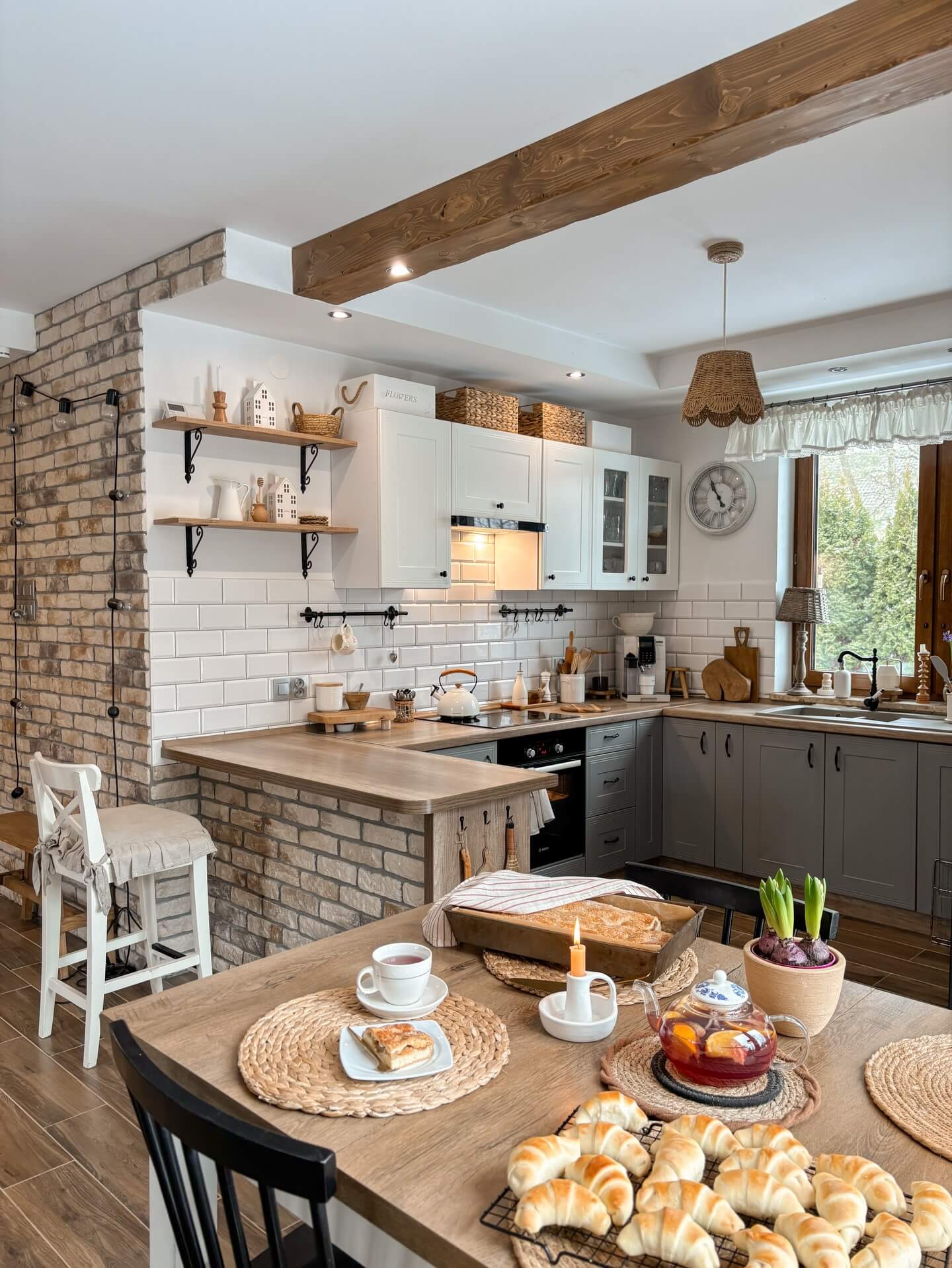
Modern farmhouse works because there’s tension between the two.
Take away everything old or natural-looking and the kitchen can become too polished.
Make everything look old and the room can become theatrical.
So choose where each side shows up.
Maybe an antique table provides age while the cabinetry stays simple.
Perhaps original wood beams bring history while the pendants feel contemporary.
Maybe natural wood cabinetry creates warmth while the backsplash and countertops remain clean and restrained.
You don’t need every object to feel both modern and farmhouse.
Let some elements provide character.
Let others provide clarity.
The contrast is often what makes the room interesting.
Do the “Remove One Farmhouse Thing” Test
Before adding another farmhouse feature, remove one.
Choose the most obvious.
Maybe it’s a sign.
A distressed accessory.
A decorative cutting board collection.
A faux-vintage container.
Take a photo before.
Remove it.
Look again.
Does the kitchen still feel warm?
Does the wood stand out more?
Can you suddenly appreciate the countertop?
Does the room feel less themed?
If yes, leave it out for a few days.
You may discover that the kitchen needed editing more than decorating.
Then do one final test from where you naturally experience the room.
Do the Doorway Test Before Buying Anything Else
Return to the primary kitchen entrance.
Look at the whole room.
Where does your eye go first?
Is that where you want it to go?
Now count the things asking for attention.
Strong cabinet color.
Dramatic stone.
Patterned backsplash.
Statement lighting.
Contrasting island.
Open shelves.
Decor.
You don’t need all of them to lead.
Pick the star.
Let the rest support it.
If the kitchen feels warmer, calmer, and more connected than it did before, resist the urge to keep shopping.
You may already be finished.
The Best Modern Farmhouse Kitchens Don’t Look Themed
You don’t need every recognizable farmhouse feature to create a modern farmhouse kitchen.
Start with the kitchen you actually have.
Keep the expensive surfaces you’re not changing at the center of your decisions.
Bring in warmth through wood, softer color, and texture.
Keep the cabinetry relatively simple.
Use black and other strong contrasts selectively.
Let one older or rustic feature provide character.
Give the modern side enough room to show up too.
And don’t underestimate what removing one unnecessary element can do.
The goal isn’t a kitchen that makes you immediately think, That’s farmhouse.
It’s one that feels warm, comfortable, collected, and like it can still belong in your home years from now.
Also read: