Small Flower Arrangements That Make Any Room Look Expensive
I’ve seen beautiful bunches of flowers lose half their charm the moment they’re dropped into the wrong vase.
The flowers aren’t necessarily the problem.
Sometimes the vase is too large, so the stems spread awkwardly. Sometimes every flower has been cut to exactly the same height. Other times, there are so many blooms packed together that you barely notice the individual flowers.
That’s why I don’t think an expensive-looking flower arrangement starts with buying expensive flowers.
It starts with making the flowers you have look intentional.
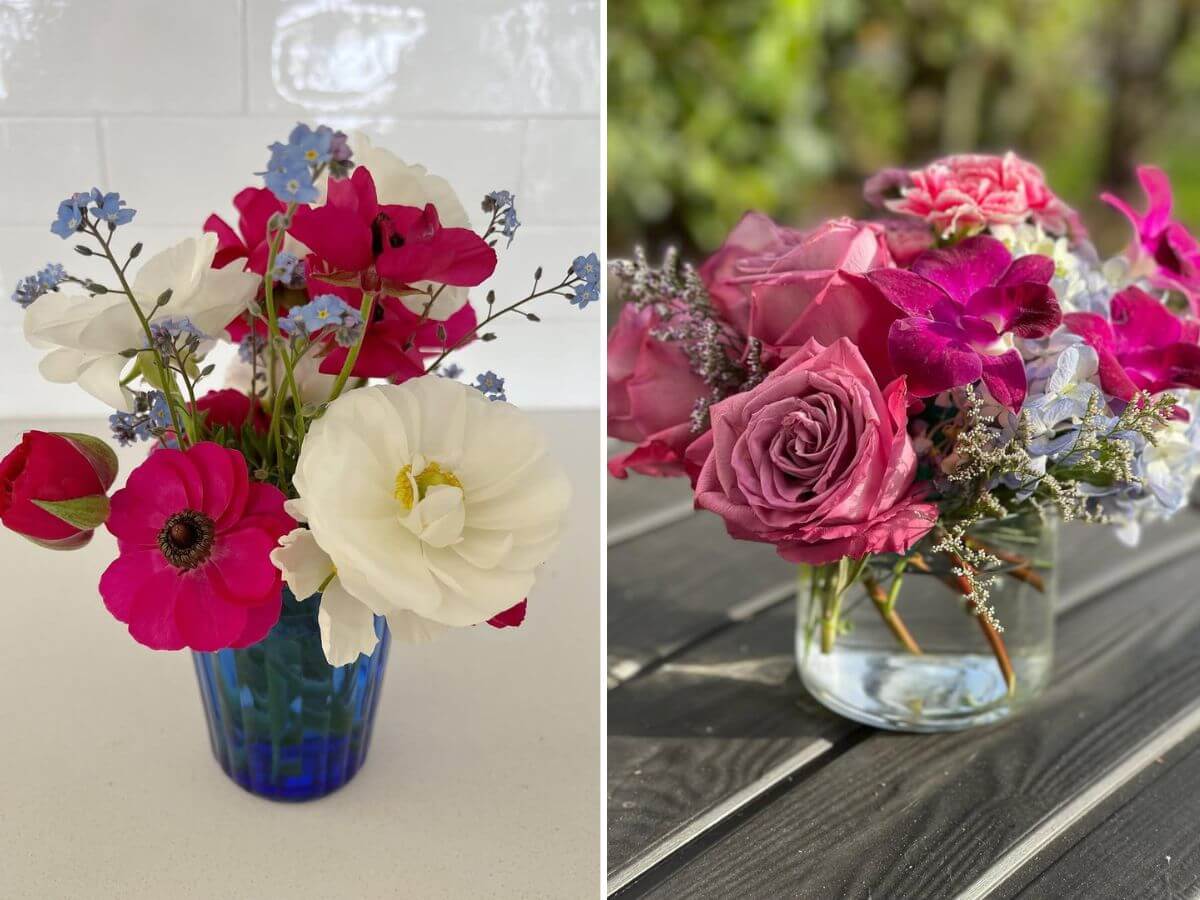
A small bunch from the grocery store can go surprisingly far when you choose the right container, pay attention to proportion, give individual blooms some space, and stop adding stems before the arrangement becomes crowded.
You may even discover that one bouquet looks better divided between several little vases around your home.
Before buying flowers, though, I’d start somewhere unexpected.
Open your kitchen cabinets.
Start With the Vase Before You Choose the Flowers
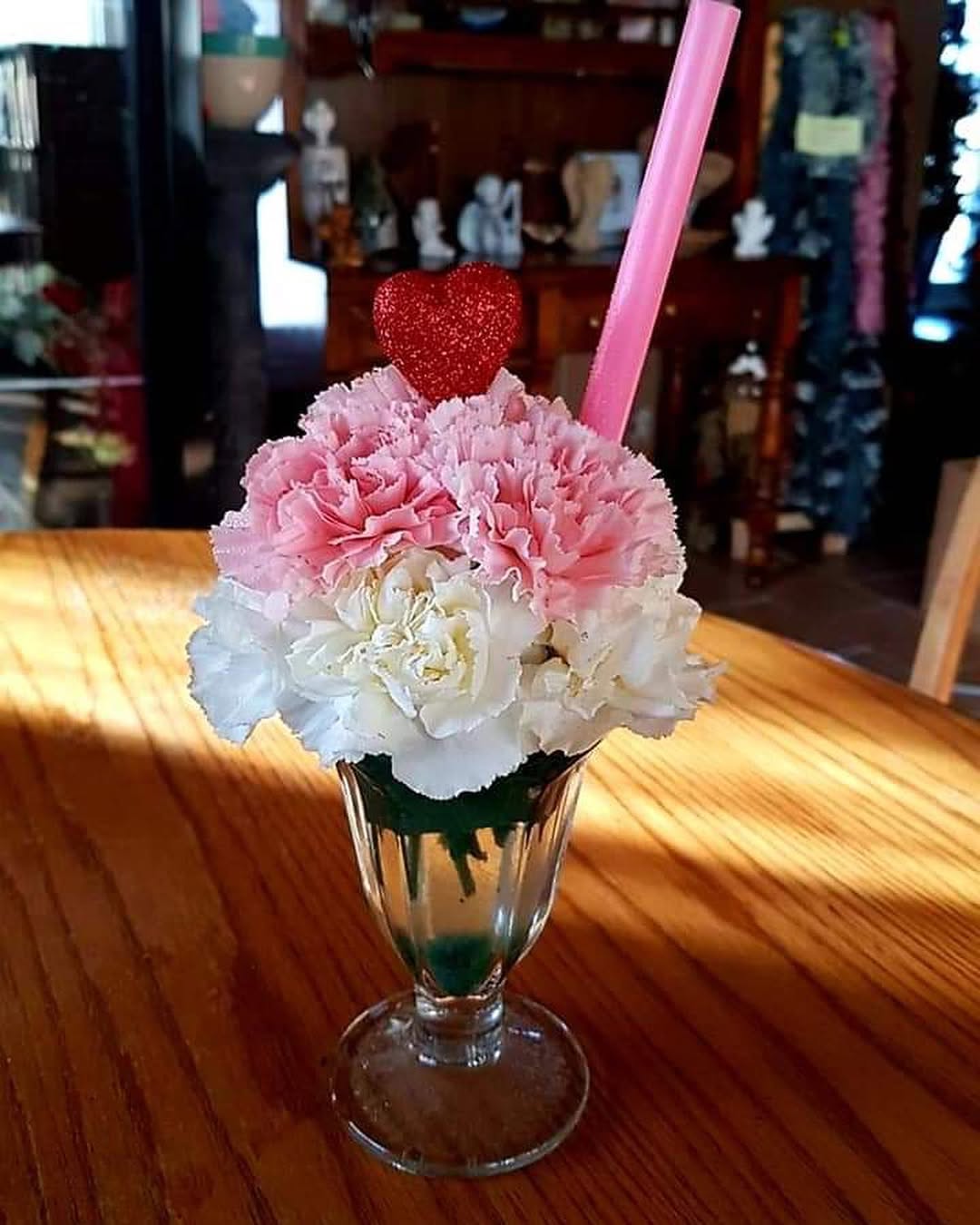
You don’t need a shelf filled with flower vases.
Look around your home first.
A small pitcher might work. So could a ceramic cup, narrow glass jar, little bottle, creamer, or another watertight container you already own.
What matters most at this stage is the opening.
If you’re working with only a handful of flowers, a huge opening makes arranging them harder. The stems naturally fall outward, and you may find yourself buying more flowers just to make the vase look full.
A narrower opening does some of that work for you.
Try this before your next flower run.
Gather three small containers from around your home and put them side by side.
Look at the opening of each one.
Then imagine five stems inside.
Which container would hold those stems together naturally?
That’s probably a better starting point than the largest vase you own.
I especially like this approach for bedside tables, bathroom counters, desks, and small dining tables because the flowers don’t have to dominate the surface to make a difference.
Once you’ve chosen the container, there’s another relationship worth checking before you make the first cut.
Get the Flower-to-Vase Proportion Right
A tiny vase with extremely tall flowers can look top-heavy.
Cut those same flowers too short and they may appear to be sinking into the container.
You want enough height for the flowers to have presence without making the vase look as though it’s struggling to hold them.
Homes & Gardens offers a useful starting point in its guide to choosing the right vase for cut flowers, explaining, “As a general rule, your flowers should be between one and a half to two times taller than the height of your chosen vase or container.”
I’d treat that as a starting point rather than a reason to make every stem identical.
Before cutting anything, hold the flowers beside the vase.
Step back.
Look at the overall height.
Then cut gradually.
You can always shorten a stem again. You can’t put those extra three inches back once they’re gone.
I like to begin slightly taller than I think I’ll need and adjust as the arrangement develops.
Once the overall scale feels right, individual flowers can move up or down within that shape.
But before you start building it, give every stem a little attention.
Prep Every Stem Before You Start Arranging
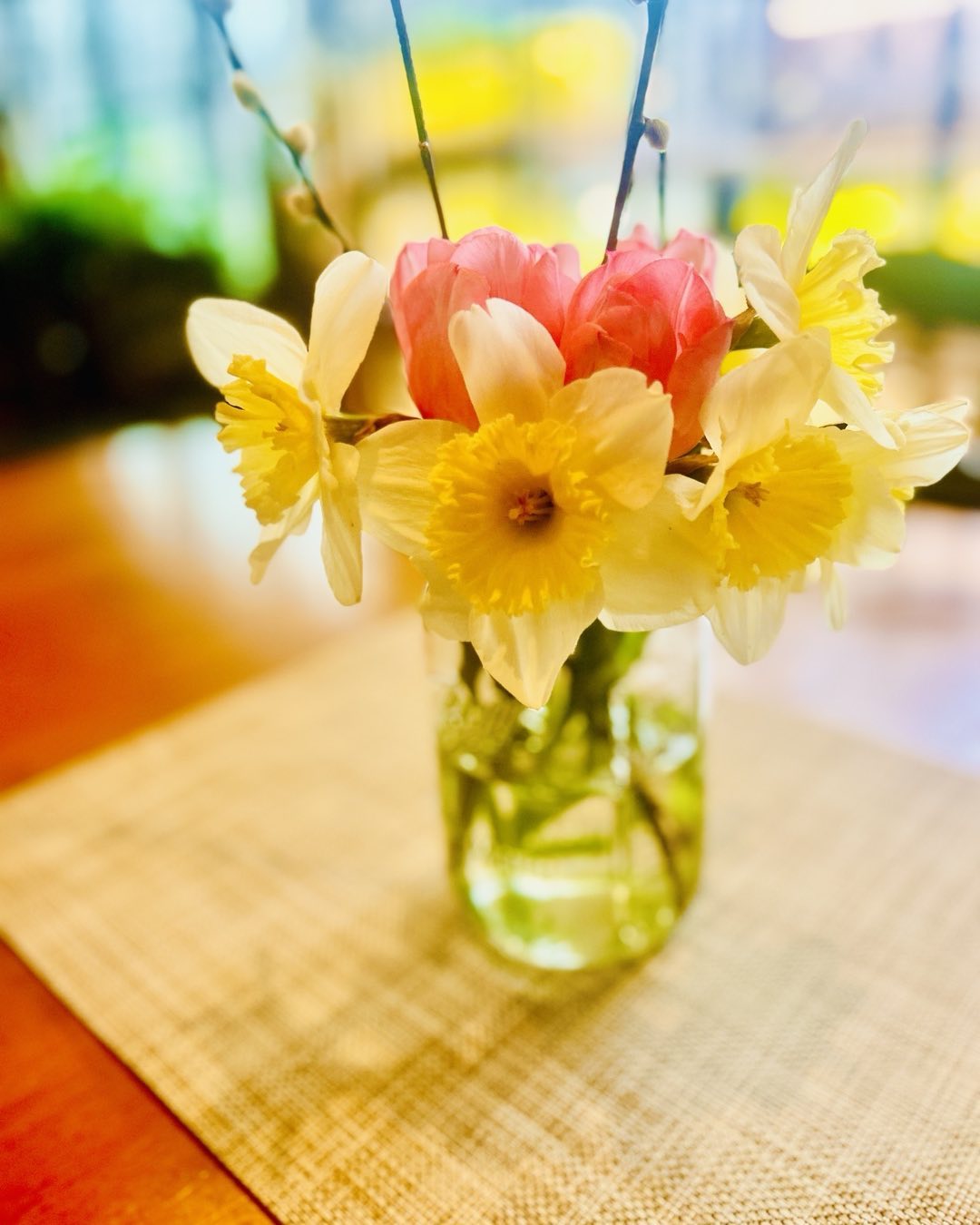
It’s tempting to unwrap a bouquet and immediately start dropping flowers into water.
Give yourself a few minutes first.
Spread the flowers across the counter.
Remove anything damaged or obviously past its best.
Look at the leaves along each stem and remove foliage that would otherwise sit beneath the waterline.
Then give the stems fresh cuts as needed before arranging them.
I also find it useful to sort the bouquet loosely before doing anything creative.
Put the larger, more noticeable flowers together.
Group the smaller blooms.
Set the greenery aside.
Now you can actually see what you bought.
A mixed bouquet that looked like one mass of flowers inside its wrapper suddenly becomes a little collection of ingredients.
And you don’t have to use all of them in the same vase.
That’s where small arrangements become much more interesting.
Use Fewer Flowers but Make Every Stem Count
More flowers don’t automatically create a more expensive-looking arrangement.
Sometimes they do the opposite.
If every inch is packed with petals, your eye doesn’t know where to look.
Try pulling out the three flowers you like most.
Maybe they’re the largest blooms.
Maybe one has opened beautifully.
Perhaps you simply love the color.
Those are your starting flowers.
Put them in the vase first.
Turn the container.
Look at the gaps.
Now add another stem only where the arrangement actually needs one.
One flower may provide height.
Another may sit lower near the rim.
A third may become the bloom your eye notices first.
That approach also makes it much easier to stretch one bouquet across more than one room.
Break One Grocery-Store Bouquet Into Several Arrangements
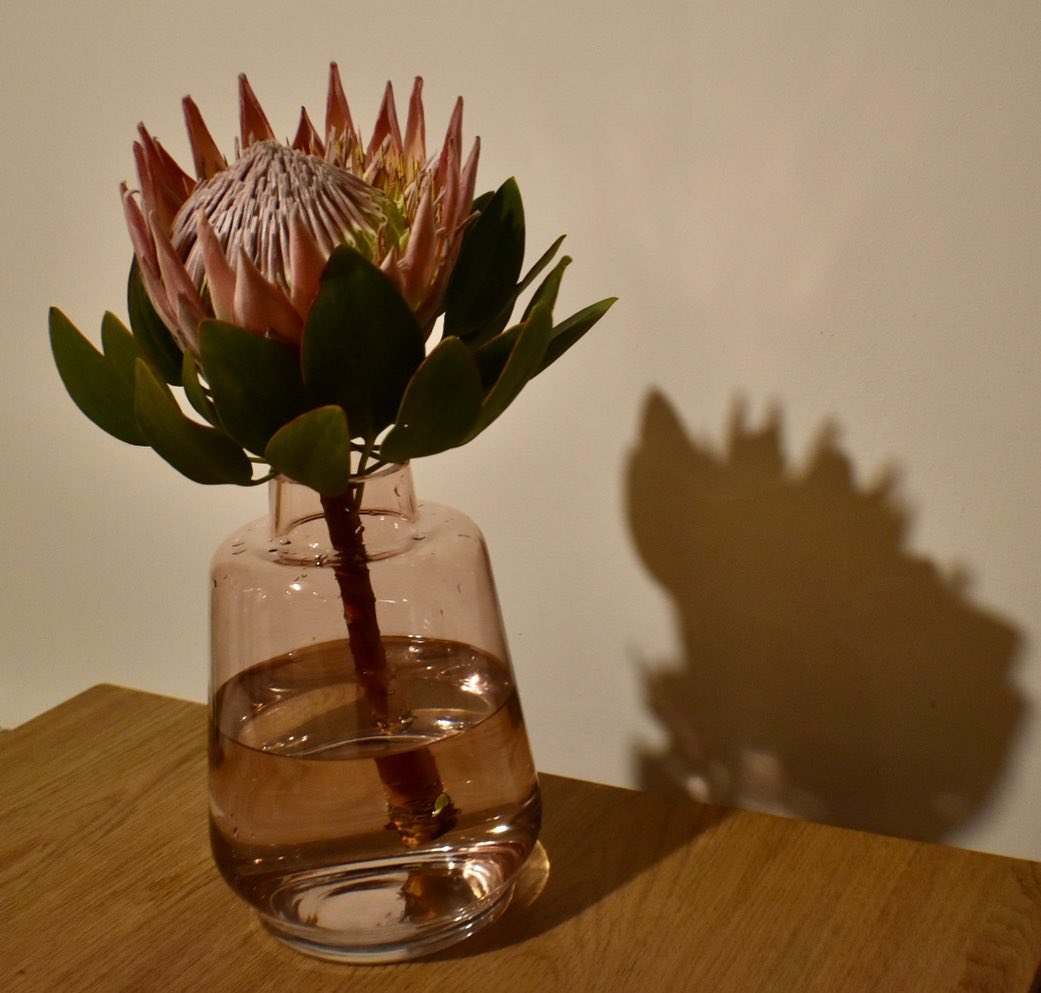
Don’t automatically treat the bouquet as one finished arrangement.
Unwrap it and divide it.
Pull out the strongest flowers for your main vase.
Then look at what’s left.
Two smaller blooms and a little greenery might be enough for the bathroom.
One beautiful flower can sit beside the bed.
Three short stems could go into a little container on your desk.
Suddenly, the same bouquet is creating small moments in several rooms.
It can also make your home feel more connected.
If the same soft pink flower appears in the living room and again beside the bed, there’s a subtle repetition as you move through the house.
You don’t need identical arrangements.
Let the largest one have more presence, then use the leftovers more casually elsewhere.
Before dividing everything, though, look at the colors you’ve brought home.
That can help you decide which flowers belong together.
Keep the Color Palette Simple
Mixed bouquets can contain a lot of color.
Pink.
Yellow.
Purple.
White.
Orange.
Several shades of green.
Sometimes that combination is exactly what you want.
But if you’re trying to make a small arrangement feel calmer and more polished, you don’t necessarily need every color in the same vase.
Try separating the bouquet by color.
Put the whites and greens together.
Maybe the pink and burgundy flowers make another group.
A yellow bloom that feels disconnected from both could become its own tiny arrangement.
Now look at the room where the flowers will live.
You don’t need to match the sofa or curtains.
Look for a connection instead.
If the room already has warm cream, wood, and muted green, a softer flower palette may sit naturally within it.
If the room is mostly neutral, one stronger flower color can become the thing that wakes it up.
Put the unfinished arrangement in its intended spot and take a phone photo.
The color that feels strangely loud often becomes much easier to notice on a screen.
You may only need to remove one stem.
And sometimes that one stem was competing with the flower that should have been the star all along.
Let One Flower Be the Star
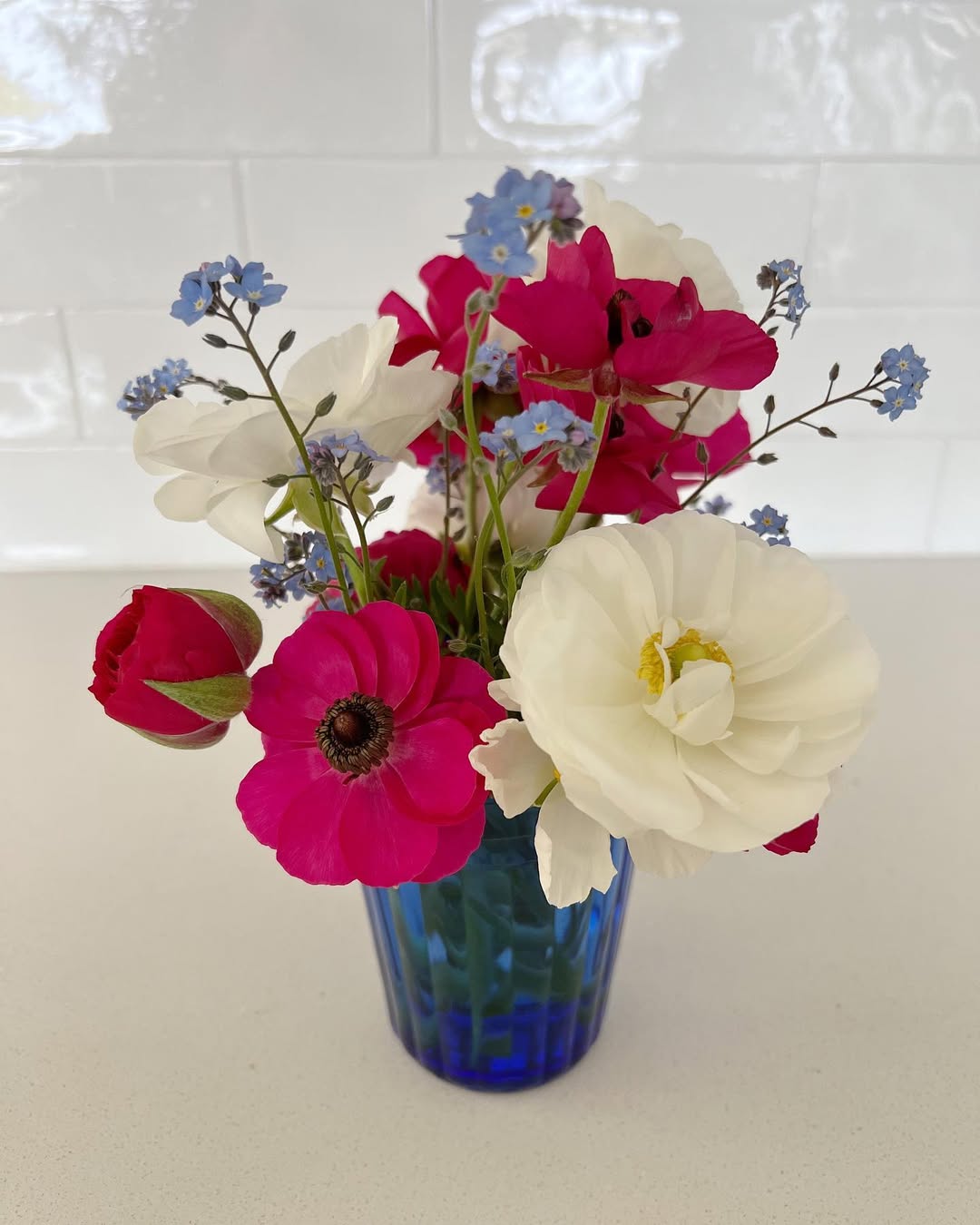
Not every bloom needs equal attention.
Choose one.
It might be the largest flower in the bunch.
It could have the most interesting shape.
Maybe it’s simply the bloom that’s opened most beautifully.
Place that flower first.
Then build around it.
I wouldn’t necessarily put it directly in the middle.
Try moving it slightly to one side.
Add another flower lower down.
Let a smaller bloom sit behind it.
Turn the vase as you work.
You’re looking for balance without making the arrangement perfectly symmetrical.
This works particularly well when you have only a few flowers.
One gorgeous bloom in a small bud vase doesn’t look incomplete just because it’s alone.
It looks deliberate.
And once you’ve chosen what deserves attention, resist the urge to cut everything else to exactly the same level.
Stop Trying to Make Every Stem the Same Height
One easy way to make flowers look stiff is to line up every bloom.
Same height.
Same distance apart.
Same amount of flower showing above the vase.
Instead, create a little movement.
Let one stem rise higher.
Keep another closer to the rim.
Use the flowers between those two heights to connect the arrangement.
You don’t need dramatic differences.
An inch here or there can be enough.
Turn the vase as you work if the arrangement will be seen from several directions.
If it will sit against a wall, pay more attention to the front and sides.
Then step away.
If the arrangement feels heavy on one side, move a stem.
If everything forms one flat line across the top, raise one flower.
If one bloom seems buried, shorten something in front of it.
And if the arrangement still feels messy, remove something before adding more.
Leave Some Breathing Room Between the Flowers
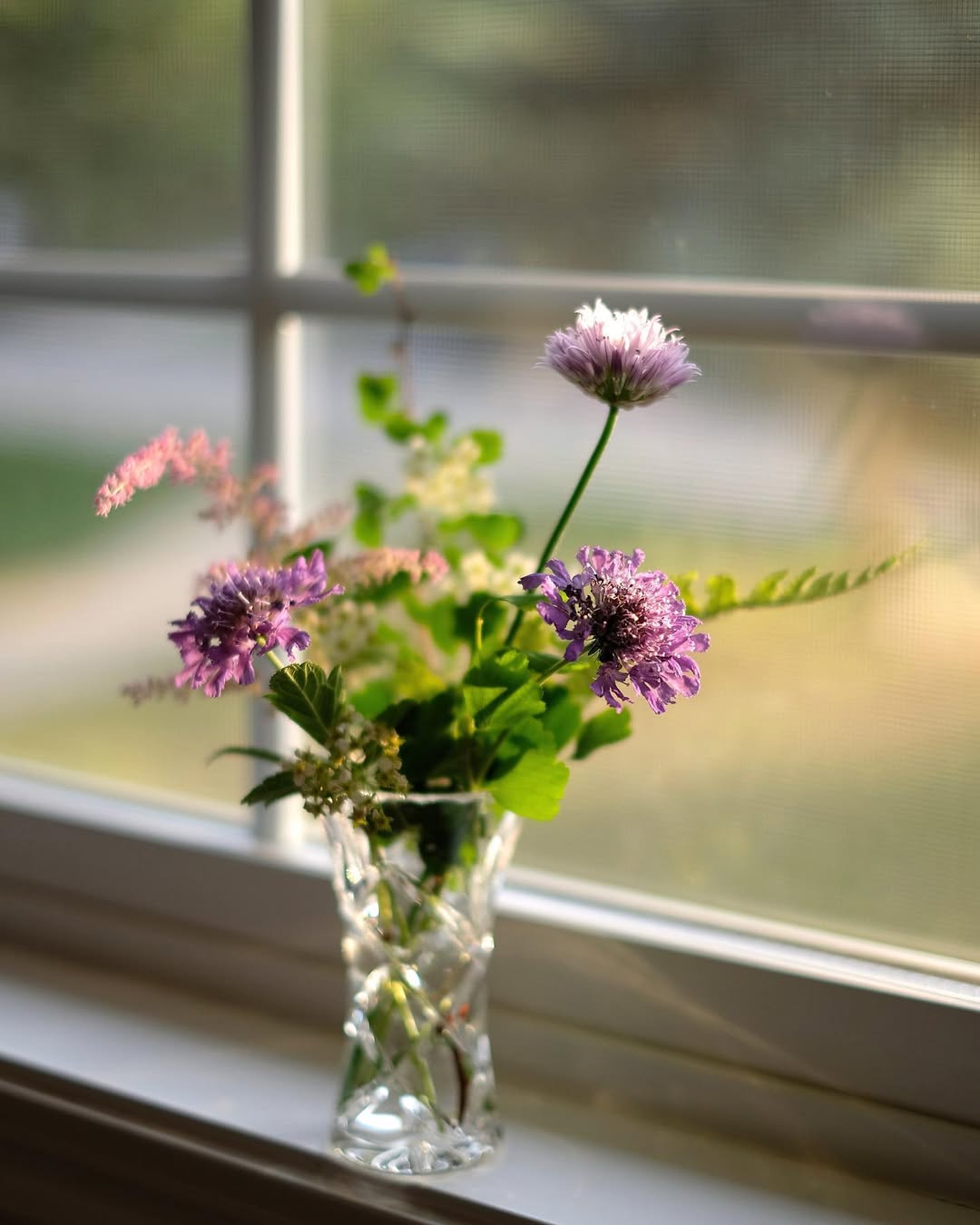
Empty space isn’t always a problem.
Sometimes it’s what allows you to see the flowers.
If five blooms are pressed tightly against each other, they can read as one colorful mass.
Separate them slightly and you start noticing the shape of each flower.
Try this with an arrangement you don’t quite like.
Remove two stems.
Don’t rearrange anything yet.
Just look again.
If the remaining flowers become easier to see, keep those extra stems out and use them somewhere else.
A smaller vase and fewer flowers can often look better than a crowded arrangement.
Greenery can help with shape, but I’d be selective there too.
Use Greenery Strategically, Not Automatically
Mixed bouquets often come with greenery, and it’s easy to assume every leafy stem belongs in the finished arrangement.
It doesn’t.
Set the greenery aside while you arrange the flowers.
Then look at the vase.
Does it need more width?
Does one side feel empty?
Would a little green help separate two similar flowers?
Add one stem and check again.
But greenery can take over a small vase quickly.
If you’re spending more time looking at leaves than flowers, remove some.
And don’t be afraid to make an arrangement without greenery.
A little vase filled with one type of flower can look clean and intentional on its own.
Try the Single-Flower Trick
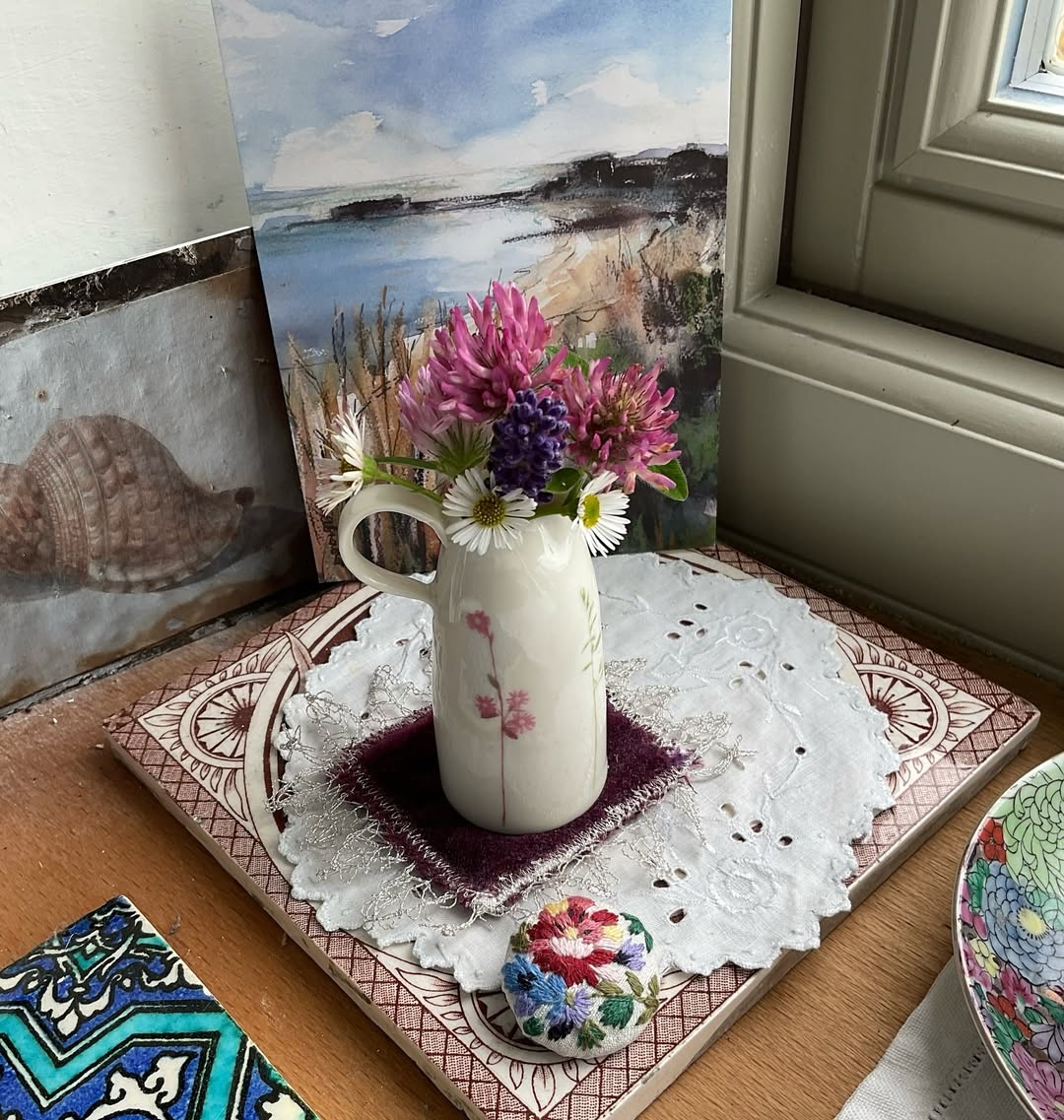
If mixed bouquets feel intimidating, buy one type of flower.
That’s it.
Tulips.
Roses.
Carnations.
Chrysanthemums.
Whatever looks fresh and beautiful when you’re shopping.
Using one variety removes several decisions immediately.
You aren’t trying to decide whether five colors belong together.
You aren’t wondering which filler works with which flower.
You’re working with repetition.
Choose a small vase and start with a few stems.
Vary the height slightly.
Turn the container.
Add more only if the arrangement needs them.
Tulips are especially pretty when you let their stems create a looser, less rigid shape.
Roses give you fuller blooms.
Even an inexpensive bunch of carnations can look completely different when you remove distracting filler and place them in a simple vessel.
If the bunch contains slightly different shades of the same color, even better.
You get variation without visual chaos.
And before deciding that inexpensive flowers need something extra, give them a quick edit.
Make Inexpensive Flowers Look Better Before Buying More
Sometimes the fastest improvement is simply removing what isn’t helping.
Look at the flowers individually.
Is one bloom badly damaged?
Is a filler stem making the arrangement feel busy?
Are there too many leaves around the vase opening?
Is one flower much brighter than everything else?
Take it out.
Now check the vase itself.
A cloudy or water-spotted glass vase can distract from beautiful flowers.
Better Homes & Gardens recommends exactly that in its advice for helping cut roses last longer: “Begin by thoroughly cleaning the vase with soap and water, removing all traces of bacteria from any previous floral arrangements.”
Once the vase is clean, rebuild the arrangement and look at it from across the room.
If the first thing you notice is a damaged petal, awkward gap, or overly dominant piece of greenery, fix that before spending another dollar.
Often, editing is all the arrangement needed.
Use Unexpected Containers for a More Collected Look
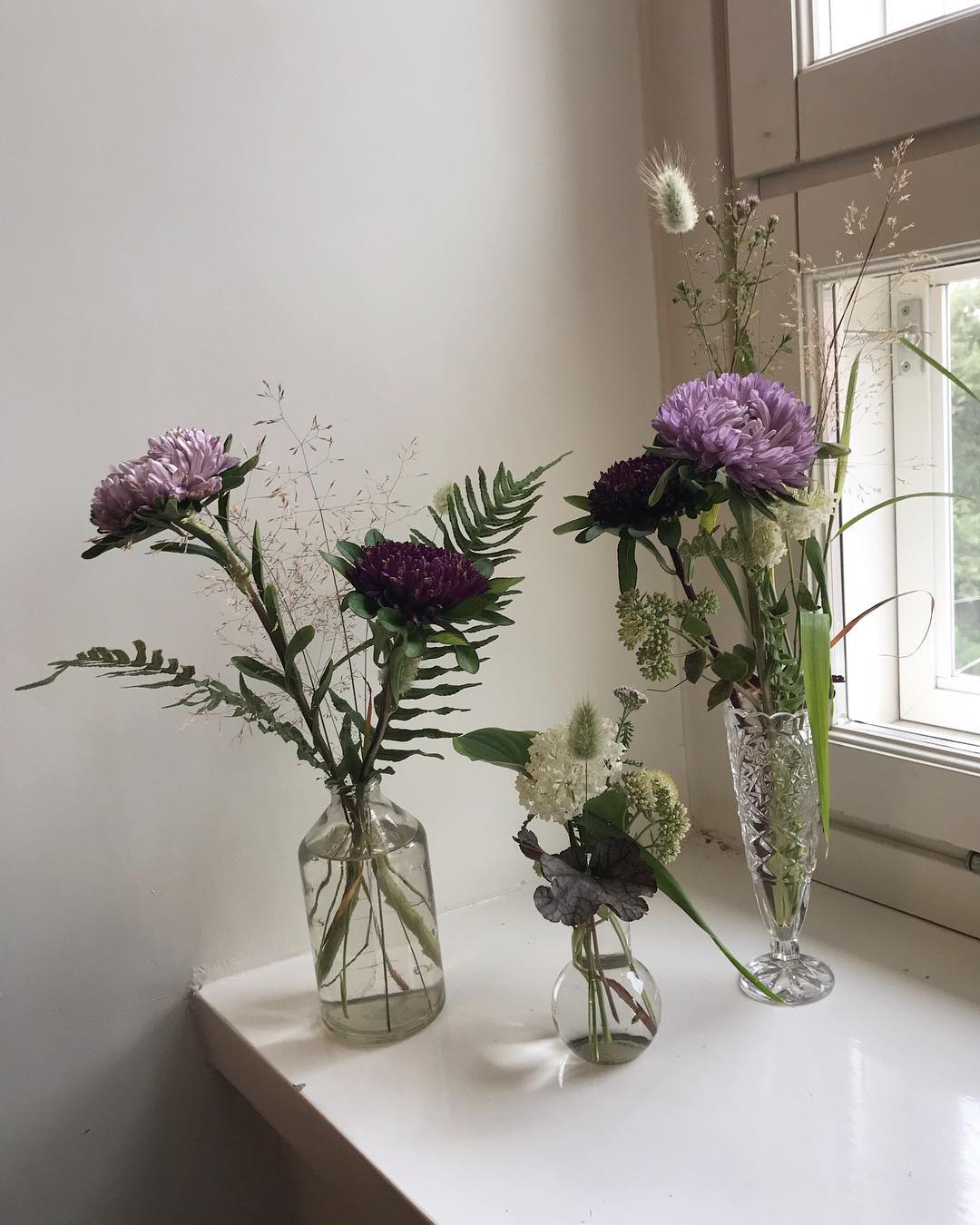
A clear glass vase works.
But it isn’t your only option.
Look through the kitchen.
A little ceramic pitcher can make grocery-store flowers feel completely different.
A creamer can hold a handful of short stems.
A sturdy drinking glass can disappear beneath a cluster of flowers.
A small bottle can hold a single bloom.
A ceramic bowl may work for certain low arrangements when the stems can be supported properly.
I like containers that look as though they could belong in the room even without flowers.
A simple ceramic vessel can work well in a bedroom.
A little pitcher may feel at home on a kitchen table.
A vintage-looking bottle can bring some character to a bookshelf.
Just make sure anything holding water is suitable for the job.
If you love a decorative container that isn’t watertight, place an appropriate waterproof vessel inside rather than risking damage to the furniture beneath it.
Once you’ve found the container, don’t arrange the flowers in isolation.
Put the empty vase where it’s actually going to live.
Match the Arrangement to Where It Will Actually Live
The right arrangement for a dining table isn’t necessarily the right arrangement for a bedside table.
Start with location.
If flowers are going in the middle of a dining table, sit down at the table before arranging them.
Imagine someone sitting across from you.
Will you be looking through flowers every time you talk?
If yes, keep the arrangement lower.
For a bedside table, footprint matters more.
You still need room for whatever you normally keep beside the bed.
A small bud vase can give you flowers without taking over the surface.
Bathroom vanity?
Again, go small.
You shouldn’t have to move the arrangement every time you need the sink.
An entry table can usually handle a little more height because nobody needs to see across it.
On a desk, I’d keep the arrangement compact and away from the area where your hands actually work.
This is where tiny arrangements become surprisingly useful.
They fit into places where a full bouquet never could.
Make Tiny Arrangements for the Forgotten Spots
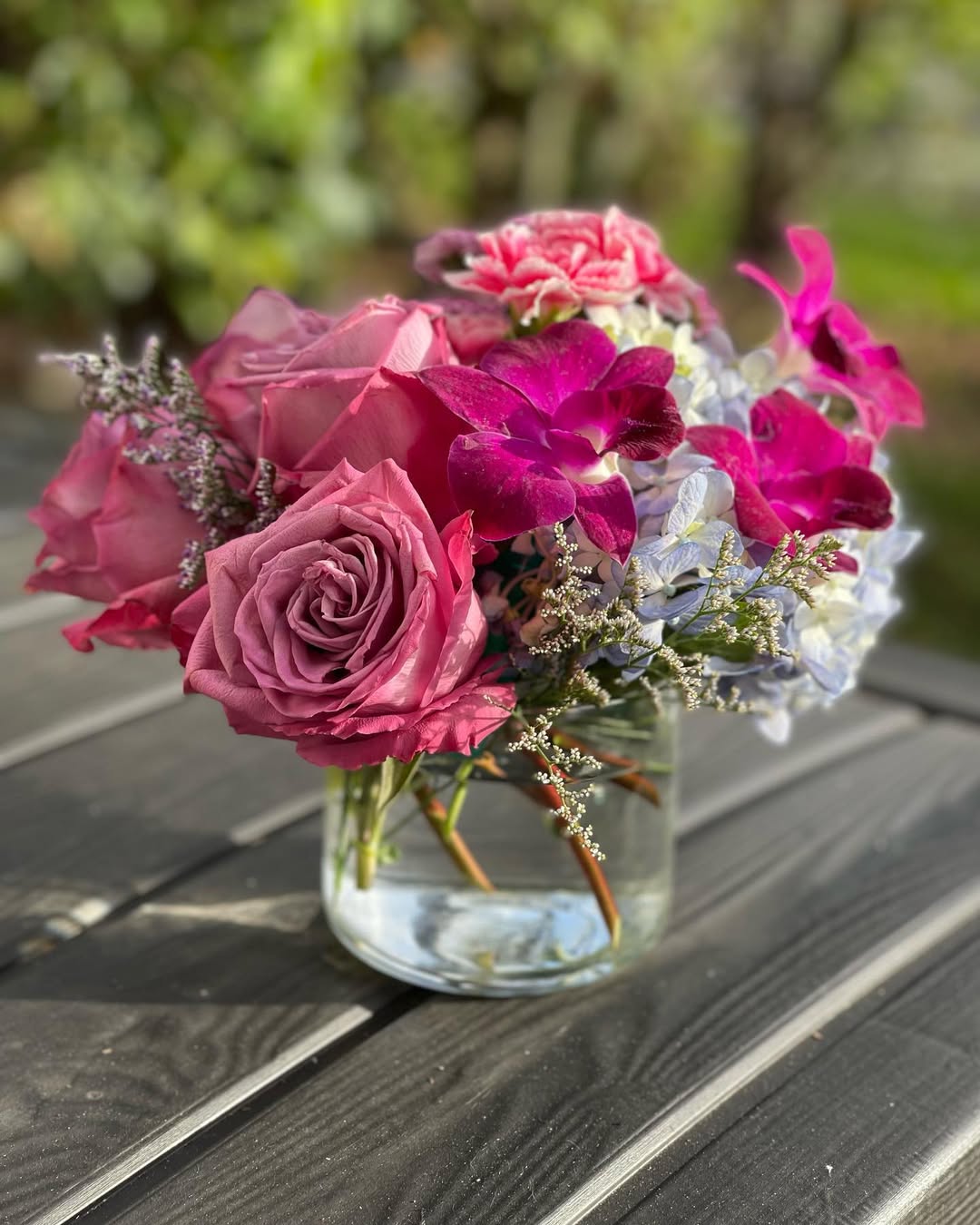
The leftover flowers are often my favorite part of this approach.
You’ve made the main arrangement.
Now you’re holding three stems.
Don’t squeeze them into the vase just because they’re there.
Walk around the house.
Could one go beside the bed?
Could two sit on the bathroom vanity?
Maybe there’s a little spot on your desk that could handle a narrow vase.
A single bloom on a small shelf can sometimes be more noticeable than that same flower buried inside a large bouquet.
This works well in smaller homes too.
You don’t need another decorative object taking up permanent space.
Flowers are temporary.
They can bring color to a little surface for a week, then disappear without adding anything else to your storage.
And because you’ve divided the bouquet, you get to notice the flowers more often as you move around your home.
Of course, those little arrangements are much nicer when the flowers stay fresh.
Keep the Arrangement Looking Fresh Longer
Once the flowers look beautiful, give them a little maintenance.
The Spruce offers a straightforward routine in its guide to flowers for cut arrangements: “Keep flowers blooming by placing the vase out of direct sunlight and drafts, changing the water every other day, and making a fresh cut each time you change the water.”
That’s an easy routine to build around small arrangements.
Remove flowers as they fade instead of waiting for the entire arrangement to look tired.
And don’t assume the arrangement has reached the end just because several blooms are finished.
Downsize it.
If five good flowers remain, move them into a smaller vase.
A few days later, maybe you’re down to two.
Move those again.
The arrangement can become smaller as the bouquet ages.
That lets you keep enjoying the best flowers rather than discarding everything at once.
Do the Five-Minute Expensive-Looking Test
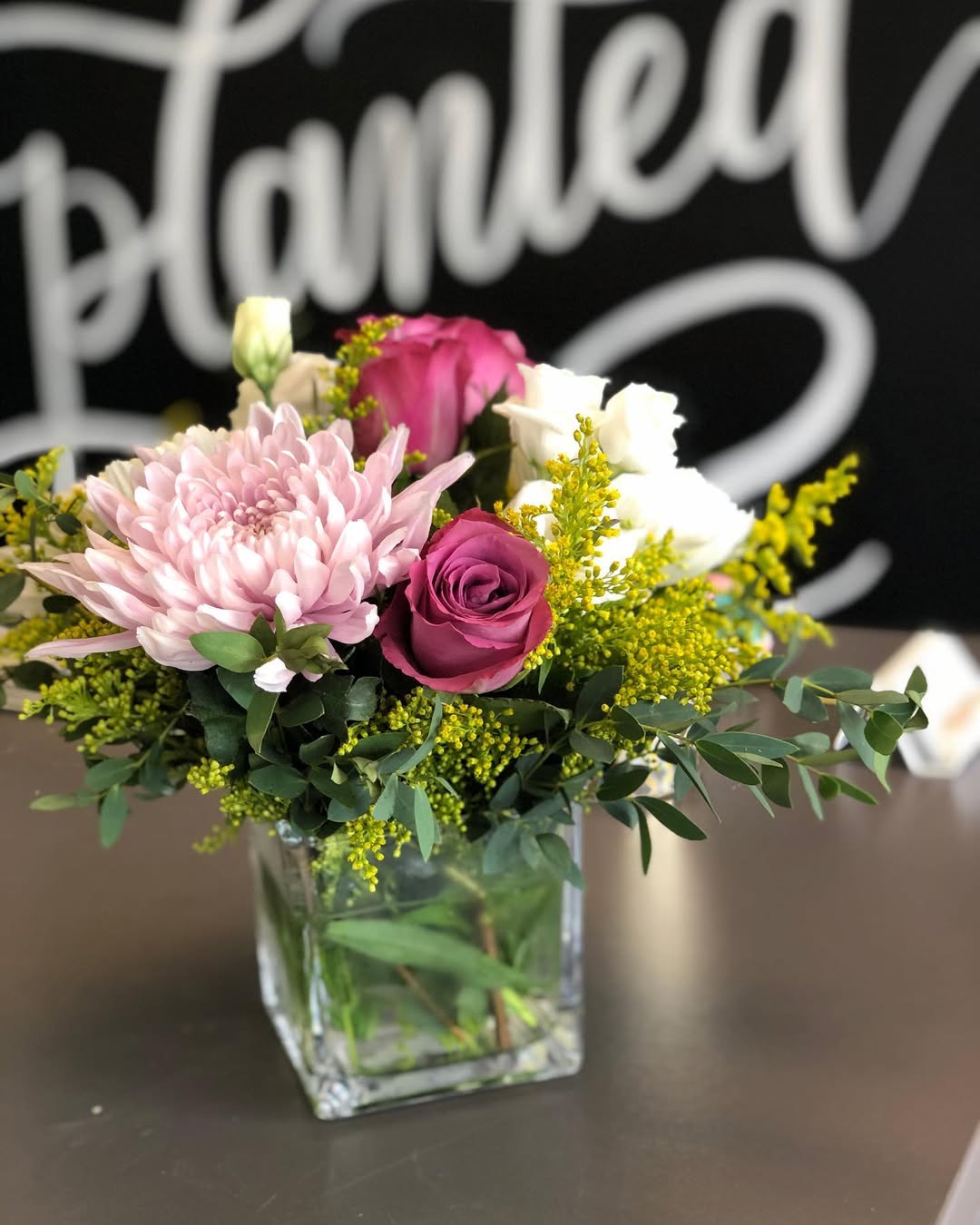
Put the arrangement where it will live.
Then walk away.
Give yourself a few feet of distance and look again.
Does the vase feel too large for the amount of flowers?
Can you identify one focal bloom?
Are too many colors competing?
Do all the flowers sit at the same height?
Can you see the individual blooms?
Is the greenery supporting the flowers or hiding them?
Make one change at a time.
Then take a phone photo.
A photograph makes the overall shape easier to judge because you stop staring at individual petals and start seeing the arrangement as one object in the room.
If something still bothers you, don’t solve it by automatically adding another flower.
Edit Before You Buy More Flowers
When an arrangement doesn’t look right, try four things first.
Rotate a stem.
Shorten a stem.
Remove a stem.F
Change the vase.
One of those may solve the problem immediately.
Maybe the vase was too wide.
Perhaps one tall flower was pulling the arrangement sideways.
Maybe the greenery was filling every bit of open space.
Or the arrangement itself was fine but looked undersized on a large dining table.
Move it somewhere smaller.
A little vase that disappears on a large table may look perfect on a bedside table.
The flowers haven’t changed.
The context has.
That is why I’d edit first and shop second.
Small Flower Arrangements Don’t Need a Big Flower Budget
You don’t need an enormous bouquet to make fresh flowers noticeable in your home.
And you don’t need florist-level skills.
Start with a small container.
Pay attention to its opening and height.
Prepare the stems before arranging them.
Choose the flowers you like most and give them room to be noticed.
Vary the heights.
Keep the colors connected.
Use greenery only when it helps.
Then take whatever is left and see whether it can become another little arrangement somewhere else.
One grocery-store bouquet may give you flowers for the kitchen, bedside table, bathroom, and desk rather than one overcrowded vase.
And when the arrangement begins fading, make it smaller again.
Next time you bring flowers home, try one thing differently.
Don’t unwrap the bouquet and immediately put the whole bunch into your largest vase.
Spread the stems across the counter.
Choose your favorites.
Find a smaller container.
And see how few flowers you actually need before that little corner of your home starts feeling more finished.
Also read:
Plant Gift Basket Ideas That Actually Feel Thoughtful and Personal