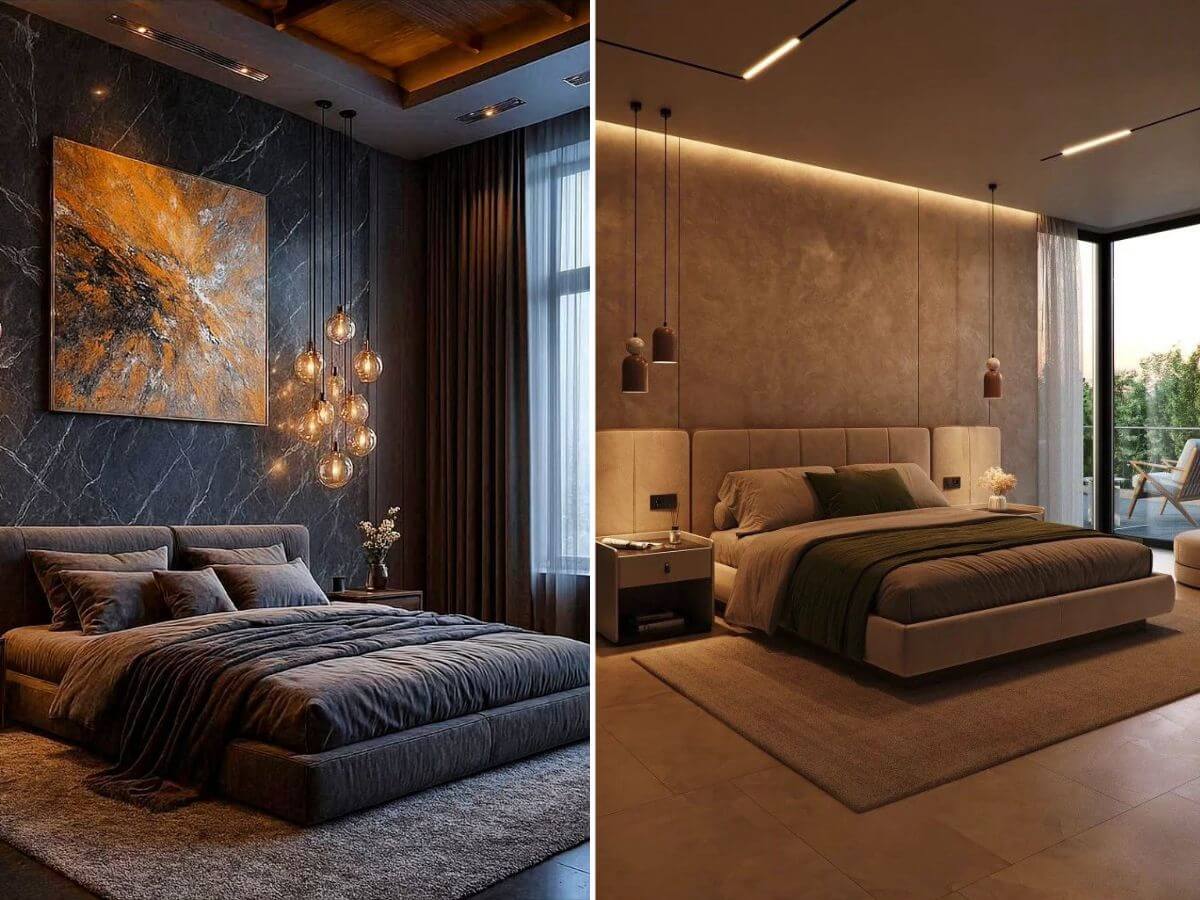
2027 Bedroom Trends That Will Make Your Room Look Expensive
I’ve noticed that the bedrooms that look expensive rarely scream expensive.
There isn’t always a designer bed, custom furniture, or an enormous rug with a painful price tag. Often, what makes the room feel finished is much quieter.
The curtains actually suit the window. The lighting feels good at night. The bedding has enough texture to make you want to climb into it. Furniture looks like it was chosen over time instead of delivered as one matching set.
That is where I think the most useful 2027 bedroom trends are heading.
We’re seeing bedrooms move toward warmer color, softer layers, collected furniture, stronger focal points, and details that make the room feel personal rather than perfectly coordinated.
The good news is that you don’t need to rebuild your bedroom around any of them.
In fact, I wouldn’t.
The smartest way to use a trend is to find the part that solves something you already dislike about your room.
So before you shop, stand in your bedroom doorway for a minute.
What feels unfinished?
Keep that answer in mind as we go.
Warm, Cocooning Color Is Taking Over the Bedroom
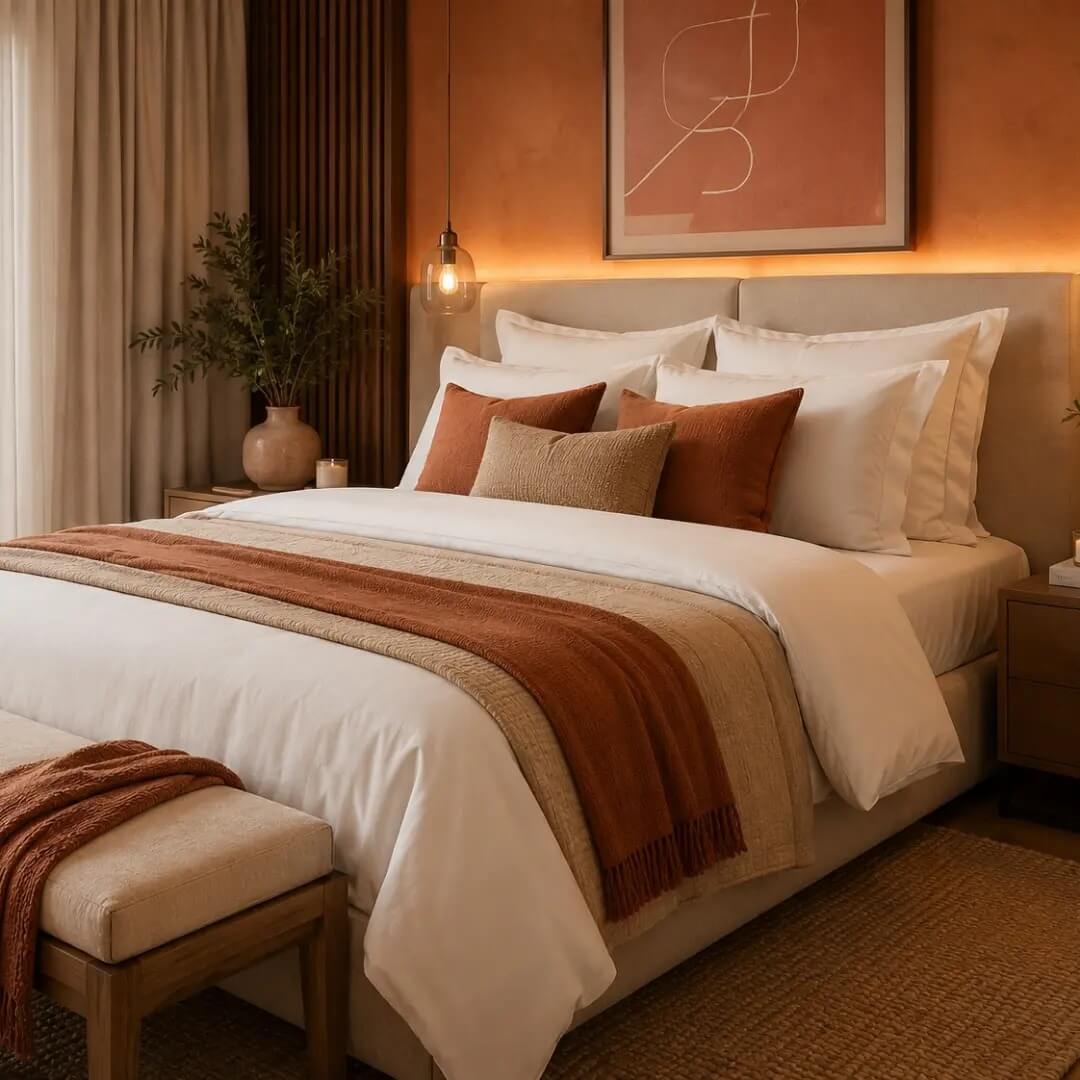
The cool white bedroom has had a very long run.
White walls. Gray upholstered bed. Pale bedding. Maybe a little black hardware for contrast.
That combination can still look beautiful, but 2027 is giving us permission to warm things up.
House Beautiful’s 2027 color forecast points in the same direction. Designer Jordan Slocum says, “After years of cool whites and grays, we think warmer neutrals will keep gaining momentum into 2027.”
Think mushroom, warm cream, cocoa, clay, muted olive, dusty rose, caramel, and other shades that make a bedroom feel softer around the edges.
You don’t have to paint four walls brown to get there.
Before opening a paint can, photograph your bedroom.
Now look at the three largest blocks of color in the picture.
Your walls will probably be one. Bedding may be another. Flooring, curtains, a rug, or a large piece of furniture might be the third.
If all three feel cool, changing just one can shift the whole room.
Try a warmer duvet before repainting. Bring in rust or olive through a quilt. Replace stark white curtains with something closer to oatmeal or cream.
If you’re nervous about deeper color, start at the foot of the bed.
A throw or coverlet lets you see the warmer shade in the room without making a big commitment.
Once the color feels warmer, the bed itself is the next place I’d look.
Beds Are Getting Softer and More Layered
An expensive-looking bed doesn’t need 11 decorative pillows that have to be moved every night.
I would rather have fewer layers that actually feel good.
Start with the bedding you already sleep in.
Then add one visible layer.
That might be a quilt, coverlet, or lightweight blanket folded far enough down the bed that you can still see the main bedding underneath.
Finish with one contrasting texture near the foot.
If your duvet is smooth, the final layer could have a looser weave. If everything is already textured, keep the throw simpler.
Then stop.
The bed should look inviting, not like you’re afraid to touch it.
This matters even more in a small bedroom because the bed occupies so much of what you see.
When floor space is limited, making the bed look finished can do more for the room than adding another chair, table, or decorative object.
There’s another easy change worth trying while you’re standing there.
Look at the furniture around the bed.
Does everything match a little too perfectly?
Matching Bedroom Sets Are Giving Way to Collected Furniture

There was a time when buying the bed, dresser, and two nightstands from the same collection felt like the safest choice.
Everything matched.
Nothing fought with anything else.
But that can also be exactly why a bedroom feels more like a furniture showroom than somebody’s home.
Designer Taylor Bowling gives wonderfully straightforward advice in The Spruce’s look at changing bedroom styles: “Mix things up, buy pieces from all over. Mix old and new which will give your room interest.”
The good news is that you don’t need to get rid of a matching set.
Break it up one piece at a time.
Keep the dresser and swap the nightstands.
Keep the bed and bring in a small vintage table on one side.
If replacing furniture isn’t happening right now, changing the hardware on one piece can be enough to make the set feel less uniform.
I like to repeat one small detail so mixed furniture still feels connected.
Maybe two pieces share a similar warm wood tone.
Maybe black appears in the lamp and the dresser hardware.
Maybe curved nightstands echo the rounded shape of the headboard.
You want a relationship between the pieces, not identical twins.
And once the furniture becomes quieter, you can let one feature behind the bed become much stronger.
Let the Headboard Become the Main Event
The bed is usually the largest object in the bedroom.
It makes sense to let it lead.
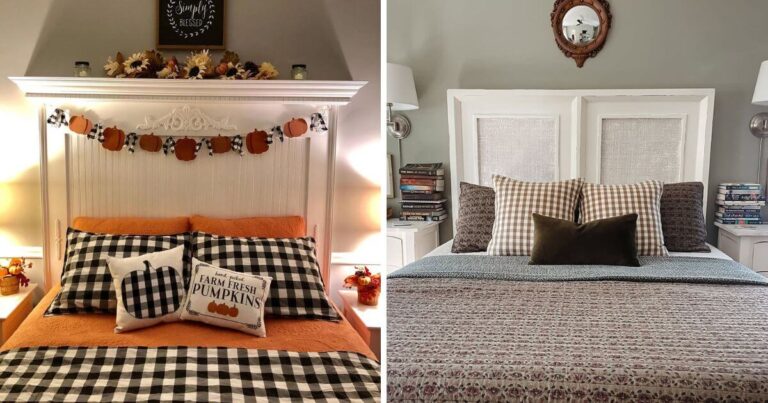
A taller upholstered headboard can immediately give the wall more presence. So can a curved shape, wood detailing, fabric, or a headboard that extends wider than the mattress.
But don’t assume this means buying a new bed.
Stand at the doorway and look at the wall behind yours.
Does the bed feel lost against it?
If it does, work with the wall first.
A large piece of art can give the bed more visual weight.
Paint can create a wider block of color behind it.
Fabric hung behind the bed can soften the wall.
Even extending curtains across more of the wall behind a bed near a window can make the entire area feel more intentional.
The goal isn’t to make the headboard enormous.
It’s to make the bed look properly scaled to the wall around it.
Before spending money, take a photo from the doorway.
Use that image to judge the whole wall rather than staring at the headboard from three feet away.
Once that wall feels right during the day, see what happens after sunset.
Bedroom Lighting Is Moving Beyond Two Matching Lamps
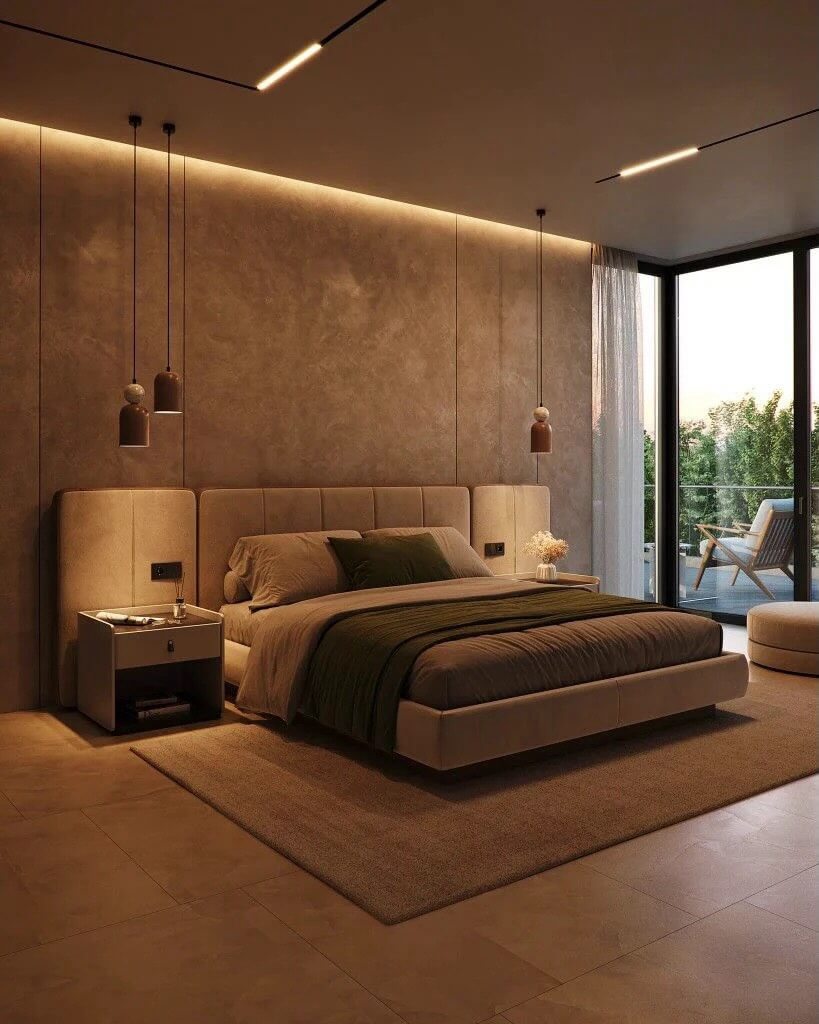
Lighting is one of the first things I would check in a bedroom that looks good during the day but somehow loses its charm at night.
Wait until evening.
Turn off the ceiling fixture.
Now look around.
Can the remaining lights carry the room?
If everything suddenly disappears into darkness except two bright pools beside the bed, you’ve found the problem.
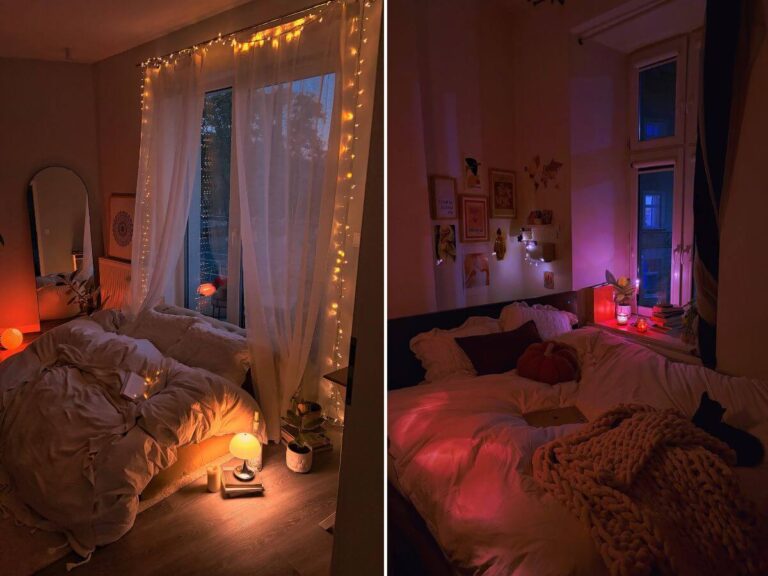
Try light at different heights.
You might have a ceiling fixture, bedside lamp, and a smaller lamp on a dresser.
Wall-mounted lights can work beside the bed when nightstand space is tight.
A floor lamp can soften a dark corner if you actually have room for one.
You don’t necessarily need all of them.
Find the darkest part of the bedroom and ask whether adding light there would make the room feel more balanced.
This is especially helpful in small bedrooms, where one good wall-mounted light may be more useful than another object sitting on the floor.
And while you’re looking up, don’t stop at the light fixture.
There’s an entire surface above you that probably isn’t doing anything.
The Ceiling Is Becoming Part of the Bedroom
Most of us decorate four walls and ignore the fifth.
The ceiling stays white because ceilings stay white.
But a bedroom is one of the nicest places to question that habit.
Carrying the wall color onto the ceiling can make the room feel wrapped in color rather than cut off by a bright white lid.
You can also use a related shade instead of an exact match.
If that’s more commitment than you want, leave the paint alone and look at the ceiling fixture instead.
A fixture with a little more scale or shape can draw attention upward without requiring a weekend on a ladder.
I’d start with the lowest-commitment change first.
Bedrooms are spaces you experience in changing light throughout the day, so live with a new ceiling idea before adding more.
Then bring your eyes back down to the windows.
They may be making the room look less finished than you realize.
Curtains Are Getting Taller, Fuller, and More Intentional

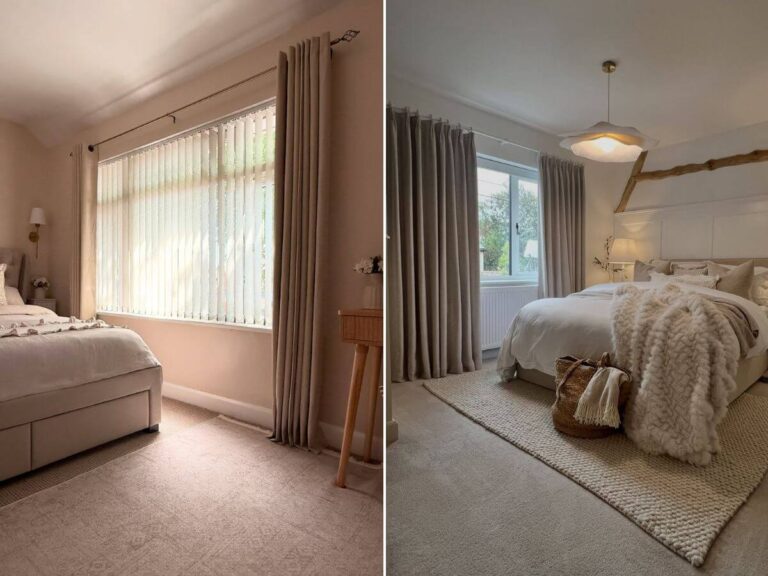
Curtains can quietly change the proportions of a bedroom.
Stand in the doorway and look at yours from across the room.
Do they frame the window?
Or do they look like two narrow strips of fabric hanging beside it?
If they feel undersized, look at the rod before buying new curtains.
A rod mounted higher can draw your eye upward.
Extending it farther beyond the sides of the window can give the fabric somewhere to sit when the curtains are open.
Then look at the amount of fabric.
You want enough width that the curtains still have some fullness when they’re closed rather than stretching almost flat across the window.
Floor length can also make the treatment feel more intentional.
In a tiny bedroom, this is one of my favorite places to put attention because it doesn’t require another piece of furniture.
You’re improving something the room already needs.
And fabric isn’t the only way to bring warmth into the space.
Wood is doing plenty of that work too.
Natural Wood Is Bringing Warmth Back
If your bedroom feels flat, look at how many surfaces are painted, upholstered, glossy, or manufactured to look perfectly uniform.
Sometimes one piece of visible wood can change the balance.
A wood nightstand can warm up an upholstered bed.
A stool can soften a painted corner.
A dresser with visible grain can give a neutral bedroom more depth without introducing another color.
Don’t worry about matching every wood tone perfectly.
Choose one that appears most often.
Then let another tone appear in a smaller amount.
If the nightstand is noticeably darker than the dresser, repeat something dark elsewhere. A frame, lamp, bench leg, or small decorative piece can make the difference feel intentional.
This is also where older furniture becomes interesting.
It doesn’t need to look new to look good.
In fact, a little age may be exactly what the room is missing.
Bring In One Piece With a Past
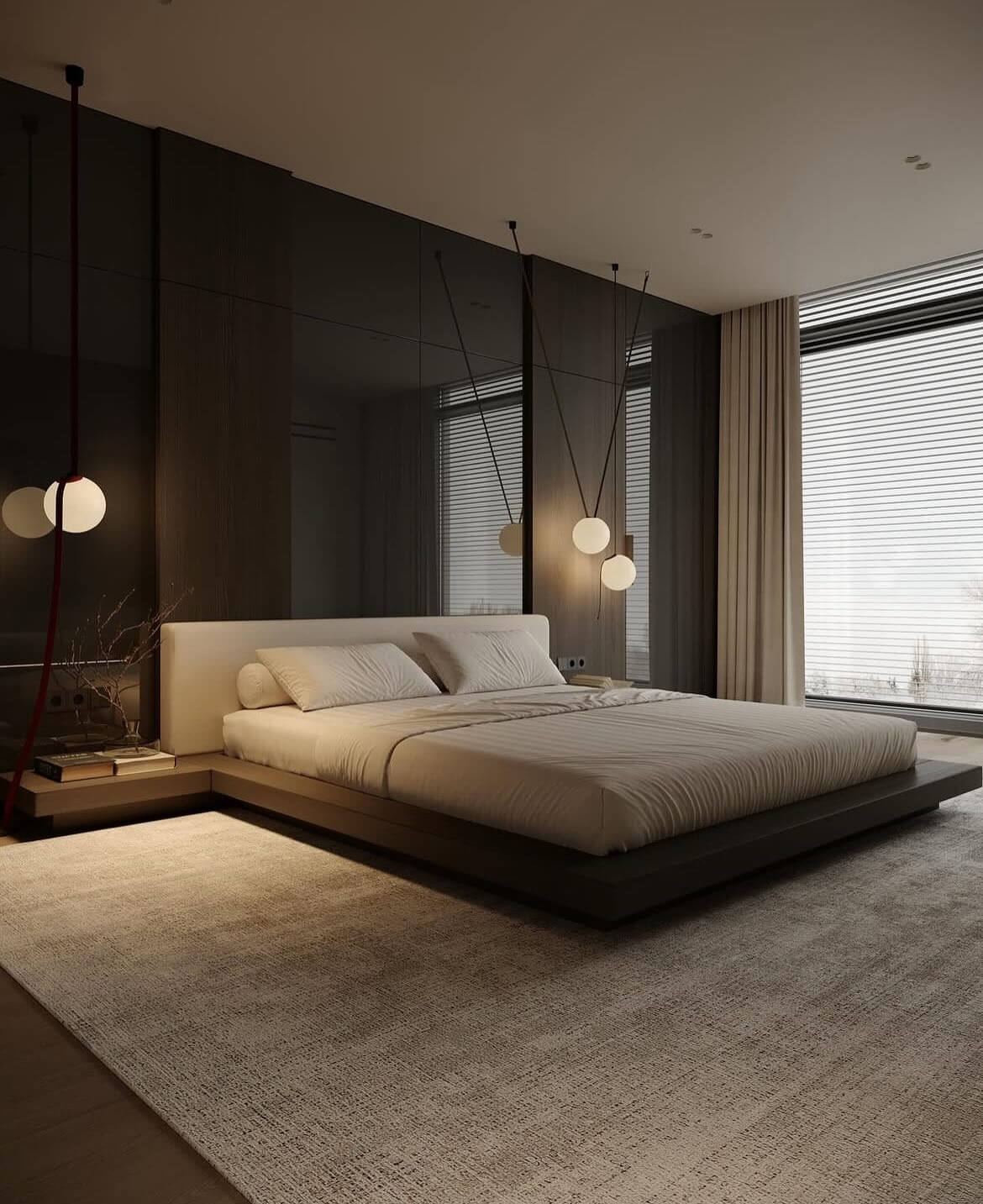
A bedroom filled entirely with new furniture can sometimes feel strangely anonymous.
One older piece changes that.
It might be a small bedside table with worn wood, a vintage mirror, an old frame, a lamp, or a stool that doesn’t look like everything else in the room.
Better Homes & Gardens’ coverage of Sherwin-Williams’ 2027 Colormix forecast points toward the same appetite for character. Emily Kantz says, “Designers and homeowners are really continuing to lean into more traditional and handcrafted pieces.”
You don’t need to turn the bedroom into an antique shop.
Start small.
If you’ve never bought secondhand furniture before, don’t make your first purchase a huge dresser that has to fit perfectly.
Look for a mirror.
A bedside table.
A lamp.
A wooden stool.
A frame.
One object with age or a handmade quality can make newer furniture around it feel less generic.
And once the furniture has some character, the floor deserves the same attention.
Your Bedroom Rug May Need to Be Bigger
Rugs are tricky because a smaller one almost always costs less.
Then you put it in the bedroom and realize the bed has swallowed it.
Before buying a rug, use painter’s tape.
Mark the rug’s dimensions directly on the floor.
Don’t just tape one corner.
Create enough of the outline that you can see where the rug would extend around the bed.
Then walk around the room.
Step out of bed.
Walk toward the dresser.
Open the closet.
Look at the taped outline from the doorway.
Does the rug visually connect the bed to the room, or does it look like a little island floating nearby?
Take a photo too.
Scale can be easier to judge on a screen because you’re seeing the room as a whole rather than looking down at the floor.
If the larger size feels right but stretches the budget, wait rather than buying a smaller rug simply because it’s available today.
In the meantime, there’s another bedroom update that costs nothing.
Remove a few things.
Bedrooms Are Getting Less Cluttered but More Personal
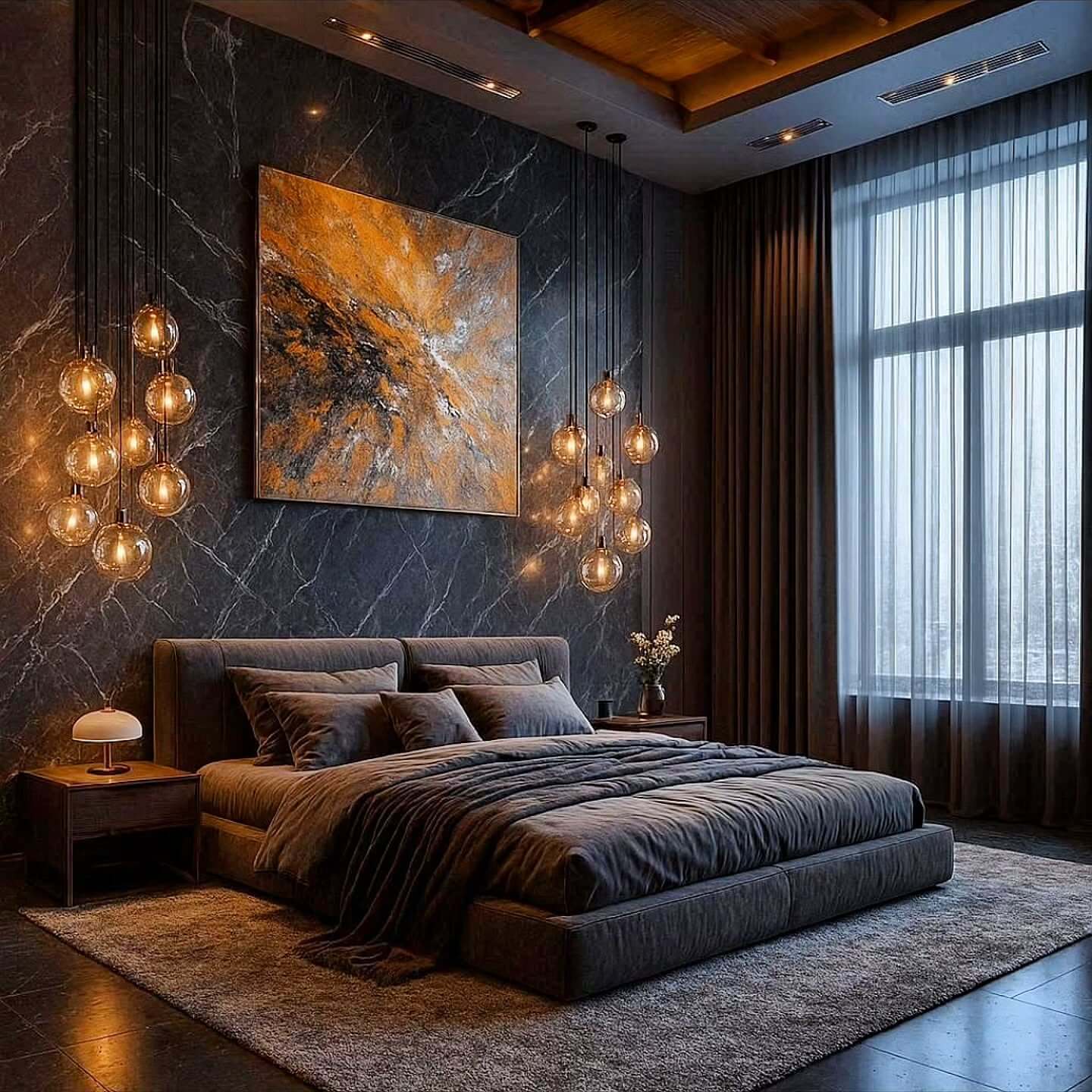
Less clutter doesn’t have to mean less personality.
I don’t want a bedroom stripped of books, photographs, artwork, or things that mean something to you.
I just don’t think every surface needs to tell five stories at once.
Try a one-surface reset.
Choose the dresser.
Remove everything from the top.
Yes, everything.
Wipe it down and stand back.
Now put back only what you use or genuinely like seeing.
Maybe that’s a lamp, a small tray, one framed photograph, and a ceramic piece you love.
Leave part of the surface empty.
Then stop for the day.
You don’t have to declutter the entire bedroom in one afternoon.
One calmer surface can change how the room feels and make the things you kept more noticeable.
This also helps you see whether your walls are carrying lots of tiny pieces when one stronger piece might work better.
Let One Larger Piece of Art Do More
A large empty wall can make people nervous.
The instinct is to start filling it.
A little frame goes here. A tiny shelf goes there. Then another print fills the gap.
Eventually, you have plenty on the wall but nothing that really holds your attention.
Try the opposite.
One larger piece can sometimes do more.
Before ordering anything, make a paper version.
Tape kraft paper, newspaper, or any scrap paper together until it roughly matches the dimensions of the artwork you’re considering.
Tape that rectangle to the wall.
Then leave the bedroom.
Walk back in.
Does the size feel right from the doorway?
Sit on the bed and look again.
This takes a few minutes and can prevent you from buying art that looks enormous online but strangely tiny once it reaches the wall.
The artwork doesn’t need to be expensive either.
Photography, framed fabric, vintage art, prints, or something you’ve had tucked away can all give the wall more presence.
And this gets us to one of the biggest misconceptions about making a bedroom look expensive.
An Expensive-Looking Bedroom Doesn’t Have to Be Beige
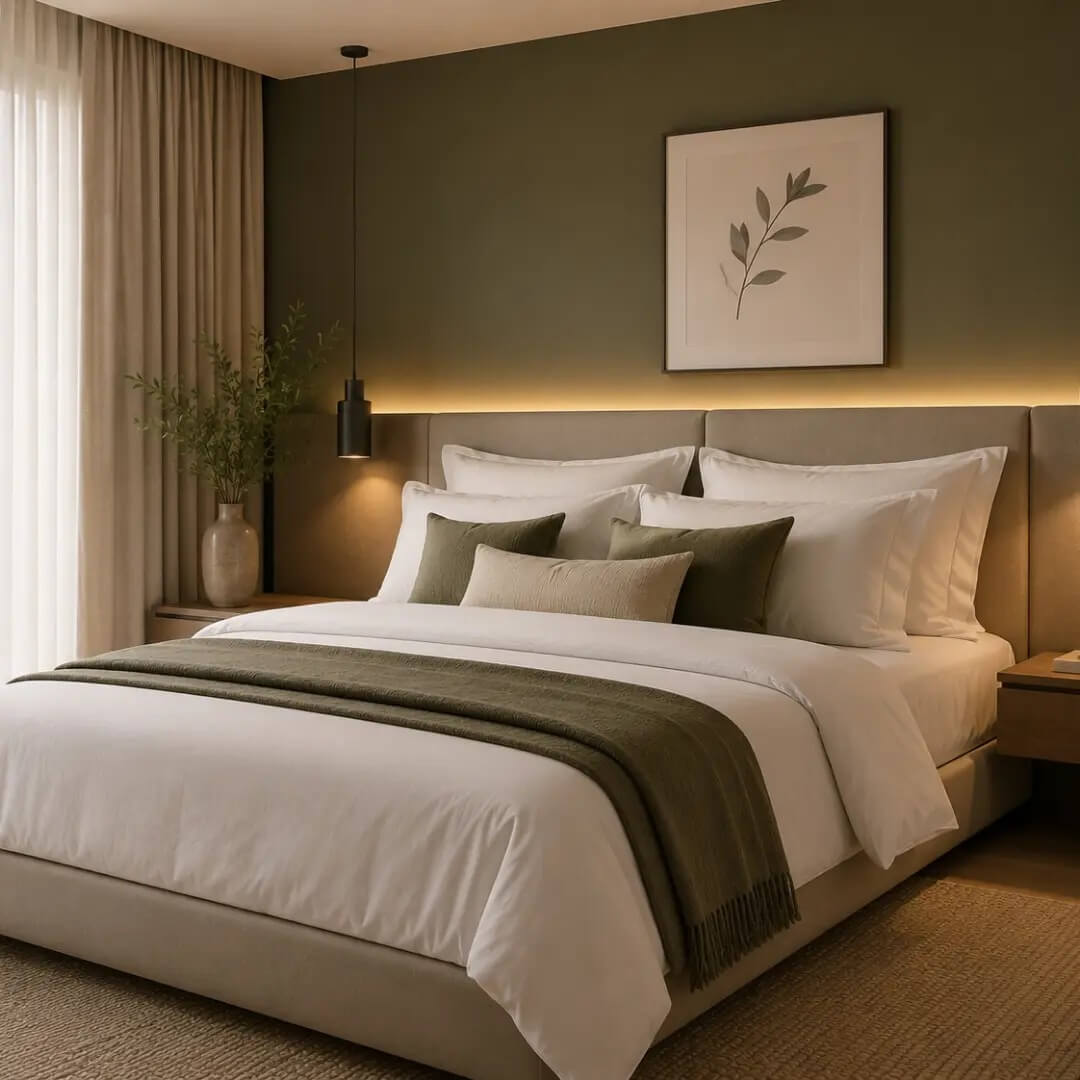
Cream bedrooms can be gorgeous.
So can green bedrooms.
Or brown ones.
Or rooms with burgundy, blue, dusty pink, warm yellow, or a mixture that feels completely personal.
What makes a bedroom feel considered isn’t the absence of color.
It’s how the pieces relate.
A colorful room with properly scaled curtains, warm lighting, good bedding, an appropriately sized rug, and furniture with some character can feel far more polished than a beige room filled with random trendy objects.
If you love color, don’t remove it because you’re chasing an expensive look.
Work on proportion instead.
Work on lighting.
Reduce the things that distract you.
Repeat a few materials or shades around the room.
Let the bed have enough presence to anchor everything else.
Those decisions can carry far more visual weight than buying another decorative object.
Which is exactly why you shouldn’t try every 2027 bedroom trend at once.
Don’t Bring Every 2027 Bedroom Trend Home
Trends are much more useful when they solve a problem.
So go back to the question from the beginning.
What feels unfinished in your bedroom?
If the room feels cold, warmer color or natural wood may be enough.
If the bed looks flat, work on the bedding before touching anything else.
If everything feels too matched, break up the furniture set.
If the bedroom looks great in daylight but dull at night, work on lighting.
If the windows feel bare, start with the curtains.
If you have lots of furniture but the room still lacks personality, bring in one older or handcrafted piece.
Pick one.
Make the change.
Then live with it.
You’ll get a much clearer sense of what the room actually needs next.
There’s one final test I would do before shopping again.
Give Your Bedroom the Doorway Test

Leave the bedroom.
Wait a moment.
Then walk back and stop at the doorway.
Don’t look for what’s pretty.
Notice what your eye finds first.
Ideally, the bed or another intentional feature gets your attention.
Now notice what competes with it.
Maybe it’s a cord hanging beneath the nightstand.
Maybe the rug looks too small.
Perhaps one wall feels empty while another is crowded.
Maybe your curtains stop awkwardly above the floor.
Or the bed itself feels unfinished.
Fix the first thing that looks unfinished before buying something new.
I like this test because it forces you to see the bedroom as a whole instead of evaluating every pillow, lamp, and picture frame separately.
You can repeat it after every change.
Often, the room needs much less than you expected.
The Most Expensive-Looking Bedroom Still Feels Like Yours
I wouldn’t redesign a bedroom simply because the calendar says 2027.
Take the trends that make your existing room better and leave the rest.
Warm the color if your bedroom feels cold.
Layer the bed if it looks flat.
Bring in an older piece if everything feels too new.
Rethink the lighting if the room loses its atmosphere after sunset.
And if you’re not sure where to begin, don’t begin by shopping.
Stand at the doorway tonight.
Look at the room you already have and find the one thing making it feel unfinished.
Change that first.
Then give yourself time to notice what happens.
Because the bedroom that looks most expensive isn’t necessarily the one with the newest furniture or the biggest decorating budget.
It’s the one where everything feels like it belongs there, including you.
Also read: